Come join Ashland Sabbath Chapel Ministries each Saturday for live streamed church services. Bible Study begins at 10:00 AM Central Time and Sermon at 11:00 AM. Visit Our YouTube channel and watch from home!
You know how it goes. Alone, the plan always sounds good. You swear you’ll wake up early, run three miles, cook something green, drink water like a monk, go to bed on time. Then the alarm rings. The room is dark. The bed is warm. The mind gets clever and soft. And that’s when you need people. Not an app, not a quote, not another promise to yourself. You need a small, steady community that doesn’t let you drift back to old ways.
Habits don’t fail because we’re weak. They fail because life is heavy and we keep trying to carry it alone. Researchers talk about “social support” like it’s some cold phrase in a lab, but what they mean is simple: people who check on you, people you don’t want to disappoint, people who show up when your own willpower has packed its bags and left town. Studies keep finding the same thing: folks surrounded by supportive relationships stick to exercise, nutrition, and sleep routines more than those going solo (Umberson & Montez, 2010).
Think of it like this. You can build a new habit with brute force. Tight jaw. Tight schedule. Nothing but grit. But a lasting habit? That comes from making it part of your social life. When the walk after dinner includes a neighbor. When the Saturday workout turns into coffee and talk afterward. When someone texts, “You coming?” and you don’t feel like lacing your shoes, but you do it anyway because saying “no” would mean explaining yourself.
The first step is choosing your people with care. Not saints. Not health fanatics who make you feel small. Just a handful of folks who want roughly the same thing: steadier energy, fewer crashes, a body that doesn’t groan every time it stands up. If you can, mix them a bit—one friend who loves cooking, another who’s into walking, someone who’s trying to sleep better. Different strengths mean different days of support. Research on behavior change calls this a “supportive network,” and it’s one of the strongest predictors of long-term habit success (Berkman et al., 2000).
You don’t need a grand plan to start. Keep it quiet. Keep it simple. Pick one habit you actually care about, not one you think you’re supposed to want. Maybe it’s moving 20 minutes a day. Maybe it’s eating one real meal instead of grabbing whatever’s closest. Then invite one or two people in. You can say, “I’m trying to get serious about this. Will you do it with me for a month?” People like to be asked. It makes them feel needed. That’s how small support networks begin—one honest request at a time.
Once you’ve got a few people on board, you turn the habit into something shared. You set a time and a rhythm. Walk every Tuesday and Thursday after work. Video call while you both prep lunches for the next day. Swap one new recipe on Sundays. Make it predictable. The brain loves patterns, and so do friendships. Over time, that little routine gets woven into your week the way brushing your teeth is woven into your morning. It stops being a question—“Will I do this?”—and becomes a fact: this is what we do.
This is where health stops being an individual project and becomes a group story. You’re not “trying to be good” on your own. You and your people are building a kind of quiet pact. On the days when one of you has no fight left, someone else has enough to spare. There’s strong evidence that these kinds of group-based efforts lead to better weight control, lower blood pressure, and more consistent exercise than solo attempts (Wing & Jeffery, 1999; Estabrooks et al., 2005). You don’t have to memorize the studies. You can feel it in your bones when you don’t want to go for that walk, but you go anyway because your friend is already at the corner.
It helps if your group makes things visible. Not public-shaming visible, just “we can see what’s happening” visible. A cheap wall calendar where you mark the days you followed through. A shared note on your phones. A simple group text where people drop a quick “Done” after they finish their walk or stretch or meal prep. That little signal carries weight. It says, “The chain is still unbroken.” James Clear talks about this idea—habit tracking makes progress real and nudges you to keep the streak alive. You see your people staying the course, and it pulls you along with them.
But it’s not all about pushing. A good support network also catches you when you fall. Because you will fall. Everyone does. You’ll get sick. Work will blow up. The kids will need you at all hours. Old cravings creep back when you’re tired and raw. If your circle is healthy, they don’t scold you. They don’t tell you about their perfect week while you’re staring at takeout cartons. They say, “Okay. That week’s done. What’s one small thing we can do today?” That kind of response matters; self-compassion and supportive feedback are linked to better habit recovery and less burnout (Neff, 2011).
You can even build small rules into your group, not harsh ones, just guardrails. Maybe you all agree on “no all-or-nothing talk.” No one says, “I blew it; I have to start over Monday.” Instead, you practice the language of course correction: “Today wasn’t great. Tomorrow I walk for ten minutes.” Or maybe you set a “two-day rule”: no one skips the same habit two days in a row. If someone hits day two of skipping, the others step in—text, call, knock on the door if they’re close by. Tiny rules like that build what psychologists call “implementation intentions”—clear if-then plans that make follow-through more likely (Gollwitzer, 1999).
To keep the network strong, it has to feed more than your waistline or your step count. It has to feed your sense of being seen. This is where social wellness comes in: feeling that you belong, that someone cares how you’re really doing, not just what you ate for lunch. Over time, those shared walks and check-ins turn into deeper talks. People open up about stress, loss, fear, and the strange pressure to be perfect. Studies show that this kind of emotional support doesn’t just feel good—it lowers stress hormones and improves long-term health outcomes (Holt-Lunstad et al., 2010).
So, building a support network for lasting habits isn’t about finding the strongest people. It’s about finding the most honest ones. The ones willing to say, “I’m tired too, but let’s show up anyway.” The ones who don’t need you to be flawless, just present. You don’t have to build a huge group. In fact, smaller often works better. A few loyal friends, a neighbor or two, a coworker who likes early walks before the office noise starts. That’s enough to start shifting the way your days feel and the way your body moves through them.
And once that little circle is in place, something else starts to happen. The weight of change doesn’t sit only on your shoulders anymore. It spreads out, thin and light, across many people. On one day you’re the one being pulled along. On another day, you’re the one doing the pulling. Without a speech, without a banner, you turn your shared routines into a quiet force, and that’s when your habits begin to feel less like a struggle and more like a way of living that might actually last.
Social accountability and motivation in health goals
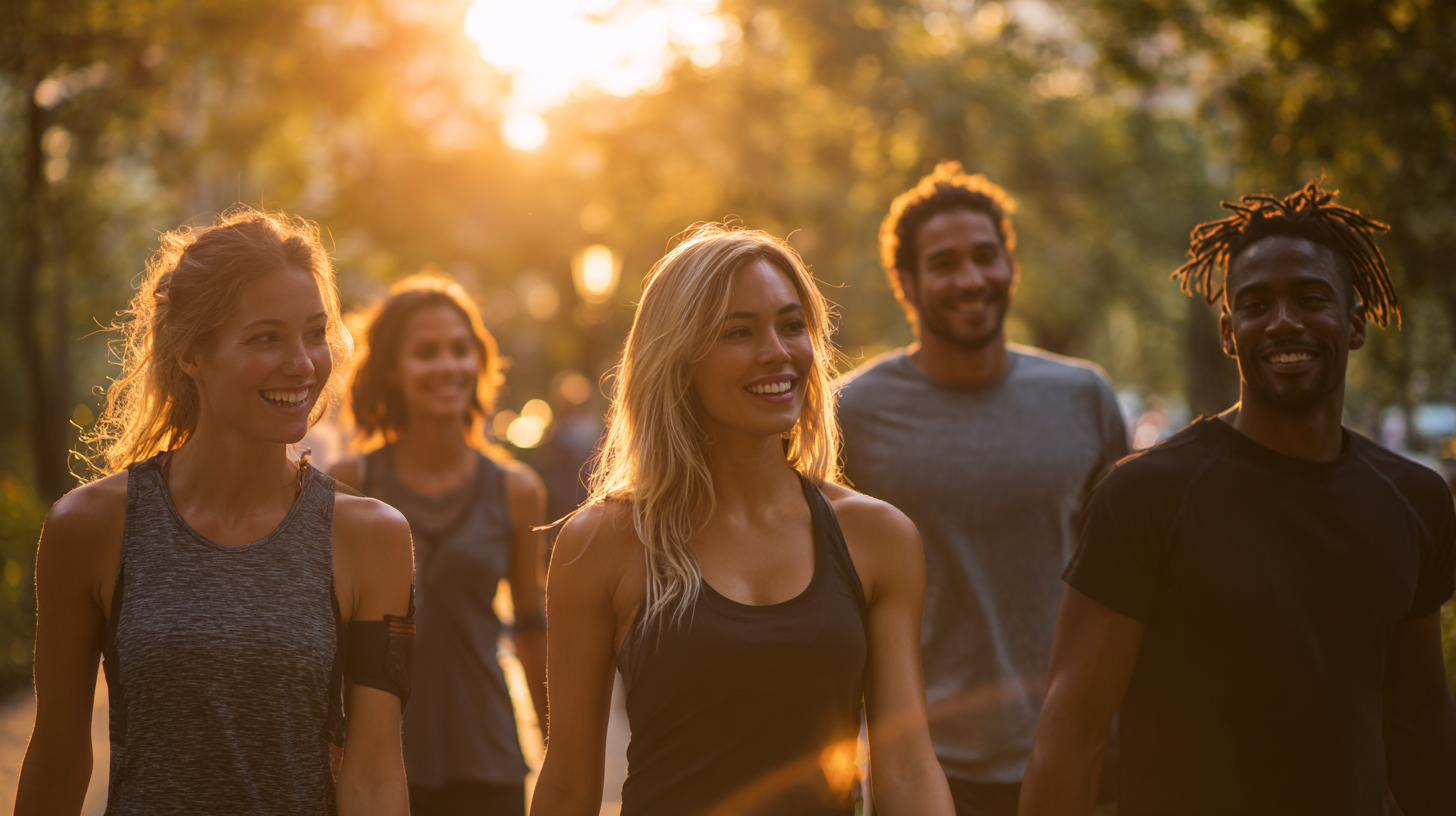
There’s a strange thing that happens when you know someone is waiting on you. Your body can be tired, your mind can be loud with excuses, but the thought of that person standing at the park gate with their hands in their pockets cuts through the fog. This is the quiet power of social accountability. It isn’t fancy. It’s just the understanding that your choices don’t live in a vacuum anymore. They touch other people.
Think about how different it feels to “go to the gym sometime this week” versus “meet Sam at the gym at 6 p.m. on Tuesday.” One is a wish. The other is an appointment with a real human being. You can negotiate with yourself all day. You can’t negotiate with the image of Sam waiting by the door, checking the time. You either show up, or you send a text that says, “I’m bailing,” and most of us hate sending that text.
That’s the thing: we will let ourselves down ten times before we’ll let a friend down once. The science backs this up—people stick to their health plans more when they’ve told someone else about them, especially when they check in regularly. But you don’t need a research paper to know this. You’ve felt it. You’ve dragged yourself out on cold nights because a friend was counting on you.
The trick is to use that pull without turning it into pressure that crushes you. Good accountability feels like a nudge, not a shove. You want people around you who say, “Let’s hit the trail at seven,” not “If you skip again, what’s even the point?” One builds strength. The other builds shame. Shame might move you once or twice, but it burns you out fast.
Here’s a simple way to set it up. You pick one clear goal: walk 30 minutes, three times a week. Then you tell one person you trust. Not the whole internet. Just one. You say, “This matters to me. Can I text you my walks for the next month? And if you don’t hear from me for a few days, will you check in?” Now it’s not you versus your own lazy side. It’s you and a friend on the same side of the line, facing the habit together.
This is where community makes the difference. Alone, you might see health as a private battle—your weight, your blood pressure, your stress. But when you’re tied in with others, your progress becomes part of a bigger picture. Your evening walk becomes the reason your friend gets fresh air too. Your choice to cook instead of order out becomes the recipe somebody else steals and makes for their kids. Motivation stops being a rare, personal mood and becomes something passed around like bread at the table.
And motivation does come and go. It’s not a steady flame. Some days you wake up ready. Some days you feel like a dead battery. Social accountability smooths that out. When your own drive flickers, someone else’s is still burning. You see a message in the group chat: “Just finished my laps,” and suddenly it’s a little harder to stay slumped on the couch. Not because you feel guilty, but because you feel pulled back into the current of what you all said you wanted.
A good way to keep that current strong is to make your check-ins specific and regular. Vague promises slip away. Clear ones hold. Instead of “We’ll keep each other on track,” you say, “We’ll send a quick note every night at nine: what we did for movement, what we ate that felt good, what we’re planning for tomorrow.” Short, simple, consistent. Those tiny reports are like lines of thread. Alone, each is thin. Over time, they weave into a rope that’s hard to break.
But you have to watch the tone. Social accountability should never turn into a scoreboard that makes you feel small. If you’re on day three of missing workouts and everyone else is posting their perfect runs, it’s easy to start thinking, “I’m just not like them.” That’s where social wellness comes in. It’s not just about staying on track; it’s about feeling safe enough to say, “I’m struggling,” and knowing people won’t pounce.
Set some ground rules with your group, the way you might agree on rules in a card game. No body-shaming. No food-shaming. No bragging without balance. If someone hits a new milestone, celebrate it—but also make room for the person who’s starting again for the fifth time this year. Ask each other real questions: “What got in the way this week?” “What helped you push through?” Those questions turn accountability into conversation, not judgment.
There’s a man I used to know who joined a simple walking group at work. They met three times a week at lunch and circled the same cracked sidewalks around the building. No fancy gear, no training plans. The only rule was that if you skipped a walk, you showed up the next day and told the group why. Not to be scolded, just to be honest. He said that rule alone changed him. “I could lie to myself,” he told me. “But I didn’t want to stand there and lie to them.” His steps added up. Ten years later, his doctor said the walks probably kept him off blood pressure meds.
This is the quiet math of health. A hundred decisions you’d normally make in the dark—eat this, skip that, sleep later—get pulled into the light when you know you’ll talk about them with someone. You don’t have to confess every detail of your day. But you do start to think, “When I tell my friend about this choice tonight, will I feel proud, or will I feel like I dodged what I said I wanted?” That thought alone can turn the wheel.
Group challenges can help, as long as they stay human. Thirty-day step counts. “Drink water instead of soda” weeks. “Cook at home four nights” experiments. You pool your efforts, keep score together, maybe even toss in a small prize—someone brings breakfast, someone hosts a movie night. Just remember: the real win isn’t who comes first. It’s that everyone is still showing up by the end.
And when someone drops off—and they will—you don’t let silence swallow them. You reach out, gently. “Haven’t seen your updates. You okay?” Not “Where’s your workout log?” but “How are you?” Sometimes the most powerful form of accountability is not, “Did you do the thing?” but “I noticed you vanished. You matter to us whether you’re on track or not.” That kind of message keeps people from disappearing for months because they’re embarrassed. It keeps the door open.
Over time, the group itself becomes the reason to keep going. Not the scale. Not the watch tracking your heart rate. The people. You don’t go to the Saturday yoga class just to stretch. You go because that’s when you hear how someone’s kid is doing, or how the new job is, or what book someone just finished. The habit becomes a standing appointment with your own life, shared with others.
Little by little, you stop thinking of these choices as chores. They’re just part of how you live with your people. You walk because that’s when you talk. You cook because that’s when you laugh. You stretch because that’s when you breathe together and let the day fall off your shoulders. Social accountability stops being a stiff word and turns into the simple fact that you’re not carrying your hopes for your body and mind alone anymore—they’re held in common, by a circle that expects you, and welcomes you, and is ready to keep moving with you into whatever comes next.
Shared resources and access to wellness opportunities
You know, one of the quiet mercies of life is that God never meant us to walk the path of health with empty hands and empty cupboards. He planted us among people and places where, if we open our eyes, we find that what we cannot reach alone becomes possible together. When we talk about “wellness opportunities,” we’re not only speaking of fancy gyms or organic shops. We’re speaking of gardens, kitchens, sidewalks, libraries, church halls, and kind hearts that, when shared, become a living storehouse for the whole community.
The world often teaches us to think in terms of “mine” and “yours,” but the body does not heal well in isolation. Ellen White wrote that “it was not the purpose of God that any one man should have unlimited control over his fellow-men” (Testimonies for the Church, vol. 3, p. 492). That principle stretches even into the way we think about health resources. When access to wholesome food, safe places to move, and sound instruction is hoarded or priced out of reach, the strong get stronger while the weary sink lower. Yet research keeps revealing what faith has long declared: when communities share resources—gardens, walking groups, education, cooking spaces—health outcomes rise, especially among those who started at a disadvantage (Putnam, 2000; Walker et al., 2010).
Think about food first. A single family trying to eat better might feel trapped by cost, time, and limited options. But several families, or a church group, or a neighborhood, can change the whole equation. Community gardens, for example, don’t just grow tomatoes; they grow access. Studies have found that people involved in community gardening eat more fruits and vegetables and feel more connected to their neighbors than those who are not involved (Alaimo et al., 2008). And beyond the data, you can feel the difference when you stand next to someone, knees muddy, passing along a basket of greens that will become supper for both of your homes.
Ellen White urged believers to cultivate the soil, saying, “Working the soil is one of the best kinds of employment, calling the muscles into action and resting the mind” (The Ministry of Healing, p. 52). Now we see modern science confirming what she saw: shared green spaces calm the nervous system, reduce stress, and even lower rates of chronic disease in communities that have access to them (Maas et al., 2006). When we open those gardens to others—neighbors, children from cramped apartments, elders who need a place to sit in the sun—we are not merely sharing vegetables. We are sharing a piece of God’s original prescription for human well-being.
But maybe your town has no garden yet. That doesn’t close the door. Shared access can also look like simple, practical cooperation. A few families can form a small buying club, pooling their money to purchase whole grains, beans, and produce in bulk. Research on cooperative buying and food co-ops shows that this kind of collaboration can lower costs and increase availability of healthier foods in low-income neighborhoods (Jablonski et al., 2019). It is one thing for a single mother to face the high price of good food by herself. It is another thing entirely when a handful of households sit together, make a list, and say, “If we share this, all of us can eat better this month.”
The same principle holds with movement. A lonely park at dusk may feel unsafe or uninviting. But that same park, filled with familiar faces walking in pairs, pushing strollers, laughing on benches, becomes a shared wellness center with no membership fee. Collective walking groups have been shown to improve blood pressure, resting heart rate, body fat, and overall fitness in many participants, even when the walks are gentle and moderate (Hanson & Jones, 2015). The path did not change. The people on it did, because they stepped onto it together.
I’ve seen this in the simplest ways. One small church, with very limited means, decided that their fellowship hall would double as a weekday walking track. On rainy evenings, they brought out chairs and set them along the walls, cleared a loop around the room, and invited anyone from the neighborhood to come. No sign-up sheets. No fees. Just open doors and a warm welcome. The fellowship hall became a shared resource: children burning energy on little legs, elders taking careful laps with canes, mothers pushing babies in quiet circles while talking about their worries and hopes. Their blood pressure monitors and their smiles both started telling a different story.
And think of information as a resource too. Health knowledge, when kept in the hands of professionals only, cannot bless as it should. But when a church, a community center, or even a group of friends decides to host simple, practical classes—on cooking whole foods, managing stress, stretching safely, or reading food labels—those lessons become shared tools. Research shows that community-based health education programs can significantly improve diet quality, physical activity, and disease management, especially for conditions like diabetes and hypertension (Norris et al., 2006; Contento, 2008).
Ellen White spoke often of teaching people “how to preserve health and to prevent disease” (The Ministry of Healing, p. 146). She saw education not as dry lectures, but as a way of lifting burdens. When you and I share what we’ve learned—how to make a simple, nourishing soup from dried beans, how to stretch stiff joints in the morning, how to read the side of a cereal box with clear eyes—we are taking part in that same ministry. It’s not about knowing everything. It’s about refusing to hide what we do know, and resisting the idea that wellness is a private luxury instead of a common trust.
Now, here’s where we run into a quiet danger. Sometimes, even when we are willing to share, systems and structures get in the way. Poorer neighborhoods often have more fast-food outlets and fewer grocery stores; fewer trees and sidewalks, more traffic and noise. Studies repeatedly show that where a person lives—what researchers call the “built environment”—strongly shapes their risk of obesity, diabetes, heart disease, and even depression (Sallis et al., 2012). This isn’t a matter of individual willpower only; it’s a matter of access. If we ignore this, we end up blaming people for choices they never fully had.
Here is where the spirit of social wellness must move us from sympathy to action. Social wellness is more than friendships; it’s the way a community organizes itself so that health is not a privilege of the few but the inheritance of all. That might mean church members advocating for a safe crosswalk so children can walk to school. It might mean a neighborhood petition for a small park instead of another vacant lot. It could be volunteering at a local clinic, or partnering with a library to host a weekly “health corner” with blood pressure checks and simple reading materials. In each of these, resources are being shared: time, space, knowledge, and voice.
Ellen White reminded believers that “we are all woven together in the great web of humanity” (Steps to Christ, p. 77). Modern public health thinkers say something similar when they describe “social capital”—the trust, networks, and mutual help that exist in a community. High social capital is linked with better health, lower mortality, and even lower crime (Kawachi et al., 1997). When neighbors know each other by name, when churches open their doors as safe places to walk, learn, and rest, when families share tools and recipes instead of competing—this invisible web tightens in a healing way.
Let’s talk about sharing within the home too. Even there, we sometimes treat wellness tools as private treasures. One person buys a blender and quietly makes smoothies, never thinking to invite a spouse or child to join. Another learns a few gentle exercises and does them behind a closed door. But what happens if we pull those things into the center of family life? “Come, try this with me.” “Let’s cook this together.” “Let’s turn off the television for fifteen minutes and walk around the block.” Children who grow up seeing health as a shared activity—meals cooked and eaten together, walks taken together, garden beds weeded together—are far more likely to carry those habits into adulthood (Patrick & Nicklas, 2005).
Of course, resources cost something. A YMCA membership, a blood pressure cuff, a bicycle—these are not free. But again, community changes what is possible. A few families can agree to share a home blood pressure monitor, passing it from house to house and keeping a simple log. A church might purchase a set of resistance bands or mats that can be borrowed. Neighbors can rotate bikes and helmets among their children as they grow. Time itself can be shared: one mother watches several children on Tuesday while the others attend a free exercise class, then they rotate on Thursday. These small arrangements transform what one person could never afford alone into a pattern that blesses many.
Some may worry that sharing will lead to loss or misuse. But won’t something be broken? Won’t someone take more than their share? Maybe, sometimes. We live with human weakness. Yet the answer to selfishness is not tighter fists but wiser stewardship. We can set gentle guidelines, care for what we share, and remember that God, who “is able to do exceedingly abundantly above all that we ask or think” (Ephesians 3:20), is not impoverished when we open our hands. As Ellen White put it, “Those who give to others will themselves be blessed” (The Ministry of Healing, p. 200). And that blessing is not only spiritual; it often shows up in lower stress, increased joy, and better physical health among those who serve and share (Post, 2005).
On a very practical level, you can begin where you are. Look around your life and ask a simple question: “What do I have, or know, or have access to, that could help someone else live a little healthier?” Maybe it’s a yard that could host three tomato plants instead of a patch of weeds, with the harvest split among a few families. Maybe it’s a car that could take a neighbor to the free clinic once a month. Maybe it’s the ability to read labels and budget—skills you could pass on in a quiet afternoon at your kitchen table. These are wellness opportunities just as much as a treadmill or a salad bar.
And then turn the question gently the other way: “What do I need that someone else might be glad to share?” This is harder, because pride whispers that we should manage alone. But shared resources only work when needs are spoken aloud. Tell a trusted friend, “I want to eat better, but I don’t know where to start.” Let a neighbor know, “I’d love to walk in the evenings, but I don’t feel safe going out alone.” Ask your church family, “Could we set aside a small corner for health materials or a weekly walking time?” You may be surprised at how willing people are to open their cupboards, calendars, and hearts when a clear, honest need is placed in their hands.
Little by little, these simple acts reshape the landscape around you. The place where you live ceases to be only a backdrop for private struggles and becomes a kind of living workshop for healing. Sidewalks that once stood empty begin to carry the sound of footsteps and quiet conversation. Kitchen tables become places where recipes and burdens are traded. Church halls echo not only with sermons, but with the hum of shared meals, health classes, and gentle exercise. In such a setting, health is no longer a lonely mountain to climb; it is a path carried, widened, and brightened by many feet walking together.
Mental well-being through belonging and connection
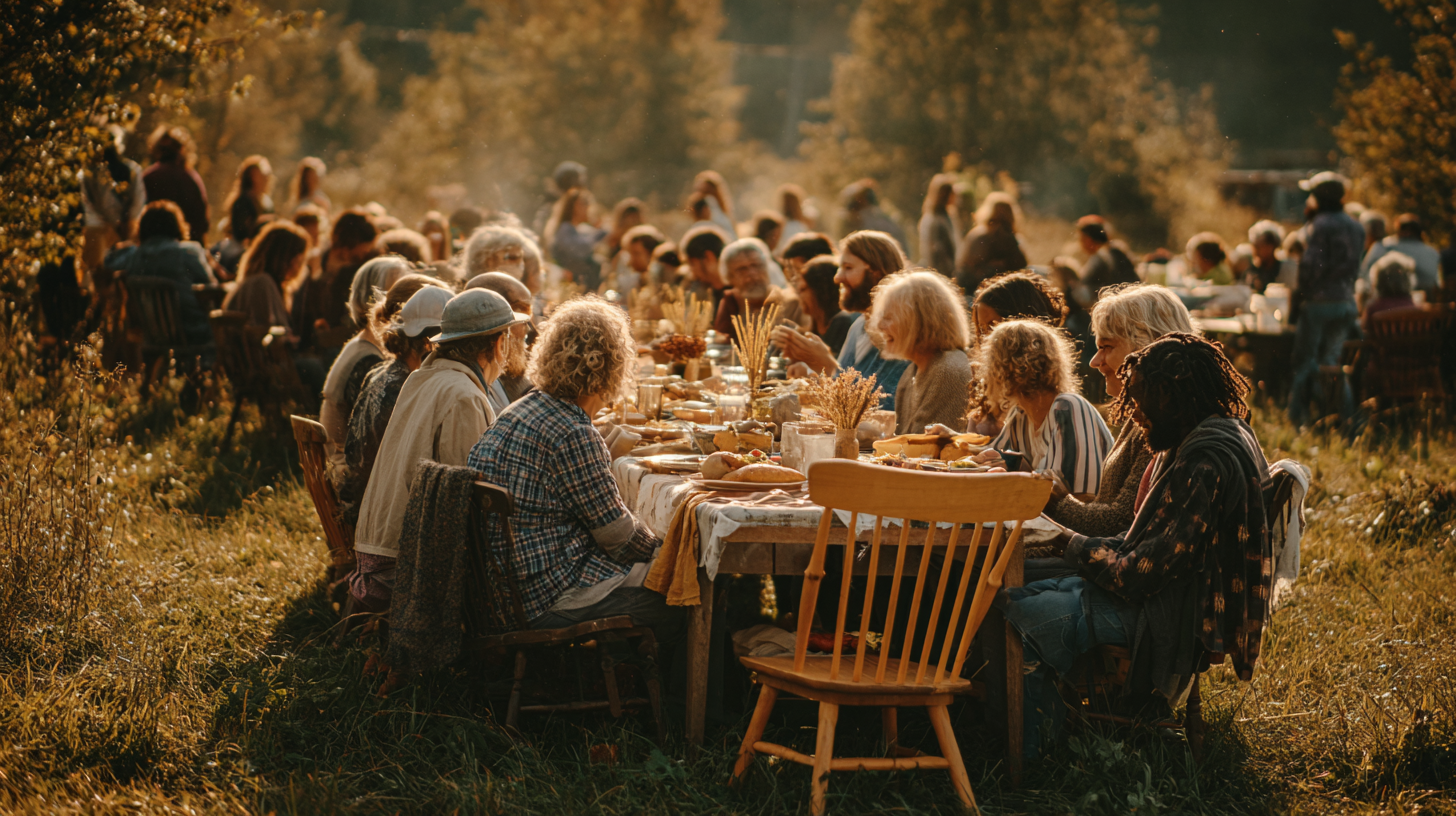
You know, the body can be fairly sturdy even when the heart is lonely, at least for a time. It will grind along on habit and caffeine and duty. But the mind? The mind starts to fray when it feels cut off. We weren’t made for that kind of isolation. From the beginning, life was designed as a shared thing—work in the garden together, meals together, worship together. That’s not just pretty language. Today, researchers keep finding that people who are more socially connected live longer, handle stress better, and have lower risks of depression and anxiety than those who walk alone (Holt-Lunstad et al., 2010; Umberson & Montez, 2010).
Think about the times your own mind has been most at peace. It probably wasn’t when everything was perfect. It was when you knew you were not carrying life by yourself. Somebody knew your story. Somebody checked if you made it home. Somebody noticed when you went quiet. That sense of being seen—that’s the root of what folks now call social wellness. It’s more than just having contacts in your phone. It’s the deep assurance that you belong somewhere, that your presence adds weight to a room, that if you vanished, a circle would close in around the absence and say, “Where is our friend?”
Modern studies give that feeling a clinical name—“perceived social support”—and then measure its effect. It turns out that people who feel supported report less depression, less anxiety, and better overall health, even when their circumstances are hard (Thoits, 2011). But you don’t need a journal article to tell you this. You can feel the difference between walking into a room where no one looks up, and walking into a room where at least one face brightens because you arrived. The first kind of room makes your shoulders curl inward. The second lets your lungs expand.
Belonging is not the same as just being in a crowd. You can stand in a busy subway car, shoulder to shoulder with strangers, and feel lonelier than you ever have in your life. Belonging happens when there’s a thread between you and someone else—a shared story, a shared habit, even a shared joke that’s been told too many times. That thread might be as simple as a Tuesday night walking group or a Sabbath potluck table where they always save you a seat. Over time, those thin threads weave into a fabric strong enough to hold you when your own mind feels like it’s slipping.
There’s a reason loneliness hits the body like a storm. Researchers have found that strong, supportive relationships can reduce the risk of early death as much as quitting smoking does (Holt-Lunstad et al., 2010). On the other side, chronic social isolation is linked with higher inflammation, higher blood pressure, and greater risk of heart disease and stroke (Cacioppo & Cacioppo, 2014). That means having a trusted friend may be as important to your long-term health as any pill your doctor prescribes. When God said, “It is not good that man should be alone” (Genesis 2:18), He wasn’t making a casual remark. He was describing a law written into our tissue and nerves.
And here is the subtle thing: your mind doesn’t only need people when life is falling apart. It needs them in the quiet, ordinary days, so that when the storm actually hits, the ship is already crewed. If you wait until you are deeply depressed or anxious to look for a community, every step feels ten times heavier. The very symptoms that make you need people—tiredness, shame, withdrawal—make it harder to reach out. That’s why these small, regular connections matter: the weekly class, the Wednesday prayer meeting, the Friday walk, the pot of soup shared once a month. They seem so ordinary, but they’re like laying in extra wood before winter.
Now, belonging does not mean pretending. A group where everyone wears a mask is not a healing place; it’s just a prettier prison. For your mind to rest, you need at least a few spaces where you can tell the truth without fearing you’ll be pushed away. The apostle James wrote, “Confess your faults one to another, and pray one for another, that ye may be healed” (James 5:16). He understood something modern psychologists agree on: open, accepting relationships help people recover from trauma, manage chronic stress, and even stick with treatment for mental illness (Pietromonaco & Beck, 2019).
In practical terms, that means building circles where weakness is not treated as a scandal. Where someone can say, “I haven’t slept this week,” or “My thoughts have been dark,” and the room does not go stiff and silent. Instead, someone asks, “Can you tell us more?” or “How can we be with you in this?” That kind of response slows the spinning of the mind. It says, without many words, “You are still ours. Your struggle hasn’t broken the bond.”
That’s one of the fiercest lies loneliness tells: that you are a burden, that people would be better off without your heaviness. When you isolate, that lie gets louder because there is nothing around to dispute it. But when you stay in a healthy circle long enough, you start to see the truth: your presence is not only tolerated—it is sometimes the very thing someone else needed that day. Maybe you share a small story that gives them courage. Maybe your quiet listening becomes the first safe harbor they’ve had in months. In serving one another like this, your own sense of uselessness begins to crumble.
It helps to remember that our minds do their worst work in the dark. Negative thoughts grow like mold in closed spaces. When you bring them into the open with trusted people, they often shrink. This doesn’t mean you pour out your entire soul to anyone who asks how you’re doing. It means you choose a few safe souls and give them permission to hear the real answer. You might say, “Can I be honest? Today has been rough,” or “I’ve been fighting this heavy feeling, and I’m not sure what to do with it.” Often, in the very act of putting feelings into words, your brain begins to sort and soften them.
Belonging also gives structure to the mind. Regular meetings, familiar faces, repeated rituals—these create a kind of mental scaffolding. In seasons when your thoughts feel scattered, the schedule of your community can hold you up. “It’s Thursday; we walk.” “It’s Sabbath; we worship.” “It’s the first Sunday; we cook together.” You may not feel like going. You may stand at the door with your hand on the knob and the weight of the week hanging off your shoulders. But you know what happens if you push the door open anyway: the smells, the voices, the gentle humor—all of it gives your nervous system a cue that you are back among your own.
And this isn’t only about friends your own age. Strong mental well-being often sprouts in communities where generations mix. Children bring a kind of hopeful noise; elders bring perspective and patience. Studies suggest that intergenerational programs—where youth and older adults share activities—can reduce loneliness, increase life satisfaction, and improve mood for both groups (Pinquart et al., 2000). When a child learns to plant beans beside an older neighbor, or an elderly member teaches a teen how to bake bread, something passes between them that no textbook can supply—a sense that life is shared, wisdom is shared, and time itself is not entirely a thief.
Of course, not every group is good for the mind. Some circles drain rather than restore. If every gathering leaves you feeling smaller, more anxious, more ashamed, that’s not social wellness; it’s social weariness. Belonging should not require the death of your conscience or your peace. There’s a line between bearing one another’s burdens and letting someone grind you down. Sometimes, the healthiest step for your mind is to step out of a toxic circle and step into a gentler one, even if it means being “the new person” for a season.
So how do you find, or build, the kind of community that actually helps your mental well-being instead of harming it? You start smaller than you think. You don’t need fifty people. You need two or three who are willing to be real. You can begin with a simple, shared practice that invites honest talk. A short walk after a study group. Ten minutes of checking in at the end of a meeting. A monthly meal where the rule is that phones stay off the table and people stay on it.
You can even set simple guidelines together. Things like:
- We listen more than we fix. Not every problem needs a quick answer. Sometimes people just need to be heard.
- We speak kindly of those who aren’t in the room. If gossip lives here, trust dies here.
- We leave room for silence. Not every pause has to be filled with chatter. Quiet can be holy ground.
- We pray with and for one another, if all are willing. Bringing burdens before God together can lighten the load on the mind in ways we don’t always see right away (Philippians 4:6–7).
Guidelines like these turn a random gathering into a kind of gentle covenant. Over time, the brain learns: “Here, I am safe. Here, I am not performing.” That safety is like cool water on a fevered mind. Cortisol lowers. Breathing slows. Muscles unclench. Not because you solved every problem, but because you are no longer standing under their weight alone.
And it’s worth remembering that giving comfort is often as healing as receiving it. People who volunteer or offer steady support to others tend to report better mental and physical health than those who stay isolated, even when they themselves are struggling (Post, 2005). There’s a strange, merciful thing that happens when you show up for another person: your own worries shrink to a size you can carry. When you listen to someone else’s story, you are reminded that pain is not unique to you, and neither is grace.
Loneliness likes to whisper, “You don’t matter.” Belonging answers back, not always with speeches, but with lived evidence: the extra chair they set out for you; the text that says, “You coming?”; the simple fact that if you miss three weeks, someone calls and says, “We haven’t seen you. Are you all right?” Those are small acts on the outside. Inside a troubled mind, they land like anchors. They tell you, in a language deeper than words, “Stay. Your life has weight here.”
Little by little, this is how a person is stitched back into the fabric of life. Not by one grand intervention, but by a steady series of shared mornings, shared meals, shared miles, shared prayers. That is what a true community does—it gathers up the scattered pieces of a person’s days and says, “We will help you hold them.” And as those pieces come together, the mind begins, quietly, to heal.
Designing community spaces that encourage active living
Look around your town, your neighborhood, even your church. What do the streets and buildings quietly tell you to do with your body? Sit? Drive? Scroll? Or move, breathe, and meet? The spaces we live in preach a constant sermon to our habits, often louder than any words. When a cul-de-sac has no sidewalks, when a city has parks but no lights, when a church has a big parking lot but no bench in the shade, the message is clear: keep moving in cars, keep sitting in chairs. Yet the moment a place is designed with walking paths, stairways that invite instead of intimidate, open greens where children and elders both feel safe, the whole rhythm of daily health begins to shift.
Urban planners call this the “built environment”—the physical layout of streets, buildings, and open spaces. Researchers have found again and again that people are more active when they live near sidewalks, trails, parks, and destinations they can walk to (Sallis et al., 2012). Think about how that plays out in real life. If your grocery store is a ten-minute walk on a safe, pleasant sidewalk, you’re more likely to walk there. If the only way to get there is along a narrow shoulder next to speeding traffic, you’re probably driving every time. The environment doesn’t just “support” your decisions; it steers them.
Now imagine if more spaces were built around the question, “How can this place help people move, connect, and heal together?” That’s where community and design meet. A park is not just grass and benches; it’s a potential walking track, playground, outdoor gym, and social hub, depending on how it’s shaped. A church is not just a sanctuary and pews; it can be a walking hall, a cooking classroom, a quiet garden path. When we start to see our spaces this way, we realize that every building plan, every zoning decision, every landscape layout is also a decision about people’s future blood pressure, mood, and mobility.
Consider stairs. In many buildings, they’re hidden behind heavy doors at the end of dim hallways, while elevators sit front and center, polished and inviting. That design choice whispers, “Stairs are for emergencies, elevators are for daily life.” Some workplaces and campuses have flipped this script by putting bright, wide staircases right in the middle of things, with windows, artwork, and signs that simply say, “Take the stairs; your heart will thank you.” Studies have shown that making stairs more visible and attractive can significantly increase stair use, even without nagging or strict rules (Nicoll, 2007). The architecture itself becomes a gentle coach, nudging people toward movement with every trip between floors.
Or think about streets. A road designed only for fast cars teaches everyone—from children to elders—that walking and cycling are risky, second-class options. But a “complete street,” with sidewalks, bike lanes, crosswalks, trees, and good lighting, sends another message: every mode of moving matters. People in walkable neighborhoods tend to get more daily physical activity and have lower rates of obesity and some chronic diseases (Frank et al., 2004). The same mile of pavement can either isolate people in their cars or gather them on foot, depending on how it is drawn.
This is not just about exercise. It is about social wellness—about whether people have natural, easy ways to bump into one another, linger, and talk. Benches placed along a path say, “You can rest here. You can sit and chat.” A small plaza in front of a library or church, with trees and a little shade, invites people to stay after the service or meeting, to exchange recipes, worries, and laughter. When communities design “third places”—not home, not work, but public spots where people can gather informally—loneliness tends to drop and connection to neighbors rises. The way a place feels can either invite the nervous and lonely out of their houses, or push them deeper inside.
Children know this instinctively. Put them in a parking lot, and they will find the one curb to balance on. Put them in a field with a path around it, a few trees to climb, and a ball, and they will naturally invent games and circuits. When you design a schoolyard with only asphalt and a few painted lines, you are quietly telling children to restrict their movement to narrow scripts. But when you offer varied surfaces, climbing structures, gardens, and open space, you tell their bodies, “Explore. Test your strength. Learn what you can do.” Those early messages shape not just their fitness, but their confidence and sense of belonging in the physical world.
Churches, in particular, have a quiet power here. Many already own land, buildings, parking lots, and fellowship halls that sit underused for much of the week. What if those spaces were reimagined as centers of active living for the entire community? A simple walking track could be marked around the perimeter of a parking lot. A corner of the lawn could become a small community garden with a bench for conversation. A fellowship hall could host low-impact exercise classes or stretching sessions in the evenings. These changes don’t require turning a spiritual place into a gym; they express care for the whole person—body, mind, and spirit.
Research on “green space” offers another clue. People who live near parks, trees, and natural landscapes tend to report lower stress, better mood, and higher levels of daily activity (Maas et al., 2006). You’ve probably felt this: a short walk among trees clears the mind more than a longer walk through noisy traffic. When a community chooses to plant trees along streets, to protect small patches of woods, or to turn vacant lots into pocket parks, it is investing not just in property values, but in mental and physical health. Those trees become daily therapists, shading and calming thousands of unnoticed steps.
Accessibility is crucial. A beautifully designed park on the far side of town, reachable only by car and closed at dusk, sends a subtle signal: “Health is for those with time, transport, and flexible schedules.” But a small, well-lit walking loop two blocks from where people live, open early and late, tells shift workers, single parents, and elders, “This is for you too.” Sidewalks that accommodate wheelchairs and strollers; benches spaced close enough for people who tire easily; restrooms that are safe and clean—these details decide who gets to participate in active living and who is quietly left out.
Lighting, too, is a health tool. Poorly lit paths, parks, and stairways are informal “Closed” signs for anyone who feels vulnerable at night. By contrast, good lighting, clear sightlines, and visible gathering spots make evening walks and outdoor play possible for many who can’t get outside during the day. Studies of “crime prevention through environmental design” show that well-used, well-lit public spaces can actually reduce crime and increase feelings of safety (Cozens & Love, 2015). When more eyes and feet are present in a place, the whole area becomes safer and more alive.
Consider also how indoor spaces shape behavior. A break room with only a vending machine, a microwave, and a television invites mindless eating and passive rest. But add a big water dispenser, a bowl of fresh fruit, a few plants, and a clear patch of floor where people can stand, stretch, or do a few simple movements, and the culture shifts. A church lobby with informational racks about walking groups, cooking classes, and stress-reduction workshops becomes a crossroads where people can connect not just spiritually, but practically around daily health.
Designing for active living doesn’t always mean big construction projects. Sometimes it is as simple as putting things where they will be used. If walking paths begin near bus stops, more people will use them. If bike racks are safe, visible, and close to doors, more people will ride. If a school puts a rack of balls and jump ropes near the playground gate, more students will pick them up. The environment is always whispering; small changes can completely change its tone.
Of course, not every community has the budget or political clout to rebuild streets or parks from scratch. But there is surprising power in small, citizen-led projects. Temporary “pop-up” bike lanes made with cones and paint can show residents and officials what safer cycling might feel like. Weekend “open streets” events, where roads are closed to cars and opened to walkers, cyclists, and skaters, give people a vivid taste of what a more active city could be. Community members who experience these experiments often begin to demand more permanent changes.
Ask yourself: if a stranger walked through your neighborhood or sat in your church for a week, what would they assume about what bodies are for? Are the biggest, brightest spaces reserved for sitting? Are the open, flexible spaces hidden away? Are there any signs or symbols that say, “Moving, playing, gardening, walking, and resting outdoors are normal, welcomed parts of life here”? Or would they conclude that the proper posture of adulthood is to be busy, tired, and still?
You don’t have to be an architect or a city planner to influence this. You can ask questions at town meetings: “Where can children safely bike?” “How could seniors walk without fear of tripping?” “Could we add a bench here, a crosswalk there?” You can talk with your church board or community leaders about small changes: a walking map posted in the lobby, a shade structure over the playground, a designated “walking hour” when halls are open. Every suggestion is a reminder that social wellness includes the shape of our surroundings, not just the shape of our conversations.
And as you look at your own habits, notice how they link to place. Do you skip evening walks because there’s nowhere that feels safe or interesting? Do you avoid stairs because they feel like back corridors, not main routes? Do you stay inside on beautiful days because there is no shaded bench or path nearby? Each of those choices is partly personal and partly architectural. What might change in your life if the path outside your door felt like an invitation instead of an obstacle?
There is a deep dignity in saying, “We want our buildings, streets, and green spaces to tell the truth about what human beings are made for.” We are made to move—not as machines on treadmills in sealed rooms, but as creatures breathing the air together, waving to neighbors, watching clouds, helping a child up after a fall. We are made to meet—not only in formal meetings, but on porches, park paths, and church lawns. Designing spaces that encourage active living is really about aligning the built world with what our bodies and souls have quietly known all along.
- How does my neighborhood’s design really affect my health?
- The layout of streets, sidewalks, parks, and buildings strongly influences how much you move without even thinking about it. When walking routes are safe, pleasant, and convenient, people tend to get more daily activity and experience better overall health.
- What small changes can our church or community center make to encourage active living?
- You can mark simple indoor or outdoor walking routes, add benches and water stations, and schedule regular walking or stretching times. Even small additions like bike racks, shaded seating, and posted walking maps can nudge people toward movement and connection.
- We don’t have much money. Can we still redesign spaces to promote activity?
- Yes. Low-cost changes—painting lines for walking loops, adding temporary cones for safer crossings, planting a few trees or container gardens, and rearranging furniture to open space for movement—can make a big difference. Often, thoughtful placement matters more than expensive equipment.
- How can we make community spaces feel safe enough for people to walk or play?
- Good lighting, clear sightlines, and regular presence of neighbors all increase safety and the feeling of safety. Organizing walking groups, family play times, or open-street events also brings more “eyes on the street,” which can deter problems and build trust.
- What role does social wellness play in designing active spaces?
- Social wellness is about how easily people can connect, support one another, and feel they belong. Spaces with benches, gathering spots, and visible activity areas naturally encourage conversation and shared routines, turning simple movement into a community experience.
- How can I advocate for healthier community design if I’m not an expert?
- Start by noticing specific barriers and possibilities—missing crosswalks, unsafe sidewalks, unused lawns—and bring them to local meetings, school boards, or church councils. Share examples from other communities, ask clear questions, and partner with neighbors to show there is real interest in change.
- What if I live in a place that isn’t walkable right now?
- You can still look for the safest, most pleasant routes available and build simple routines around them, even if they’re short. At the same time, you can join with others to push for small improvements—like better lighting, a single new crosswalk, or a modest walking path—that can grow into larger changes over time.
Ashland Ashland Sabbath Chapel
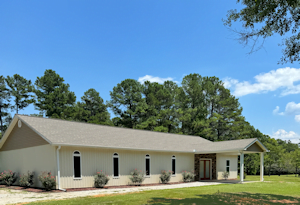
Beside our live streamed church services, all are welcome to attend our church in person each Saturday beginning 10:00 AM Central Time by going to 2425 Owens Rd., Ashland, AL 36251. There is no cost and any donations are strictly voluntary.
For questions, call +2563547124.