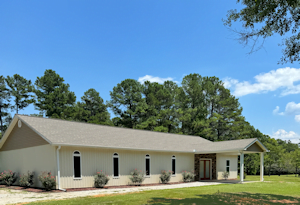
Come join Ashland Sabbath Chapel Ministries each Saturday for live streamed church services. Bible Study begins at 10:00 AM Central Time and Sermon at 11:00 AM. Visit Our YouTube channel and watch from home!
If you want to turn exercise into an excuse to hang out more, the outdoors is your best friend. It takes what can feel like “working out” and hides it inside something that looks a lot more like a mini adventure. The trick is to start thinking less about perfect routines and more about “What sounds fun to do together this weekend?” Once you do that, social fitness starts to feel natural instead of forced.
For starters, consider hiking. Not the epic, bring-a-compass kind if that’s not your thing—just a local trail with a bit of elevation and a good view. Pick something that takes 60–90 minutes so it feels like an outing instead of a death march. Tell one friend to bring snacks, another to handle music for the drive, and someone else to pick the trail. When everyone has a job, it feels like a shared project. And because hiking has built‑in pauses—photo breaks, water stops, “look at that view” moments—you can talk, catch up on life, and still log a serious amount of steps without obsessing about reps or form.
If trails aren’t nearby, turn your neighborhood into your “gym.” Schedule a weekly walking loop together: maybe it’s a 30‑minute route after work or a Saturday morning coffee walk. Keep the pace brisk enough that you feel your breathing change a bit, but still comfortable enough to chat. This kind of regular, low‑pressure activity is sneaky: it stacks up over time and has a real impact on your overall health. To keep it interesting, you can add simple mini‑challenges along the way—two minutes of fast walking between certain landmarks, a quick set of stairs if your path hits a park, or a short stretch break halfway through.
Another easy way to make the outdoors more active is to turn a normal hangout into something that just happens to require moving. Instead of “Let’s meet at that café and sit for two hours,” try “Let’s grab something to go and walk around the park.” You still get the conversation and the coffee, but now you’re doing slow laps instead of sinking into chairs. Over a month, those little swaps add up the way spare change piles up in a jar: quietly but noticeably.
On days when you want more of a shared adrenaline rush, look for beginner‑friendly outdoor classes or events. A lot of cities offer weekend boot camps, yoga in the park, or sunrise circuit sessions. These are perfect if your group is mixed in fitness levels, because everyone can move at their own pace while still being part of the same experience. And there’s something about doing push‑ups or lunges on grass, with birds making commentary in the background, that feels less intimidating than a room full of mirrors and machines. Plus, when you all glare at the same burpee together, that’s instant bonding.
Cycling is another good group option, especially if some of you are still building confidence. You don’t need fancy gear or Lycra uniforms—just bikes that work and a route that feels safe. Start with a flat, low‑traffic loop, maybe along a river or through quieter residential streets. Make your first outing more of a “scouting ride” than a workout: the goal is to explore, talk about where to stop next time, and figure out who’s naturally faster or slower. Over a few weekends, you can stretch the distance, add a gentle hill, or finish at a spot with good food so the ride starts to feel like an adventure with a reward at the end.
If you like a little friendly chaos, try organizing mini outdoor challenges. Think of them as casual, low‑stakes “field days” you build yourselves. For example:
- Relay races in a park using simple distances between trees or benches.
- Partner carry or wheelbarrow races over short, safe stretches of grass.
- Timed plank or squat holds, with someone acting as “announcer” and hyping everyone up.
- Frisbee accuracy contests: who can hit a target or get closest to a cone.
The point isn’t to crown a champion—it’s to create as many reasons as possible to laugh, cheer, and move a little harder than you would alone. The more ridiculous it feels, the more people loosen up and forget they’re exercising.
Water can be a great equalizer too, especially if some friends have joint issues or are easing back into movement. Kayaking, paddleboarding, or even just a structured “swim and chat” session at a lake or calm beach gives you a mix of movement and downtime. You don’t have to be experts. Rent a couple of boats or boards, stay close to shore, and trade off every 15–20 minutes. It’s hard to stay stressed when you’re floating, talking, and occasionally trying not to tip over together.
If your group likes a bit of structure, you can layer in small goals around all of this without turning it into homework. For example:
- Pick one outdoor meet‑up day each week that doesn’t move, like “Thursday Trail Walk” or “Sunday Park Circuit.”
- Keep a shared note or chat where you log what you did (“3‑mile walk,” “45‑minute bike ride,” “30 minutes of Frisbee”).
- Rotate who chooses the next outdoor plan so everyone’s tastes show up: one week hiking, one week yoga, one week biking, one week a park circuit.
With a rhythm like that, the outdoors becomes your casual training ground. You’re not chasing perfection; you’re just using fresh air, open space, and a few simple ideas to make being together the main event and exercise the side effect. Over time, those little adventures quietly turn into a habit, and the habit is what keeps your energy, mood, and health moving in the right direction without you having to obsess over it.
At-home workout challenges and games
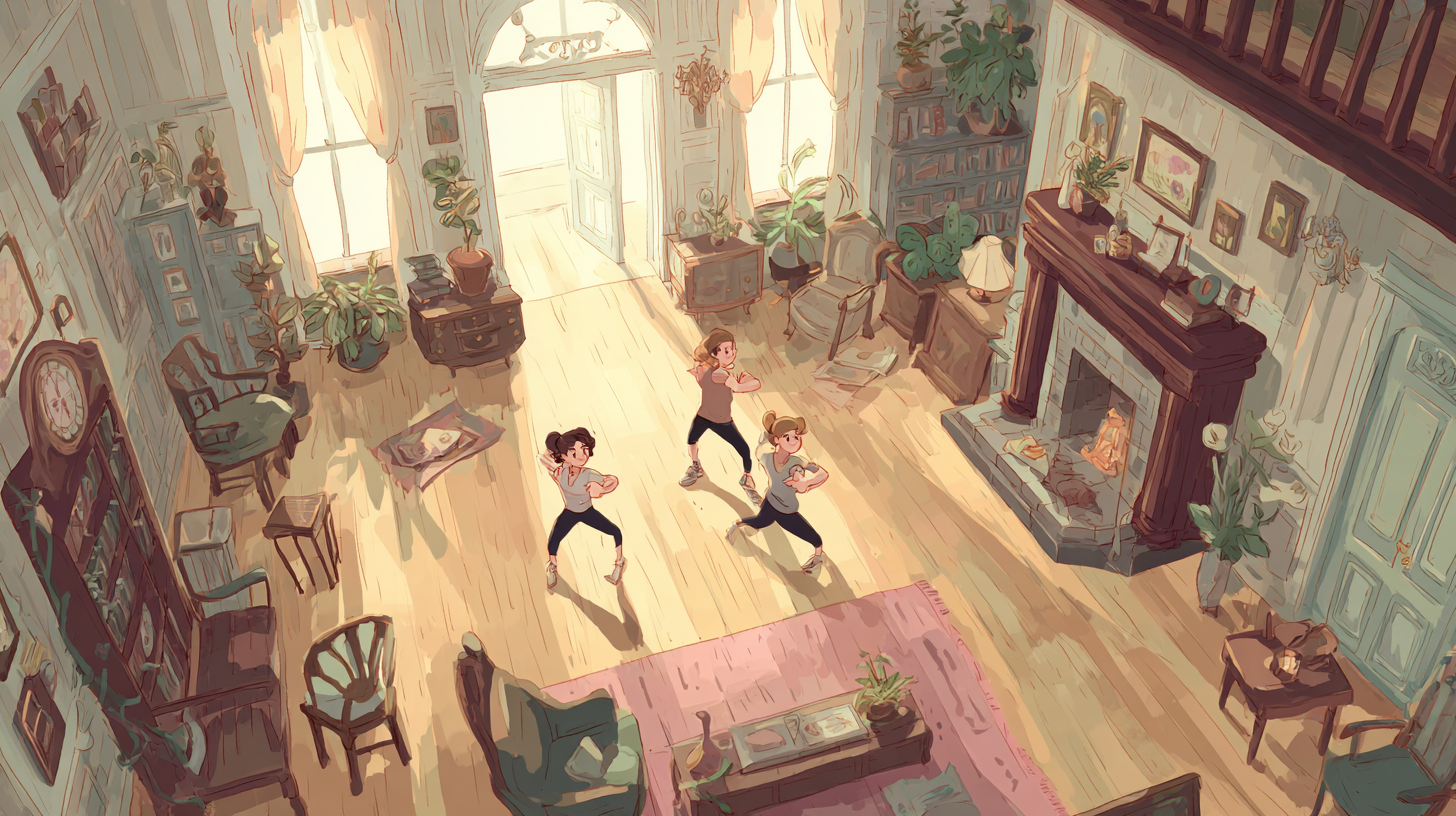
If the open air refuses to oblige, or the weather conducts itself in a manner wholly unbecoming to a pleasant promenade, you and your friends need not abandon your designs upon health and motion. The drawing room, however small, may be transformed into a scene of the liveliest exertion, provided you approach it with a little invention and a cheerful disregard for dignity. You do not require a room full of machines, nor a wardrobe of mysterious garments; you require only your own bodies, a modest patch of floor, and a mutual agreement not to mock one another too severely when someone’s balance deserts them.
The first step is to settle upon a shared intention. Instead of vaguely announcing, “We should work out together sometime,” propose something more definite: “Every Tuesday evening, we shall devote thirty minutes to moving our limbs in some tolerably energetic fashion, and we shall do it together.” Researchers have long observed that such regular, scheduled activity undertaken with companions tends to endure more faithfully than solitary resolutions, for the very simple reason that human beings do not like to disappoint their friends, even when they are quite ready to disappoint themselves (Carron & Spink, 1995). With a fixed day and time, your little circle begins to drift, almost without knowing it, into the pleasant habit of social fitness.
Once you are all assembled—whether in the same room or connected by video—declare your territory. Remove treacherous rugs, slide chairs politely to the side, and establish that no one shall fling their limbs in the direction of a fragile lamp. Then, appoint a modest warm‑up. March or step in place, roll the shoulders, circle the wrists and ankles, and add a few gentle hip hinges and side bends. Five minutes of such preparation will persuade your joints that they are not being ambushed, and will decrease the likelihood of strains and complaints later (ACSM, 2022). Think of it as a courteous introduction between your body and the work you are about to request of it.
From there, you may turn the whole occasion into a game. Choose a simple circuit of body‑weight movements—nothing so alarming as to frighten the timid, but enough to rouse the pulse: squats to remind the legs of their duties, wall push‑ups for the arms and chest, supported lunges using a chair, glute bridges upon a mat or carpet, and a small plank or hands-and-knees “bird dog” for the midsection. Each exercise may last thirty to forty seconds, with twenty seconds in which to breathe, laugh, and complain theatrically. Perform the whole set three or four times. In this form, your “workout” begins to resemble a parlor game in which the forfeit is effort rather than a coin or a ribbon.
To maintain everyone’s interest, appoint a game‑master and change the scheme each week. One evening, your gathering might be conducted in the manner of a deck of cards: hearts for lower‑body movements, diamonds for upper‑body, clubs for core, spades for light cardio, with the number on the card determining the repetitions. Another night you may indulge in the ancient and honorable “dice workout,” where each throw of the die commands a different movement, and the pips decree how long you must perform it. The unpredictability keeps your company engaged; the shared groans when someone rolls an unkind number are, in themselves, a form of bonding.
You may also discover great amusement in turning exercise into a sort of story. One person proposes a “plot”—for instance, an imaginary escape from a dreadful dinner party—and the rest act it out with movement. Tiptoe “stealth steps” to leave the room unseen; sudden squats to duck behind furniture; brisk knee‑high marches to hurry down a corridor; slow lunges around a corner to spy if the coast is clear. This narrative approach may appear ridiculous, but the heart does not much care whether it is elevated by an elegant program or by pure nonsense; it beats faster either way, and your health profits just the same.
For those whose spirits are encouraged by friendly rivalry, introduce small challenges of a length that will not permit despair to set in. Who can hold a wall sit the longest, provided everyone starts at the same time and may not lean upon a convenient table? Who can perform the most controlled chair rises in one minute, standing and sitting with care rather than flinging themselves about? Who can balance on one leg for thirty seconds, then attempt it again with eyes gently closed? Evidence suggests that such brief bursts of effort, repeated regularly, improve both cardiovascular fitness and everyday function, especially when the participants feel socially supported (Buchan et al., 2015). The presence of a friend cheering—or laughing—beside you can make ten seconds feel quite illustrious.
Not every person will relish competition; some are better enticed by cooperation. For them, pair or group challenges are more agreeable. You might perform “mirror moves,” where one friend leads and the other must imitate every motion as if reflected in a glass, changing leaders each song. Or try a “follow the leader” routine around the room: side steps, tiny squats, little twists of the waist, arms sweeping overhead, all in procession like a somewhat confused but determined parade. In such activities, the object is not to win, but to remain connected, to watch one another, to feel that you are doing something jointly rather than merely in parallel.
If one of your number has an agreeable talent for choreography—or at least a sturdy sense of rhythm—you may construct a modest dance. Choose a single song, agree upon four to six simple moves, and practice them until everyone can proceed without tripping over their own feet. A little grapevine step, a turn, a clap above the head, a gentle jump, a sway from side to side: these need not be complicated to leave you rather rosy‑cheeked by the end. Dance has long been linked with improved mood and reduced stress, in part because it blends activity with music and social connection (Murrock & Higgins, 2009). Moreover, it is nearly impossible to take oneself too seriously when one has just executed three slightly crooked spins in a sitting room.
Those who are separated by distance need not despair; the age of screens has, at least in this one respect, performed us a service. Establish a video call, prop your devices at a sensible angle, and proceed as if you shared the same carpet. Decide together upon a short routine, press play on the same piece of music, and begin. One week, you might all attempt the same online class and later exchange your opinions on the instructor’s enthusiasm. Another, you may appoint a different friend to select the movements and “teach” them to the rest. In this way, even a long‑distance acquaintance can feel as near as the chair beside you, and your little practice of social fitness continues unbroken.
Since no endeavor can be sustained indefinitely on effort alone, establish delights as well as demands. After your shared exertions, sit—politely, if breathlessly—with water or tea, and reflect. Invite each person to name one thing they found easier than expected, and one thing that nearly defeated them. Keep a notebook or a simple shared document where you record these impressions, along with what you did and how long it lasted. Over time, you will discover that the wall sit which once seemed intolerable becomes merely inconvenient, and that the plank which reduced everyone to sighs now passes with much less drama. Observing such progress together strengthens resolve, for it is not only your own improvement you witness, but that of your friends as well.
If your group enjoys a little ceremony, you might attach small tokens to your accomplishments: not in the form of grand prizes, but in lighthearted acknowledgements. A paper “crown” for the person who chose the most enjoyable game that week. A hand‑written “medal” for the one who encouraged others most generously. Perhaps a rotating title—“Keeper of the Playlist,” “Guardian of the Timer,” “High Steward of Stretching”—to honor the otherwise humble work of organizing. These trifling honours cost nothing but imagination, yet they lend your gatherings a charming sense of occasion, and make the habit more likely to persist.
In all of this, the object is not to fashion yourselves into champions, but to weave movement into the fabric of your friendship, so that an evening at home may serve both your hearts and your bodies. When the sky outside is uncooperative, your parlor, living room, or even a narrow hallway can be enough. With a few well‑chosen games, a modest variety of exercises, and the gentle insistence of companionship, your at‑home gatherings cease to be wholly sedentary affairs and become, instead, conspiracies in favor of shared health. What begins as a series of little challenges—half an hour here, a song or two there—may, before long, feel as natural as conversation, and quite as necessary.
Social sports and recreational leagues
When you and your friends are ready to move beyond the drawing room and seek a little more structure—and perhaps a dash of spectacle—it is time to consider the world of social sports and recreational leagues. These are simply organized excuses to run, throw, swing, or scramble in the company of others, with the added benefit that someone else worries about the schedule, the referees, and the equipment. Your chief responsibilities become punctual arrival, cheerful effort, and the occasional victorious shout. In this way, social fitness gains both rhythm and accountability, which are powerful allies to anyone who wishes to protect their health.
Do not imagine, as some do, that leagues are reserved only for the swift of foot or the powerfully coordinated. Many communities now offer “just for fun” versions of nearly every game. You will find beginner volleyball, co‑ed softball, low‑key soccer, pickleball, ultimate frisbee, and even leagues devoted to games whose chief purpose seems to be amusement rather than athletic glory—kickball, dodgeball, and so forth. These are designed with the understanding that half the players are a little rusty, that knees sometimes object to sudden heroics, and that most people simply desire a pleasant way to move and mingle after a day of more sedentary labors. Researchers have observed that such recreational sports, even at a modest intensity, improve cardiovascular fitness, muscular strength, and mood when pursued regularly (Oja et al., 2015).
If the very word “league” sounds too formidable, you may begin more gently by assembling a small band of friends for a weekly game in the park. A worn‑in soccer ball, a frisbee, or even a pair of old tennis rackets is sufficient to kindle a standing appointment with motion. Choose one evening, agree that you will meet whether the numbers are three or ten, and simply play. Over time, as your little company becomes more consistent and your courage grows, you may take the next step and register as an official team in a local recreational league. By then, you will already have the beginnings of shared strategy, inside jokes, and the comfortable awareness that no one is likely to be shocked by your particular level of skill.
When you do join a league, look carefully at how it describes itself. Phrases such as “beginner,” “social,” “developmental,” or “no experience needed” are friendly signs. Leagues that emphasize “competitive,” “advanced,” or “tournament play” may be better visited later, should your zeal draw you onward. Many community centers and city recreation departments now recognize that ordinary folk want games which are welcoming rather than intimidating, and they structure their offerings accordingly. There is little merit in signing up for a league so fierce that you dread every match; the happiest path is one where you finish tired, smiling, and already discussing what you will do differently next week.
One of the quiet strengths of team sports is that they weave different kinds of activity together without your having to think much about it. In a single friendly soccer game, for instance, you jog, sprint, change direction, balance, and occasionally attempt a heroic kick that surprises even you. In volleyball, you crouch, jump, rotate, and reach. In softball, you alternate brief bursts of effort with stretches of watchful stillness. These mixed patterns of movement improve agility, coordination, and endurance in a way that mirrors the varied demands of daily life more closely than some very rigid exercise routines (Caspersen, Powell, & Christenson, 1985). What feels like a series of small chases after a ball is, in fact, quiet training for stairs, grocery bags, and all the unexpected dashes of ordinary existence.
There is another blessing in these games: you are not responsible for your own motivation alone. The schedule is set externally; the team has need of you; the league expects your attendance. When one’s own will is faint, the knowledge that seven or eight others are lacing their shoes in expectation of your presence exerts a gentle but persuasive pressure. Numerous studies have shown that such social commitment increases adherence to health‑promoting behaviors, including regular exercise (Burke, Carron, & Shapcott, 2008). You may skip a solo jog with little inner debate; you are far less likely to abandon your friends before a match.
If your circle includes persons of differing energy and confidence, you can assign roles that honor each one’s present capacity. The bold may run more, chase loose balls, and volunteer for striker or server. Those who are regaining their strength after illness or long inactivity may prefer positions that ask for shorter bursts of movement and more strategic thinking—a defender in soccer who organizes the back line, a second‑base player who manages shorter throws, a volleyball setter who directs the play. And there is always a need for someone to keep score, watch for substitutions, or serve as team chronicler, recording each week’s chief triumphs and comic misfortunes. In this way, everyone shares in the enterprise, even if not all are yet able to participate at the same intensity.
To keep your hearts as engaged as your bodies, it is wise to wrap small rituals around each game. Arrive a little early so you may warm up together: a light jog around the field, a few arm circles, some playful passes of the ball, and perhaps a brief stretch for the muscles most likely to be called into service. This not only protects you from needless strains (ACSM, 2022), but also serves as a social “on‑ramp”—a gentle slide from the concerns of the day into the shared focus of the game. After the match, whether in victory or defeat, linger long enough to cool down, exchange your observations, and perhaps share a simple refreshment. These modest surrounding habits deepen the sense that your league night is not just about the scoreboard, but about companionship and shared care for your bodies.
For some, the very idea of keeping score awakens old anxieties: memories of schoolyard selections where some children were always chosen last, or of games where mistakes were rewarded with mockery rather than mercy. If that shadow still lingers in any of your company, speak of it plainly and decide together how you will conduct yourselves. Make it your agreed practice that no one is scolded for a missed catch or a wild throw; instead, you call out the effort—“Good try,” “Nice hustle,” “We’ll get the next one.” Research suggests that this sort of positive, task‑focused feedback, rather than harsh evaluation, improves enjoyment and willingness to continue in physical activity (Ntoumanis & Biddle, 1999). Your team culture can heal some of what earlier, less gracious experiences may have wounded.
Not every recreational league requires a large field or complicated equipment. Many community centers run weekly badminton, pickleball, or table tennis evenings, where the court is small, the movements brisk but contained, and the barrier to entry very low. These can be particularly suitable if your group includes older adults, or those with joints that protest at hard pounding on pavement. Such games train coordination, reaction time, and balance in ways that are both gentle and engaging (López‑Valenciano et al., 2018). You may even set your own small, shared goals: “By the end of this season, we shall all be able to serve without sending the ball into the ceiling,” or, “Let us see whether we can manage ten consecutive returns without sending anyone diving under the next table.”
If the formal league schedule does not always suit, you can borrow its spirit and construct a miniature “season” of your own. Choose a few favorite games—perhaps three weeks of frisbee, three of park volleyball with a portable net, and three of simple relay races and field games. Record the dates, assign friendly team names, and keep a running tally not merely of wins and losses, but of little milestones: “First successful overhand serve,” “Longest rally,” “Most heroic slide in the grass.” At the close of your season, hold a modest awards gathering. Offer hand‑made certificates for such dignified honors as “Most Encouraging Voice,” “Steadiest Defender,” or “Master of Post‑Game Snacks.” These ceremonies may be lighthearted, but they strengthen the threads of commitment that hold your fellowship of movement together.
In time, you may notice that the effect of these games reaches beyond the field or court. You find yourselves standing a little straighter, climbing stairs with less complaint, sleeping more soundly on the nights when you have played. Your conversations widen to include talk of strategy, of small improvements, of how it felt to chase that last ball. This is the quiet work of social fitness: it takes what might have been an isolated struggle to “get in shape” and turns it into a shared adventure. The rules and lines and whistles of the league provide structure; your friendships provide warmth; and together they form a habit of activity that carries blessings to body, mind, and spirit alike.
Active hangouts for rainy days
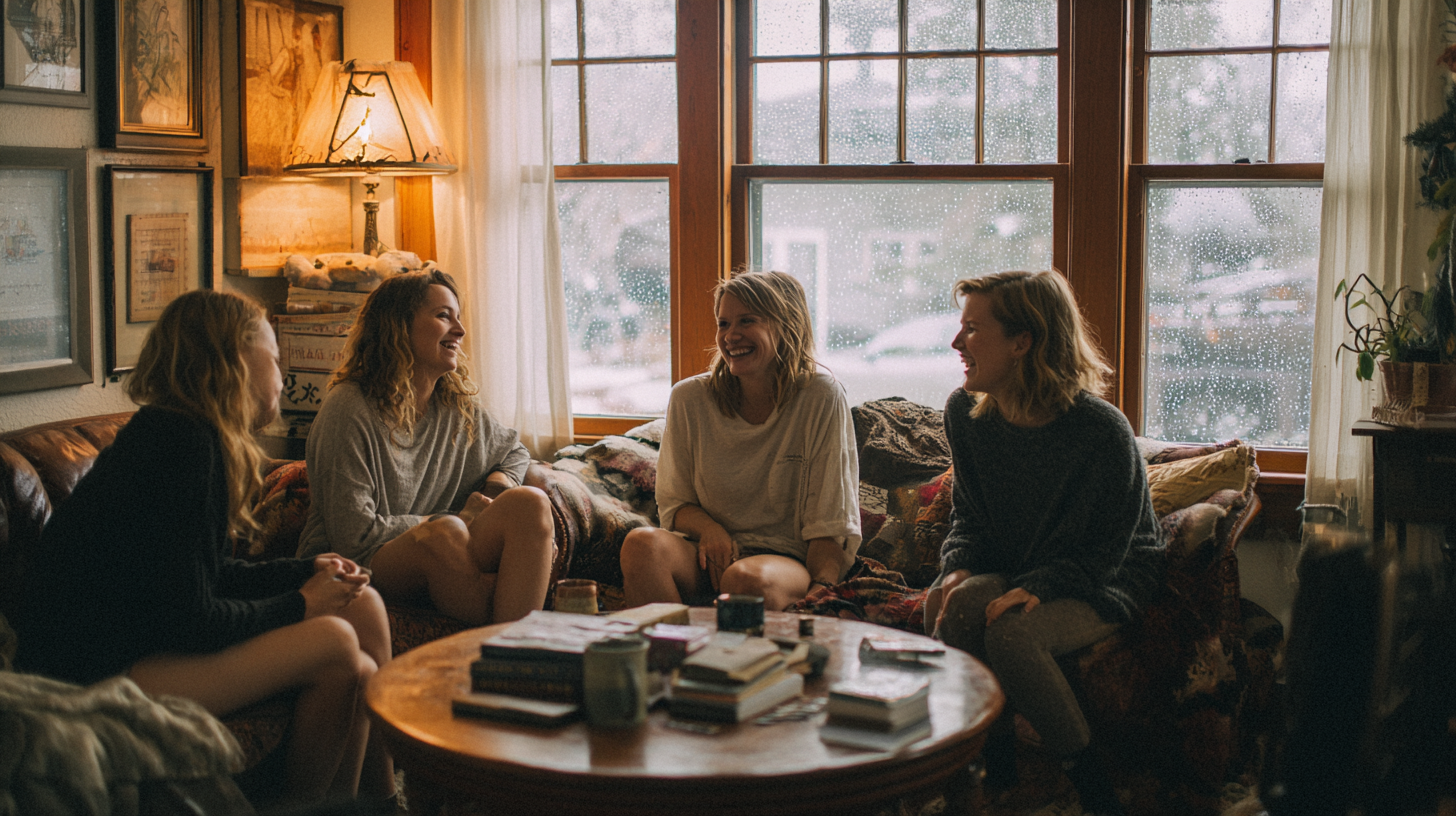
When the clouds gather themselves with unnecessary zeal and the rain composes a long‑winded sermon upon your roof, you and your friends are not thereby excused from activity. You are merely invited to be more inventive. There is a certain pleasure in declaring, “We shall not be ruled by the weather,” and contriving an indoor gathering that serves both your delight and your health. If the fields are muddied and the courts are damp, very well—let the coffee shop, the corridor, the church hall, or the living room become your little gymnasium.
You might begin with what most would call an ordinary visit. “Come over this afternoon; we will have tea and talk.” But before anyone has time to sink too deeply into the furniture, you suggest a brief “movement intermission.” Ten minutes is sufficient. Set a modest timer; rise together; and agree that, until the bell sounds, everyone will be on their feet. Walk slow circles through the room, swing the arms gently, lift the heels, roll the shoulders, and pause by a sturdy chair for a few partial squats. The aim is not heroics but circulation—an indoor version of a stroll around the block. Short bouts like these, scattered through a long afternoon, have been shown to ease the stiffness that comes from much sitting and to nudge blood sugar and blood pressure toward better levels (Dempsey et al., 2018). You resume your seats warmer, more alert, and perhaps a trifle amused at yourselves.
Where more space is available—a fellowship hall, a wide corridor at work, or the lobby of an accommodating apartment building—you may plan your rainy‑day meetings with more intention. Clear a little path along one wall and treat it as your walking lane. During a shared study session, knitting circle, or planning meeting, adopt a simple rule: every thirty minutes, all who are able shall walk that lane for three to five minutes together. No one is compelled to stride with great speed; the mere act of rising, moving, and conversing as you go is enough. You can even appoint a “bell ringer” whose duty it is to watch the clock and announce these brief processions. What might have been hours of uninterrupted sitting becomes, almost without effort, a pattern of social fitness, where the talk continues but the legs do not grow quite so dull.
You need not abandon games simply because the grass is wet. Many a field pastime has an indoor cousin that is kinder to floors and furnishings. In a cleared room, set up a line of safe, low‑risk stations: a gentle balance challenge near the wall, a corner for light marching in place, a spot for simple wall push‑ups, and another for stepping up and down upon the lowest stair or a sturdy platform. Rotate through every minute or two, like a little indoor circuit. The pace can remain conversational; the laughter may be as loud as you please. Such “station games” resemble the circuits used in more formal exercise settings, but here they appear as a kind of rainy‑day fair, where each booth offers a different way to move.
If your friends are fond of puzzles and riddles, you may blend mental exertion with physical. Prepare a stack of questions—trivia, charades prompts, Bible verses to finish, or even common proverbs with key words missing. When the rain confines you to one room, declare that each correct answer permits the team to stay seated, while each uncertain guess triggers a short burst of motion for everyone: ten gentle marches in place, five sit‑to‑stands from a chair, a slow stretch for the arms, or a brief “statue balance” on one foot. In this way, mistakes become blessings in disguise, for they call you to move instead of simply to sigh. Research suggests that such light, frequent motions interwoven with mental tasks sustain attention and reduce fatigue better than long unbroken sitting (Benzo et al., 2016).
Board‑game evenings, too, can be redeemed from utter sedentariness with a few kindly modifications. Agree upon house rules before the first die is cast: every new round begins with thirty seconds of standing or gentle stepping; every time a player passes “start” (or its equivalent), the entire company rolls the shoulders and neck; every time someone wins a point or a property, all must perform a simple celebratory stretch. You are not trying to turn the parlor into a boot camp; you are simply refusing to let hours go by without any signal to the body that it is still in use. Over time, such customs become part of the charm of your gatherings, like the particular way you shuffle the cards or the special mug someone always uses.
If you have access to a modest indoor space with higher ceilings—a church gymnasium, a community center room, or even a long hallway—more boisterous enterprises may be undertaken while the rain scolds the windows. Soft‑toss games with foam balls, relay races that involve walking briskly while balancing a book upon the head, or obstacle courses composed of chairs, cones, and taped lines upon the floor can all be arranged with little trouble. Divide into small teams and keep the objectives friendly: “Which team can complete the course with the most graceful posture?” or, “Who can carry a beanbag on a spoon from one end to the other without dropping it?” These amusements train balance, coordination, and reaction in a manner that feels more like play than like exercise (Barnett et al., 2013).
Those who enjoy music may find that the dreariest afternoon is no match for a little indoor rhythm. You need not proclaim, “We shall now conduct a dance class,” which may alarm the shy. Instead, put on a song of moderate length and invite everyone to stand and sway, tap a foot, or improvise such steps as their joints will allow. One friend may know a simple line dance or folk pattern; another may improvise hand motions; a third may merely clap the beat. Ten minutes of modest dancing raises the heart and brightens the mind more gently than many suppose (Murrock & Higgins, 2009). When the music ends, you may drop back into chairs with the agreeable sensation of having thrown off, if only for a moment, the heaviness of the gray sky.
Rainy‑day outings can also be arranged in public indoor spaces, if home and hall are not easily available. A museum, large bookstore, or shopping center can provide shelter and a surprising number of steps. Do not simply drift; give your wandering a bit of structure. Set a shared step or time goal: “We shall walk and talk for forty‑five minutes before we sit,” or, “Let us see how many exhibits we can visit without standing in one place more than five minutes.” Walk at a pace that permits conversation but still demands a little effort. Studies of everyday walking in such environments show that even light to moderate pace, accumulated for thirty minutes or more, yields measurable benefits for cardiovascular health (Hamer & Chida, 2008). You are not merely surviving the weather; you are using it as an excuse to explore.
For those who must meet in smaller quarters—a narrow apartment, a shared office, or a modest study—the solution lies in short, frequent, and simple movements that require no great sweeping of the limbs. Agree that, during your gathering, everyone will occasionally perform “micro‑motions”: ankle circles under the table, gentle shoulder squeezes together and then relaxed, slow neck turns, and seated marches with the feet lifting just enough to wake the hips. Every twenty or thirty minutes, someone calls out a new motion, and all quietly comply while the conversation continues. These slight efforts may seem trivial, yet they combat some of the aches and stiffness that accompany prolonged sitting and remind each person that their body, not merely their mind, is present in the room (de Rezende et al., 2014).
There is also value in planning rainy‑day “service sessions” that double as exercise. Choose a sheltered space—perhaps a church building, a community pantry, or an elderly neighbor’s home—and offer an afternoon of practical help. Sorting donations, carrying light boxes, sweeping floors, setting up chairs, or reorganizing shelves all demand a variety of movements: bending, lifting within reason, reaching, and walking. When such tasks are shared among friends and punctuated with conversation, they become a form of social fitness that blesses both giver and receiver. The body is strengthened, the heart warmed by service, and the gloomy weather outside loses much of its power to dampen the spirit (Pereira & Borgo, 2014).
Because rainy days often tempt us toward heavy foods and long periods of idleness, it can be profitable to link your indoor gatherings with gentle attention to nourishment as well. After your games, circuits, or walks through museum halls, share a simple, wholesome refreshment—fruit, nuts, whole‑grain bread, or a warm vegetable soup. Evidence continues to accumulate that movement and modest dietary care together support mood and long‑term health more strongly than either alone (Warburton & Bredin, 2017). When friends associate a drizzly afternoon not with lethargy and indulgence, but with light motion and nourishing fare, you have quietly shifted the whole character of such days.
To keep these rainy‑day customs from dissolving into good intentions, give them names and dates, just as you would any other appointment. “Stormy‑Day Step Club,” “Indoor Circuit Society,” or “Fellowship of the Hallway Walk” may sound whimsical, but a named gathering feels more real than a vague hope. Maintain a simple record—perhaps a shared note—of what you did: how many laps of the corridor, which stations you tried, which song induced the most enthusiastic swaying. Over weeks and months, you will see that what began as a desperate response to poor weather has become an expected part of your friendship. The rain will still fall as it pleases, but you and your companions will have learned how to answer it: not by surrender, but by a quiet, cheerful conspiracy to move, to talk, and to guard your health together, even when the skies are unkind.
Tech-powered ways to stay moving together
Devices that so often tempt us toward idleness can, with a small shift in intention, become surprising allies in social fitness. The very screens that swallow entire evenings of scrolling can just as easily connect you and your friends in shared activity, whether you live on the same street or are scattered across continents. The question is no longer, “How much time do I spend on my phone?” but rather, “What kind of movement, curiosity, and connection does this screen invite me into?” Once you begin to ask that, your technology stops being merely a distraction and starts to function more like a set of tools in a workshop—a means to build habits, not merely to pass time.
A simple starting point is the humble step counter or activity‑tracking app. Most smartphones now track your walking without any special equipment; fitness bands and watches add a bit more detail if you enjoy numbers. Instead of treating these as private scores, turn them into a friendly group project. Create a shared chat or group where, once a day or once a week, everyone posts a screenshot of their steps or minutes moved. You might agree on a collective goal—“Can we, together, reach 300,000 steps this week?”—and celebrate when you cross it. Studies on wearables suggest that pairing self‑tracking with even light social accountability can significantly increase daily movement (Brickwood et al., 2019). It is not the gadget itself that changes you so much as the gentle awareness that others are walking with you, even when you cannot see them.
If your friends enjoy a bit of structure, explore the many fitness apps that offer shared programs or group challenges. Some allow you to join the same four‑week strength plan or yoga series and track your progress side by side. You might agree to complete three short sessions per week, checking in after each one with a quick note—“Day 2 done, that last set of lunges nearly did me in”—so that everyone sees both the effort and the honesty. Others let you start specific challenges: a plank challenge where the time increases slightly each day, or a “move for 20 minutes” streak that counts any kind of activity. The technology handles the reminders and tracking; you and your friends supply the encouragement, jokes, and occasional commiseration when someone’s muscles are loudly registering their opinions.
For those separated by distance, live video can transform lonely workouts into shared rituals. Schedule a weekly “movement call” the way you would a Bible study, book club, or family catch‑up. One week, you might stream the same free online workout and press “play” at the same moment, agreeing that you will all keep cameras on, no matter how awkward you feel at first. Another week, you can rotate “hosts”: each friend leads a simple routine of stretching, light strength work, or dancing to a favorite song. Research on group exercise consistently finds that perceived social support increases enjoyment and adherence (Burke, Carron, & Shapcott, 2008). A grainy video of a friend attempting a balance pose beside their kitchen table may be far more motivating than the most polished professional fitness video watched alone.
Digital maps and route‑sharing apps offer another way to use technology for motion rather than mere navigation. Many let you log walks, runs, or bike rides and then share your route and notes with others. You and a friend in another town might both commit to a “Saturday Loop,” posting your respective paths afterward: their riverside walk, your circuit around the lake or through quiet streets. Over time, you build a little atlas of your lives in motion, dotted with comments like, “This hill nearly finished me,” or, “Saw three ducks and a very insistent squirrel here.” These small stories stitched to your maps remind you that health is not an abstract number but something lived, step by step, in real places with their own weather, smells, and sounds.
Gamified fitness platforms—those that turn exercise into a sort of story or competition—can be particularly powerful when shared with friends. Some apps award virtual badges for streaks or milestones, others pit you against your past self or place you and your team on a virtual “leaderboard” for minutes moved. Used unwisely, such features can become yet another source of pressure or comparison; used gently, they add color and playfulness. Decide together how you will frame them: perhaps you celebrate any new badge in the group chat, and treat the leaderboard, not as a ranking of worth, but as a reminder that everyone is contributing in their own way. You might even invent your own informal awards—“Most Improved,” “Comeback of the Week,” or “Best Effort Despite a Terrible Night’s Sleep”—to keep the emphasis on persistence rather than perfection.
Virtual reality and motion‑sensing games, once thought of purely as toys, can stealthily become engines of genuine exertion. Systems that track your gestures in three dimensions can turn a modest living room into a boxing ring, dance floor, or adventure landscape where you must duck, reach, and step to succeed. In multiplayer modes, you and your friends can share the same virtual space even when you are far apart, collaborating or competing in ways that demand real physical response. Early research suggests that such “exergames” can raise heart rate and energy expenditure to levels comparable with light‑to‑moderate exercise, particularly when the play is social (Staiano & Calvert, 2011). Think of how different it feels to “exercise” for 30 minutes versus “defeat the lava floor together” for the same length of time; your pulse cares little for the label, but your mind certainly does.
Even the simplest of communication tools—texting, group chats, shared calendars—can be repurposed as quiet engines of motion. You might form a small “movement thread” with two or three close friends devoted solely to short, specific prompts: “Standing up for a five‑minute stretch break now—anyone else?” or, “I’m heading out for a 20‑minute walk; reply ‘WALK’ if you can join from where you are.” These messages function like little bells throughout the day, calling you back to your body for a moment amid tasks and worries. A shared calendar, meanwhile, can host recurring reminders not just for scheduled workouts, but for “active social hours”: a walking phone call once a week, a Sunday afternoon park meet‑up, or a monthly “try a new class together” outing. Over time, the calendar ceases to be a mere record of obligations and becomes a map of your shared care for one another’s health.
As you explore tech‑powered ways to move, questions of boundaries and focus naturally arise. It is very easy for a “quick check” of your fitness app to dissolve into twenty minutes of unrelated scrolling, or for constant notifications to fracture your attention. One useful practice is to designate specific windows for tech‑assisted fitness and to defend the rest of your time from unnecessary alerts. For example, you might silence non‑urgent notifications during a live workout or group walk, allowing only the timer, music, or step tracker to speak to you. Ask yourselves: “Is this app helping us notice our bodies more, or less? Does this notification invite us into motion, or merely into more screen‑staring?” Your answers to such questions will shape whether technology becomes a servant of your social fitness or a subtle master.
Accessibility is another dimension worth examining honestly. Not everyone in your circle will have the same devices, data plans, or comfort with technology. A friend with an older phone or limited internet might feel quietly excluded if all your active plans rely on streaming or costly subscriptions. Make it your shared habit to choose tools that are free or low‑cost where possible, and to keep an eye out for “lighter” options: audio‑only calls instead of video, downloadable videos for offline use, simple step counts instead of intricate metrics. You might even set a group rule that any new tech you introduce must have a no‑cost version and must be explainable in a few straightforward sentences. The aim is not to showcase gadgets, but to widen the circle of who can join you in motion.
If you are curious about deeper patterns, collaborative tracking can become a kind of ongoing experiment in your lives. Some apps allow you to tag your mood, sleep, or energy level alongside your activities. Over weeks, you and your friends can compare notes: “We all seem to sleep better on days with even a 15‑minute walk,” or, “Short stretching sessions before bed line up with fewer stiff mornings.” Without turning yourselves into research subjects, you are nonetheless gathering data about how some of God’s simple gifts—movement, companionship, rest—intertwine in your own bodies. This is where technology, properly humbled, can serve wonder: it makes visible what you might otherwise miss about the quiet ways activity shapes your days and your health.
More broadly, tech‑powered movement invites a kind of shared reflection. After a month of step challenges, video calls, or exergames, pause to ask one another: “Which tools truly help us move and connect? Which ones drain us or leave us more anxious than before?” You might find that a simple group text and a free walking app serve you far better than an elaborate subscription program, or that five minutes of daily stretch prompts in your chat are more sustainable than ambitious hour‑long virtual classes. The point is not to adopt every innovation, but to learn, together, how to discern the difference between tools that deepen your attention to your bodies and relationships, and those that quietly erode it. In that ongoing discernment, technology becomes less of a force that “just happens” to you and more of a set of choices you make deliberately in service of life, friendship, and long‑term health.
As you experiment, allow yourself to remain a little curious, even skeptical. Why does a notification from a friend feel more compelling than one from an app? What kinds of digital “rewards” actually encourage you, and which ones feel hollow? How might you redesign your own environment—folders, home screen, default apps—so that the path of least resistance leads toward motion and connection rather than passivity? These questions are not simply technical; they are, in a way, spiritual. They ask who, or what, is forming your daily habits and to what end. Let your use of technology for social fitness become one more place where you and your friends practice wisdom together, always watching for the difference between what merely entertains and what quietly builds strength, patience, and joy.
- How can I start using technology to be more active with friends if we’re all busy?
- Begin with the smallest, most realistic commitment you can all keep—such as a 10-minute shared walk challenge each weekday or one 20-minute video call workout on Sundays. Use a simple group chat and a free step-tracking or timer app, and focus on consistency rather than intensity.
- Do we need fitness trackers or smartwatches to do tech-powered workouts together?
- No. While wearables can be helpful, most modern smartphones track basic steps and time, and that is enough for many group challenges. Start with free or built-in tools, and only add devices if they genuinely make things easier or more enjoyable for everyone.
- How do we keep tech-based fitness from turning into unhealthy competition?
- Set ground rules that emphasize effort, consistency, and encouragement instead of rankings and “wins.” Celebrate personal progress (“You walked twice this week!”) and collective milestones, and if leaderboards become discouraging, hide or ignore them in favor of cooperative goals.
- What if some friends don’t have reliable internet or the latest devices?
- Choose tools that work on basic phones and with low data use, such as text messages, audio calls, and offline-friendly apps. Design challenges around simple metrics like time spent walking rather than high-tech features, so no one is excluded by their hardware or connection speed.
- Are virtual workouts and exergames really good for my health, or just entertainment?
- Many virtual workouts and movement-based games raise your heart rate, build strength, and improve balance when used regularly, especially if you’re moving your whole body. The key is to treat them as real exercise—aim for at least 20–30 minutes of genuine effort—and to choose options that make you breathe a bit harder while still allowing you to enjoy yourself.
- How can we stay motivated to keep using these apps and routines over time?
- Link your tech habits to real relationships: regular check-ins, shared goals, and scheduled “movement dates” with friends. Periodically change the challenge, celebrate small wins, and have honest conversations about what is and isn’t working so your routines stay fresh and meaningful.
- What should we watch out for when using technology to support our fitness?
- Be cautious about over-tracking, constant notifications, and comparisons that leave you feeling anxious or inadequate. If a tool makes you more aware of your body in a kind, constructive way, keep it; if it drains your attention or dampens your joy, consider turning it off, changing the settings, or replacing it with something simpler.
Beside our live streamed church services, all are welcome to attend our church in person each Saturday beginning 10:00 AM Central Time by going to 2425 Owens Rd., Ashland, AL 36251. There is no cost and any donations are strictly voluntary.
For questions, call +2563547124.