Come join Ashland Sabbath Chapel Ministries each Saturday for live streamed church services. Bible Study begins at 10:00 AM Central Time and Sermon at 11:00 AM. Visit Our YouTube channel and watch from home!
You know how people joke about “losing their edge” as they get older? That edge is mostly about how flexible and responsive the brain stays over time, and that’s where lifelong learning quietly does its best work. When you keep feeding your mind new material—whether it’s a language app on the train, a coding tutorial at night, or even learning how to play jazz piano—you’re essentially giving your brain a regular workout. Just like muscles adapt and strengthen under resistance, your brain rewires itself in response to new challenges, building connections that help you think faster, remember better, and adapt more smoothly when life throws you a curveball.
Under the hood, your brain is constantly pruning and rewiring neural pathways. When you go on “autopilot” and stick to the same routines year after year, those pathways can get a little too set in their ways. Continuous education shakes that up. Learning a new concept in data analysis, for example, forces your working memory and attention systems to coordinate in a new way. Wrestling with a complex novel or a dense non-fiction book pushes your comprehension and critical reasoning. Over time, this kind of repeated challenge helps maintain what psychologists call cognitive flexibility—the ability to switch between ideas, perspectives, or tasks without getting mentally stuck.
Think about the contrast between following a recipe you’ve cooked a hundred times versus trying something completely unfamiliar. The familiar recipe is comfortable; you can almost do it with your eyes closed. The new one? You’re reading carefully, converting units, adjusting timing, maybe rescuing a sauce that’s going sideways. That extra mental tension is where the growth happens. In a similar way, each new subject you study or skill you tackle introduces just enough complexity to keep your brain from slipping into mechanical repetition. Over the years, those small stretches compound into a noticeable difference in how quickly you process information and how confidently you tackle new problems.
There’s also a strong memory component to all this. People often assume memory just “fades” with age as if it were a battery running down. In reality, the brain stays surprisingly responsive, especially when it’s being used in meaningful, varied ways. When you’re learning something new, you’re not just cramming facts; you’re organizing them, connecting them to what you already know, and revisiting them. That’s basically the perfect recipe for building resilient long-term memories. For instance, if you start studying photography, you’re remembering technical settings, visual patterns, and feedback from each shot you take. Each time you recall and apply that knowledge, you strengthen those memory traces instead of letting them drift away.
This ongoing engagement with new material has a ripple effect on everyday thinking. You may notice it when you read the news and can instantly compare arguments, pick up on weak logic, or connect a current event to something you studied last year. That kind of critical thinking doesn’t appear out of nowhere; it’s trained by years of treating your brain as something more than a storage device. When you regularly confront ideas that challenge your assumptions—maybe in a history course, a philosophy podcast, or a statistics workshop—you become better at spotting bias, weighing evidence, and asking sharper questions. The more you practice that, the less likely you are to be overwhelmed by information or swayed by the loudest voice in the room.
Another subtle benefit of consistent learning is how it supports attention. We live in a world that constantly slices our focus into smaller and smaller pieces, but a real learning task demands sustained concentration. Following a complex lecture, debugging a stubborn piece of code, or working through a tricky set of math problems all require you to hold multiple ideas in mind, ignore distractions, and stay with the problem long enough to get somewhere useful. Over time, this kind of practice strengthens your ability to direct and maintain focus, which spills over into everything from conversations with friends to planning your finances.
There’s also a strong link between ongoing education and mental health and general wellbeing. When you’re actively learning, you’re not just distracting yourself—you’re giving your mind structure, purpose, and a sense of progression. Mastering a new topic or finally understanding a concept that used to confuse you gives a real, measurable boost to mood and self-esteem. That small moment where you think, “Oh, I get it now,” is your brain tagging the experience as rewarding. Over time, those little wins form a feedback loop: you feel capable, so you take on new challenges; you handle them, so you feel even more capable. That’s a powerful antidote to the stagnation and low-level anxiety that can creep in when life feels like the same day on repeat.
It helps that learning introduces novelty, and novelty is one of the brain’s favorite things. New subjects, tools, or perspectives interrupt routine thought patterns and keep you from mentally calcifying. Even something like switching from reading short articles to tackling a structured online course changes the texture of your thinking. You start planning how to allocate time, deciding which materials to prioritize, and evaluating your own progress. Those are metacognitive skills—thinking about your own thinking—that make you more effective at handling anything mentally demanding, not just the course itself.
One of the most underrated cognitive advantages, though, is resilience under stress. When you get used to approaching unfamiliar material and not knowing the answer right away, you become more comfortable in that in-between state where things are unclear. You learn to experiment, to search for patterns, to ask for help when needed. So when you later face a real-life problem—a sudden change at work, a complicated medical decision, or unexpected financial issues—you’re not paralyzed by uncertainty. Your brain has rehearsed the process of breaking a vague problem into smaller, manageable pieces and testing different solutions. That habit of mind doesn’t remove stress, but it keeps stress from shutting you down intellectually.
All of this sets up a foundation that makes the next layers of your life easier to build. Once you’ve trained your brain to stay curious, to tolerate uncertainty, and to process new information quickly, you’re better positioned to adapt when careers shift, technologies change, or personal priorities evolve. The same cognitive muscles that help you decode a research article or pick up a new software tool are the ones you’ll lean on when you’re looking at your long-term options and trying to decide what comes next. That’s where continuous education starts bleeding into your working life—not as an abstract ideal, but as a practical asset that shapes how you handle opportunities and changes that show up on your horizon.
Career growth through ongoing skill development

When you and I talk about work, we usually talk about the job you have right now—your boss, your schedule, the project that’s running late. But beneath all that, there’s something more important quietly deciding where your career can and cannot go: the skills you’re steadily building, or quietly letting fade. Ongoing skill development is the way you keep the doors of opportunity from rusting shut. In a world where job titles and tools change faster than anyone expected, lifelong learning isn’t a nice extra; it’s the main engine that keeps your work life from drifting off course.
Think about how many roles barely existed a decade or two ago: data analyst, UX designer, cloud architect, social media strategist. Folks who moved into those fields didn’t get there by accident. Most of them stepped out of their comfort zone, picked up new tools and ways of thinking, and slowly stitched together a skill set that employers suddenly found incredibly valuable. The people who stayed glued to what they already knew often found their positions squeezed, automated, or outsourced. The difference between those two paths is usually not raw intelligence; it’s whether a person made a habit of adding new capabilities as the landscape shifted.
There’s a simple economic truth at work: skills that are in demand give you leverage. When you bring something rare or increasingly necessary to the table—say, knowing how to analyze customer data, or being able to manage a distributed team across time zones—you’re not just another name on a list. You become someone whose presence changes outcomes. Employers notice that. Clients notice that. And before long, it shows up in very practical ways: raises, promotions, stronger references, and more freedom to choose what kind of work you’ll say “yes” or “no” to.
Now, it’s easy to imagine “ongoing skill development” as a stack of certificates and framed diplomas, but it doesn’t have to look that formal. Sure, a targeted course in project management or Python can be incredibly useful, but so can less obvious investments. Learning how to write clearer emails that actually get decisions made, for instance, can shift how people respond to you in an organization. Picking up conflict-resolution techniques can turn you into the person everyone wants in the room when things get tense. Those aren’t flashy skills, but they quietly raise your value wherever you work.
Take a simple example. Suppose you work in customer service and you decide to spend an hour or two each week learning about basic data visualization. You start tracking the most common complaints, plotting when they spike, and noticing patterns that weren’t obvious in the daily rush. After a few months, you bring a simple chart to your manager showing that response times tank on Mondays and that a small shift in staffing could fix a big chunk of dissatisfaction. Suddenly, you’re not just another rep handling tickets; you’re someone who can see and solve systemic issues. That is the sort of thing that changes your reputation and your trajectory.
Or imagine a teacher who begins to experiment with online learning platforms on the side. At first it’s just curiosity—looking into how students engage with material digitally, or trying out quiz tools that give instant feedback. Over time, that teacher becomes the go-to person at the school when the administration wants to pilot hybrid classes or redesign a curriculum for remote students. The extra effort, spread steadily over months, quietly repositions that teacher as more than an employee filling a schedule; they become a leader in how the school adapts to a changing world.
What makes ongoing learning so powerful for career growth is that it compounds. The first time you step into a new area—maybe learning a bit of coding, or picking up the basics of marketing—you feel clumsy, and progress is slow. But every new skill you add widens your field of vision. Once you understand the basics of spreadsheets, you can more easily slide into analytics. Once you’ve led a small project, the next one doesn’t feel as intimidating. Each new piece not only does something on its own; it makes the next step easier to see and take. Over five or ten years, that compounding effect separates the careers that steadily rise from those that stay flat or drift sideways.
There’s also a deeper personal shift that comes with ongoing development: your identity at work changes. You stop thinking of yourself merely as “someone who has this job” and start seeing yourself as “someone who can learn what is needed next.” That change matters. When a new tool arrives at the office, instead of grumbling about the change, you’re more likely to say, “Let me try it; I’ll figure it out and then show the rest.” When a cross-functional team is formed for a tricky problem, you may not know everything they’re talking about, but you’re comfortable being the person who asks questions, picks up new concepts, and connects the pieces. People who carry themselves this way often get invited earlier into conversations where decisions are made.
At the same time, this habit of keeping your skills fresh guards against one of the quiet fears most workers carry—the fear of becoming obsolete. It’s unsettling to watch younger colleagues arrive already comfortable with new tools or methods that feel foreign to you. But the answer isn’t to resent them; it’s to remember that you can still learn. Each time you master something new—a software platform, a design approach, a leadership technique—you prove to yourself that you’re not stuck in one era. That does more than improve your prospects on paper; it strengthens your inner sense of security. You know you’re not completely at the mercy of external shifts because you’ve cultivated the ability to adapt.
This all ties very closely to your overall wellbeing and even your mental health at work. Feeling trapped in a role you’ve outgrown is draining. You start dreading Mondays, counting the hours, and wondering whether this is “all there is.” But when you’re actively building new skills, even if your current job isn’t ideal, you carry a sense of motion. You can tell yourself, honestly, “I’m preparing for something beyond this.” That sense of forward movement lightens the burden of a tough season in your career because it reframes it as temporary training ground rather than permanent confinement.
Of course, someone might say, “But I’m not looking for a promotion; I just want to be stable.” The trouble is, in our time, stability often comes from flexibility. The roles that survive reorganizations, industry shifts, and new regulations are usually held by people who can wear more than one hat. If budgets tighten, leaders look for those who can manage both the technical side and the client communication, or who can switch between in-person and digital work without falling apart. Continuous skill development is how you quietly build that flexibility so that when the winds change, you bend instead of breaking.
It’s also worth noting that different stages of your working life call for different kinds of growth. Early on, you might focus on building a broad base: getting reasonably fluent in the core tools of your field, learning how to work with others, understanding how decisions get made. Later, you may pick a few areas to deepen, becoming the person everyone turns to for a specific kind of problem. And at some point, you may shift toward mentoring and leadership skills—learning how to guide others, resolve disputes, pass on knowledge. In each phase, ongoing learning is what keeps you from becoming a caretaker of old habits instead of a contributor to what’s needed now.
If you look back over your work history, you can probably already see moments where taking on a new skill nudged your path in a different direction. Maybe you agreed to learn a bit about budgeting and suddenly you were invited into planning meetings. Maybe you volunteered to help with training new hires and discovered you were good at teaching. Those were not random turns in the road; they were fruits of your willingness to grow. When you make that willingness a steady pattern instead of a rare exception, your career stops feeling like a series of accidents and starts to look more like a story you’re deliberately shaping.
And that’s one of the quiet blessings of this approach: it brings your daily work and your longer-term hopes a little closer together. Every time you sit down to study a new tool, to practice a difficult conversation, or to understand the wider system your job fits into, you’re not just surviving the workday—you’re building a bridge from where you are to where you might yet go. Over time, those small, repeated acts of learning can carry you into roles and responsibilities that once felt far beyond reach, not because someone suddenly “discovered” you, but because you steadily became the kind of person whose skills made those doors open almost naturally.
Social and emotional rewards of learning
You know how, in certain seasons of life, the days begin to resemble one another so closely that you can scarcely tell Monday from Thursday? It is then that learning something new acts like the opening of a window in a close, over-warm room. Suddenly there is fresh air, a little movement, a sense that you yourself are still capable of surprise. That feeling is not some whimsical luxury; researchers have found that continued engagement in mentally stimulating activities is associated with greater life satisfaction and lower rates of depression and anxiety across adulthood, even into later years [1][2]. In very plain terms, lifelong learning can help keep your spirits from going dull and heavy, even when other parts of life are far from perfect.
Think of the last time you wrestled with something difficult and, after several false starts, finally understood it. Do you remember that small, intense flash of delight—almost like the satisfaction of placing the final piece in a jigsaw puzzle? Psychologists call that sense of “I did it” mastery, and it is closely tied to stronger self-esteem and lower stress [3]. When you make a habit of learning—new recipes, new software, new historical periods, even new dance steps—you collect more of those moments. They accumulate quietly, like interest on a bank account, until one day you notice that you are no longer speaking of yourself as someone who “can’t” but as someone who, with patience, generally “can.”
This shift does wonders for mental health. A number of studies have shown that adults who participate in structured learning—courses, workshops, book clubs, skill programs—report greater psychological wellbeing and a stronger sense of purpose than those who do not [1][4]. The reasons are simple enough. Learning gives you goals that are under your own control, timelines that are not entirely at the mercy of bosses, markets, or relatives. When other areas feel uncertain, having a small, steady project—finishing a module, practicing a new technique, reading one chapter a night—anchors the mind. It says, “Whatever the rest of the world is doing, here is one place where I can move forward.”
There is another charm to this pursuit: the way it changes your relationship with yourself. Many of us carry old stories—“I am terrible with numbers,” “I’m hopeless with technology,” “I’m not creative.” They follow us around like dull relations at a family gathering, forever ready to discourage us. Each new learning effort is a polite but firm contradiction of such tales. Suppose you decide, in spite of your misgivings, to take a beginner’s course in drawing. For the first few weeks, your efforts may resemble slightly anxious stick figures. But in time, a line you draw will actually suggest a face, or a tree, or a fragment of landscape. However modest, that evidence stands against the old narrative. You begin to think, “Well, perhaps I am not quite so hopeless as I thought.” That gentler, more generous view of yourself is no small emotional reward.
And we must not forget the social side of all this. When you enter a class or a study group, even a virtual one, you step into a small society where everyone is, by definition, a beginner in something. The usual hierarchies of age, job title, or family position soften. You might find yourself learning basic coding from a teenager one moment and trading reading recommendations with a retired engineer the next. Shared curiosity becomes a kind of equalizer. Research on adult education regularly finds that such environments foster a sense of belonging, reduce loneliness, and strengthen social networks—each of which is strongly linked to better wellbeing and even physical health outcomes [5][6].
It is easy, when life grows busy, to let one’s social circle shrink to the barest essentials: the people at work, those at home, and perhaps a neighbor or two glimpsed in haste. Learning can enlarge that circle again in a most natural way. Join a language class, and suddenly you have fellow conspirators with whom to mispronounce verbs and laugh at mistakes. Enroll in a community garden workshop, and you will soon be exchanging tips and seedlings. These are not merely passing encounters; they are relationships woven around shared effort. When researchers speak of “social capital”—the trust, goodwill, and mutual support that come from such connections—they are really describing the comfort of knowing that if something goes wrong, there are people who will notice and care [6].
Even solitary learning, though, has a social flavor. When you read a historian’s account of a distant era, or listen to a scientist explain some elegant experiment, you are, in a sense, keeping company with minds beyond your own. The world feels less narrow, less confined to the troubled corners you know first-hand. People who regularly engage with new ideas often report feeling more optimistic and more compassionate; they see their own circumstances as part of a larger tapestry rather than an isolated misfortune [2]. That subtle widening of perspective can soften resentment, reduce envy, and make it a little easier to meet life’s difficulties with grace.
There is also the question of identity. As we move through different stages—student, employee, caregiver, manager, retiree—it is all too easy to become entirely defined by a single role. Then, when that role changes or disappears, we feel unmoored. Ongoing learning offers a quieter, more stable identity: you are someone who is curious, who is willing to grow. That identity can survive job loss, children leaving home, even a move to a new city. Studies on people entering retirement, for instance, show that those who participate in learning programs adjust more smoothly and maintain higher levels of life satisfaction than those who do not [4][7]. They do not feel they have “come to the end,” because their minds are still traveling.
And let us be honest: learning can be a source of honest delight. There is a peculiar joy in discovering, on a rainy afternoon, that you can coax a coherent tune from a musical instrument that once baffled you completely. Or in realizing, halfway through a history course, that you can now follow a discussion that would formerly have left you lost. These are small, private triumphs, hardly headline-worthy, yet they color the days, adding a quiet sparkle. They also provide a healthier form of escape than many distractions we fall into when weary. Rather than numbing the mind, they enliven it.
Of course, none of this means that learning is always comfortable. Sometimes the very act of confronting something new stirs up insecurities and comparisons—“They are all picking this up faster than I am; perhaps I should never have tried.” But here again, there is a hidden emotional reward. Each time you persist in the face of that discomfort, you practice tolerating vulnerability without fleeing from it. Psychologists often point out that this kind of “stretch” is associated with greater resilience and reduced fear of failure over time [3][8]. Instead of interpreting mistakes as proof that you are incapable, you begin to see them as ordinary steps on the road to understanding.
All these inner gains—confidence, connection, resilience—spill back into other parts of your life, including your work. The same sense of capability you build while learning a new subject makes it easier to volunteer for a challenging project. The friendships formed in a writing workshop or coding bootcamp may introduce you to opportunities you would never have heard of otherwise. And the steadier emotional footing that comes from having goals beyond your job keeps you from feeling that every office slight or setback is a verdict on your entire worth. In that way, the social and emotional rewards of learning quietly support the very career growth we spoke of earlier, creating a kind of virtuous circle.
So when you think of lifelong learning, try not to imagine a grim procession of courses and exams undertaken out of duty. Picture instead a series of conversations—some with other people, some with ideas, some with your own past assumptions—through which you come to know the world, and yourself, a little better. The benefits may not announce themselves all at once, but they gather with time, like letters received from distant friends, until you discover that your days are richer, your relationships warmer, and your inner life more spacious than it would have been had you allowed your curiosity to go idle.
- [1] Field, J. (2009). Lifelong Learning and the New Educational Order. Trentham Books.
- [2] Helliwell, J. F., Layard, R., & Sachs, J. (Eds.). (2020). World Happiness Report. Sustainable Development Solutions Network.
- [3] Ryan, R. M., & Deci, E. L. (2000). Self-determination theory and the facilitation of intrinsic motivation, social development, and wellbeing. American Psychologist, 55(1), 68–78.
- [4] Schuller, T., Preston, J., Hammond, C., Brasset-Grundy, A., & Bynner, J. (2004). The Benefits of Learning: The Impact of Education on Health, Family Life and Social Capital. Routledge.
- [5] Hammond, C. (2004). Impacts of lifelong learning upon emotional resilience, psychological and mental health: Fieldwork evidence. Oxford Review of Education, 30(4), 551–568.
- [6] Putnam, R. D. (2000). Bowling Alone: The Collapse and Revival of American Community. Simon & Schuster.
- [7] Narushima, M. (2008). More than nickels and dimes: The health benefits of a community-based lifelong learning programme for older adults. International Journal of Lifelong Education, 27(6), 673–692.
- [8] Dweck, C. S. (2006). Mindset: The New Psychology of Success. Random House.
Practical strategies for integrating learning into daily life
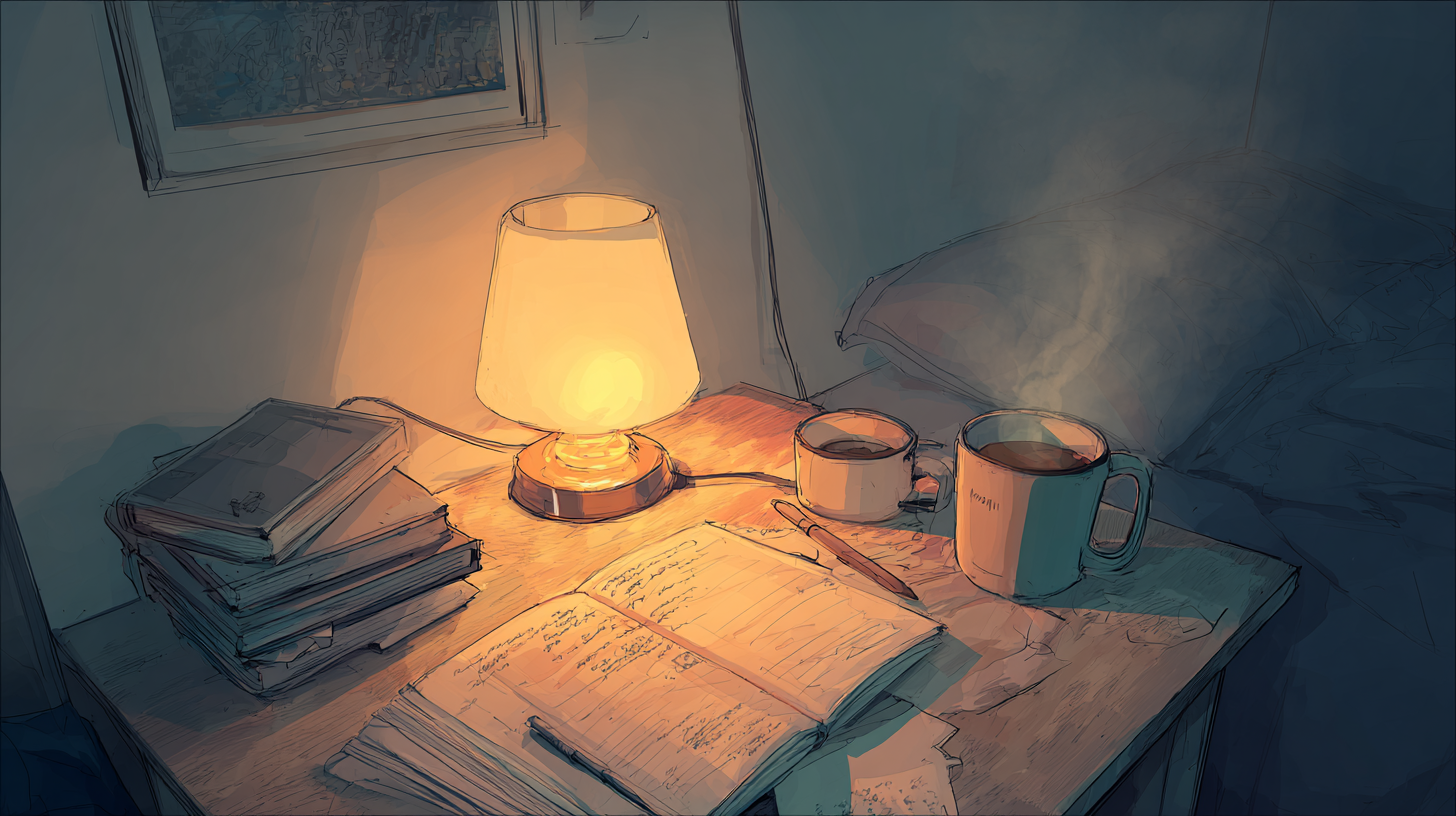
Let me say this plainly: if learning only happens when life is quiet and the calendar is empty, most of us will hardly learn at all. The days will keep arriving full—of work, family needs, unexpected troubles—and if we wait for a perfect season, our minds will quietly stiffen, like a field left untilled. The secret is not to search for more hours than other people have, but to treat the hours you already hold as soil in which small seeds of learning can be planted. Little by little, almost unnoticed, those seeds of lifelong learning bring strength, clarity, and even joy into the very midst of your present responsibilities.
One of the first things that helps is to lower the height of the gate. Many people imagine learning as something that must come in large, formal chunks—night classes, long textbooks, expensive certifications. But your mind is nourished by steady, modest portions as surely as your body is by daily bread. Ten focused minutes, rightly used, will serve you better than an hour that you are always postponing. Choose one small, specific goal—perhaps to learn the basics of a new software tool, to understand a period of history that has always puzzled you, or to gain some simple financial literacy. Break it into pieces so small that they almost seem too easy: one lesson, one page, one short video, one practice exercise. When the goal is modest, the resistance to beginning is smaller, and beginnings, repeated, become habits.
Think of the little pockets of time that already exist in your days. There is the bus ride, the waiting room, the line at the store, the minutes before bed when you might otherwise scroll aimlessly on your phone. Choose one of these and quietly claim it. Decide, for example, that every weekday commute will belong to listening—perhaps to a language app, a history podcast, or an audiobook in a field you wish to understand. Or set aside the first fifteen minutes after breakfast as your reading time, before the rest of the day begins to pull at you. By tying learning to something that already happens, you anchor it; it is less likely to be swept away by mood or convenience because it has become part of your ordinary path.
It also helps to prepare the way the night before. Lay out the book you want to read where your eyes will fall on it. Keep a notebook and pen in your bag so that, if a question arises during the day, you can jot it down rather than letting it pass. If you are using an online course, keep the next lesson open in a browser tab so that when you sit down, you have no decisions to make beyond pressing “play.” These small arrangements may seem trivial, but they remove the little frictions that so often turn our good intentions aside. The easier it is to begin, the more faithfully you will return.
Another useful practice is to choose a single “theme” for a season instead of scattering your attention in every direction. Perhaps you sense that your work would be easier if you were more at home with numbers. You might then decide that, for the next three months, your main thread of learning will be basic statistics and spreadsheets. Or if you long to understand people better, you might spend a season reading and listening about communication, conflict resolution, and emotional intelligence. Focusing in this way allows ideas to build upon each other. You begin to see connections, and that sense of progress strengthens your resolve far more than jumping from subject to subject, gathering only fragments.
Do not be afraid to scale your method to your current strength. If you are tired and your days are already heavy, you may not be ready to commit to a long, demanding course. Begin gently. Choose materials that are clear and accessible. Read an introductory book rather than an academic volume; take a beginner-level class rather than one that promises to “cram” an entire field into a few frantic weeks. Early successes calm the fear that you have started too late or that your mind is too worn. As your confidence grows, you will find yourself reaching for more challenging material almost without being asked.
You will find great help in turning learning from something you merely consume into something you actively work with. After hearing a lecture or reading a chapter, pause to speak, write, or teach—even if your audience is only yourself. Summarize the main idea in a few sentences in your own words. Jot down two or three questions that the material raises for you. Try to explain the concept to a family member at dinner or to a friend over the phone. This simple pattern—take in, reflect, express—does more to fix knowledge in your mind than hours of passive exposure. It is like chewing food thoroughly rather than swallowing it whole; the nourishment is better absorbed.
It is often wise to enlist companionship. There is something steadying about knowing that another person expects to see you at a certain time, with a certain chapter read or assignment attempted. You might form a small reading circle with one or two friends, meeting once a week, even for half an hour, to share what you have learned. Or you can join an online forum or study group connected with the topic you are pursuing. The point is not to create pressure or competition, but to surround your new habit with gentle accountability and shared interest. When your motivation flickers—and it will—someone else’s curiosity can lend you a little flame of their own.
Remember too that your home can be arranged in ways that either invite or discourage learning. You do not need a grand library or a private office. A single shelf with thoughtfully chosen books, a small corner with a comfortable chair and good light, a clear place on the table for your notebook or laptop—these are enough. If every surface is crowded with noise and distraction, the mind feels as cluttered as the room and is more likely to reach for the easiest entertainment. But when there is a particular spot that quietly says, “Here is where we read, here is where we study,” it becomes easier to slip into that frame of mind when you sit there.
It is also important to weave learning into tasks you already must do, so that it strengthens rather than competes with your responsibilities. If you are cooking, you might listen to a lecture while chopping vegetables. If you are walking for your health, you could turn part of that time into a walking classroom with an audio course. If your work involves repetitive tasks, ask whether some of them can be paired with listening or brief reading. Of course, some responsibilities demand your full attention, and you should give it. But many ordinary chores leave just enough mental room for a gentle current of instruction to flow through them.
You will find that integrating learning into daily life also brings quiet support to your mental health and overall wellbeing. Having a small, purposeful project that moves forward from week to week can steady the heart when other things seem uncertain. Instead of ending the day thinking only of what went wrong or remained undone, you can say, “I am one lesson further along,” or “I finally understood that concept I had been circling.” These are modest victories, but they push back against the sense of stagnation that so easily feeds discouragement.
There will be days, of course, when you are simply too weary, or when troubles crowd so closely that your mind hardly has room to breathe. On such days, be gentle with yourself. Do not turn learning into another rod for your back, another measure of failure. It is better to do a very little—a page skimmed, a brief review of notes, a few minutes of practice—than to abandon the habit entirely. And if a day passes with nothing at all, simply begin again the next. A garden does not die because one watering is missed; it suffers only when neglect becomes a pattern. Faithfulness is not the same as perfection.
You may find it helpful, from time to time, to look back and take quiet note of what has changed. Keep a simple record—a notebook, a digital document, even a calendar—where you mark what you have read, what lessons you have completed, what small skills you are beginning to handle more easily. When you feel you are moving too slowly, those records will bear witness: “No, you are not in the same place. You have been moving, even when the steps felt small.” That recognition strengthens courage more than any flattering words from others, because it rests on evidence your own eyes can see.
In all of this, remember that you are not merely filling your mind with facts for their own sake. You are training your attention, your patience, your capacity to sit with confusion without fleeing from it. These are qualities that will serve you not only in study, but in your relationships, your work, your handling of hardship. When a difficult decision arises, the same habits that carried you through a challenging chapter or problem set—breaking the issue into parts, seeking understanding, being willing to revise your first impressions—will help you walk more wisely.
So do not despise the modest, ordinary ways in which you weave learning into the fabric of your days. A few pages before sleep, a lesson on the train, a weekly conversation with a friend about something new you are both trying to grasp—these are not trifles. They are like small lamps placed along a dark path. Each one may seem, by itself, too feeble to matter. But together they give you light enough to keep walking, to keep growing, even when life is busy and the future uncertain. Over time, you will discover that this steady, almost quiet faithfulness has carried you much farther than any burst of enthusiasm that burned hot for a moment and then went out.
Overcoming barriers to lifelong learning
For many people, the greatest obstacle to learning is not a lack of ability but a quiet, persistent chorus of objections: “I’m too old,” “I’m too busy,” “I was never good at school,” “That world isn’t for someone like me.” These are not mere excuses; they are stories, often formed years ago, that now sit like stones in the path. Overcoming them is not a matter of pretending they do not exist, but of examining them honestly and deciding whether they will be allowed to rule the rest of your life. If you are willing to question your own objections, you may discover that the chief barrier to lifelong learning is not time, money, or age, but the belief that change is no longer possible.
One of the most common barriers is the conviction that you “missed your chance.” Perhaps school was not a kind place for you. Perhaps you left early to work, or you were steered into paths that did not fit your interests, or you were told plainly that you were “not academic.” It is easy to let those early experiences harden into a verdict: “I am simply not the learning type.” But there is a quiet, liberating truth here: school is only one style of learning, and a very narrow one at that. Many people who struggled with tests and textbooks blossom when learning is connected to real problems, hands-on projects, or their own questions. If you can cook without a recipe, repair a machine by listening to it, manage a household, raise children, or keep a business afloat, you have already demonstrated a formidable capacity to learn. The question is not whether you can learn, but whether you are willing to do it now in forms that suit the person you have become.
Time is another barrier that seems, at first glance, impossible to move. You may look at your days—work, children or grandchildren, household tasks, caring for older relatives—and think, “There is simply nothing left to give.” Yet if you examine the pattern of your hours, you may notice small pockets that slip away almost unnoticed: a half-hour of scrolling, another of television you barely remember, conversations that repeat the same complaints without change. The purpose of noticing this is not to condemn yourself, but to recognize that your time is already being spent; the question is, on what? If you reclaimed even a fraction of those scattered minutes for intentional learning, what might shift in your skills, your confidence, your wellbeing a year from now?
Money can feel like a high wall, especially when expensive degrees and polished online programs are held up as the only “real” forms of growth. It is true that some paths do require formal credentials. But there is a vast landscape of learning that costs little or nothing: public libraries with books, audiobooks, and digital courses; community centers offering workshops; open online classes from universities; skill-sharing groups where people teach one another. Even within paid options, there are often scholarships, sliding scales, employer-sponsored trainings, or installment plans that go unexplored simply because no one thought to ask. Before you conclude that a subject is “out of reach,” try turning the question around: “If I truly wanted to learn this, what free or low-cost doors might already be open that I have not yet knocked on?”
Fear of failure may be quieter than these other barriers, but it is often the most powerful. You may worry that if you try and fall short, it will confirm your worst suspicions about yourself. So you stay on safe ground, repeating only what you already know how to do. The trouble is that this “safety” carries its own cost. As the years pass, the untried subjects become a source of regret, and your world slowly shrinks to the size of your current competence. One way to loosen the grip of this fear is to start deliberately tiny, in ways that feel almost playful rather than grave: a short tutorial instead of a full course, a simple project shared with a friend, a trial month in a class with the clear permission you give yourself to stop if it proves a poor fit. The aim is not to prove anything grand, but to gently retrain your mind to associate new learning with curiosity rather than humiliation.
Perfectionism hides in the shadow of fear. You may carry the unspoken rule that if you cannot do something properly, thoroughly, and impressively, it is not worth doing at all. Under this rule, beginning is perpetually postponed until “things settle down,” “you have more energy,” or “you can really commit.” Notice how this keeps you standing at the door, never stepping through. A more humane approach is to embrace the idea of “imperfect learning”: you move forward at a modest pace, accept that some weeks will be thinner than others, and allow yourself to be a beginner without apology. Instead of asking, “Can I master this quickly and completely?” ask, “Can I move one step further than I stood yesterday?” Over time, such humble steps add up in ways that grand, abandoned plans never do.
Health, fatigue, and emotional burdens can also feel like unanswerable obstacles. Perhaps you live with chronic pain, depression, or anxiety. Perhaps your sleep is poor, your body tired, your mind often fogged. In such conditions, any extra effort can seem unfair. Yet many people in similar circumstances have found that gentle, well-chosen learning actually supports their mental health: it offers structure, a sense of progress, and a reason to lift the eyes beyond immediate discomfort. The key is to choose forms of learning that respect your limits—short sessions, materials that genuinely interest you, and goals that can be adjusted as your energy rises and falls. Instead of asking, “How can I keep up with others?” you ask, “What kind of learning, in what amount, would nourish me rather than exhaust me?”
Environment and relationships can either nourish or choke your desire to grow. If the people around you mock your efforts—“Why bother at your age?” “You think you’re better than us now?”—it may feel simpler to give up than to stand alone. But consider what is truly at stake: are you willing to let someone else’s discomfort dictate the size of your life? You may not be able to change their attitudes, but you can quietly seek out another circle: a library reading group, an online community of learners, a colleague who is also trying to improve, a family member who cheers you on. Even one supportive voice can make it easier to keep going when others do not understand. And who knows—your persistence may, in time, unsettle their own resignation and invite them to reconsider what is possible for themselves.
Cultural expectations can weigh heavily as well. In some communities, education is seen as something that belongs mostly to the young, or to particular professions, or to those with certain backgrounds. In others, a man or woman who devotes time to study may be seen as neglecting family duties or “getting ideas above their station.” These attitudes have roots in real histories of exclusion and hardship, but they need not define your future. By choosing to learn—respectfully, steadily, without arrogance—you quietly challenge the notion that curiosity has an age limit or a social class. You become, perhaps without intending it, a living question mark in front of others: must things always remain as they have been, or can someone like us, from here, become more knowledgeable, more capable, more at ease in the wider world?
Technology, too, can feel like a gate with no handle from your side. If you did not grow up with computers or smartphones, every new platform may seem like an insult, a reminder that the world is racing ahead without you. But technology can also be a bridge, opening doors to learning that would once have been firmly shut. You do not need to become an expert overnight. Start with one device, one purpose: perhaps learning how to join a video class, or how to download audiobooks from the library, or how to use a simple note-taking app. Ask younger relatives, friends, or colleagues for help; many would be glad to teach if invited. As your comfort grows, each new tool becomes less a threat and more a servant of your curiosity.
Perhaps the deepest barrier of all is a kind of quiet despair: the sense that even if you did learn more, it would not matter. The world feels too large, too troubled; your own life feels hemmed in by obligations and past choices. What difference would another skill, another book, another course make? This is where you are invited to think more carefully about the scale of meaning. Learning may not overturn every hardship. It will not rewrite history or guarantee prosperity. But it can change how you meet your days: with sharper understanding instead of confusion, with greater resourcefulness instead of helplessness, with a sense of being a participant in the world rather than a passive spectator. Is that difference truly so small that it is not worth seeking?
As you consider these barriers—time, money, fear, health, relationships, culture, technology—notice which ones echo most strongly in your own mind. Instead of turning away, linger with them. Ask yourself questions that unsettle the easy answers: “What if this story about myself is only partly true?” “If I gave myself permission to be a beginner, what would I attempt first?” “What would my days feel like in five years if I refused to grow at all? And what might they feel like if I kept learning, even slowly?” This kind of questioning is itself a form of learning: you are studying your own life, testing its hidden assumptions, and deciding which to keep and which to outgrow. In doing so, you step through the first and most important gate—not into a classroom, but into a different way of being in the world.
- Why is lifelong learning important if I already have a stable job?
- Even in a stable role, the tools, expectations, and opportunities around you are constantly shifting. Lifelong learning helps you adapt, stay relevant, and feel more confident and creative in the face of change, rather than anxious or left behind.
- Am I too old to start learning something new?
- No. Research shows that adult brains remain capable of forming new connections throughout life. You may learn differently than you did at 18, but age can actually help you connect new ideas to a richer base of experience.
- How can I make time for learning when my schedule is already full?
- Instead of waiting for large open blocks of time, look for small, recurring pockets—commutes, waiting rooms, short breaks—and tie specific learning activities to them. Ten to fifteen focused minutes a day, sustained over months, can add up to substantial progress.
- What if learning new things makes me feel stupid or anxious?
- Feeling clumsy at the beginning is normal; it means you’re stretching beyond your current comfort zone. Starting with small, low-pressure tasks and celebrating tiny wins can gradually reduce anxiety and build a healthier, more resilient view of your own abilities.
- Can lifelong learning really improve my mental health and wellbeing?
- Yes. Having meaningful learning goals gives structure, a sense of progress, and new social connections, all of which are linked to better mental health and overall wellbeing. Many people find that regular learning reduces feelings of stagnation and low mood.
- Do I need formal courses, or can I learn on my own?
- Both paths are valid. Formal courses provide structure and feedback, while self-directed learning lets you move at your own pace and follow your curiosity; many people combine the two by using books, free online resources, and occasional classes.
- How do I choose what to learn first?
- Start at the intersection of usefulness and genuine interest: a skill that would help in your current life or work, and a topic you are honestly curious about. Picking one clear focus for a few months makes it easier to see progress and stay motivated.
Ashland Sabbath Chapel Ministries
Beside our live streamed church services, all are welcome to attend our church in person each Saturday beginning 10:00 AM Central Time by going to 2425 Owens Rd., Ashland, AL 36251. There is no cost and any donations are strictly voluntary.
For questions, call +2563547124.