Come join Ashland Sabbath Chapel Ministries each Saturday for live streamed church services. Bible Study begins at 10:00 AM Central Time and Sermon at 11:00 AM. Visit Our YouTube channel and watch from home!
When we talk of guiding our children toward healthy habits, I am persuaded that the mind must be courted before the body can be persuaded. A child who feels scolded into wellness will resist it with all the vigor of youth, while a child who feels invited into a pleasant new way of living will often surprise us with eagerness. So, rather than lament, “You must eat better” or “You never exercise,” it is far more fruitful to speak in terms of, “Let us see how strong you can become,” or “I wonder which breakfast will help you run fastest at the park.” This small alteration in language, from criticism to curiosity, is the first thread in weaving a positive mindset around wellness.
You know as well as I that children are exceedingly attentive to our tone. If wellness appears to us as a tedious duty, they will learn to regard it as yet another dreary rule, not unlike an overlong sermon. But if we speak of food, movement, and rest with quiet enthusiasm—without exaggeration, but with genuine interest—then they begin to perceive wellness as something delightful, even a little adventurous. When you say, “I feel so much better when I drink water in the morning,” or “My walk today made my head feel clear,” you are not preaching; you are merely reporting, and such reports carry great weight with young observers.
It helps, too, to shift the child’s attention from appearance to capability. Many a young person has been made miserable by remarks concerning looks, when the true object of wellness is to feel energetic, calm, and capable. Instead of “You will look better if you eat less sugar,” try, “Your legs will have more power for climbing that big hill,” or, “This snack will help your brain think quickly during your math game.” By attaching wellness to strength, play, learning, and comfort, we make it a friend, not a tyrant. The child then comes to associate good choices with immediate, pleasant rewards—more stamina at the playground, fewer headaches, a more cheerful mood—rather than with vague future promises.
In speaking of children, we must not forget that they are naturally inclined to imitation. They will rarely take seriously what we do not practice ourselves. If we declare that sleep is important and then sit up far into the night, we create a puzzle in their minds. Yet if they observe us closing the day with a book rather than a screen, choosing a walk after supper, or preparing a simple meal with fresh vegetables, they quietly note that wellness is our normal way, not a passing fad. A parent who sighs dramatically while eating something “virtuous” teaches that wellness is a burden; a parent who eats and remarks, “This is surprisingly good,” teaches that it may be enjoyed.
Another gentle method is to help children listen to their own bodies, rather than simply obeying external rules. You might say, “Notice how you feel when you drink water after running,” or, “Do you feel more comfortable on the days when you have a real breakfast?” This trains them to make connections between choices and sensations: heaviness or lightness, sluggishness or energy, jitteriness or calm. When a child reflects, “I sleep better when I do not eat a heavy snack late at night,” that realization is worth ten parental lectures. You have helped them consult their own experience, and that is a powerful tutor.
I have observed that many well-meaning adults speak of wellness chiefly in negative terms—“no sugar,” “less screen time,” “stop snacking,” and so forth. While limits have their place, a more cheerful approach is to emphasize what may be added: “Let us see how many colors we can put on your plate at dinner,” or “Shall we try three different ways to move our bodies today: jumping, dancing, and walking?” Abundance is more enticing than restriction. If the child believes that wellness means more fun, more flavors, more games, and more comfort, they are much more willing to adopt it as part of their identity.
It is also worth making room for choice, even in small matters. The young mind appreciates a sense of agency. Instead of issuing every detail as a command, offer two sound options: “Would you like apple slices or carrot sticks with your snack?” or “Shall we ride bikes or play tag this afternoon?” So long as both options are sensible, the child experiences wellness as something they help direct, not merely endure. Over time, this fosters confidence: they begin to believe, “I am a person who can make good decisions for my body.” That belief is the very root of a positive mindset.
Of course, perfection is a most tiresome companion, and no child can keep company with it for long. A rigid insistence on flawless meals, unbroken exercise schedules, and constant cheerfulness will produce only secret rebellion or quiet shame. It is far better to treat missteps as entirely ordinary. If a day of too many sweets leaves a child feeling unwell, you might say lightly, “Now you know how your body talks to you. Tomorrow we can try something different.” In this way, mistakes become information rather than moral failings, and the child learns that wellness is a flexible path, not a fragile glass that shatters at the slightest touch.
Conversation is another useful ally. Instead of delivering grand speeches, try modest, curious questions that invite the child to think. “Which lunch helps you feel less sleepy at school?” or “Was your mood different on the day you played outside after class?” Such questions place the child in the role of detective. They gather clues—about food, movement, sleep, and even how much noise or quiet they prefer—and slowly assemble a personal understanding of what supports their well-being. This quiet detective work does more for their long-term mindset than any number of scoldings about “good behavior.”
You may also find it helpful to link wellness to values a child already holds dear. If your youngster loves caring for a pet, you can observe, “You give your dog water and good food so he can run and play. Your body needs the same kindness.” If they are proud of their schoolwork, note how a rested mind reads more easily or solves puzzles more quickly. When wellness begins to serve the child’s own hopes and pleasures, it becomes desirable, not dutiful. They begin to say, “I want to feel ready for my game,” rather than simply, “I have to,” and that difference is quiet but profound.
Even trivial rituals may shape a mindset. A small family custom, such as taking a few deep breaths before a meal or stretching together in the morning, signals that caring for oneself is as ordinary as brushing one’s teeth. These routines need not be grand to be effective. A brief walk after dinner, a glass of water kept by the bed, a shared fruit plate in the afternoon—all these small acts generate an atmosphere in which wellness is simply “what we do.” Children move most easily within such atmospheres; they hardly notice that they are being trained, yet the training settles deep.
At times, you may encounter resistance, eye-rolling, or dramatic sighs that would not be out of place on a theater stage. In such moments, it is tempting to abandon the enterprise altogether. Yet if you can keep your tone light and your expectations steady, the child will learn that wellness is not negotiable in principle, only in details. You might say, “We will move our bodies after school; you may choose the manner,” or, “We will have a vegetable at dinner; you may choose which one.” This mixture of firmness and freedom preserves the positive spirit while still establishing clear boundaries.
All these small attentions—to language, example, curiosity, flexibility, and gentle firmness—prepare the soil in which more specific practices may grow. Once a child has learned to think of wellness as a source of comfort and strength, they are far more ready to consider particular subjects, such as how different foods support the body, or why certain routines help them feel calmer and more focused throughout the day. When the mind is thus softened and made receptive, any conversation about nutrition or movement lands more kindly, and the child can receive it not as a lecture, but as a useful piece of their own unfolding story.
Creating a balanced and nutritious daily diet
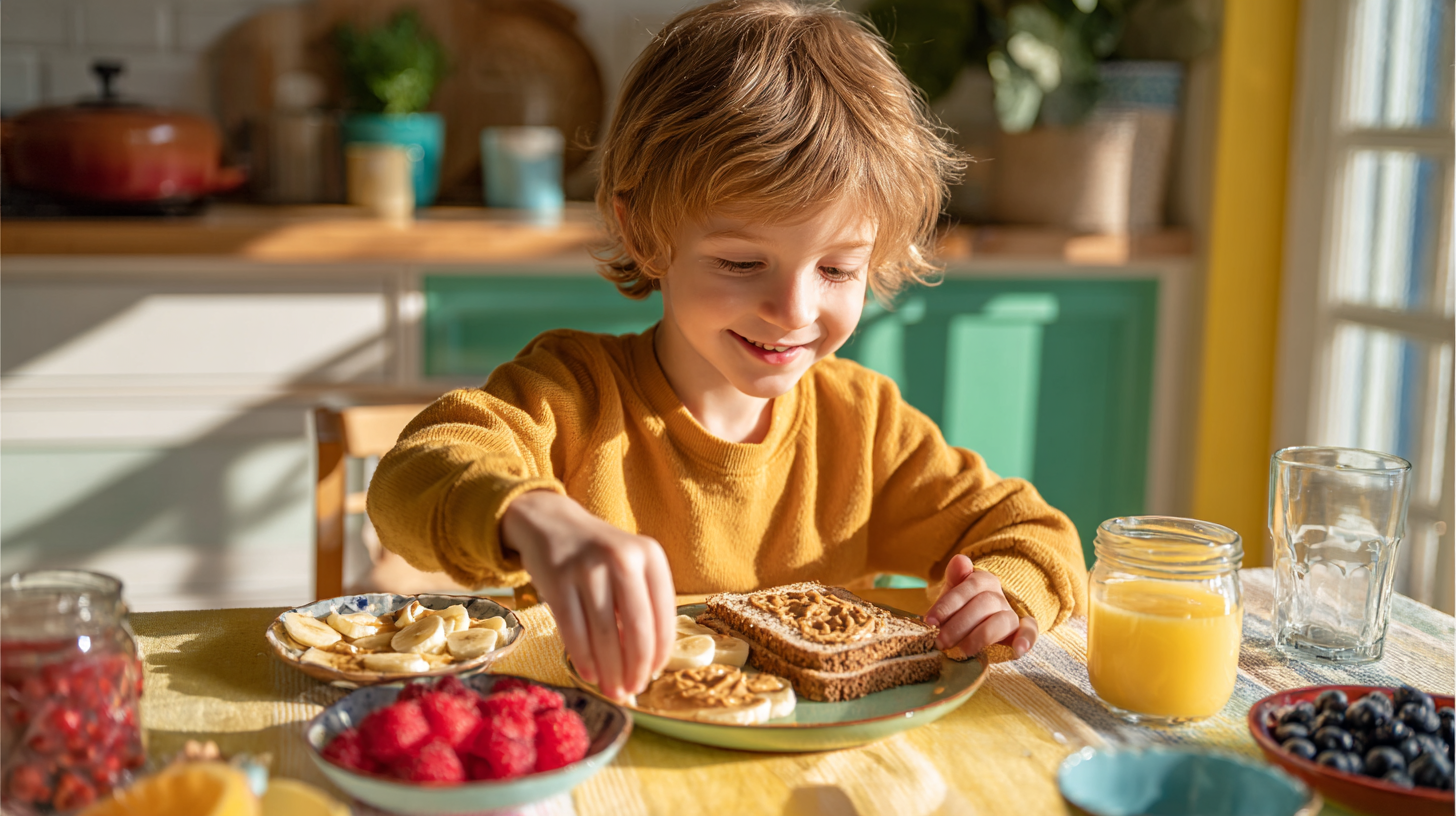
Once a child has begun to see wellness as something friendly rather than fearsome, it becomes far easier to talk about what actually fills their plate. Instead of treating nutrition like a dry lesson from a dusty book, we can present it as the study of how to “fuel your superpowers.” Most children understand that a car will not run on muddy water, nor a plant thrive without sunlight; in the same way, their bodies and minds cannot do their best work on scattered crumbs and syrupy drinks. When you say, “This breakfast is like good fuel for your brain,” you are not moralizing—you are simply naming the connection between food and the powers they already value: running, thinking, laughing, and playing without wearing out.
Now, a balanced daily diet sounds very grand, but in practice it is a simple matter of arranging a few clear patterns, then repeating them until they become as ordinary as putting on shoes. The first pattern is to include something from each of the main food groups—fruits, vegetables, whole grains, and proteins—throughout the day, rather than crowding them all into one heroic meal. You need not mention “macronutrients” or “micronutrients” unless your child happens to be keen on big words. It is enough to talk about “foods that help your muscles,” “foods that help your brain,” and “foods that help you stay full and steady.” Over time, this gentle vocabulary becomes part of their own thinking, and they begin to ask, “What will help me feel steady this afternoon?” rather than simply, “What can I snack on?”
Breakfast is an excellent place to begin, if only because it arrives each day whether we are ready or not. Many children set off with nothing more substantial than a sugared cereal and a gulp of colored milk, only to find themselves listless and irritable by mid-morning. You might quietly conduct an experiment: offer, for several days, a simple breakfast that includes at least one source of protein (such as eggs, yogurt, nut butter, or beans), a whole grain (like oatmeal or whole-wheat toast), and a fruit. Then, without fanfare, help them notice, “You seemed less cranky before lunch this week. Do you think your new breakfast had anything to do with that?” When the child themselves observes that a piece of toast with peanut butter and a banana holds them more comfortably than a frosted pastry, you have gained an ally.
Lunch and snacks may be approached with the same spirit of quiet structure. Instead of asking, “What do you want?”—which often produces a request for sweets disguised as food—you can frame it as, “Choose one thing to crunch, one thing to fill you, and one thing to refresh you.” The “crunch” might be carrot sticks or bell pepper strips, the “fill” a sandwich or leftovers from last night’s stew, and the “refresh” a piece of fruit or a small salad. This language is simple enough for younger children, yet it carries the real principle of balance. Before long, they may surprise you by saying, “I still need something crunchy,” as if they had invented the idea themselves.
Dinner, that notorious battleground of vegetables and negotiations, can be greatly softened by a little foresight. Instead of declaring, “You will eat your vegetables,” which invites resistance, invite participation. “Help me choose two vegetables for supper,” you might say, or, “Will you wash the broccoli while I chop?” Children are far more inclined to taste what their own hands have prepared, even in a modest way. I have seen the pickiest of youngsters proudly serve “their” salad and then feel obliged, by sheer dignity, to eat a few leaves. This is not trickery; it is simply recognizing that ownership has a flavor of its own.
If vegetables are a particular challenge—and for many children they are—you can make them less intimidating by tying them to familiar favorites rather than presenting them as dismal strangers. A few peas stirred into rice, grated carrot tucked into tomato sauce, spinach added to a smoothie that already tastes of banana and berries: such easy additions gradually accustom the palate. You might invite a child to rate new vegetables on a scale from “No, thank you” to “I would eat this again,” rather than dividing the world into “like” and “hate.” That middle ground—“I do not love it, but I can manage it”—is more realistic and allows tastes to grow over time without a scene at every meal.
The question of sweets and treats always arises, and it is unwise to pretend that they do not exist, for the world is full of them. A rigid ban often makes them more fascinating, like a forbidden book; a thoughtful place in the pattern, however, teaches proportion. You might say, “Sweet things are visitors, not permanent residents at our table.” Perhaps you agree that one small sweet after supper is acceptable on certain days, or that special desserts accompany holidays and birthdays. Whatever your family’s decision, keep it steady and calm. When a child knows that cake will appear at the cousin’s party and that a small portion is permitted, they need not spend the entire week begging for sugar; they can simply look forward and then enjoy, knowing that ordinary days have their own quieter pleasures.
One helpful idea is to make the “everyday” foods as appealing as possible, so that treats do not hold all the charm. A bowl of sliced oranges or apples left on the table, a plate of cucumbers and cherry tomatoes arranged in a circle, or a simple yogurt topped with a few berries and a sprinkle of oats—all these call softly to a child as they wander through the kitchen. You need not lecture; the colors and scents do the inviting. When the child reaches out, you might remark, “Your body must be asking for something fresh,” as if you and their body were on the same side. This small alliance, between parent, child, and body, is a powerful foundation for lifelong healthy habits.
It is also helpful to remember that thirst is often disguised as hunger, particularly in the case of juices and sweetened drinks. Many children grow accustomed to a constant flow of flavored liquids, which soon taste more natural to them than simple water. Without turning this into a battle, you can gently make water the main drink of the house. Keep a pitcher where they can reach it, offer it before and after play, and perhaps allow juice at certain times instead of as a constant accompaniment. If they protest that water is “boring,” you might add a slice of lemon or a few berries and say, “This is water in its Sunday best.” Over time, the body comes to appreciate the clean taste of water, and the child notices that headaches, fatigue, and crankiness are often eased by a drink from the humble tap.
Of course, a balanced diet is not created in one grand sweep but through quiet repetition of small choices. If one day’s meals fall into disarray—which will happen, particularly during busy seasons or travels—there is no need for despair. You may say, with easy good humor, “Today our food was rather lopsided. Tomorrow we shall see if we can bring back the colors.” Children learn then that balance is measured over several days, not every single plate. This prevents the all-or-nothing thinking that so often leads older people into cycles of strictness and indulgence. Instead, the child comes to understand food as a friendly, flexible tool, not a harsh judge.
In speaking of balanced eating, it is wise to guard against turning every meal into a mathematics lesson of grams and portions. While there is value in knowing that half the plate might be vegetables and fruits, a quarter protein, and a quarter grains, this information should serve peace, not anxiety. You can quietly arrange plates according to this pattern without announcing it like a royal decree. If an older child shows curiosity, you may share the principle and invite them to arrange their own plate now and then. The aim is not exact measurement but a habit of thinking, “Have I included something fresh? Something to keep me full? Something to help my body repair itself?” When these questions arise naturally, the formal rules become almost unnecessary.
What we say about our own bodies while we eat also teaches more loudly than any food chart. If a child hears, “I should not eat this; it will make me fat,” or, “I have been so bad today with food,” they learn to see meals as moral exams. Instead, you might observe, “I feel better when I include some vegetables,” or, “That dessert was delicious; I am glad we do not have it every night or it would not feel special.” In this way, nutrition remains a matter of comfort, strength, and gratitude, rather than shame. The table becomes a place of learning and fellowship, not a courtroom.
As these patterns settle in, you will find that conversations about food grow calmer. A child who expects a vegetable, a grain, a protein, and some fruit scattered across the day does not argue so fiercely about every carrot slice, for it has become simply “what our family does.” They may still grumble from time to time—that is the privilege of youth—but the structure beneath is firm. This quiet reliability in meals prepares the way for other parts of wellness, such as movement and rest, to take their proper place. A body that is steadily nourished has more energy for games, less frantic hunger in the late afternoon, and a softer landing into sleep at night. Thus, the plate, though it seems an ordinary thing, becomes a very real support for the child’s whole day.
Making physical activity fun and engaging
When we speak of helping children form healthy habits, I often think we have made movement far more solemn than the Lord ever intended it to be. The young were not made to sit still as statues for hours on end; their very limbs protest against such captivity. If we frame “exercise” as a duty—another chore to be endured—they will dodge it at every turn. But if we present movement as play, as exploration, as a kind of daily adventure, they accept it as gladly as they accept recess at school. The body is like a lively colt; it does not respond well to stern lectures, but it rejoices when you open the gate and say, “Let us see how far you can run today.”
One helpful shift is to stop speaking chiefly of “working out” and start speaking of “moving our bodies.” To a child, “workout” sounds like a punishment dreamed up by grown-ups who have forgotten how to play; “Let us move our bodies” sounds like an invitation to a game. You might say, “We have been sitting a long while; let us see how high we can jump,” or, “Our legs are ready to explore; who will lead the way to the corner and back?” This sort of language turns movement into a shared enterprise rather than a command. Instead of, “You need more exercise,” try, “Our bodies were not made to be still all day; shall we give them a little joy?”
To make physical activity truly engaging, it must be attached to delight, not merely to distant rewards. If we say, “You must run now so you will be healthy when you are old,” the child politely ignores us, for “old” is a far country to them. But if we say, “Let us see whether running to the tree and back makes you feel more awake for your drawing,” we draw a straight line between movement and something they already love. When a child notices, “I draw better after I have run a little,” or, “I sleep more peacefully after we walked to the park,” they begin to see activity not as a tax on their time but as a friend to their pleasures.
You and I know that every child has a different nature. Some leap before breakfast and cannot keep from dancing in the grocery aisle; others would rather curl up with a book or a box of blocks and hardly move for hours. It does no good to scold the quieter child for not resembling the lively cousin or the neighbor’s energetic boy. Instead, we must look for the forms of movement that suit each temperament. The one who loves stories may enjoy a “journey walk,” where you narrate a little tale as you stroll—“Now we are explorers crossing a river; those cracks in the sidewalk are the water.” The child who loves building might delight in carrying small stones or sticks to construct a “fort” in the yard. Movement, when paired with their natural bent, ceases to feel foreign.
Variety is another ally. The body thrives when it is invited to move in many ways: running, stretching, balancing, climbing, pushing, pulling, and even simply standing up and sitting down with awareness. You might think of the day in little pockets of opportunity rather than one grand hour that never seems to arrive. Ten minutes of dancing after breakfast, a brisk walk around the block after school, a few stretches before bed—these scattered fragments join hands to make a sturdy chain. Children are far more willing to give you ten minutes of lively play than to surrender an entire afternoon to “exercise class.”
Games are the secret doorway by which much movement may enter without protest. Instead of saying, “We shall now perform squats,” which sounds like a prison sentence, you might propose, “Let us play a game where the floor turns to lava every time I clap, and the only way to escape is to jump.” The ordinary squat hides within the story. “Red light, green light” trains quick starts and stops; “Simon Says” can include stretches, toe-touches, slow marches, and little hops; a simple game of tag raises the heart rate as well as any treadmill. If the child laughs and forgets to ask how long the game will last, you are on the right path.
Children also relish challenges, provided that success is truly within reach. You might keep a small notebook and jot down their “records”: how many jumping jacks they can do before needing a rest, how long they can balance on one foot, how quickly they can walk once around the block. Every week or two, invite them to test again, not in a spirit of competition with others, but simply with their former selves. “Last week you could balance for eight seconds; shall we see whether today your body can reach ten?” When they see their own progress, they begin to take quiet pride in what their bodies can do, and this is a strong root of lifelong movement.
Another simple approach is to weave activity into the ordinary tasks of the day, so that “exercise” does not appear as an extra burden laid upon an already full schedule. Walking or biking to school, if the distance and surroundings permit, is better than any formal routine sprung upon a weary child in the evening. Taking the stairs rather than the elevator, parking a little farther away at the store and turning the walk into a race, carrying groceries in small loads so little arms may assist—these things teach, without a speech, that movement is the common companion of daily life. A household where everyone reaches for the car even to go two blocks unwittingly preaches that the body is merely a passenger, not a worker.
Outdoors, whenever possible, is the best “gymnasium” for the young. Grass, uneven ground, trees, and open sky call forth a fuller range of motion than any carpeted room can offer. Climbing, rolling, balancing on a fallen log, swinging from a low branch, throwing and catching—these are not just games; they are lessons for muscles, joints, and nerves. The fresh air steadies the mind, and the wide spaces calm spirits that have been cramped by desks and screens. If you have only a small yard or a nearby park, that is sufficient ground for many adventures: an “animal walk” where you take turns choosing whether to move like a bear, a crab, a frog, or a bird; a “treasure hunt” where the clues are scattered at intervals that require plenty of walking or running between them.
For children who declare themselves “not sporty,” structured sports teams can sometimes feel like a trial rather than a joy. In such cases, it is wise not to force the matter as if team sports were the only honorable road to health. There are quiet forms of movement: nature walks, gardening, helping to rake leaves, practicing a simple stretching routine, learning a bit of child-friendly yoga, or joining you in a morning walk while the world is still hushed. Some children are drawn to the water; swimming or even vigorous play in shallow water builds strength and confidence without the noise of a crowded field. The aim is not to produce athletes but to foster bodies that know the dignity and comfort of regular motion.
Of course, some children do love the roar of the crowd and the clear rules of games. For them, team sports can be a fruitful school, teaching not only physical skills but also patience, cooperation, and perseverance. Yet even here, we must guard against turning every game into a high-stakes trial. If victory and ranking become the principal themes, the child may begin to feel that movement is worthwhile only when it produces trophies. It is better to say, “I enjoyed watching you run and try your best,” than to ask first, “Did you win?” In this way, you affirm the effort, the courage, and the simple pleasure of play, rather than the outward result alone.
Music is a powerful helper in making activity enjoyable. A simple “dance time” after supper, when you put on a few lively songs and invite everyone to move in whatever manner they please, can turn a gloomy, sluggish evening into a little festival. Some children will leap and twirl; others may sway more modestly, but all will have moved more than if they had sunk at once onto the couch. You might even invent small traditions: one favorite song for “clean-up dancing,” when you tidy the room while moving to the music, or a slower tune for gentle stretching before bed. In such moments, movement binds the family together instead of sending each member to a separate screen.
It is also wise to notice the natural rhythms of your child’s energy. Some spring out of bed eager to move; others only find their liveliness in the late afternoon. You will gain more cooperation if you place your main activity at a time when their bodies are already half-ready, rather than dragging a sleepy child through jumping jacks at dawn or prying a drowsy one from a book just before bed for a riotous game. You might say, “I see that after your snack you like to run about—let us make that our usual outdoor time.” To work with the grain of their nature isalways easier than to fight against it.
On days when the weather is harsh or time is short, indoor movement need not be complicated. A hallway can host a “walking race” on tiptoe, on heels, in long strides, in tiny steps. A sturdy chair can serve as a support for leg lifts and gentle stretches. A deck of cards can become a game where each suit stands for a movement—hearts for hops, clubs for squats, diamonds for arm circles, spades for marching in place—and the number on the card determines how many to do. Five or ten minutes of such play may be enough to refresh a restless mind or soften a sour mood.
Remember, too, that your own example speaks more loudly than any schedule hung on the refrigerator. If a child sees you choose a short walk over another half hour of idle scrolling, or stretch your back after a day at your desk, they learn that movement is a sensible response to stiffness and fatigue. You need not preach; a simple remark such as, “My body feels cramped; I am going to take it for a little walk,” reveals that the body is a companion to be cared for, not a machine to be ignored until it fails. Invite them along, but do not make every movement a command performance. Sometimes, your quiet habit will beckon them more effectively than any insistence.
At times, a child will resist, no matter how artfully you arrange the games. Perhaps they are tired, discouraged, or feeling awkward about their abilities. In such moments, it is better to lower the bar than to scrap the plan altogether. You might say, “We had planned a long bike ride; today we shall simply take a short walk around the block, and that will be enough.” This teaches that the habit of movement is what matters most, not the grandeur of each individual session. A little activity, gently chosen, keeps the pattern unbroken and prevents that “all or nothing” spirit which so often defeats older folk in their efforts at health.
Finally, it is worth remembering that movement and nutrition are companions, not rivals. A child who has been well fed with steady, balanced meals has more cheer for games and more stamina for playground adventures. Likewise, a child who moves regularly often comes to appreciate wholesome food, for they feel the difference between running on “empty” and running on a good breakfast. When you speak of the two together—“This snack will help your legs jump higher,” or, “Our walk will help your body use the good food you ate”—you weave them into one tapestry of care. Over time, the child comes to see that taking joy in movement and choosing food wisely are not separate projects, but two aspects of the same kindness shown to the body the Lord has entrusted to their keeping.
Limiting screen time and promoting quality sleep
You and I both know how quietly the glow of a screen can steal away the minutes—and with them, the peace of mind and body that children so deeply need. It is not that screens are evil in themselves; they can be useful tools and even pleasant companions. But when they grow from servant into master, they demand a price: restless sleep, hurried meals, strained eyes, and minds too stirred to find stillness. If we wish to guide our little ones toward healthy habits, we must treat screen time as we would sweets—something to be used with care, in sensible portions, and never allowed to crowd out what truly sustains life.
Rather than thundering, “No more screens!” and turning the household into a battlefield, it is often wiser to speak of making room for other good things. You might say, “We want enough time today to play outside, to eat together, and to rest well tonight. How shall we fit screens in so they do not push those things away?” This shifts the conversation from prohibition to planning. The child begins to see that the day is like a small garden: if we plant only screens, where shall we put sunshine, movement, reading, and quiet conversation?
Clear boundaries are a mercy, not a cruelty. A child is quietly relieved when the adults have already decided, “In our home, screens sleep when the sun is high, and they wake only at certain times,” or, “We do not bring screens to the table or to bed.” You might, for example, agree that on most days screens may be used only after homework, for a limited period, and never in the hour before bedtime. If this pattern is kept steady, there is far less bargaining and far fewer daily quarrels. The rule becomes like the sunrise—predictable, and therefore less resented.
It can also be helpful to make some “non-screen zones” in the house. Perhaps the table is always free from devices, so that meals can be a time for talking, tasting, and listening. Maybe bedrooms are kept screen-free, or at least free from personal devices, so that they remain places of rest rather than of constant stimulation. When you say, “In this room, we give our eyes and minds a little rest,” you are not simply removing a pleasure; you are offering a sanctuary. Children may grumble at first, but in time many come to love the quiet.
Of course, limits are more gladly received when something delightful stands ready to slip into the place left open. If a screen is turned off and nothing else is offered, the child feels only loss. But if you close the lid of a laptop and then say, “Now our time belongs to us. Shall we go outside, play that card game, or start the puzzle you chose yesterday?” the boundary feels like a doorway, not a wall. Keeping a small shelf of inviting activities—books, building sets, drawing supplies, simple crafts—within easy reach makes it far easier for a child to fall into wholesome play rather than begging for “just five more minutes” of glowing distraction.
One gentle exercise is to help children observe how they feel during and after extended screen time. Without scolding, you might say, “You watched quite a bit today. Notice how your eyes feel, and whether your head is light or heavy,” or, “After that long game, was it easier or harder to fall asleep?” When they begin to connect their own weariness, irritability, or trouble sleeping with the hours spent before a screen, they gain an inner guide more effective than a hundred rules. Our task is not merely to forbid, but to awaken discernment.
It is also wise to distinguish between different kinds of screen use. Watching a quiet nature program together and discussing it afterward is not the same as frantic switching between noisy videos late at night. Video-calling a distant grandparent to share a school project is different from passively scrolling through endless clips. When possible, be present, at least at first, for what they watch. Ask simple questions: “What did you like about that?” “Did anything in the show make you feel tense or uneasy?” From these conversations, the child learns that screens are to be weighed, not merely consumed.
Now, if we are to guard the child’s rest, we must be particularly watchful of screens in the evening hours. The bright light and rapid images tell the brain, “It is still daytime,” and the mind, stirred up with excitement or worry over what it has just seen, cannot easily submit to sleep. You may have noticed how a young one, allowed a loud cartoon or an intense game just before bed, seems wound like a spring, eyes wide and thoughts racing. In such cases, we sometimes blame the child’s “stubbornness” in not sleeping, when in truth we have flooded their senses just at the hour when nature calls for quiet.
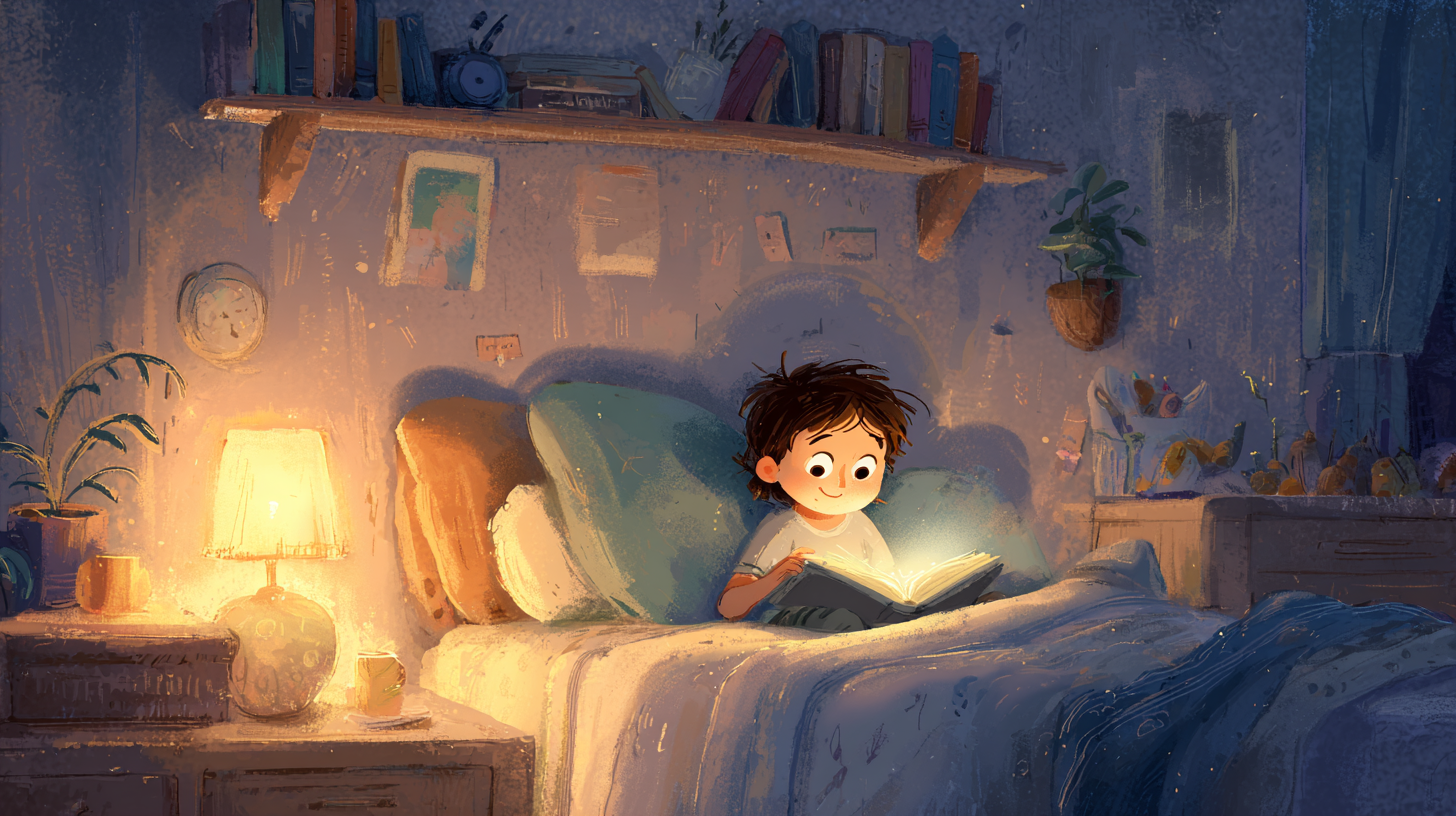
A simple practice is to create what you might call a “soft landing” into the night. Decide together that, for the last hour before bedtime, the home will grow gentler: screens off, lights a little lower, voices softer. You might speak of it as “helping our bodies know that night is coming.” During this time, choose activities that soothe rather than stimulate: reading aloud, drawing, working a simple puzzle, folding laundry together, or telling stories from your own childhood. This change need not be gloomy; it can have the sweetness of ritual. Children quickly learn to expect it, and their bodies, given the same signals each evening, begin to prepare for rest almost on their own.
Bedtime itself is not merely a clock reading; it is a kindness we extend to growing minds and bodies. Many youngsters today are sent to school with eyes heavy and tempers short, not because of any ill will on the part of their parents, but because the hours of the night have been eaten away by entertainment, by late meals, or by the restless glow of devices. Yet the child’s brain, busy with learning and growth, needs more sleep than ours. When we honor their need for rest, we are not being strict for our own convenience; we are cooperating with the quiet work of their development.
Instead of saying only, “You must go to bed,” you might invite them to notice the fruits of good sleep. After a well-rested morning, observe with them, “It seemed easier for you to remember your spelling today,” or, “You were so cheerful at the playground; perhaps your good sleep last night helped.” When they drag the next morning after a late bedtime, you may gently ask, “Do you think staying up so late made it harder to wake today?” In this way, the child begins to see sleep not as a thief of fun, but as a helper of memory, mood, and play.
A simple, repeated bedtime routine becomes a safe pathway from the busyness of day into the stillness of night. It need not be elaborate. Perhaps it includes washing, brushing teeth, putting on comfortable pajamas, a brief tidy of the room, a few minutes of reading or listening to a story, and a short prayer or quiet reflection. Done at roughly the same time and in the same order each evening, these steps tell the body, “Now we are turning toward rest.” Even on days when emotions are high, the familiar pattern exerts a calming influence, like a well-worn path that leads home.
Do not overlook the room itself. A bedroom scattered with toys, toys blinking with lights, and devices standing ready on every surface speaks of activity, not repose. As far as you are able, keep the sleep space simple and peaceful. Darken it at night—light sneaking in from screens or bright lamps can confuse the body’s sense of time. Make sure the air is fresh; when weather allows, a little airing of the room during the day helps the night feel cooler and cleaner. These small attentions cost little, yet they prepare a kind of “nest” where sleep can settle more easily.
Nutrition, too, walks hand in hand with rest. A child who eats a mountain of sugary snacks late in the evening is likely to find their sleep disturbed by racing heart and unsettled stomach. If supper is placed too close to bedtime, the body may still be busy with digestion when it ought to be settling into repair. You might choose to offer the main meal earlier in the evening, with only a light, simple snack later if truly needed—a small piece of fruit, a bit of yogurt, or a slice of whole-grain toast. Then, with a drink of water, the child’s body can turn its energies from constant processing to quiet rebuilding during the night.
We must remember that many children are not stubborn by nature, but stimulated beyond their power to handle. A day crowded with screens, snacking, and rushing from one place to another can leave them overfilled with impressions. When they lie down, there is no inner room for peace; the scenes of the day continue to flash before the mind. By simplifying the evening—less noise, less argument, fewer late errands—we open space for their thoughts to settle like calm water. Then, when you say, “It is time to rest,” you are not commanding a storm to cease, but inviting an already-quiet river to flow into sleep.
Your own example again carries more weight than any bedtime chart. If you habitually sit up late with your own devices, eyes on one more report or one more show, then urge your child to sleep early, they may obey outwardly but remain puzzled inwardly. They learn, often without words, that rest is for the young, while grown people “graduate” into exhaustion. But if they see you, at a reasonable hour, closing your work, dimming your own screens, and saying, “I am going to bed now; my body needs its rest,” they are given a different lesson: that care for one’s health is a lifelong duty, not something to be discarded with childhood.
On some evenings, despite your best planning, the schedule will tangle itself: a late return from an event, a child’s illness, or a family emergency may push bedtime far past its usual hour. In such cases, treat the disruption as the exception it is, not a new pattern. The next evening, speak of it lightly: “Last night was unusual; tonight we will be kind to our bodies and return to our ordinary time.” Children learn, then, that while life occasionally demands flexibility, the gentle rule of rest is not abandoned. This protects them from the “sliding” of bedtime later and later until exhaustion becomes their daily companion.
Some children will insist they are not tired, even as their actions plainly declare otherwise: tears over small matters, quarrelsome words, clumsiness. In those moments, argue as little as possible. You might say, “Your body is speaking through your mood. Let us see whether it feels better after some rest.” You are not engaging in a debate over whether they deserve bedtime; you are simply honoring what their behavior is already proclaiming. Once they have experienced the relief that follows a good sleep, you can gently remind them of it the next time they protest.
As the pattern of balanced screen time and regular, comforting sleep takes hold, you will notice that other parts of wellness stand straighter as well. A rested child has more patience to try a new vegetable, more energy for afternoon play, and more calm when facing schoolwork. Likewise, a child who is not constantly stirred by screen images can better hear the quiet signals of hunger, fullness, and thirst that support sound nutrition. In this way, each habit reinforces the others, and the home becomes a place where minds and bodies alike can grow in strength, clarity, and peace.
When the evening light begins to soften, and you move through the familiar steps of shutting down devices, straightening rooms, and drawing the household toward rest, you are doing more than closing the day; you are writing, in the heart of each child, a lesson about their own worth. You are telling them, “Your body is precious enough to be guarded from needless strain. Your mind is valuable enough to be spared from constant clamor. You are loved enough that we will protect your sleep.” Such quiet teaching, repeated night by night, will outlast many sermons and many rules, and will prepare them for the next good work of ordering the whole family’s life around simple, steady, healthy routines.
Involving the whole family in healthy routines
If we wish for children to regard healthy habits as ordinary and even pleasant, it is not enough for one diligent parent to toil alone while the rest of the household carries on as usual. A child quickly notices when rules apply only to them, while older brothers, sisters, or adults enjoy a different liberty. This breeds quiet resentment: “Why must I eat vegetables when Father never does?” or, “Why must I go to bed on time when my sister is up half the night with her phone?” But when the whole family walks, however imperfectly, in the same direction, the child feels less singled out and more included in a shared way of living. In such a home, wellness is not a sentence passed upon the young; it is a family culture.
One of the simplest, yet most overlooked, tools is the family meal. When even a few suppers each week are eaten together, at a table cleared of devices, the child witnesses nutrition, conversation, and manners intertwined. They see that vegetables are not “kid food” forced upon them, but something everyone eats. They watch adults passing dishes, sampling new flavors, and saying, “This is good; I might like it again.” Without a single lecture, the table says, “This is what our family does: we pause, we eat food that truly feeds us, and we listen to one another.” Ask yourself: what does your table quietly preach, day after day, about food, about pace, about attention?
Shared routines are another quiet but powerful influence. If bedtime is treated as a grim punishment for the youngest alone, it is unsurprising that they resist it. But when older siblings also follow their own calming routines—closing screens, preparing for the next day, reading or reflecting in their rooms—the whole household bends in the same direction. Likewise, if one parent insists on walks while the other sinks consistently into the couch, the message is mixed. Children are shrewd; they live not by our stated ideals but by the patterns they actually see. What would a curious observer, watching your household for a week, conclude about the value you place on movement, rest, and order?
It often helps to speak of “our family way” rather than a list of isolated rules. “In our family, we move our bodies every day,” you might say, or, “In our family, we turn off screens before bed so that everyone can rest.” This language suggests that the child is not being controlled from above, but welcomed into a tradition. You can even invite them into the making of that tradition: “What are three things you think should be part of our evening routine?” Their answers may be simple—story time, a song, a glass of water—but when incorporated, they lend a sense of ownership. Are there customs you might begin, however small, that would teach your values more clearly than any scolding?
Many parents feel that they must shoulder all the responsibility, while grandparents, aunts, uncles, or close friends undo their work with abundant sweets, late nights, or constant entertainment. Yet even here, gentle conversation can turn potential conflict into partnership. Instead of accusing, “You always spoil them,” you might share your hopes: “We are trying to help the children feel calmer and sleep better, so we are keeping sweets for special times and turning screens off earlier. Would you be willing to help us with that when they are with you?” Most relatives, when they understand the purpose—to support the child’s peace and strength—are willing to cooperate at least partly. Have you considered inviting extended family into your vision for the children’s health, rather than assuming they will resist?
Household tasks offer a surprisingly rich training ground. When children help wash vegetables, stir a pot, set the table, or sweep the porch, they see that caring for the body and the home is shared work, not drudgery assigned to one weary adult. You might say, “Our bodies need good food; our home needs a bit of order; let us all give a little help.” Even a very young child can carry napkins or place spoons; an older one can plan one simple meal a week. Over time, they begin to understand that wellness is not bought ready-made at a store but crafted by many small acts of service. What if the next time you feel tempted to “do it faster yourself,” you paused and asked, “Is this a chance to train a partner for the future?”
It is tempting to divide the family into “the healthy one” and “the reluctant ones,” but labels sink deeper than we realize. If an older sibling is praised only for athletic skill while another is called “the picky eater” or “the sleepyhead,” the roles harden. Instead, look for occasions to honor each person’s progress: a father who takes his first regular walks in years, a teenager who helps cook a balanced meal, a younger child who tries a new food without a scene. You might even keep a small “victory list” on the refrigerator, noting family achievements: “We walked to the park together three times this week,” “Everyone helped chop vegetables for soup,” “We turned off screens on time four nights in a row.” How might your household change if you recorded and celebrated improvements instead of reciting complaints?
Conversation is a subtle thread binding all these efforts together. Rather than declaring, “This is how it is,” you can invite thoughtful questions at the table or during a walk: “What helps your body feel its best during school?” “What do you notice about our evenings when we keep screens off earlier?” “What kind of family do we want to be in ten years—tired and rushed, or steady and strong?” Even children are capable of surprising insight when treated as thinkers rather than mere rule-followers. Their answers may challenge you to examine your own habits as well. Are you willing to let their honest observations refine the routines you thought were already settled?
There will, of course, be days—or whole seasons—when your plans fall apart: illness sweeps the household, work hours change, a move or new baby rearranges everything. In such times, it is easy to abandon the idea of family wellness altogether. Yet even in tumult, a few small anchors can remain: a brief blessing before meals, a short daily walk with whoever is able, a consistent bedtime for the youngest. These tiny constants whisper to a child, “Our values have not changed, even when our schedule has.” When the storm passes, you can rebuild around those anchors rather than from nothing at all. Which two or three habits could you choose as non-negotiable, even in busy or difficult weeks?
Perhaps the most searching question we can ask is not, “How do I get my child to obey these health rules?” but, “What kind of story is my family telling about the body, the mind, and the soul?” Is the body treated as an inconvenience, always dragged along behind work and screens and hurry, or as a gift to be stewarded? Are meals hurried and distracted, or do they carry at least a hint of gratitude and attentiveness? When you look back years from now, what do you hope your children will remember: constant nagging about sugar, or the feeling of everyone walking together after supper, the sound of shared laughter during a simple game, the calm of the house as lights dim and the whole family turns toward rest? Let these questions trouble you, in the best sense, until they stir you to craft a family life that quietly teaches them how to live well.
- How can I start healthier routines if my family is already set in its ways?
- Begin with one or two small, visible changes instead of trying to fix everything at once. For example, choose a nightly family walk or a device-free dinner, and keep it steady until it feels natural, then add another habit.
- What if one parent is committed to healthy habits but the other is not?
- Avoid blaming in front of the children and focus on what you can model consistently. Quietly share your reasons and hopes with your spouse, invite them into simple, low-pressure changes, and let the positive results—calmer evenings, better moods—speak for themselves.
- How do I involve teenagers who resist family routines?
- Give them a voice in planning: ask what kinds of meals, activities, or schedules feel realistic to them, and be willing to compromise where you can. Emphasize respect and autonomy—offer choices within boundaries rather than issuing only commands.
- Can healthy routines still work when our schedules are very busy?
- Yes, if you weave habits into what you already do rather than adding long, separate tasks. Think in small pieces: walking part of the way to activities, packing simple nourishing snacks, and having a brief, predictable bedtime ritual even on late nights.
- How do I keep extended family from undermining our efforts with sweets and late nights?
- Explain your goals kindly and specifically—“We’re working on better sleep” or “We’re limiting sugary treats to special occasions”—and suggest clear alternatives they can offer instead. Express gratitude when they support your plans so they feel like allies, not accused offenders.
- What should I do when family members slip back into old habits?
- Treat setbacks as information rather than failure: notice together how everyone feels when routines slide, then calmly reset the next day. It is the long pattern that shapes children, not a single perfect week.
- How can I teach my children to care about health without making them anxious about food or their bodies?
- Keep the focus on what the body can do—energy, strength, clear thinking—rather than on appearance or “good” and “bad” foods. Use neutral, curious language, invite them to notice how they feel after different choices, and avoid shaming words about eating or weight.
Beside our live streamed church services, all are welcome to attend our church in person each Saturday beginning 10:00 AM Central Time by going to 2425 Owens Rd., Ashland, AL 36251. There is no cost and any donations are strictly voluntary.
For questions, call +2563547124.