Come join Ashland Sabbath Chapel Ministries each Saturday for live streamed church services. Bible Study begins at 10:00 AM Central Time and Sermon at 11:00 AM. Visit Our YouTube channel and watch from home!
Let’s start with something really simple that most of us have forgotten how to do: actually listening to your body. When people talk about mindful eating, this is the core of it—being able to tell the difference between “I’m truly hungry” and “I’m bored, stressed, or just reacting to a habit.” Modern life has trained us to eat because it’s noon, because the show just started, because the meeting ended, or because food is right in front of us, not because our body quietly raised its hand and said, “Hey, I could use some fuel.” Researchers have even found that people often eat in response to external cues like time of day or portion size rather than internal hunger signals, which can contribute to overeating and weight gain (Wansink, 2010; Lowe & Butryn, 2007).
One of the simplest tools I like is the hunger–fullness scale. Imagine a scale from 0 to 10. Zero is “I’m going to pass out if I don’t eat,” and 10 is “I’m so full I need to unbutton my pants and lie down.” Most of your regular eating wants to happen in that middle zone—start eating when you’re around a 3 or 4 (gently hungry but not desperate), and stop around a 6 or 7 (comfortably satisfied, not stuffed). It sounds trivial, but using a scale like this has been shown to help people naturally regulate intake and develop healthier nutrition patterns without strict dieting rules (Tribole & Resch, 2012).
The trick is catching those signals early enough that you’re not already ravenous. When you wait until you’re at a 1 or 2—shaky, irritable, “hangry”—your brain is basically yelling, “Just get calories in, I don’t care where they come from!” That’s when the chips or drive-thru mysteriously become irresistible. Your prefrontal cortex, the part of your brain that makes thoughtful decisions, doesn’t stand a chance when blood sugar is crashing. Studies on appetite regulation show that extreme hunger is associated with stronger reward responses in the brain to high-calorie foods, making moderation harder (Goldstone et al., 2009).
A good way to reconnect with those quieter signals is to pause before you eat and ask, “Where am I on that 0–10 scale?” Not as some moral test, but as data-gathering. Scan your body quickly: does your stomach feel empty or just mildly hollow? Any lightness or heaviness in your head? Energy level dipping or pretty steady? Often the first signs of hunger are subtle—slight distraction, a dip in mental focus, a gentle pull in the stomach—long before you feel true discomfort. Over a few days, you start to recognize your personal “early warnings,” and that’s where mindful eating becomes practical instead of abstract.
It also helps to distinguish physical hunger from what’s often called “head hunger.” Physical hunger grows gradually, tends to be open to a variety of foods, and is felt in the body—stomach, energy level, maybe even mood. Emotional or habitual urges are usually specific (“I need chocolate, right now”), hit more suddenly, and often show up in the mind first: thoughts, images, cravings. Research in eating behavior notes that emotional and external eating are strongly linked to overeating and weight gain, while responsiveness to internal hunger and fullness is associated with healthier body weight and more flexible eating patterns (Van Strien et al., 2009).
If you’re not sure which you’re dealing with, you can run a quick experiment: tell yourself, “If I’m still hungry in 10 or 15 minutes, I can absolutely eat.” Then do something neutral—stretch, walk around the room, sip water, breathe slowly. If it’s physical hunger, it usually hangs around or gradually intensifies. If it’s emotional or boredom-driven, it often fades or shifts. This kind of gentle delay has been used successfully in cognitive-behavioral approaches to eating to help people separate impulse from action without turning food into the enemy (Fairburn, 2008).
On the fullness side, most of us grew up with the “clean your plate” script, which trains you to outsource your stopping point to the plate instead of your body. Your body might be at a comfortable 6 on the fullness scale, but the plate is still half full, so the old rulebook kicks in. The problem is that your stomach and brain talk on a slight delay. It can take about 15–20 minutes for fullness signals—like the hormones cholecystokinin and peptide YY—to rise enough for your brain to register satisfaction (Delzenne et al., 2010). If you eat quickly and chase external cues, you can blow right past that sweet spot before your system has time to say, “Alright, that’s plenty.”
One shift that helps is to build in natural “speed bumps” while you eat. Every few bites, you pause for just a breath or two and quietly check in: “Where am I now—5, 6, 7?” Not judging, just noticing. Look for sensations like gentle stretching in the stomach, fading interest in the food, or the first moment when bites stop tasting as fantastic as the first ones. Those are early markers of satiety that, in lab studies, have predicted when people will spontaneously stop eating if they’re not distracted (Blundell & Finlayson, 2004). Treat those signals like a yellow traffic light, not a red one—just a hint to slow down and pay attention.
An easy structure is to mentally divide your meal into three parts. During the first third, you’re checking in to confirm that you actually are at that 3–4 hunger zone and that the food is meeting that need. In the middle third, you ask once or twice, “How’s my hunger now? Am I starting to feel satisfied?” In the last third, you decide: “Do I actually want the rest of this, or am I eating it because it’s here?” That tiny decision point is powerful. Some days, finishing the plate fits your hunger. Other days, you’ll realize you’re good at two-thirds and can pack the rest. The point is that you’re letting your body, not the portion size, cast the deciding vote.
All of this connects directly to long-term wellness, not just meal-by-meal comfort. People who eat more in line with internal cues rather than external rules tend to have more stable weights over time, less disordered eating, and less guilt around food (Tylka & Kroon Van Diest, 2013). You’re also making life easier on your metabolism: big swings between extreme hunger and overfullness keep hormones like insulin and ghrelin on a roller coaster, which can nudge you toward more cravings later in the day. Listening earlier and stopping earlier smooths those swings out, which many people notice as fewer afternoon energy crashes and less nighttime grazing.
None of this has to be perfect. You’re not trying to hit the “ideal” number on the scale every meal; you’re simply collecting information and adjusting. Some days you’ll realize halfway through, “Wow, I was more hungry than I thought,” and you’ll keep eating. Other days you’ll stop and notice, “I overshot it a bit; I’m more full than I like.” That’s not failure—that’s calibration. Over time, that ongoing calibration is what quietly rewires how you relate to food, and it makes the next steps—like eating without distractions and actually savoring what’s on your plate—feel much more natural.
Creating a distraction-free eating environment
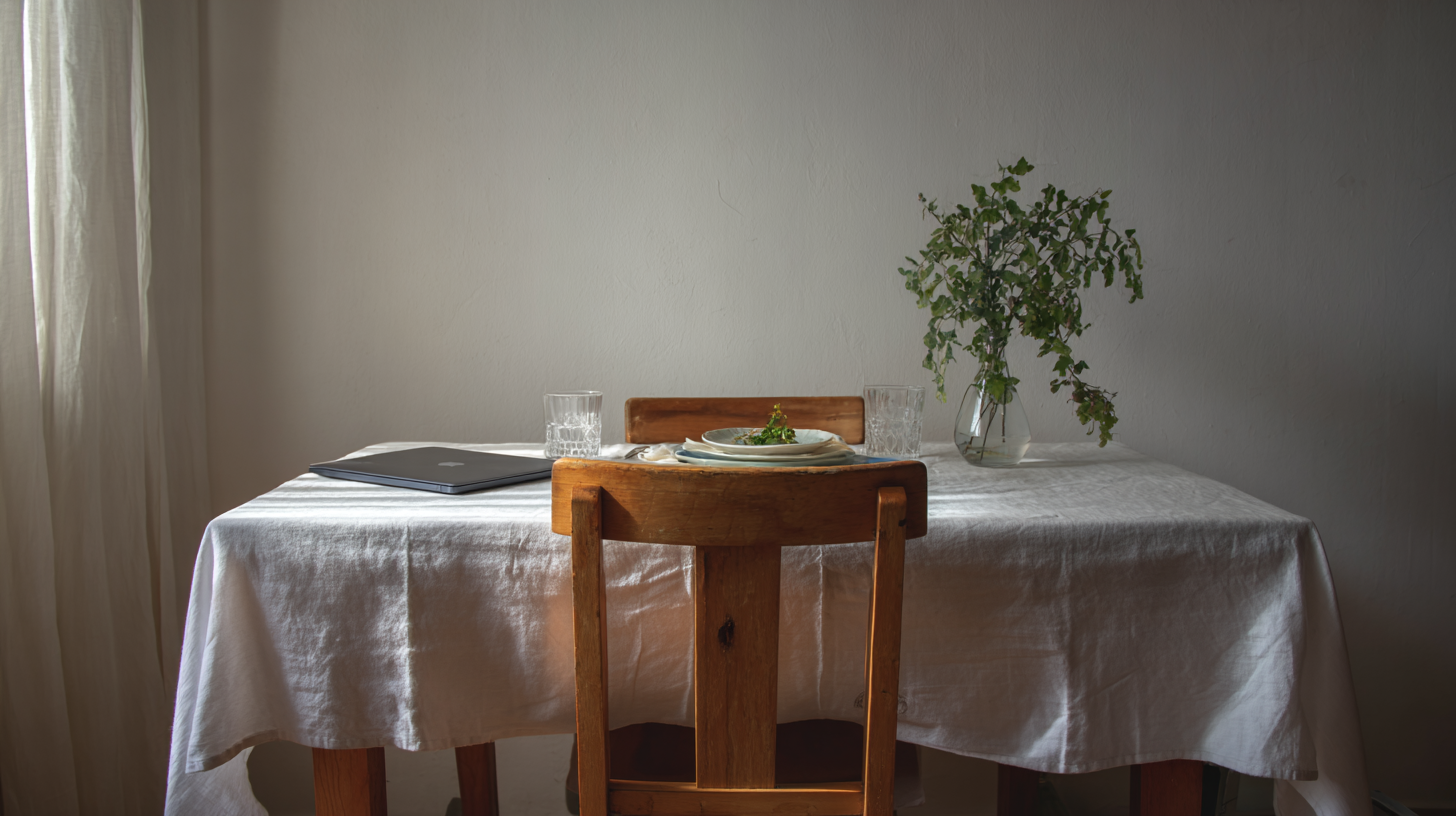
If listening to your own hunger is like hearing a quiet knock at the door, then a calm table is the act of opening it. My dear friend, you and I both know how rarely one eats in peace these days. The plate appears; the screen glows; notifications flare like little fireworks; and, before one can utter a polite “how do you do?” to the meal, it has vanished without ceremony. Yet mindful eating depends mightily on the company one keeps at table—and I do not mean human company only, but the entire little theatre of objects, noises, and temptations that surround your fork.
Imagine, if you will, a dining room where the most boisterous guest is the ticking of a distant clock. No television declaring the latest calamity, no phone buzzing for attention, no laptop sulking in the corner, pleading to be consulted. In such a room, the plate ceases to be a mere supporting actor to the main drama of messages and media; it becomes the principal character. Food, which has long supported your health, wellness, and spirits, is finally allowed to speak. And once it does, you will find its conversation surprisingly rich—flavors more vivid, textures more intriguing, and your own satiety signals much less shy.
Consider, by contrast, the very modern spectacle of dining with a screen. You have seen it: a person, perhaps even yourself, fork in one hand, phone in the other, eyes never quite resting upon the food. The plate grows lighter, yet the mind remains unsatisfied, half-fed and half-distracted. Researchers have observed that eating with screens and other diversions often leads people to consume more than they intended and to feel less satisfied afterwards, as though the meal never quite “registered.” It is as if the stomach has completed its duty, but the mind still feels it has not been properly invited to the party.
I must beg you not to think this is a matter of strictness or severity, as though I would condemn you to dine in monastic silence at every meal. Not at all. It is, rather, about creating a little refuge in the day—a small pocket of calm where your attention is allowed to rest on the simple act of eating. You know how, in certain houses, the drawing room is set apart for conversation and repose, while the more chaotic business of the household swirls elsewhere? Your table can serve a similar purpose for your own nutrition, if you treat it as a room in which the clamorous guests of technology are, occasionally, politely refused admittance.
One gentle way to begin is to declare just one daily meal a “no-screen engagement.” It need not be the grandest banquet; even a modest breakfast will do. Before you sit, you might place your phone in another room, close the laptop, and switch off any news that tends to rattle the nerves. You are not banishing these things from your life; you are merely giving your meal a clear, unshared appointment. At first, the silence may feel odd, like meeting an old acquaintance after many years and not knowing quite what to say. But soon you will find your attention, freed from constant interruption, turns quite naturally to your food—and then, quite pleasantly, to your own internal cues.
Physical space, too, exerts more influence than we like to admit. A table cluttered with old mail, undone tasks, and the remnants of earlier meals whispers reproachfully while you eat: “You should be working, organizing, catching up.” The mind, obedient to these insinuations, hurries through the meal as though eating were merely an inconvenient intermission in the great drama of productivity. If you can clear even a small portion of the table and make it deliberately pleasant—a simple cloth, a glass of water, perhaps a little plant or candle—you send yourself a quiet message: “This moment matters.” In so doing, you are not merely decorating the room; you are dignifying your own care and wellness.
I think you will find that once distractions are gently set aside, several improvements appear almost unbidden. You notice the speed of your eating, for one thing. Without a show to follow or messages to answer, rapid shoveling begins to feel faintly absurd; there is no race to be run. You realize when a bite is particularly pleasing, instead of having it slip by unnoticed. You become more aware of that subtle shift from “this is delightful and I want more” to “this is still pleasant, but I no longer desire it quite so much”—a shift that, in a distracted state, is rarely perceived until one is already overfull.
Distraction-free eating also does a very pretty thing for your emotions: it allows you to distinguish between the comfort that food genuinely provides and the burdens you may be asking it to bear unfairly. When your attention is divided between a stressful email and a plate of pasta, the anxiety and the eating become so entangled that you can scarcely tell which is soothing which. But when you sit with the food alone, you begin to see more clearly. Perhaps the meal does comfort you, but you also recognize that some of the unease belongs to other matters entirely. This clarity is not a mere philosophical luxury; it is an ally in preventing food from becoming the sole instrument for managing every feeling that passes through your day.
You may be wondering how to manage this in a lively household, where children require tending, partners wish to converse, and the dog is convinced that every bite belongs rightfully to him. Perfect serenity is not necessary—nor, I suspect, would it be very entertaining. Aim instead for what I might call “attentive looseness.” Allow conversation, certainly, but let it fall into the background once in a while while you take a breath, observe your plate, and taste a bite with your full attention. You may even invite others into the experiment: ask what they notice about the meal beyond “it’s good” or “I’m starving.” Children, especially, enjoy playing at detectives of flavor and texture if you make it into a little game.
On those days when you must eat at your desk, because the world has entirely forgotten the wisdom of pauses, you can still soften the assault of distraction. Close the most demanding windows on your computer; turn your chair a little away from the screen; resist, if you can, the urge to read while you swallow. Offer yourself at least a few minutes of focused eating at the beginning of the meal, even if the latter half must be more hurried. A modest island of presence is better than a sea of mindless multitasking. Over time, you may find that those few guarded minutes become the calmest and most restoring part of the workday.
Nor should we underestimate the role of sound. A room filled with clamor—from television, from overlapping videos, from perpetual alerts—keeps the nervous system on a kind of low, relentless march. Eating in such a setting often leads to tense, speedy bites, as though the body were preparing for some impending alarm. When possible, favor quieter soundscapes: a little gentle music without words, or the simple hum of the house. Taste, after all, is not independent of mood. A calmer mind tends to find food more satisfying; and the more satisfying the meal, the less you feel compelled to chase fulfillment in repeated, restless snacking.
If this all feels somewhat grand for something as humble as lunch, remember that habits are rarely altered by forceful decrees; they shift by means of these small, repeated acts of respect. Each time you place your phone in another room, clear a small corner of the table, or take a bite without staring at a screen, you are quietly declaring that your own body and its needs are worthy of unshared attention. This, more than any particular diet or rule, is what anchors mindful eating in daily life: the conviction that nourishing yourself deserves, at least for a few minutes, to be the main event rather than the background noise.
Creating a distraction-free environment is less about puritanical rules and more about reclaiming a small ceremony that modern chaos has unceremoniously trampled. You are not merely eating to survive or to check a box on some health chart; you are engaging in the very human, very ordinary miracle of feeding a living body. When you strip away the constant chatter of devices and obligations, you give that miracle a clear stage on which to act. And once you grow accustomed to the ease and clarity it brings—to the way fullness reveals itself more gently, how taste becomes more vivid, how calm settles in with each unhurried bite—you may find yourself guarding that quiet space at the table as fiercely as you protect any other treasured part of your day.
Savoring food with all your senses
Now that you have cleared a space for your meal and quieted the clamor around it, the next natural step is to truly meet your food—to greet it, as it were, with all your senses awake. This is where mindful eating begins to feel less like a discipline and more like a privilege. You are not merely putting fuel into a machine; you are receiving a gift that has passed through many hands—soil, sun, rain, farmers, grocers—before it arrived upon your plate. When you slow down enough to notice, the very same food that once seemed ordinary becomes almost noble in its purpose.
Start with your eyes. Before the first bite, pause for a brief moment and simply look at what is before you. Notice the colors—the deep green of broccoli, the golden hue of roasted potatoes, the bright red of a tomato slice. Even a simple bowl of oats has shades and textures if you trouble yourself to see them. Colorful plates are not only pleasing; they often signal a greater variety of nutrients, the very things that support your nutrition and daily strength. You might quietly ask yourself, “What elements of the earth do I see here? What has been gathered for my care?” Such reflection transforms the plate from a casual convenience into a kind of altar of daily provision.
Then, turn your attention to aroma. Bring the fork or spoon close before you taste and take a slow, unhurried breath. Notice the steam, the spices, the freshness or warmth that rises. You will find that smell prepares the body to receive food; it stirs the appetite gently without rushing it. The Lord designed us so that digestion begins even before the first bite, as the senses alert the body that nourishment is on its way. When we skip over this step in haste, we often overshoot both hunger and satisfaction. But when you inhale and truly register the scent, the first bite becomes far more satisfying than when you swallow mindlessly between hurried tasks.
As you begin to eat, invite your mouth to become an attentive instrument instead of a hurried conveyor belt. Pay attention to the texture of each bite—the crisp snap of a carrot, the softness of bread, the creaminess of a soup, the slight chewiness of whole grains. These details may seem small, yet they are what turn eating from a blur into an experience. The more fully you register the texture and taste of each mouthful, the fewer bites you need in order to feel genuinely content. Many people who practice this kind of attentive tasting find that modest portions leave them more satisfied than large, rushed meals ever did.
Here is a little exercise you might try with just one bite at each meal. Choose a piece of food—perhaps a slice of apple. First, look at it for a brief moment: notice the sheen of the skin, the pale flesh, the pattern where the knife passed through. Then smell it, noting the sweetness or tartness. Place it in your mouth and, before chewing, simply feel it rest on your tongue. Notice the coolness, the weight. As you begin to chew, count slowly to eight or ten, not as a strict rule, but as a way of stretching out your awareness. Observe how the flavor gradually unfolds—how the first sharp note softens into something gentler. When you swallow, see if you can feel the path of that nourishment as it begins its quiet work. One fully attended bite like this can teach you more about your meal than twenty bites taken in haste.
Savoring with all your senses also brings a certain honesty to your choices. When you actually taste your food, you begin to notice which items truly satisfy and which merely promise satisfaction without delivering it. You may discover that a handful of fresh nuts, chewed slowly, leaves a richer, more lingering contentment than a whole bag of hastily eaten chips. Or that a piece of dark chocolate, allowed to melt on the tongue, provides deeper pleasure than several bars swallowed almost without noticing. This is not about becoming strict or joyless; it is about recognizing that many highly processed foods are engineered to shout at your taste buds in the first second and then fall strangely flat, luring you to keep eating in search of a fulfillment that never quite arrives.
In contrast, simpler, less tampered-with foods quietly reward your patience. A vine-ripened tomato, a ripe peach, a warm slice of whole-grain bread—these may not shout as loudly at first, but if you give them your attention, they offer layered, enduring satisfaction. As your senses become more attuned, you will find your preferences gradually shifting toward the foods that sustain both pleasure and wellness, rather than those that excite and then abandon. This gentle re-education of taste is one of the hidden blessings of slowing down; you are no longer at the mercy of whatever shouts the loudest from the shelf.
Your ears, too, have a part to play. Listen, now and then, to the sounds of your meal. The crackle of a crust, the crunch of a salad, even the quiet clink of a spoon against a bowl remind you that you are engaged in a living act, not abstractly thinking about health while treating the body as an afterthought. Some people find that when they actually hear themselves chewing, they are naturally inclined to take smaller bites and chew more thoroughly. This slower rhythm gives the stomach more time to register fullness, which, as we have already seen, prevents that uncomfortable, overfull state that so easily creeps in when we eat in silence of mind but noise of environment.
Do not forget, either, the sense of touch—not only in the mouth, but in the way you handle your food and utensils. There is something quietly grounding about feeling the warmth of a bowl in your hands, the smooth handle of a fork, the coolness of a glass of water. When you bring both hands to the table, instead of eating with one while the other scrolls a device, your whole body joins the act. This bodily presence anchors you in the moment, much like folding the hands in prayer steadies the wandering mind. In time, you may find yourself taking a brief pause before the first bite, much like a blessing, simply to feel the presence of the meal and acknowledge the care that has brought it to you.
You may worry that all this savoring will make meals unbearably slow or overly self-conscious. Yet, like learning a new hymn, what feels awkward at first soon becomes natural. You need not dwell on every bite as though it were a ceremony. A few moments of focused attention at the beginning of the meal are often enough to set the tone. Perhaps you fully attend the first three bites—seeing, smelling, tasting with intention—and then let the rest of the meal unfold more easily. Even this modest practice can transform the entire experience; your body receives the message that the meal is being taken seriously, and your appetite responds with greater calm and clarity.
There is another quiet gain in all of this: gratitude begins to rise almost of its own accord. When you actually see the colors, smell the spices, feel the textures, and taste the complexity of even a humble dish, it becomes difficult to treat food as a mere obstacle or enemy. Instead, you recognize it as an ally in your daily labor, a provision kindly given that your hands and mind may serve more effectively. In an age where eating is often tangled with guilt and anxiety, this return to simple thankfulness is no small medicine. Gratitude softens the heart, reduces the urge to binge or restrict, and makes balanced choices feel less like punishment and more like cooperation with the good that has been placed before you.
Over time, using all your senses in this way will begin to knit together the other skills you are learning. The same attention that helps you notice aroma and texture will also help you catch early signs of fullness. The same pause you take to look at your plate will make it easier to recognize whether you are eating from genuine hunger or from some restless feeling within. And the same appreciation that grows when you savor your food will gradually loosen the grip of those hurried, joyless habits that have long worked against your health. By engaging sight, smell, taste, touch, and sound, you are not complicating eating—you are restoring it to the rich, grounded place it was always meant to hold in a life ordered toward true health and quiet strength.
Managing emotional eating triggers

You and I both know that the hardest eating is rarely about hunger. It is the evening when the house grows quiet and the worries grow loud; the day when someone’s careless word stings; the afternoon when fatigue presses on your shoulders like a weight. In those moments, the hand drifts toward the cupboard almost without your consent, and food—dear, faithful, overburdened food—is summoned like a servant to attend to sorrows it was never meant to bear alone. If we are to practice mindful eating, we must learn to distinguish between feeding the body and trying to hush the heart with a spoon.
Let us speak plainly: eating to soothe feelings is not proof of moral failure. It is proof that you are human. From childhood, many of us were comforted with treats when we were sad, praised with sweets when we did well, or occupied with snacks when adults were too busy to tend to our feelings. Is it any wonder that, as grown people, our minds still associate certain foods with relief, reward, or distraction? The trouble is not that food brings comfort; the trouble arises when it becomes the chief, or only, answer to every discomfort. Over time, that bargain exacts a price on your wellness, your energy, and often your sense of peace.
One of the first steps is to notice the particular “weather” that sends you to the pantry. Emotional eating is not random; it follows patterns as faithful as the sunrise. For some, it is stress—the long list, the tight deadlines, the ever-urgent demands. For others, it is loneliness, boredom, anger, or that vague, restless unease that comes when you feel you should be doing something meaningful and cannot quite name what. You might take a week and, without judgment, simply keep a little record. Each time you find yourself reaching for food outside your usual meals, pause long enough to ask, “What am I feeling right now?” You might jot down a few words: “tired,” “worried,” “annoyed,” “unseen,” “celebrating.” Over a few days, the same companions will begin to appear, and you will know your familiar triggers by name.
Once you can name them, you can begin to speak to them more wisely. Suppose, for instance, that “evening loneliness” shows up again and again. You come home, the house is quiet, and the refrigerator becomes your most reliable conversation partner. In that moment, the problem is not a lack of calories; it is a lack of connection. Food, no matter how abundant, cannot introduce you to a friend, but it can distract you from the ache long enough to postpone action. When you see this pattern clearly, you can begin to ask a different question—not “What do I want to eat?” but “What kind of comfort do I truly need?” Sometimes the answer will still include food, but it will not stop there.
A simple tool I have often recommended is what I call the “HALT” check—four letters standing for Hungry, Angry (or anxious), Lonely, and Tired. When an urge to eat surges up suddenly, especially if you have eaten not long before, pause and quietly run through these four. “Am I physically hungry? Am I angry or anxious? Am I lonely? Am I tired?” If the answer is true hunger, then by all means, eat and thank God for the provision. But if the stronger note is anger, loneliness, or weariness, then you know this is less a matter of nutrition and more a matter of care.
Let us imagine you discover that you are not hungry so much as you are weary to the bone. You have shouldered the burdens of the day, and now you want something to soften the edges. In that case, a cookie may bring a moment’s sweetness, but it will not actually give your body the rest it cries out for. What would tend to that fatigue more truly? Perhaps it is lying down for ten minutes with your eyes closed. Perhaps it is stepping outside to feel the air on your face, taking a few slow breaths. Perhaps it is loosening the tight collar of your schedule by saying no to one more demand this evening. Food may still have its place, but it will be part of a larger, kinder response instead of the sole instrument.
Another key distinction is between cravings that appear suddenly and insistently, and the steady, gentle voice of genuine hunger. Emotional cravings often have a very particular script: “I need ice cream, right now,” or “Only chips will do.” Physical hunger is usually less dramatic; it is willing to be answered by a range of foods—a hearty soup, a piece of fruit, a simple sandwich. When you hear that sharp, specific demand rise up, you might gently test it by offering an alternative: “If I am truly hungry, I would be willing to eat an apple or some nuts.” If your mind rebels—“Absolutely not; it must be chocolate”—then you can smile and say to yourself, “Ah, this is more about my feelings than my stomach.” That awareness alone loosens the grip of the craving.
Now, it is one thing to know this and another to stand in the kitchen with a storm of feeling and a box of cookies within reach. In that moment, you do not need a sermon; you need a simple, doable next step. Here is a practice that has helped many: give the feeling five minutes. Before you eat, tell yourself, “I am free to have this food, but first I will spend five minutes tending to what I feel in some other way.” Set a small timer if you like. In those five minutes, you might:
Take a short walk down the street or simply around the house, breathing slowly.
Sit in a quiet spot and name your feeling out loud: “I feel anxious about that meeting,” or “I feel hurt by what was said today.”
Write a few lines in a journal to pour some of the pressure out of your mind onto paper.
Offer a brief prayer, not polished, but honest: “Lord, I am weary and reaching for food; show me what I truly need.”
Call or message a trusted friend, not to fix everything, but simply to break the isolation.
At the end of those five minutes, you check in again. If you still wish to eat, you may do so—no scolding, no drama. But you will find, more often than not, that the edge of the craving has softened. Sometimes it will have passed entirely; other times it will still be there, but less like a shout and more like a whisper. The five minutes do not simply delay eating; they give you space to remember that you have more tools than your fork.
There is also wisdom in preparing for your particular triggers before they arrive. If you know that late-night television leads almost invariably to mindless snacking, you might decide to shorten the viewing or change the activity: a book, some gentle stretching, a warm bath, a quiet conversation. If you recognize that stress at work sends you to the vending machine each afternoon, you might plan a short “breathing break” at the same hour or step outside for some fresh air with a glass of water or tea. When you meet your trigger with a ready alternative, you are not simply resisting; you are replacing.
Sometimes, the feelings we are trying to smother with food are not fleeting moods but long-standing sorrows—grief, chronic stress, old wounds that have never fully healed. In such cases, it is both wise and courageous to seek support beyond your own resources. Speaking with a counselor, pastor, or trusted advisor is not a sign that you have failed at self-control; it is a sign that you are taking seriously the weight of your own heart. As that deeper work unfolds, you may find that the frantic urge to eat in order to numb yourself begins, gradually, to quiet down. Food will no longer be asked to carry burdens it cannot bear.
Now, I would not have you swing to the opposite extreme and decree that comfort and food shall never again meet. Shared meals have always been places of consolation and joy. A bowl of warm soup on a cold evening, bread broken with a friend after a hard day—these are proper comforts, and there is no virtue in refusing them. The aim is not to strip eating of all emotional warmth, but to set it in right relation: food may support your heart, but it must not become your only refuge. When a treat is chosen with awareness, enjoyed slowly, and received with gratitude rather than hidden in shame, it ceases to be an act of bondage and becomes instead a small, honest pleasure woven into a balanced life.
One practical boundary that can help is to bring comfort foods out of hiding and into the light of regular meals. Instead of eating them standing at the counter or furtively by the glow of the refrigerator, you might place a modest portion on a real plate, sit at the table, and enjoy it as you would any other food—present, seated, unhurried. This simple act removes some of the secrecy that often fuels emotional overeating. It is difficult to binge in a spirit of calm, open acknowledgment; it thrives in haste and concealment. By treating even your most tempting foods with the same dignity as your vegetables and grains, you remove some of their mysterious power.
Above all, as you learn to manage emotional triggers, extend to yourself the same gentleness you would offer a weary friend. There will be evenings when you realize, only after the fact, that you have eaten more than your body needed in an attempt to soothe a troubled mind. Do not heap condemnation upon yourself. Instead, look back on the episode as a teacher. Ask, “What was I truly seeking? What might I try differently next time that feeling visits?” In this way, even missteps become part of your training in mindful eating, not evidence that you are incapable of change.
As you practice naming your feelings, pausing before you eat, and offering yourself alternative forms of comfort, you will begin to notice a new freedom. The same circumstances that once drove you automatically to the cupboard will still arise—stressful days, quiet evenings, unexpected disappointments—but they will no longer dictate your response with iron authority. You will have a moment of choice, a little space to breathe and decide. And in that space, your body’s true needs and your heart’s deeper longings can both be honored, each in its proper way, as you continue to build habits that support lasting health and a steadier peace of mind.
Building sustainable mindful eating habits
Big, lasting change in mindful eating rarely arrives with fanfare. It is usually built from small, nearly invisible choices that you repeat until they become part of who you are. Instead of aiming for perfection—never eating distracted, never overeating, never reaching for food when tired—aim for direction. Ask yourself, “What would it look like to be just a little more awake with this meal than I was last week?” Tiny adjustments, made gently but consistently, reshape your relationship with food far more reliably than short bursts of strictness that leave you exhausted.
One of the wisest shifts you can make is from “diet mode” to “practice mode.” Diet mode speaks in all-or-nothing terms: “I blew it,” “I was good,” “I cheated.” Practice mode, by contrast, assumes you are learning a skill. A musician does not quit because she misses a note; she plays the passage again, a little more carefully. You can treat your eating in the same way. Each meal becomes a low-stakes rehearsal for the kind of wellness you desire, not a moral test that you either pass or fail.
To build sustainable habits, start smaller than you think you need to. Choose one or two anchor practices and repeat them until they feel almost automatic. For example, you might decide that your first three bites of any meal will be eaten slowly, with attention to taste and texture. Or you might choose a single daily “check-in”—once a day, you pause before eating and ask, “Am I physically hungry, emotionally stirred, or just on autopilot?” When these small anchors are in place, you can gradually add more, but it is better to have one habit you truly keep than ten you abandon after a week.
Routines are powerful allies here. When you eat at wildly different times and places each day, every meal requires a fresh decision, and decision fatigue sets in long before the week is over. It can help to establish gentle rhythms: waking, a simple breakfast, a midday meal away from your desk when possible, an evening meal at roughly the same hour. You need not be rigid, but having a loose framework reduces the “What now?” moments that often lead to hurried, less thoughtful eating. Over time, your body begins to anticipate nourishment, hormones regulating appetite become more stable, and your capacity for calm choices grows.
Pairing new habits with existing ones can also make them stick. Behavioral scientists call this “habit stacking.” You might link a brief hunger check-in to something you always do—like washing your hands before eating or setting your plate on the table. “When I set down my plate, I pause for ten seconds and ask where I am on the hunger–fullness scale.” Or “When I pour my drink, I take two slow breaths.” The existing habit acts like a hook on the wall; you are simply hanging a new practice where you will not forget it.
Another overlooked element of sustainable nutrition habits is planning that respects your real life, not your idealized fantasy of it. If your evenings are rushed, building your entire mindful eating practice around a slow, elaborate dinner will fail the moment work runs late or a child needs help with homework. Instead, look for practices that fit even on messy days: a mindful first bite, setting your fork down once or twice during the meal, packing one snack that actually satisfies hunger instead of grabbing whatever appears in a vending machine. Ask yourself, “What would mindful eating look like on my busiest day?” and build from there.
Flexibility is not the enemy of discipline; it is what keeps discipline from snapping. Some days you will savor every bite at a quiet table; other days you will eat a sandwich in the car between obligations. Sustainable habits allow for both. When the ideal is impossible, look for the smallest piece of it you can still keep: turning off the radio for the first two minutes while you eat, noticing the taste of the first few bites, or doing a brief hunger check before you reach for seconds. Even under less-than-perfect circumstances, you are training your mind to stay present rather than surrendering entirely to chaos.
It also helps to anticipate obstacles before they appear. What tends to throw you off course? Perhaps it is coming home famished, which makes any sort of mindful choice nearly impossible. You could respond by preparing a simple, nourishing option in advance—cut vegetables and hummus, a pot of soup, a batch of cooked grains and beans. When your future self opens the fridge, not in a calm state but in a ravenous one, there will be at least one option that supports, rather than sabotages, your intentions.
People often underestimate the role of environment in sustaining habits. If your kitchen surfaces are perpetually cluttered, cooking even a simple meal may feel daunting, and takeout will seem more appealing by default. Consider organizing your space so that the tools of mindful eating—plates, real glasses, basic cooking supplies—are easy to reach. Keep a bowl of fruit visible instead of hiding it behind snack foods. Place a small notecard near the table with a question you want to remember, such as, “How hungry am I right now?” or “What am I really needing?” These quiet cues invite you back to your intentions without demanding perfection.
Support from others can turn fragile resolutions into sturdy habits. You might invite a friend, spouse, or family member to experiment with one practice alongside you—perhaps a weekly meal eaten without screens, or a shared commitment to pause before second helpings. You could even form a small discussion group at church or in your community to explore how eating, faith, and wellness intersect. Speaking aloud about your efforts and struggles dissolves the sense that you must figure everything out alone and can spark insights you might never reach by yourself.
Tracking your experience for a short season can reveal patterns that your memory glosses over. For a week or two, you might jot down not just what you eat, but how you eat and how you feel afterward. Did you sit or stand? Were you distracted or present? How did your body feel two hours later—steady energy or a crash? This is not about judging yourself; it is about gathering information. Once you see the connections between hurried meals and afternoon fatigue, between slower eating and fewer cravings at night, your motivation for change grows from the inside out.
Along the way, expect resistance—from habits, from old narratives, even from loved ones who are used to you eating a certain way. You may face internal voices that whisper, “This is too much work,” or “You always quit eventually.” Rather than arguing with those voices, acknowledge them and keep practicing anyway, as one would keep walking through a patch of wind. The real measure of change is not whether you ever hear those doubts, but whether you let them decide your next meal.
Sustainable mindful eating also calls for a kinder way of speaking to yourself. Harsh self-criticism may feel like motivation, but it usually leads to rebellion or despair, not steady effort. When a meal goes poorly—when you eat past fullness, rush mindlessly, or fall back into old patterns—practice asking, “What did I learn?” rather than, “What is wrong with me?” Over time, this curious, compassionate stance makes it easier to get back on track after setbacks, which is precisely what separates a fleeting experiment from a lifelong habit.
Most of all, keep connecting these daily choices to something larger than appearance or numbers on a scale. Ask yourself why this matters. Do you want steadier energy to serve others well, clearer thinking for your work, a calmer heart in the presence of your family, or simply a more peaceful relationship with food? When mindful eating is tethered to a deeper calling—to love God and neighbor with your whole self, body included—it becomes more than a self-improvement project. It becomes a way of honoring the life you have been given, one bite, one breath, one small decision at a time.
- What is mindful eating, in simple terms?
- Mindful eating means paying full attention to your food and your body while you eat—how it looks, smells, tastes, and how it makes you feel. Instead of eating on autopilot, you notice hunger and fullness cues and make choices that support your health and values.
- Can mindful eating help with weight loss?
- Many people naturally eat less and feel more satisfied when they slow down and listen to their bodies, which can lead to weight loss over time. However, the deeper goal is a healthier relationship with food and more stable nutrition habits, not quick or extreme changes on the scale.
- How do I start practicing mindful eating if my schedule is very busy?
- Begin with tiny practices that fit into your existing routine, such as taking three slow breaths before you eat or paying full attention to the first three bites of any meal. Consistency matters more than length; even brief moments of awareness can reshape long-term habits.
- What should I do if I often eat from stress or emotions?
- First, pause long enough to name what you are feeling—stress, sadness, boredom, or loneliness. Then, before eating, try one small alternative form of comfort, such as a short walk, a few deep breaths, prayer, or a quick journal note; afterward, you can decide more clearly whether you’re truly hungry.
- Is it possible to be mindful when eating with family or friends?
- Yes; mindful eating doesn’t require silence or solitude. You can still enjoy conversation while occasionally checking in with your body, noticing your food’s taste and texture, and choosing to stop when you feel comfortably satisfied rather than when your plate is empty.
- Do I have to give up my favorite comfort foods to eat mindfully?
- No; mindful eating is about how and why you eat, not a list of forbidden foods. You can include favorites in moderate portions, enjoy them slowly, and notice how they affect your body and mood so they become part of a balanced pattern that supports your overall wellness.
- How long does it take to see benefits from mindful eating?
- Some changes—like feeling more satisfied and less rushed at meals—can appear within days or weeks of consistent practice. Deeper shifts, such as fewer cravings, steadier energy, and a calmer relationship with food, usually unfold gradually over months as mindful eating becomes part of your daily life.
Ashland Ashland Sabbath Chapel
Beside our live streamed church services, all are welcome to attend our church in person each Saturday beginning 10:00 AM Central Time by going to 2425 Owens Rd., Ashland, AL 36251. There is no cost and any donations are strictly voluntary.
For questions, call +2563547124.