Come join Ashland Sabbath Chapel Ministries each Saturday for live streamed church services. Bible Study begins at 10:00 AM Central Time and Sermon at 11:00 AM. Visit Our YouTube channel and watch from home!
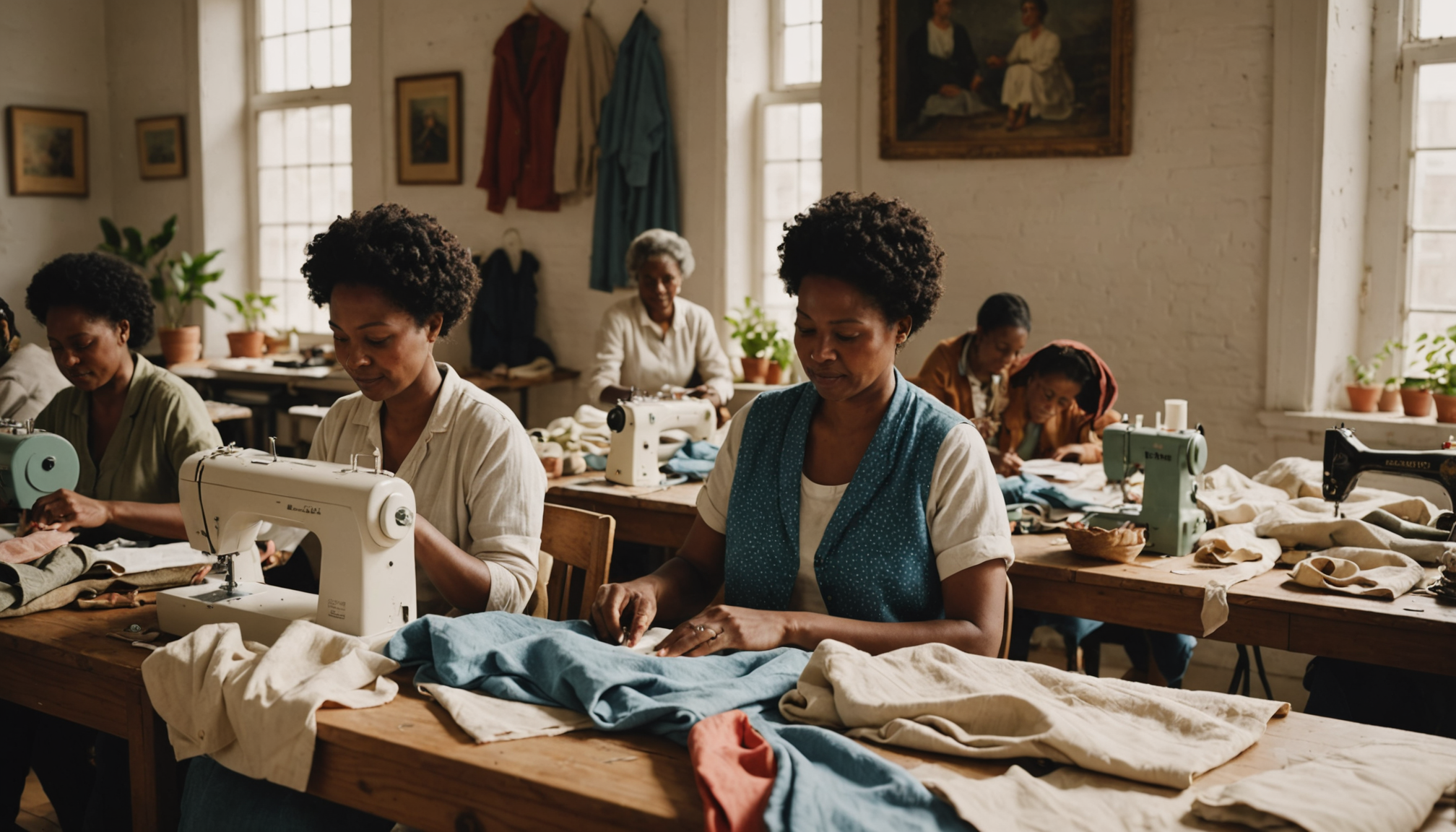
In the small, sun-drenched homes of the early Adventist community, a revolution of sorts was taking place, not in the grand halls of power or on the bustling streets, but at the humble sewing machine. Here, the notion of home sewing blossomed, giving birth to a culture steeped in practicality and modesty. Women gathered, their fingers deftly moving among threads and fabrics, engaging in a kind of textile alchemy that transformed simple materials into garments imbued with purpose.
A fervor for modest attire accompanied their creations, aligning perfectly with the principles held dear by the Adventist faith. Each stitch was not merely a functional necessity but a reflection of their spiritual values—dressing in a way that honored their beliefs while fostering simplicity and humility. Clothing, then, became a canvas upon which their faith was woven, with designs eschewing the ostentation so common in the wider society.
This was more than just a means to cover oneself; it was about crafting a new identity, one that rejected the prevailing fashion trends of the time. Instead of chasing after fleeting whims, Adventist women embraced practical fashion, creating pieces that were both utilitarian and aesthetically appealing. Think of long skirts paired with simple blouses, all carefully tailored to allow freedom of movement and to promote modesty.
With each home sewn garment, the community built a sense of solidarity, not just in style but in shared values and beliefs. Fathers, sons, and brothers contributed to this culture too, engaging in what was perhaps a less noticed but equally vital aspect of their clothing revolution. The whole family was involved in the consciousness of clothing reform that responded to their spiritual call.
As they crafted each piece with care, they were not simply producing clothing but affirming a lifestyle. The Adventists, with their emphasis on faith over fashion, found themselves entwined in a battle against the fast-paced world outside, choosing to create a simpler, yet richer tapestry of life within their own homes. In this space, garments spoken of in humble terms became the embodiment of their lofty ideals, marking the onset of a new chapter in both personal expression and communal identity.
Historical Context of Adventist Clothing
The historical tapestry surrounding Adventist clothing production is intrinsically linked to the broader currents of social and religious movements occurring in the 19th century. As the world ushered in transformative innovations, both in industry and ideology, the early Adventists found themselves at a unique intersection of faith and practical necessity. The backdrop of the Second Great Awakening, a period marked by religious fervor and revivalism, provided fertile ground for the formation of a community eager to uphold distinct moral values, particularly those concerning personal conduct and appearance.
Within this milieu, as conventional societal norms dictated extravagant fashion, a counter-current emerged championing the principles of modesty and simplicity. In particular, the Adventist movement, underscored by the teachings of its founders, strongly advocated for a lifestyle detached from worldly excess. This ethos was palpably reflected in the garments crafted by individuals who sought to redefine their identity through what they wore. Here, the practice of home sewing became not merely a domestic chore but a dignified expression of religious conviction and community solidarity. Women, in throngs, made use of their textile abilities, fostering not only a sense of purpose but also a bond among those participating in these communal crafting sessions.
The socio-economic context of the time played a pivotal role in shaping the production practices within Adventist circles. Many families faced the dual challenge of limited resources and a burgeoning consumer culture that celebrated excess. In response, the community’s commitment to clothing reform arose, prioritizing self-sufficiency and frugality. This conscientious effort was not just about saving money; it was a deliberate rejection of the prevailing standards of beauty that often dictated an individual’s worth and status. Instead, Adventists embraced modest attire as an expression of their principles—rejecting flamboyant styles in favor of garments that conveyed a sense of dignity, humility, and moral integrity.
As the movement progressed, the influence of religious tenets became ever more pronounced in the manner that clothing was perceived and produced. With attention to the virtues of temperance and practical simplicity, fashions fluctuated to echo the changing theological understandings and societal reactions. Ladies’ dresses transformed from complex silhouettes to simpler forms that allowed for ease of movement, while men donned sturdy attire fit for both labor and worship. The notion of practical fashion was thus ingrained in each decision regarding design and construction. It became a fundamental aspect of their identity, a powerful declaration that their faith manifested not only in behaviour but also in the very fibers they chose to wear.
In aggregating these elements of historical context, it becomes evident that the production of clothing within the Adventist community was far more than an act of creation; it was a profound statement of belief, an articulation of shared values, and an embodiment of communal resilience. As the years unfurled, this devoted approach to clothing would continue to evolve, shaped by both internal convictions and external influences that would challenge the steadfastness of their practices.
Materials and Techniques Used

In the heart of the Adventist movement, an intricate dance with fabric began, influenced not merely by trends but by fundamental principles that shaped the community’s ethos. The materials chosen for this textile work spoke volumes of their beliefs. Cotton, linen, and wool were the staples, celebrated not only for their durability but also for their ability to breathe, an essential quality for the climate variations that embraced the early settlers. This choice of fabric was deliberate—a rejection of synthetic alternatives that were gaining popularity in the more commercialized textile markets. Indeed, the use of natural fibers was as much a statement of their commitment to environmental stewardship as it was to simplicity.
The techniques employed in this clothing production were steeped in practicality, a reflection of the community’s values. Home sewing became an art of necessity, where each seam was not just a connection of fabric but an opportunity to instill purpose into every garment crafted. Women, often gathering in groups, participated in a shared ritual of creation, exchanging tips and skills, and fostering a greater sense of camaraderie. The rhythmic hum of sewing machines and the gentle tap of fabric being cut echoed throughout their homes, symbolizing both industriousness and devotion. The advent of patterns allowed even the least experienced seamstress to produce garments that conformed to the ideals of modest attire without excessive embellishment.
The Adventist community prioritized not only the aesthetic but also the ethical implications of garment production. Linen and cotton, soft against the skin, promised comfort and ease of movement—attributes that resonated deeply with their philosophy of living a life of moderation and dignity. The garments designed and produced during this time tended to eschew the frills and hyperboles of contemporary fashion. Instead, the emphasis lay on structured bodices and flowing skirts or trousers that allowed for vigorous activity—embodying a spirit of practicality that matched their lifestyle. Among the men, durable fabric became the hallmark of their work shirts and trousers, signifying both readiness for labor and adherence to their modest ideals.
In addition, the integration of innovative techniques such as patching and upcycling illustrated the community’s commitment to sustainability. Worn garments were not discarded lightly; they were transformed, reimagined into new creations that upheld the principles of clothing reform. This practice not only extended the life of each piece but also underscored an essential Adventist belief in stewardship and resourcefulness—values that underscored the charge to live simply and responsibly in all aspects of life. Thus, every garment served as both an expression of faith and a testament to a conscientious approach to consumption.
As the threads were woven together, so too were the lives and beliefs of those within the community, each garment embodying a narrative that transcended mere utility. The results of these practices went beyond the confines of individual households; they created a unified identity, marked not just by attire but also by shared values and aspirations. In this way, the materials and techniques employed within the context of early Adventist clothing production became a vital reflection of a lifestyle that was as much about moral integrity as it was about the fabric of daily living.
Influence of Adventist Principles on Fashion
The influence of Adventist principles on fashion is palpable throughout the garments that emerged from this dedicated community. Each piece of clothing was a carefully considered representation of not only personal style but also collective beliefs—an interplay between faith and the social fabric that enveloped them. At the heart of this transformation lay a profound commitment to the values espoused by the Adventist faith, which elevated modesty and simplicity to the forefront of personal expression.
In stark contrast to the extravagant fashions of their contemporary society, the Adventists championed modest attire as a means of setting themselves apart. Their clothing was intended to reflect a lifestyle that sublimated vanity in favor of humility. Women, for instance, embraced long skirts that flowed gracefully while still adhering to the foundational tenets of their beliefs. This embrace of modesty not only fulfilled a spiritual calling but also functioned as a vehicle to cultivate a sense of identity that resisted the seductive pull of consumerism and impermanence prevalent in the secular world.
Through home sewing, the Adventists found a practical outlet for both their creativity and their convictions. The act of producing one’s own garments became a communal activity, fostering bonds among those involved in the textile work. Group gatherings often resembled a fusion of functional work and social interaction, where women shared skills and ideas while collaborating on the creation of attire. This social dimension underscored the belief that clothing was not merely an individual concern but a collective expression of faith, binding the community together in both purpose and appearance.
Moreover, the selection of colors and patterns reflected their guiding principles. The avoidance of bright hues and ostentatious designs further signified a rejection of vanity and excess. Instead, earth tones and simple prints became predominant, promoting a sense of tranquility and reinforcing the ideology that one’s worth was not defined by outward appearances. Through these choices, Adventists articulated their devotion: that true beauty emanates from the heart rather than the raiment.
The influence of scripture on clothing choices was also significant. Many Adventists adhered to passages that extolled humility and self-restraint, applying these teachings as guiding principles in their daily lives. The garments they crafted became symbols of those ideals—each stitch a testament to their steadfast faith. The notion of clothing reform was not merely a reaction to fashion; it was a reflection of their ethical disposition and spiritual commitment. They denounced notions of status associated with clothing, choosing instead garments that promoted equality among community members.
This dedication to practicality was further emphasized in the design and functionality of the attire produced. The community’s approach to style was grounded in a utilitarian perspective, with garments being crafted for everyday tasks while still maintaining a semblance of decorum. The blend of functionality and modesty in designs stood as a powerful commentary on their values—clothing that allowed the wearer to engage fully in life’s endeavors while serving as a subtle proclamation of their beliefs.
As this ethos permeated the Adventist community, it became increasingly clear that their approach to fashion was an outward manifestation of their inward convictions. Fashion, for them, was never a superficial affair; each garment served as a building block in the construction of their community’s collective identity, iterating not only their lifestyle but also their unwavering faith. It is here, in the closely woven fabric of their creations, that the enduring legacy of Adventist clothing lies—a testament to the power of belief expressed through the simplest of acts: the art of dressing modestly.
Evolution of Clothing Styles in the Adventist Community

As the Adventist community evolved, so too did their clothing styles, reflecting not just personal preference but a rich tapestry of ongoing theological reflection and societal engagement. The early years highlighted a strong reliance on home sewing, with each garment signalling a commitment to the ideals of modest attire and practical fashion. However, as the community grew and interacted with broader cultural currents, the evolution of clothing styles became a fascinating dialogue between tradition and modernity.
In the beginning, the styles were simple and utilitarian, primarily rooted in the foundational principles of modesty and functionality. Long dresses and skirts for women and durable trousers for men characterized the attire of the Adventist faithful. Each piece was crafted with a dual purpose: to serve the wearer in daily life while embodying the community’s spiritual convictions. As the community faced external influences—ranging from societal changes to technological advancements—there emerged a natural adaptation within their clothing practices.
As the Adventist population became more visible in various societal spheres, their clothing began to shift subtly. This transition was marked by a creative engagement with new textile work methods and styles, which allowed members to incorporate elements of contemporary fashion while still championing their core tenets. The introduction of practicality into design meant that modest apparel could now feature modern cuts or comfortable fits without sacrificing the community’s commitment to simplicity.
Moreover, the principles of clothing reform catalyzed a re-evaluation of how garments could symbolize faith. While maintaining modesty, the Adventists began exploring ways to add personal flair to their attire, whether through color selection or modest embellishments. These adjustments were not mere departures from tradition; instead, they represented an intention to embrace individuality while remaining steadfast in their values. The dialogue between external cultural influences and internal beliefs crafted a rich landscape where clothing became a powerful vehicle for expressing both identity and faith.
As the decades unfolded, Adventist clothing styles continued to evolve, mirroring broader trends while preserving the core mission of modest attire. The principles of practicality and simplicity remained paramount, leading to hybrid looks that combined comfort with a nod towards contemporary aesthetics. Notably, this transition did not sever ties with the community’s foundational beliefs; instead, it fortified them, illustrating that evolution in style could harmoniously coexist with adherence to spiritual principles.
Thus, the evolution of clothing styles within the Adventist community stands as a compelling reflection of their resilience and adaptability. It exemplifies not merely a response to changing times, but a profound engagement with the complexities of faith and culture—a journey through fabric and design that highlights a commitment to modesty while navigating the ever-shifting landscape of existence. This interplay invites deeper contemplation on how values translate into personal expression and communal identity, raising critical questions about the nature of belief and style and how they influence one another in the tapestry of life.
- What was the garment style like in the early Adventist community?
- Early Adventist clothing styles were characterized by simplicity and practicality, often featuring long skirts or dresses for women and durable trousers for men. Modesty was a defining feature, reflecting their commitment to spiritual values.
- How did home sewing influence Adventist clothing?
- Home sewing allowed community members to create their own garments, fostering a sense of unity and purpose. This practice embodied their beliefs, as each piece of clothing was a representation of their commitment to modest attire and practical fashion.
- What materials were commonly used in early Adventist clothing production?
- Cotton, linen, and wool were the primary materials, chosen for their durability and breathability. These natural fibers also aligned with the community’s values of simplicity and environmental stewardship.
- How did Adventist principles shape their approach to fashion?
- Adventist principles primarily emphasized modesty, simplicity, and practicality in fashion. Clothing was viewed as an expression of faith, and styles were crafted to promote humility and reject ostentation.
- Did Adventist clothing evolve over time?
- Yes, as the Adventist community grew and engaged with broader societal changes, their clothing styles evolved. This adaptation incorporated both contemporary fashion elements while still prioritizing their foundational principles of modesty and practicality.
- What role did clothing reform play in the Adventist community?
- Clothing reform was pivotal in promoting the ideals of modest attire and social equality. It encouraged community members to reject extravagant styles in favor of garments that reflected their spiritual convictions and commitment to simplicity.
- How did gender influence Adventist clothing styles?
- Gender played a significant role, with women primarily creating garments that emphasized modesty and practicality, while men’s clothing focused on durability for labor. This division reflected both social norms and the community’s values regarding individual roles.
Beside our live streamed church services, all are welcome to attend our church in person each Saturday beginning 10:00 AM Central Time by going to 2425 Owens Rd., Ashland, AL 36251. There is no cost and any donations are strictly voluntary.
For questions, call +2563547124.