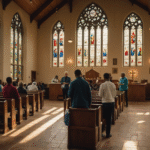
Come join Ashland Sabbath Chapel Ministries each Saturday for live streamed church services. Bible Study begins at 10:00 AM Central Time and Sermon at 11:00 AM. Visit Our YouTube channel and watch from home!
In the early days of the Adventist movement, timekeeping was not merely a matter of practicality but a profound reflection of spiritual conviction. Early Adventists adopted various practices to ensure their daily lives were aligned with their understanding of biblical teachings, particularly regarding the Sabbath. This observance influenced their entire daily schedule, shaping how they planned activities and engaged with the world around them.

The foundational belief in a literal interpretation of the Sabbath as a day of rest set the tone for their timekeeping habits. The Adventists maintained that the Sabbath should be observed from sunset Friday to sunset Saturday, necessitating a precise measurement of time. This led to the development of specific practical methods to ensure that no activities infringed upon this sacred time. For instance, many Adventist households would engage in preparatory work during the week, executing a sort of activity planning to ensure they could fully observe the Sabbath without interruptions.
To help manage their schedules effectively, many Adventists relied on community engagement to adhere to their timekeeping practices. Groups within the church would communicate the calendar dates for religious gatherings and special events, emphasizing the importance of unity in observance. This communal reliance not only reinforced their individual practices but also helped to foster a deeper sense of belonging among the members.
Interestingly, the early Adventist approach to timekeeping also embraced the natural rhythms of the seasons. Understanding the cyclical nature of time contributed to a more harmonious relationship with both their faith and the world in which they lived. Activities were often planned around seasonal festivals and agricultural cycles, reflecting a profound respect for the environment that shaped their spiritual life.
Overall, the early Adventist movement’s approach to timekeeping was deeply intertwined with their beliefs and practices. It was not merely about managing the hours and minutes of the day but a way of honoring their faith and community through a structured schedule management that prioritized their spiritual commitments.
Historical Context of Time Measurement

In the context of time measurement, the understanding of hours and days has evolved through centuries, shaped by culture, religion, and the practical needs of society. During the formative years of the Adventist movement, particularly in the 19th century, people looked to the heavens, to the sun and the moon, for their guidance. Timekeeping was almost sacred. The sun would rise and fall, and with it, lives would adjust, farmers would plant, and families would gather for meals, all orchestrated by the rhythm of nature itself.
However, with the advent of mechanical clocks and the insistence on standardized time, a profound shift began to take place. Time became a numerical construct, something that could be measured with precision. Industrialization transformed how people viewed time. The clock dictated the daily schedules, imposing a structured order that often clashed with the more fluid, organic lifestyles people had once known.
For early Adventists, the embrace of the literal Sabbath as a divinely ordained rest day brought a unique challenge. The faithful were called not only to observe this day with reverence but also to resist the relentless push of the clock that characterized other aspects of society. Life was no longer just about marking time; it was about aligning one’s schedule management with a higher purpose. With the tension between the secular and the sacred pressing on them, early Adventists forged a path dedicated to spiritual integrity.
Key figures among the Adventists emphasized the importance of accurate timekeeping. They taught that the observance of the Sabbath from sunset to sunset required meticulous attention to detail. It was not enough to simply know the hour; one had to prepare, plan, and execute their daily activities in such a manner that the sanctity of the Sabbath was preserved. Activities that measured life in seasons began to have added significance, wrapping each year in cycles of reflection and renewal.
In these communities, practical methods emerged from necessity. Clocks were fashioned, yes, but they were also tailored to reflect the Adventist understanding of time. Some would synchronize their watches with the local sundial to ensure they began observing the Sabbath at precisely the right moment. Activity planning took precedence over hasty actions that would lead to Sabbath-breaking. Each decision counted, each hour a testament to their faith, and a validation of their beliefs in a world rapidly advancing in timekeeping technology.
As the concept of time continued to evolve, early Adventists navigated the complex landscape where spirituality and modernity intersected. They found strength in their collective observance, in festivals of light and gatherings that celebrated more than just the tick of the clock. They fostered ties grounded in shared practices — in the careful recording of the seasons, which led them to a deeper communion with one another and with their shared understanding of the divine. Thus, in their quest for spiritual alignment, early Adventists wove together a fabric of time that was both personal and communal, anchoring their faith in the very measure of time itself.
Key Figures in Adventist Time Keeping
Among the early Adventists, several key figures emerged, each bringing a unique perspective and passion to the practice of timekeeping. Their influence shaped the community’s understanding of how to live in accordance with their beliefs, particularly in relation to the Sabbath. Individuals such as James White and Ellen G. White stood out as pivotal leaders, intertwining their teachings with the fabric of Adventist timekeeping.
James White, in his role as an organizer and promoter of the movement, emphasized the importance of adhering strictly to their interpretation of biblical time. He advocated for communal gatherings to discuss not only spiritual matters but also the practical methods required to maintain the daily schedule aligned with God’s commandments. His writings encouraged careful preparation for the Sabbath. He often noted the necessity of activity planning throughout the week, ensuring that each individual was ready to embrace the day of rest fully. This preparation allowed church members to focus on spiritual renewal rather than practical concerns, reinforcing the dual commitment of faith and discipline.
Ellen G. White, whose writings became centerpiece texts for Adventists, took this advocacy further. She articulated the spiritual significance of the Sabbath, framing it as not merely a break from labor but a divine appointment that demanded respect and reverence. Her reflections imbued the practice of timekeeping with a sense of urgency and sanctity. She spoke of the need to align one’s daily schedule with the higher calling of the Sabbath, encouraging families to establish routines that honored both their faith and their community.
This emphasis on time management within the framework of spirituality was critical at a time when society was shifting towards mechanized and precise measures of time. Early Adventists faced the challenge of preserving their sacred practices against the encroaching tide of industrialization. As the clock dictated life outside, the figures within the Adventist movement sought to root time in a spiritual context. They created models that allowed for a rhythm in their lives, punctuated by the observance of the Sabbath, which served as a foundation upon which they could structure their weeks.
The influence of these key figures brought about a communal understanding of time that transcended individual practice. In gatherings and public talks, they recognised the role of seasons as not just markers of climate but as divine indicators of spiritual cycles. These seasonal rhythms provided an additional layer of meaning that amplified the observance of the Sabbath. They reminded each member of the community that time was a gift from God, to be appreciated and honored, not taken lightly or broken by the relentless push of modern life.
In navigating the complexities of the era, these leaders fostered a culture where precise timekeeping became an act of faith. They inspired congregations to engage in community activities on days preceding the Sabbath, ensuring no last-minute chores would taint the holiness of their sacred observance. This focus on schedule management transformed how members organized their lives, shifting from a perspective that saw time as a commodity to one that viewed it as a sacred trust from God.
As these practices evolved, the early Adventist leaders forged a path that married spiritual devotion with the daily management of time. Their legacy lay not only in the writings left behind but also in the communal practices they established. Each hour was not just a number but a stepping stone toward a deeper understanding of their faith, rooted in an unwavering commitment to preserving the sanctity of the Sabbath.
Significance of the Sabbath and Time

The significance of the Sabbath within early Adventist timekeeping practices was, without question, a cornerstone that shaped their lives in multifaceted ways. To these devout individuals, the Sabbath was not a mere day of confinement away from worldly toil but a divine appointment, an intermission filled with celestial promise. As the sun descended on Friday, the anticipation would rise, and with it, the sacredness of the hours ahead became the primary focus of their collective hearts and minds.
The practice of carefully demarcating the Sabbath from sunset to sunset necessitated a conscientious approach to activity planning. Each week unfolded in a rhythm dictated not solely by personal pursuits but by an unwavering commitment to prepare for this hallowed day. Activities were curated during the week, often considered with the utmost deliberation to ensure that when the Sabbath appeared, every soul was free to bask in its sanctity. This was not merely a personal directive; it resonated deeply within the community, creating a network of support wherein members exchanged reminders and encouragements.
Particularly enchanting was the way in which families would organize their home life in devotion to the Sabbath. Children were taught the importance of this day through playful rituals and practices, instilling in them a reverence that would carry into their adulthood. Special meals were prepared in advance, their recipes steeped in tradition, as the kitchen filled with savory scents that danced in the air, beckoning family members to gather around the table, side by side, as they celebrated their faith and community. These weekly gatherings served not only to satisfy hunger but also to fulfill the spiritual hunger that resides within every heart seeking connection with the divine.
Furthermore, the community’s adherence to the Sabbath as a day of rest fostered a notion of collective experience, wherein the act of setting aside time transcended individual effort. It became a communal observance that echoed through their interactions. During the hours shared in fellowship, stories would be recounted under the candlelight, prayers whispered with gravity, and hymns sung with vigor, creating a tapestry of life steeped in faith and love. Here, the essence of time was woven into their spirituality; the hours stretched out like a cherished treasure, sacred and untouched, nurturing connections that retained their vibrancy throughout the week.
In this light, time was perceived less as a regimented series of ticks and tocks but rather as a divine curriculum, shaping their existence. Rather than surrendering to the relentless rush of industrialization, early Adventists championed a slower, more deliberate approach to life, where the observance of the Sabbath infused their daily schedule with a sense of balance and unity. The end of the workweek celebrated not just the cessation of labor but transformed the ordinary hours into a sacred pilgrimage toward spiritual renewal.
The significance of the Sabbath, therefore, was not merely laid in its observance but was deeply embedded in the very fabric of how early Adventists organized their lives. It was an act of defiance against the prevailing tide of a fast-paced era, reclaiming time as a precious gift to be shared and honored. In fostering this understanding, they cultivated a culture where each moment resonated with purpose, and where the observance of the sacred rhythm served to bind them in community and faith, charting a course for their generations to come.
Evolution of Time Keeping Methods
The evolution of timekeeping practices among early Adventists showcased a blend of traditional rhythm and a progressive approach to aligning the faith with the daily demands of life. As society evolved, so too did the need for Adventists to adapt their methods of time measurement and activity planning while remaining steadfast in their observance of the Sabbath. With the introduction of mechanical clocks and the increasing urgency of modern life, Adventist communities began to construct their own unique frameworks for timekeeping that emphasized both spiritual significance and practical methods.
Early Adventists experienced a significant transformation in their understanding of time as they began to embrace innovations that allowed for precise measurements without abandoning their core beliefs. Clocks and watches became common tools, but these mechanical devices were not merely for convenience. Instead, they served as instruments for reinforcing their commitment to the rhythms of the Sabbath as individuals orchestrated their daily schedules around this sacred day. Groups within the community began to synchronize their practices, ensuring that each member followed a collective understanding of when the Sabbath would commence and draw to a close, tightly weaving their spiritual lives into the fabric of time management.
In adapting to the changes brought about by industrialization, early Adventists leaned on practical methods that highlighted their dedication to spiritual observance. The practice of sunset meetings became vital as families gathered together to mark the beginning of the Sabbath. Here, they would unite in prayer, song, and reflection, creating a communal experience that shaped the very essence of their faith. Moreover, the observance of seasonal rhythms played an influential role in their timekeeping, with specific events and festivals marking both the passage of time and the fulfillment of their spiritual obligations. The communal calendars incorporated these significant dates into the everyday lives of the members, serving to synchronize the wider community in a shared timeline that emphasized both unity and devotion.
As Adventists navigated the complexities of their evolving world, they brought forth a deeper understanding of time—not just as a linear measure but as something sacred to be honored. This perspective invited them to view their lives through the lens of schedule management that reflected their spiritual journey. They cultivated a practice of mindfulness surrounding their hours, where time not only marked the progress of the day but also became an opportunity for reflection and connection. The interplay between their spiritual convictions and the demands of the modern world embodied a dynamic tension that shaped their evolving practices in timekeeping, providing a rich foundation for the generations that would follow.
- What is the importance of the Sabbath in early Adventist timekeeping?
- The Sabbath served as a cornerstone of early Adventist timekeeping practices, providing a designated time for rest and spiritual renewal. Observing the Sabbath from sunset Friday to sunset Saturday required meticulous planning to ensure members could fully engage in spiritual activities without distractions.
- How did early Adventists measure time?
- Early Adventists measured time primarily through natural indicators like the sun and moon, but they also began utilizing clocks and watches as society progressed. This duality allowed them to maintain a spiritual focus while adapting to the technological advancements in timekeeping.
- What methods did early Adventists use for activity planning?
- Activity planning among early Adventists involved organizing their weekly tasks to ensure they could observe the Sabbath without impediments. This often included completing chores in advance and synchronizing schedules with fellow community members to promote a collective observance of the Sabbath.
- How did seasonal rhythms influence Adventist timekeeping?
- Seasonal rhythms played a significant role in Adventist timekeeping by aligning spiritual observances with agricultural cycles and festivals. This connection deepened their sense of community, as members collectively recognized the changing seasons as part of their spiritual journey.
- What challenges did early Adventists face regarding timekeeping?
- One of the main challenges early Adventists faced was balancing their spiritual obligations with the pressures of modern industrial life. The precise measurements of time introduced by mechanization often conflicted with their beliefs about the sacredness of the Sabbath and the need for a more relaxed approach to daily life.
- Who were the key figures in shaping Adventist timekeeping practices?
- Prominent figures like James White and Ellen G. White were instrumental in shaping early Adventist timekeeping. Through their teachings, they emphasized the importance of aligning daily schedules with the observance of the Sabbath and advocated for practices that reinforced communal spirituality.
- How did early Adventists ensure communal observance of the Sabbath?
- Early Adventists fostered communal observance of the Sabbath through group activities, synchronized schedules, and shared calendars. By engaging in collective events and mutual support, members reinforced the importance of the Sabbath and its significance in their lives.
Ashland Sabbath Chapel Ministries
Beside our live streamed church services, all are welcome to attend our church in person each Saturday beginning 10:00 AM Central Time by going to 2425 Owens Rd., Ashland, AL 36251. There is no cost and any donations are strictly voluntary.
For questions, call +2563547124.