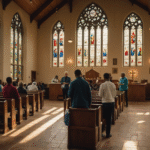
Come join Ashland Sabbath Chapel Ministries each Saturday for live streamed church services. Bible Study begins at 10:00 AM Central Time and Sermon at 11:00 AM. Visit Our YouTube channel and watch from home!
The foundation of what would become known as Pioneer Adventist Star Reading can be traced back to a time when the vast expanse of the night sky served not merely as a canvas of celestial beauty but as a vital tool for survival and guidance. As keen observers of the natural world, early Adventists embraced the stars as reliable markers for navigation, utilizing their innate navigation skills to traverse the wilderness. This practice was not merely an intellectual pursuit; it was steeped in the necessity of outdoor wisdom, where the alignment of the heavens dictated the fortunes of travelers journeying into the unknown.

Utilizing the constellations, these pioneers developed a rich tapestry of sky lore, which informed their understanding of time and direction. The North Star, a steadfast sentinel in the firmament, served as a compass point for those yearning to find their way across land and sea during long nights of travel. The methodical gaze upon celestial bodies fostered a relationship between humanity and the cosmos, serving as metaphorical beacons that illuminated the paths of those traversing the earthly realm.
Through observation and practice, the pioneers honed practical knowledge pertaining to star patterns, planets, and their positions, thereby transforming the art of star reading into a necessary tool for navigation. It synergized with their spiritual ideals, blending the awe of creation with the imperative needs of life. Nights spent beneath the expansive sky did not merely facilitate direction finding; rather, they cultivated a profound appreciation for the Creator’s handiwork, intertwining faith with the rhythms of nature.
As these early Adventists moved through uncharted territories, the wisdom gleaned from star reading became an integral part of their collective identity, celebrating their reliance on divine providence while promoting a sense of community amongst pioneers facing the vast unknown. Engaged in both physical journeys and spiritual quests, they endeavored to decode the celestial messages that whispered to them through the rustling leaves and the soft glow of starlight, forever tethering their earthly concerns to the greater cosmos.
Historical context of star reading
During the formative years of the Adventist movement, the practice of star reading emerged against a backdrop of both physical exploration and spiritual questing. The geography of America in the 19th century was not merely a landscape to traverse; it represented a frontier fraught with both promise and peril. To navigate this rugged terrain, early Adventists relied heavily on their inherent navigation skills, often honed through necessity. The expansive wilderness demanded a heightened awareness of celestial patterns, guiding travelers not just across land, but also through the labyrinth of their spiritual journeys.
The era was characterized by a burgeoning interest in science and the natural world. Naturalists and astronomers, such as John Herschel and Sir William Herschel, were redefining humanity’s understanding of the cosmos. Their discoveries echoed through the hearts of Adventists who viewed the same stars during their night travel. This synergy of faith and reason encouraged a pursuit of practical knowledge about the stars that transcended mere curiosity; it became a method of survival. Adventist pioneers learned to read the skies as one would read a book, understanding the language of the heavens as essential to their way of life.
Moreover, this historical context of star reading was deeply intertwined with their beliefs. Influenced by biblical texts that spoke of cosmic wonders, such as Psalm 19:1, which proclaims, “The heavens declare the glory of God,” Adventists found profound spiritual significance in the very act of stargazing. Each constellation revealed a story, each planet bore a purpose, and through careful observation, they sought to align their earthly endeavors with heavenly will. This connection reinforced a holistic approach to life, blending the outdoor wisdom necessary for navigation with the doctrinal teachings of their faith.
In gatherings, where community was paramount, discussions would often turn to stories of celestial navigation, fostering a shared culture steeped in both the practical and the ethereal. The narratives that emerged created a unique Adventist lore, wherein tales of survival were interwoven with messages of divine guidance. Thus, star reading was not merely an ancient skill; it became a vital expression of their identity, offering both direction and assurance in uncertain times.
As modernity began to encroach upon this pastoral way of life, the techniques used in star reading evolved. However, the core principles remained rooted in those initial efforts, demonstrating that despite the advent of technological conveniences, the whispers of the stars continued to hold significance. The historical legacy of these practices emphasizes a continuous thread, illustrating how the understanding of the universe can profoundly shape belief, community, and the practices that grow from a deep connection to both God and nature.
Key figures in Adventist star reading

The Adventist pioneers were not merely wanderers; they were seekers, charting a course through both the wilderness and their spiritual lives. Among them, several figures became emblematic of the practice and dissemination of star reading. One such figure was James White, a co-founder of the movement, whose journeys across America during the turbulent 1840s were marked by his keen awareness of the night sky. White’s notable navigation skills served not only to guide him safely through uncharted territories but also to inspire a generation of Adventists to embrace the heavens as a vital source of direction. He often recounted his own experiences of traveling by starlight amidst the uncertainty of foggy nights, detailing how the ethereal glow above provided him with a sense of peace and divine presence.
Another pivotal character was Ellen G. White, whose writings emphasized the significance of God’s creation as a source of inspiration and guidance. Her reflections on nature often included the celestial realm, encouraging believers to observe the stars and contemplate their purpose in the grand design of creation. Her influence cemented a belief that star reading was not merely a practical endeavor but a spiritual discipline, allowing individuals to connect more deeply with their faith while exercising their outdoor wisdom. Ellen wrote of a particular evening spent under the vast dome of the sky, where she felt that through observing the constellations, she was brought closer to understanding God’s infinite love.
Likewise, John Loughborough, another founding figure in the Adventist tradition, was known to incorporate astrological observations into his evangelistic efforts. His tales of travel often included detailed descriptions of how he utilized practical knowledge of the stars for direction finding while traversing from one community to another. Loughborough’s enthralling narratives painted vivid imagery of the heavens—each star and planet a symbol of hope and guidance for the faithful. The Adventists found in his words the reminder that the very struggles they faced were reflections of the cosmic battles being waged across the sky, resonating with their spiritual convictions.
These key figures contributed to the rich tapestry of Adventist star reading by intertwining their experiences with the larger narrative of the movement. They fostered a culture in which celestial navigation became a metaphor for spiritual journeys. Each tales shared by these pioneers served not just to instruct but to unite the community through shared experiences, illuminated by the stars above. As dusk fell and the constellation of Orion rose above the horizon, early Adventist congregations would gather to recount their encounters with the stars, emphasizing the strong connection between their navigation methods and their faith.
Through these luminous figures, the practice of star reading became a crucial aspect of Adventist identity, embodying both an appreciation for the natural world and a profound faith that transcended the physical realm. Their legacy did not merely reside in the skill of reading the stars but flourished in the stories that breathed life and meaning into their faith journey, proving that even in the darkest hours of night travel, one could find light and direction in the eternal gaze of the cosmos.
Techniques and methods used
The techniques and methods used in Pioneer Adventist Star Reading were grounded in a blend of practical knowledge and intuitive wisdom. Armed with a desire to navigate the wild expanses of their environment, early Adventists utilized the stars as both guideposts and companions during their night travel. Their methods were not learned in isolation; they were passed down through generations, honed by experience, observation, and the necessity of survival.
At the heart of their practice lay a careful understanding of celestial movements. Pioneers learned to identify key constellations and their seasonal shifts. The Big Dipper, for instance, served as a crucial reference point, its position allowing travelers to locate the North Star. This star, in turn, was a vital beacon, signaling true north amidst the sprawling landscape. Such navigation skills, acquired through diligent observation, underscored the importance of the stars not just as distant entities, but as integral components of their earthly journey.
The approach to star reading was systematic, reflecting a unique blend of faith and reason. Pioneers would track the movements of planets, noting their positions against the backdrop of the constellations, allowing them to predict seasonal changes and weather patterns. They often recorded these observations, creating celestial charts that brought structure to their understanding of the night sky. This meticulous documentation transformed casual stargazing into a disciplined study, reinforcing their belief in a universe that was orderly and purposeful.
Moreover, the practice extended to the art of storytelling. Around campfires, figures from the community would share narratives steeped in celestial lore, recounting journeys guided by the stars. These tales served as both entertainment and education, instilling the principles of direction finding in younger generations. It was a communal activity that fostered bonds among travelers, cultivating a shared heritage that celebrated both the beauty of the heavens and the practical wisdom derived from them.
In addition to the direct observation of the skies, some Adventists combined their star reading with other navigational tools. The use of a compass and natural landmarks was common, but it was the interplay between these and celestial observations that truly defined their method. By cross-referencing the location of the stars with earthly geography, they developed a comprehensive understanding of navigation that transcended simple reliance on either stars or land features alone.
This intricate interplay of techniques ensured that their navigation skills were not merely responses to immediate need but were deeply embedded in their cultural and spiritual identity. Each journey became a pilgrimage of sorts, where the physical act of travel aligned with spiritual aspirations, guided by the knowledge that even in the darkest nights, the stars remained steadfast. Through this process, Adventist star reading evolved into a practice that not only directed their travels but also informed their understanding of their place in the universe.
Impact on adventist beliefs

The impact of star reading on Adventist beliefs was profound, intertwining the practical knowledge gleaned from celestial observation with the spiritual narratives that shaped their understanding of God’s creation. This practice became a vital connection between the cosmos and the day-to-day reality of their lives, reminding believers that knowledge and faith could coalesce into a single guiding principle. As they navigated physical landscapes, their navigation skills expanded into existential journeys, urging them to align their lives with the heavenly bodies that guided them through both earthly and spiritual realms.
For early Adventists, the stars were not merely physical entities; they represented divine themes woven into the tapestry of their existence. Biblical interpretations of celestial phenomena, such as the star of Bethlehem leading the Magi, reinforced their belief that the heavens communicated messages from God. The constellations each held stories that resonated with their experiences, serving as reminders of the divine presence that accompanied them on their trials of faith. This belief illuminated their night travel with hope, even as they confronted challenges unimaginable in their wilderness pursuits.
The practice of star reading fostered a culture of reflection among Adventists, inviting them to ponder the significance of their gazes into the night sky. Rather than mere pastime, stargazing became an act of worship, wherein they contemplated God’s grandeur through the beauty and order of the universe. Such reflection furthers the notion that understanding the natural world enhances spiritual experience, compelling believers to see themselves not as isolated beings but as integral parts of the wider cosmos, orchestrated by divine design. Their outdoor wisdom, therefore, became a crucial resource in navigating both their moral paths and their physical journeys, strengthening the intertwining of faith and reason.
This rich interplay between the stars and their beliefs bore lasting influence, solidifying the idea that the cosmos held relevance in their spiritual lives. As newer generations emerged, the stories and techniques of star reading were passed down, evolving but remaining steadfast in their foundational principles. The belief in the guidance provided by celestial bodies instilled a sense of purpose and wonder, challenging every follower to consider their role within God’s grand design, igniting a thirst for deeper understanding and connection with the universe.
- What is Pioneer Adventist Star Reading?
- Pioneer Adventist Star Reading refers to the practice of utilizing celestial navigation techniques to find direction during travels, deeply rooted in the beliefs of the Adventist pioneers. This practice integrated spiritual insights with practical navigation skills, allowing travelers to align their journeys with divine guidance.
- How did early Adventists use stars for navigation?
- Early Adventists utilized star patterns to orient themselves and find their way during night travel. They learned to recognize key constellations and the North Star, which served as a crucial reference point for direction finding across unfamiliar landscapes.
- Why was star reading important to Adventists?
- Star reading merged the physical and the spiritual for Adventists, reinforcing their belief that God communicated through the cosmos. This practice provided guidance not only in navigation but also in understanding their place in creation, enhancing their faith journey.
- How does star reading connect to Adventist beliefs?
- The practice of star reading is directly linked to biblical narratives and the belief that the heavens declare God’s glory. Observing celestial phenomena deepened their spiritual insights and reinforced the idea that navigation through life is under divine providence.
- What role did storytelling play in star reading?
- Storytelling was a vital part of the star reading tradition, as pioneers shared experiences and lessons learned under the night sky. These stories cultivated community bonds and passed down knowledge of celestial navigation methods along with spiritual teachings.
- Are there contemporary practices related to star reading?
- Today, contemporary Adventists may still engage with star reading, although the methods have evolved. Incorporating both modern astronomy and traditional practices, they may use this knowledge to foster a deeper connection with their faith and understanding of creation.
- How can learning about star reading enhance one’s faith?
- Learning about star reading enriches one’s faith by promoting wonder and reflection on the universe’s intricacies and God’s creative power. This practice encourages believers to appreciate the guidance offered through nature as a manifestation of divine will.
Ashland Ashland Sabbath Chapel
Contemporary relevance and practices
In contemporary practice, the legacy of Pioneer Adventist Star Reading continues to resonate, albeit in forms that reflect the changes within society and technological advancement. The once essential navigation skills, unshackled from the immediate pressures of survival, now serve as a bridge to a deeper spiritual understanding. Adventists today may not rely on the stars to traverse wilderness terrains as their ancestors did, yet the act of stargazing still carries profound significance, evoking awe, wonder, and an intrinsic connection to the cosmos.
Many modern Adventists engage with astronomy through educated lenses, blending the robust findings of contemporary science with the rich traditions of their faith. Church-sponsored events often feature workshops on celestial navigation, where participants are introduced to the practical knowledge of identifying constellations and planetary movements, echoing the teachings of their forebears. Such workshops offer not just education but an opportunity to connect with fellow believers under the vast, starlit sky, rekindling the communal spirit that defined early Adventist gatherings.
Moreover, outdoor gatherings, such as camp meetings or retreats, often incorporate aspects of star reading. Participants find themselves, once again, beneath the celestial dome, sharing stories that intertwine personal experiences with tales of divine guidance inspired by the stars. This revival of storytelling around campfires rejuvenates an age-old tradition, reminding individuals that faith is alive, breathing through the narratives that evolve in the presence of the night sky. The integration of this ancient art with contemporary worship breathes new life into practices that promote reflection on one’s journey through life.
As many Adventists delve into the lessons of nature, the contemplation of the cosmos presents a pathway to not only navigate the physical aspects of existence but to also embrace the spiritual journey that life offers. Each sighting of a shooting star or the bright glow of a planet provides a moment of pause, acting as a reminder of God’s creative power and the beauty that exists within the universe. This appreciation fosters a holistic worldview, where outdoor wisdom merges seamlessly with faith, reinforcing the notion that understanding the heavens can enhance one’s spiritual experience.
Today, technology enriches this experience, with applications and devices that provide instant access to celestial information. Such tools allow users to identify stars, constellations, and planets with a mere touch, marrying modern innovation with the timeless pursuit of understanding our place in the universe. Yet, even with these advances, the emotional and spiritual connections forged through experiencing the night sky in community remain irreplaceable. It is within these moments that believers reflect on their life direction, finding solace in the everlasting cycle of creation that the stars represent.
In essence, the practice of star reading today not only preserves a connection to the traditions of the early Adventist pioneers but also invigorates the community with opportunities for exploration and connection to something greater than themselves. As Adventists look to the stars, they no longer simply search for guidance in navigation but for a deeper understanding of the divine love that echoes through the cosmos, creating a legacy rich in both tradition and contemporary interpretation.
Beside our live streamed church services, all are welcome to attend our church in person each Saturday beginning 10:00 AM Central Time by going to 2425 Owens Rd., Ashland, AL 36251. There is no cost and any donations are strictly voluntary.
For questions, call +2563547124.