Come join Ashland Sabbath Chapel Ministries each Saturday for live streamed church services. Bible Study begins at 10:00 AM Central Time and Sermon at 11:00 AM. Visit Our YouTube channel and watch from home!
In the early days of Adventism, worship wasn’t just an event; it was an experience steeped in a communal spirit that echoed across the tents and pews. Imagine the sun dipping low on the horizon, casting a warm hue over a gathering of eager hearts, all converging for what would become known as camp meetings. These were not your average church services; they were vibrant, spirited occurrences filled with the energy of shared faith and anticipation for divine connection.
The atmosphere buzzed with the melody of hymn singing, where voices rose and fell like waves upon the shore, converging in harmonious devotion. Each hymn wasn’t merely a song; it was a lifeline, a communal cry echoing the joys and struggles of those present. The songs themselves were often simple yet profound, allowing even the shyest to find their voice among the throng.
With the flicker of campfires illuminating faces, the congregation gathered in circles, the warmth of fellowship radiating through the air. Tent revivals, too, formed a cornerstone of the worship experience. These gatherings, often spontaneous, were filled with enthusiasm, as speakers delivered passionate sermons, their voices rising above the murmurs of the crowd. They were a vibrant canvas upon which the gospel was painted, characterized by fervor and urgency, as if each word could awaken the sleeping soul.
Through sabbath keeping, pioneers found a moment of rest amid the chaotic lives they led, marking time together in a way that felt sacred. With families setting aside their daily toil, the Sabbath became a touchstone for devotion and reflection, inviting all into a rhythm of worship that offered refreshment and renewal. This was their world—a tapestry woven from countless threads of shared belief, forging unbreakable bonds within the community.
Community and fellowship thrived in this environment, where each service reinforced the connections among attendees. Meals were shared, stories exchanged, and laughter spilled like honey among those who sought truth together. It wasn’t about rituals or formalities; it was about the essence of worship, a collective experience imbued with each person’s spirit, facilitating a deeper understanding of faith within those sacred spaces.
Historical context of pioneer adventist worship
The roots of pioneer Adventist worship can be traced back to a time when faith found itself blooming amidst the rugged landscapes of a fledgling America. Picture, if you will, the golden fields stretching endlessly, dotted with tents and makeshift structures where the faithful would gather. This was more than a mere assembly of believers; it was a convergence of souls seeking something greater than themselves amid the trials and tribulations of life. The historical context surrounding these gatherings illustrates the deep spiritual yearnings of people striving to carve out a place for their beliefs in a rapidly changing world.
In the mid-19th century, America was a nation in turmoil—a period marked by social upheaval, the strains of industrialization, and a quest for identity. As communities began to take shape on the frontier, so too did the spiritual landscapes of those communities evolve. The pioneers turned to their faith as both a refuge and a rallying cry, with camp meetings taking on an invaluable role in nurturing their spirits. These events, often spanning several days, served as sanctuaries where weary souls found purpose and direction—a beacon of hope in uncertain times.
Consider the fervor of tent revivals, held under vast canopies that fluttered in the evening breeze. The flickering lights cast an inviting glow, drawing in curious onlookers, while the warmth of the community provided comfort to those seeking solace. It was during these revivals that vibrant sermons were delivered—fire and brimstone often mixed with the gentle whispers of grace. The speakers, emboldened by the authenticity of their message, ignited a passion among the listeners, transforming mere gatherings into spiritual awakenings where lives were profoundly changed.
Moreover, hymn singing became an integral part of these services, elevating the collective experience to one of transcendent joy and unity. Each note resonated with the hopes and dreams of the congregants, binding them together in their faith journey. The selection of hymns often reflected the communal struggles and aspirations, serving not only as a source of inspiration but as an instrument for fostering fellowship. Voices would rise, mingling in a joyous cacophony, celebrating shared beliefs and nurturing the bonds of community that ran deeper than any written doctrine.
Sabbath keeping, too, emerged amidst this historical backdrop as a much-cherished practice that reinforced the spiritual rhythm of the pioneers. It was a day set apart—a pause from the clamor of daily life that beckoned families to come together in worship. This sacred observance provided a much-needed respite, encouraging reflection and gratitude, as well as the re-establishment of connections among friends and neighbors. Thus, the pioneers found in Sabbath a rhythm that infused their communal life with meaning, turning every week into a time for renewal.
As we delve further into the legacy these early practices have bequeathed us, it becomes evident that the intertwining of historic context, emotional fervor, and communal spirit laid the groundwork for what would evolve into a robust framework for modern Adventist worship. The story of their faith is not merely a tale of personal salvation; it is a testament to the power of worship in forging a community called by a higher purpose—a purpose that echoes through the ages and continues to resonate in the heart of every believer today.
Key elements of worship services

Within the vibrant tapestry of pioneer worship services, certain key elements emerged that not only defined the character of these gatherings but also forged an indelible connection among the participants. Central to this experience were the joyous renditions of hymn singing, which served as both an expression of faith and a means of fostering community among those gathered under the open sky or within hastily assembled sanctuaries.
The importance of hymn singing cannot be overstated; it was a practice that enlivened the spirits and brought vibrancy to the worship. Each hymn was carefully selected, often reflecting the collective struggles and aspirations of the congregation. Take, for instance, the beloved “What a Friend We Have in Jesus,” which echoed through the fields, its gentle yet powerful melody enveloping all in a sense of solace and companionship. Such hymns acted as both balm and celebration, allowing individuals, regardless of their vocal prowess, to unite in a chorus that transcended personal limitations and fortified the communal bond.
Add to this the fervor of the tent revivals—those lively, thunderous assemblies that often drew people from miles around. Under the vastness of a starlit sky, the tents became hallowed spaces filled with spirited sermons, impassioned testimonies, and the palpable anticipation of divine revelations. It was here that preachers, equipped with a fire in their hearts, shared messages that resonated deeply with the struggles and hopes of the attendees. Listeners sat enraptured, their hearts stirred, minds ignited, and spirits uplifted in a shared quest for spiritual awakening.
The encounters during these tent revivals extended beyond the pulpit; they were moments when individuals felt the presence of something far greater than themselves. As the revivals progressed, the sharing of personal stories became commonplace, further entwining the lives of congregants. Hearts laid bare contributed to an atmosphere where vulnerability was met with compassion, and where the act of sharing burdens became a collective endeavor fostering a sense of belonging.
Sabbath keeping also stood as a pillar of community worship, intertwining with these lively atmospheres. Each week, pioneers gathered to celebrate this sacred day, marked by rest and reflection. The observance of the Sabbath was designed not merely as a pause from labor but as an invitation to engage deeply with one another in worship and fellowship. Together, families would share meals that nourished both body and spirit, each bite steeped in gratitude for their faith and the community that surrounded them.
In these instances, the aspect of congregational worship was vital; it underscored the notion that worship was not a solitary pursuit but a collective journey marked by shared experiences. The gathering of eager participants created a safe harbor amidst the storms of life, providing both support and encouragement as they navigated their spiritual paths. It was within this sacred space that rituals took on new meanings, as they reflected the dynamics of community life, reinforcing ties that were as strong as the very fabric of their faith.
Thus, in these foundational elements—hymn singing, fervent preaching, shared meals, and the celebration of the Sabbath—we find a rich legacy that shaped the very essence of worship for pioneers. They established a framework that emphasized unity, authenticity, and the joyful celebration of shared beliefs, reverberating through time and continuing to inspire modern Adventist practices.
Community and fellowship in worship
In the heart of the pioneer worship experience lay the undeniable strength of community and fellowship, which blossomed in spaces both humble and grand. As the sun dipped below the horizon, casting long shadows over the gathering, the air was filled with the warm exchange of greetings, laughter, and the soft rustle of shared joys and sorrows. Camp meetings became the stage upon which these connections flourished—an intricate tapestry woven from the threads of individual stories, each one rich with the essence of life lived in pursuit of faith.
The sense of belonging was palpable as families settled onto benches or sprawling quilts. Children darted between legs, their innocent laughter punctuating the air, mingling harmoniously with the robust voices singing hymns that echoed through the night. Songs like “Amazing Grace” transcended the mere act of singing; they became anthems of collective memory, binding people together through shared experience. This communal hymn singing wasn’t merely a ritual; it was a declaration of faith; a celebration of every challenge faced, every triumph achieved, and every heartache met with resilience.
As the gatherings unfolded, stories were exchanged amidst the flickering light of campfires, where the flames danced to the rhythm of the shared narratives. Each tale told was a thread in the larger fabric of community, woven with the fibers of encouragement and empathy. The revival meetings, often spontaneous and fervent, served as sacred spaces where attendees laid bare their burdens—their doubts, their fears, and their hopes—in an act of vulnerability that drew them closer together. In those sacred moments, they found solace not only in fellowship with their Creator but with one another. Each testimony became a light shining brightly in the darkness, illuminating the paths of those who sought to navigate the complexities of their spiritual journeys.
Moreover, the observance of Sabbath keeping established a rhythm in their lives that emphasized rest, reflection, and relationship—an invitation to slow down and reconnect. On this special day, families gathered for communal meals, a ritual that transcended the physical act of eating to become a heartfelt communion. The sharing of food was an act of love, where each dish bore the care and thought of its maker, inviting the community to partake in the sustenance not only of body but of spirit. The conversations swirled around the table, laughter punctuating stories long forgotten, while the next generation listened wide-eyed—receptive to the lessons embedded within each tale.
This environment was where the essence of congregational worship emerged as a vibrant and enduring theme. It was here, amidst the music of voices raised in unison, where believers experienced a deepened sense of belonging and support. Worship became a collective endeavor, characterized by shared worship and kinship, reminding participants that they were not alone in their struggles nor their victories. Together, they stood as a testament to the beauty of faith nurtured in community—a legacy that would ripple through time, influencing the fabric of worship practices for generations to come.
Legacy and influence on modern adventist practices
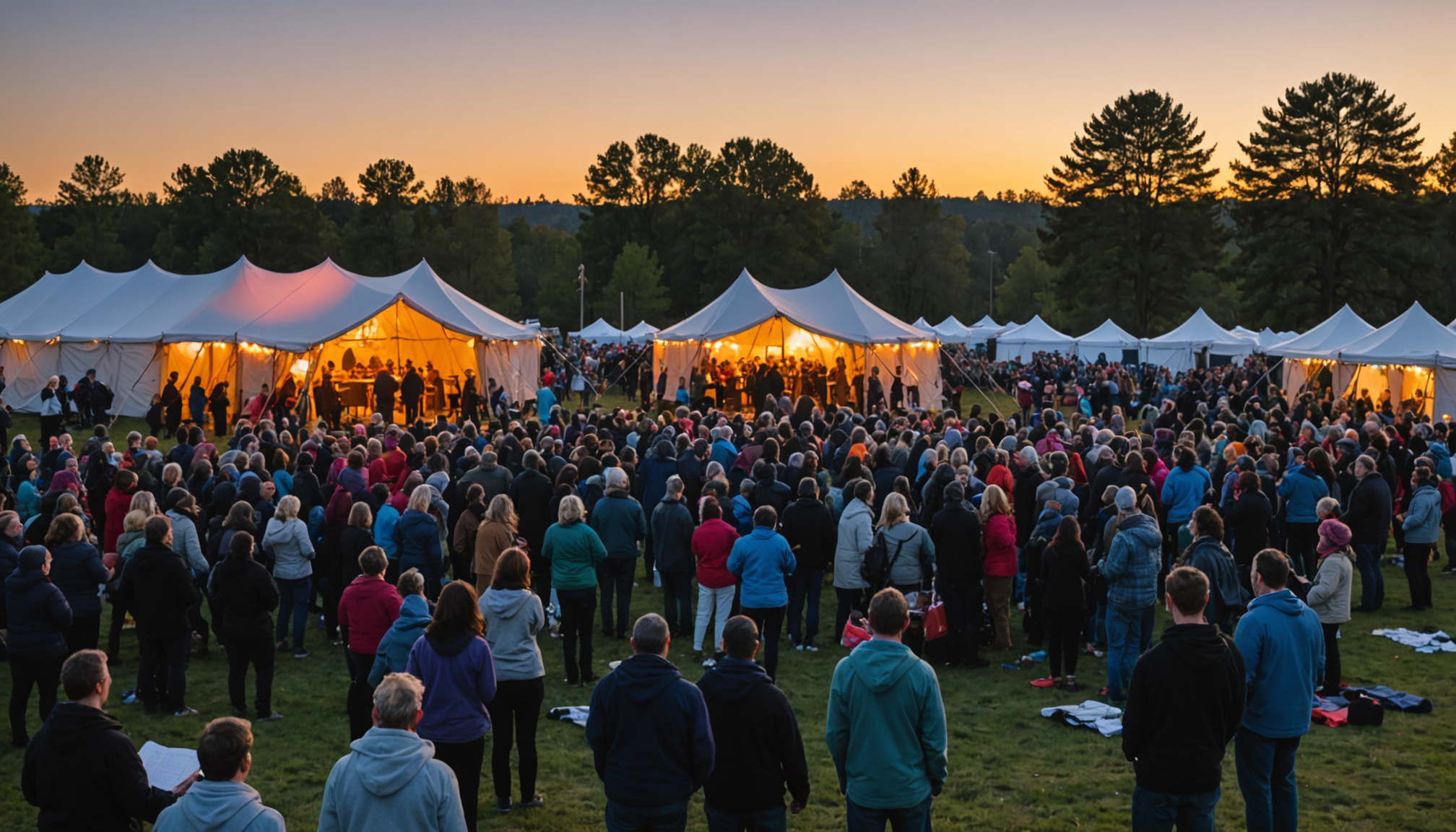
The legacy of pioneer Adventist worship practices has profoundly shaped the landscape of modern congregational worship, establishing elements that continue to breathe life into gatherings today. The vibrant tradition of camp meetings, characterized by their inclusive and celebratory nature, has influenced how communities engage with one another in the worship experience. These meetings were more than just events; they represented a movement toward spiritual awakening, where collective worship became a powerful expression of faith, fostering deep connections within communities.
The fervor of tent revivals, which became a hallmark of early Adventist gatherings, further solidified this legacy. The energy generated during these events was contagious, electrifying the atmosphere and creating an environment ripe for transformation. Modern congregational settings often echo this spirit, using passionate preaching and impromptu testimonies to elicit strong emotional and spiritual responses from attendees. It’s this very foundation of heartfelt engagement that allows worshipers to experience divine connection—as it has throughout history—bringing them closer to one another and to their faith.
Hymn singing, an essential aspect of pioneer worship, forged an enduring link that still resonates today in many congregations. While the hymns of the past served to narrate shared experiences, contemporary worship often incorporates music as a facilitator of unity and expression. This continuity underscores the importance of communal singing as an act that not only reflects personal faith but also binds congregants together in shared devotion. The selection of songs—a blend of traditional hymns and contemporary worship—mirrors the historical context, each melody serving as a reminder of the collective journey undertaken by the church community.
Moreover, the practice of Sabbath keeping, with its rootedness in rest and reflection, continues to inform the rhythms of worship in modern settings. Many congregational communities designate the Sabbath as an opportunity to step away from daily pressures and reconnect with both God and each other. This sacred time encourages families and individuals to engage in fellowship, reflecting on the week’s experiences through shared meals and moments of gratitude. This aspect fosters an ongoing sense of community, rooted in the understanding that worship is as much about relationships with one another as it is about the relationship with the divine.
As the legacies of these practices weave through the fabric of modern worship, they provoke thoughtful conversations among believers about the essence of shared faith. What does true community look like in today’s worship experience, and how can we uphold the traditions that have brought us together in the past while also embracing contemporary expressions of spirituality? Alongside these considerations, the challenge remains to ensure that the spirit of those early pioneers—marked by passion, fellowship, and dedication—continues to thrive in congregational worship today. Such reflections are not merely academic; they invite active participation in the ongoing journey of faith and connection among church communities worldwide.
- What are pioneering Adventist worship services?
- Pioneering Adventist worship services were community gatherings characterized by vibrant hymn singing, passionate preaching, and shared meals, often held outdoors in tents or open spaces, known for their inclusive and communal spirit.
- How have camp meetings influenced modern worship?
- Camp meetings have set a precedent for modern worship by emphasizing community, spiritual revival, and emotional engagement during services, influencing how congregations interact and experience faith together.
- What role did hymn singing play in pioneer worship?
- Hymn singing was a fundamental expression of faith, serving to unite congregants in shared experiences and reflecting their communal struggles and aspirations, which continues to resonate in today’s worship practices.
- What was the significance of tent revivals?
- Tent revivals were significant as they created dynamic spaces for spiritual awakening, where passionate preaching and personal testimonies fostered a deep sense of community and invited transformative experiences for attendees.
- How does Sabbath keeping relate to modern worship?
- Sabbath keeping remains a vital practice, encouraging believers to take time away from daily routines to reflect, rest, and reconnect within their faith communities, promoting spiritual growth and fellowship.
- What lessons can modern congregations learn from pioneer worship?
- Modern congregations can learn the importance of community engagement, passionate worship, and the shared experience of faith that pioneers demonstrated, thereby fostering deeper connections in their worship settings.
- In what ways can we keep the pioneer spirit alive in worship today?
- To keep the pioneer spirit alive, congregations can embrace inclusive practices, create opportunities for collective storytelling, and cultivate environments that celebrate the vibrant shared faith of their communities.
Beside our live streamed church services, all are welcome to attend our church in person each Saturday beginning 10:00 AM Central Time by going to 2425 Owens Rd., Ashland, AL 36251. There is no cost and any donations are strictly voluntary.
For questions, call +2563547124.