Come join Ashland Sabbath Chapel Ministries each Saturday for live streamed church services. Bible Study begins at 10:00 AM Central Time and Sermon at 11:00 AM. Visit Our YouTube channel and watch from home!
When you’re stuck inside, the trick isn’t finding time to move; it’s finding ways to move that don’t bore you so badly you “forget” to do them tomorrow. That’s where creative indoor home workouts come in. Think of your space less like a living room and more like a tiny training stage: you’re designing scenes that keep you engaged, raise your heart rate, and quietly support that long game of healthy living without feeling like punishment.
One of the easiest ways to make indoor routines more interesting is to build them around “mini-scenes” instead of sets and reps. Instead of saying, “I’ll do 3 sets of squats and lunges,” you design a 5–10 minute “chase sequence” or “escape room” for your body. For example, pick three movements—say, bodyweight squats, pushups on the counter, and mountain climbers. Set a timer for eight minutes. Your only job is to cycle those three moves at a gentle-but-constant pace until the timer beeps. You’re not chasing numbers; you’re staying inside the moment, like you’re playing a timed game. Research on time-efficient interval training shows that short, focused blocks like this can significantly improve cardiovascular health and muscular endurance even in small spaces (Gibala & McGee, 2008).
You can also structure indoor routines around “zones” in your place. Each zone gets a move, and moving between zones becomes part of the workout. For instance: the door is your jumping-jack station, the couch is your glute-bridge station, the kitchen counter is your incline pushup station, and the hallway is your walking lunge lane. Walk a lap through your home, and at each zone, you do a fixed number of reps—maybe 10. When you make it back to the door, that’s one circuit. Do three to five circuits. This kind of simple, location-based structure helps your brain remember the routine and makes it easier to repeat on autopilot, which is crucial for building a consistent fitness habit.
Another way to keep your body guessing is to borrow the idea of “intervals” but strip out the intimidation. Instead of high-octane, gasping-for-air intervals, try “gentle intervals”: 30 seconds of movement, 30 seconds of easy, for 10–15 minutes total. Pick four or five low-impact moves—marching in place, side steps, chair squats, wall pushups, and standing knee lifts. Do each move for 30 seconds, then rest or walk slowly for 30 seconds. Repeat two or three times. Studies suggest that even light-to-moderate intensity interval-style sessions can improve metabolic health and cardiorespiratory fitness when done consistently (Tjønna et al., 2008), and you don’t need fancy gear or a ton of space to get the benefits.
If you’re the type who gets restless doing the same moves, turn your workout into a deck-of-cards game. Assign each suit an exercise—say, hearts = squats, spades = pushups (against the wall or counter if needed), diamonds = glute bridges, clubs = bicycle crunches. The card value is the number of reps. Draw 10–15 cards and work through them one by one. You’ll get randomness, variety, and a bit of suspense: you never know when that queen of pushups is coming. Gamification like this can increase adherence to exercise programs by making the experience more enjoyable and self-directed (Schoech et al., 2013).
On days when you’re drained or mentally fried, build what I like to call “stealth routines.” These are short, almost suspiciously easy sessions designed specifically so you can’t talk yourself out of starting. For example, pick just three moves—cat-cow stretches, hip circles, and gentle wall slides for your shoulders. Do each for one minute, rest for a minute, then repeat once or twice. That’s it. The point isn’t to set records; it’s to keep your body familiar with the daily rhythm of movement. Consistency, even at low doses, has been shown to support better mood, sleep, and overall health, especially when it becomes part of your daily identity (Warburton & Bredin, 2017).
You can also structure indoor routines around themes, which makes them easier to remember and more fun to repeat. Try a “desk-break circuit” for days full of video calls: every hour, when you stand up, you do 10 wall pushups, 10 chair squats, and 10 calf raises. That’s maybe one minute of movement. Spread across an eight-hour day, you’ve just done 80 reps of each without ever changing into gym clothes. Or build a “movie-night mobility” routine that you drop into every 20–30 minutes of a show: a minute of ankle circles, a minute of thoracic twists, and a minute of hamstring stretches while you’re on the floor. Breaking movement into tiny, themed segments like this lines up with research showing that physical activity accumulated in short bouts throughout the day can confer much of the same health benefit as doing it all at once (Murphy et al., 2009).
When you want something that feels closer to a “real” workout, but you’re limited to an apartment or a single room, create what’s basically a micro boot camp. Think of four stations: legs, push, pull (or core if you don’t have something to pull on safely), and cardio. For legs, you might do split squats with your back foot on the couch; for push, incline pushups on the countertop; for core, dead bugs or planks; and for cardio, fast step-touches or high-knee marching. Set a timer for 30–40 seconds per station with 20 seconds rest to transition. Cycle through the four stations three to five times. You’ve hit most major muscle groups, spiked your heart rate, and never left your living room. Total-body routines like these align with guidelines from the American College of Sports Medicine, which recommend including both aerobic and muscle-strengthening activities for overall health (ACSM, 2021).
Music is the hidden engine in all of this. Build playlists with different energy levels and lengths, and let the playlist define the session. A 10-minute upbeat list is perfect for a quick “shake-off-the-day” routine; a 25-minute list can guide a fuller session. Sync your movements to the beat—squats on every second beat, step-touches in time with the drums, plank holds during the chorus. Research consistently shows that listening to music you enjoy can reduce perceived exertion, improve mood, and increase exercise adherence (Terry et al., 2020). In other words, the right song can turn a slog into something you actually look forward to.
If you’re more visually driven, treat the room like a storyboard. Write 5–8 simple movements on sticky notes and place them around the room: “10 squats,” “30-second wall sit,” “10 pushups,” “20-second plank,” “20 jumping jacks,” “10 bridges,” “20 mountain climbers.” Then pick a route and walk through it. Each note is a “shot.” You complete the move, then cut to the next one. Change the order every session so the “story” shifts a little each time. This small bit of creativity prevents the stale, repetitive feel that often kills motivation with indoor routines.
Finally, when you’re working with tiny spaces and limited equipment, progression is less about adding weight and more about adjusting angles, tempo, and rest. You can make a pushup harder by moving from the wall to the counter, then from the counter to the floor. You can turn a basic squat into a tempo squat by lowering for a slow count of three and rising for a count of two. You can shrink rest periods from 40 seconds to 30 to 20 as your capacity improves. These are subtle levers, but over weeks and months they add up, helping you grow stronger and more capable without needing anything more than your body weight and a bit of imagination.
All of these creative indoor routines are really just different ways of solving the same puzzle: how do you make movement fit the contours of your actual life, in your actual space, instead of waiting for ideal conditions that may never show up? When you start treating your home like a flexible training stage, you stop negotiating with yourself about whether you “have time” or “have gear” and start asking a better question: “What can I build here, today, with what I’ve got?” That shift in mindset is what quietly turns scattered home sessions into a sustainable practice that supports you day after day.
Using household items as exercise equipment

You don’t need a chrome-plated gym to get stronger. You just need to start looking at your place like a toolbox instead of a box you sleep in. Most people walk past a chair, a wall, and a backpack a hundred times a day and never see the fitness hiding there. But if you’re willing to improvise, your home becomes a rough, honest training ground that can carry you a long way toward steady, healthy living.
Think about a sturdy chair first. It’s more useful than half the gear sold online. You can do chair squats—tap your hips to the seat and stand back up—to build leg strength and teach good form with a built-in depth marker. Step-ups onto the chair or a lower stool train your quads and glutes one leg at a time, which helps balance out side-to-side differences and mimics real-world movements like climbing stairs. Chair triceps dips, with your hands on the seat and feet on the floor, hit the backs of your arms; bend your knees more if it’s hard, straighten them if it’s too easy. Research on bodyweight training shows that movements like these can meaningfully increase strength and muscular endurance when done consistently, even without added weights (Calatayud et al., 2015).
The wall is another quiet workhorse. It doesn’t complain, and it doesn’t move. Start with wall pushups: hands a bit wider than shoulders, feet stepped back until your body makes a straight line from head to heel. Lower your chest toward the wall, then press away. When that becomes easy, move your hands to a countertop or sturdy table to increase the difficulty. This simple change of angle is just physics working in your favor. You can also slide into a wall sit—back flat to the wall, knees bent around 90 degrees, thighs parallel to the floor—and hold as long as you can. Wall sits are brutal in a clean, simple way, and isometric exercises like them have been shown to improve lower-body strength and even help modestly with blood pressure control when programmed regularly (Inder et al., 2016).
A backpack may be the most underrated piece of “equipment” you own. Load it with books, water bottles, or canned goods, then wear it on your back for squats, lunges, and step-ups. You’ve just created a homemade weight vest. Hold the backpack in front of you at chest height for goblet-style squats to challenge your core and upper back more. As you get stronger, add a book or two. Progressive overload—the gradual increase of weight or difficulty over time—is one of the core principles behind strength gains, whether the load is an iron plate or an old textbook (Kraemer & Ratamess, 2004). The backpack doesn’t care.
Now look at those grocery bags and water jugs. A pair of evenly loaded shopping bags makes a fine substitute for dumbbells. You can do farmer’s carries—just walk slowly around the room holding a bag in each hand, shoulders down, abs tight. That simple walk builds grip strength, core stability, and postural control. You can also use the bags or jugs for rows: hinge at the hips, keep your back flat, and pull the weights toward your ribs to work the upper back. Dense household objects like these can generate enough resistance to stimulate meaningful strength improvements, especially in beginners and intermediates training at home (Gentil & Bottaro, 2010).
The floor itself is a tool. You don’t need a mat if you have a towel or blanket. Use it for glute bridges: lie on your back, feet flat, lift your hips until your body forms a line from shoulders to knees. To make it harder, put your feet on a cushion or folded blanket so they’re slightly elevated. Or try hamstring curls by placing your heels on a small towel on a smooth floor; lift your hips, then slowly slide your heels in and out. These small tweaks change the leverage and create the kind of tension that builds real strength in your backside and legs, which matters for everything from climbing stairs to protecting your knees.
The couch can play both hero and villain, depending on how you use it. Instead of just sinking into it, use the edge for incline pushups if you’re not ready for the floor yet, or decline pushups with feet on the couch if you want more challenge. You can also do Bulgarian split squats by resting your back foot on the couch and bending your front knee, dropping your back knee toward the floor. It’s a harsh, honest movement that builds balance and unilateral leg strength. Single-leg variations like this are especially useful for home workouts, because they give you more challenge without needing heavy weights (McCurdy et al., 2005).
If you have a broomstick or mop, you’ve got a guide for form and a tool for mobility. Hold it overhead with straight arms and practice overhead squats to work on posture and shoulder mobility. Use it across your shoulders, gently rotating side to side for thoracic spine mobility. While the stick itself doesn’t add much load, drills like these improve joint range of motion and body awareness, which lowers your risk of strain when you start loading movements with that backpack or those water jugs (Behm & Chaouachi, 2011).
A rolled-up towel can become a training partner too. Squeeze it between your knees during glute bridges or wall sits to fire up your inner thighs and improve alignment. Stand on it with one foot to make balance exercises like single-leg stands or calf raises more challenging. Balancing on unstable but safe surfaces forces the smaller stabilizing muscles around your ankles, knees, and hips to work harder, which supports overall joint health and balance—especially important as we age (Granacher et al., 2013).
As you start using these household tools, the key is to think in simple, clear categories instead of chasing fancy moves: something for legs, something for pushing, something for pulling or bracing, and something that raises your heart rate. For example, you might string together a short circuit like this: backpack squats, wall pushups, grocery-bag rows, and farmer’s carries with those same bags. Do each exercise for 30–45 seconds, rest 15–30 seconds, and repeat the circuit three or four times. With that, you’ve built a full-body strength session with nothing more than the things already scattered around your home.
None of this has to look pretty. It just has to be honest and repeatable. The chair doesn’t care if you’re tired. The wall doesn’t care if your form isn’t perfect yet. You show up, use what you have, and let those plain objects turn into quiet allies. Over time, the backpack feels lighter, the wall pushups feel easier, the grocery bags don’t bite into your fingers quite so much. That’s progress, carved out of everyday things. And once you start seeing your surroundings as equipment, you stop waiting for perfect conditions and start building strength right where you live, one rough, simple session at a time.
Incorporating movement into daily chores
Most folks think of chores as the enemy of rest, but the truth is, they can be powerful allies of your health if you handle them wisely. Instead of seeing housework as a burden to rush through and escape from, you can turn it into a quiet form of training that serves your body, your mind, and your home all at once. The same minutes that usually vanish into grumbling can become part of a gentle, steady rhythm of movement that carries you toward stronger healthy living.
The first step is to stop separating “exercise” and “chores” into two rival camps. A scrub brush in your hand does not make your muscles less real. A laundry basket doesn’t suddenly erase the value of the steps you take carrying it. Walking up and down the stairs, pushing a vacuum, scrubbing floors, reaching for high shelves—these are all movements your body understands as work. When you begin to honor them as such, you stop dismissing your day as “lazy” simply because you never put on gym clothes, and you start weaving fitness into the fabric of ordinary life.
One simple way to do this is to turn every room reset into a short movement break. Before you leave a room, ask yourself, “Can I do one small thing with my body before I walk out?” Maybe you do 10 squats while you pick items up from the floor and place them on a chair. Maybe you march in place for 30 seconds while you wipe down a counter. Stand on your toes for calf raises as you wash a few dishes. It doesn’t have to be grand; it has to be repeatable. Those drops of movement, scattered through the day, can gather into a river that quietly reshapes your strength and energy.
Cleaning itself can become a kind of gentle circuit if you are intentional about your posture and pace. When you’re vacuuming, instead of shuffling along half-bent, stand tall, brace your midsection lightly, and take longer, deliberate steps as though you were out for a purposeful walk. Each backward pull of the vacuum can be paired with a slight lunge: step one foot back, bend the front knee a little, then switch feet on the next stroke. You’re already pushing and pulling; all you’re doing is putting your legs under honest duty instead of letting them trail behind you.
Think about mopping or scrubbing the floor. Many people hunch forward, letting their lower back take all the strain. You can turn this around by hinging at your hips—soft bend in the knees, chest lifted, back straight—as you reach forward with the mop or cloth. Each time you scrub, use your legs and core to drive the motion, not just your arms and spine. Work in small sections so you can shift from one kneeling or hip-hinged position to another, almost like slow-motion lunges and half-squats. The work still gets done, but instead of stealing from your joints, it feeds your strength.
Reaching and stretching are hiding everywhere in your home if you’ll look for them. When you are putting dishes away or returning books to a shelf, stand with your feet planted firmly and stretch tall through your spine as you place items on higher shelves. Pause for a breath at the top of each reach, feeling the length along your sides. When you load the dishwasher or pull laundry from a front-loading machine, don’t fold yourself in half at the waist; step one foot back, bend the front knee, and lower into a small lunge as you reach down. Alternate legs from time to time. You’re essentially practicing split squats in disguise, each one helping to steady your balance and strengthen your legs.
Even the humble laundry basket can be a training companion. Instead of dragging it along the floor, hug it to your chest with your shoulders back and your midsection braced, and carry it as though it were a precious bundle. Walk with intention down the hallway, heel to toe, feeling each step. If you have to climb stairs, slow down a little, place your whole foot on each step, and press firmly through your heel as you rise. That’s resistance training carved into your day by nothing more than a week’s worth of clothes. When you set the basket down, bend your knees, keep your back steady, and let your legs bear the weight. Every careful lift like that is one more rep that protects your back instead of punishing it.
Cooking gives you more chances than you might think to slip in movement. While you wait for water to boil or something to simmer, stand at the counter and perform gentle heel raises: rise onto your toes, hold for a second, then lower with control. Or place your hands on the edge of the counter and do a set of incline pushups, keeping your body in a straight line. If you’re stirring a pot, you can stand with feet shoulder-width apart and shift your weight from side to side, turning the motion into a slow, rhythmic sway that keeps your hips and ankles from stiffening. Ten minutes in the kitchen can carry more training than you’d get from sitting on the couch waiting for the timer to ring.
Short “chore sprints” can also be a blessing on busy days. Instead of telling yourself you need a full 30-minute block for exercise, choose a single task and pair it with one movement. For example, decide that every time you take trash or recycling out, you will do 15 bodyweight squats before you lift the bag, and another 15 after you come back inside. If you’re changing bedding, after you pull the old sheets off, take 60 seconds to do glute bridges on the bare mattress before you put the new ones on. These little agreements with yourself are easier to keep than big promises, and over a week they add up to sturdy, respectable home workouts without ever opening a separate time slot on your calendar.
Try also to work in deliberate pauses for mobility in the midst of your duties. When you finish sweeping one room and before you start the next, take 20–30 seconds to roll your shoulders slowly forward and backward, then circle your wrists and ankles. After carrying groceries inside, stand tall in the doorway, place your forearms on each side of the frame, and gently lean your chest forward for a stretch across the front of your shoulders. These tiny interludes keep stiffness from gaining a foothold and remind your body that it is made not just to toil, but to move freely.
If you live with others, consider turning a weekly cleaning session into a kind of shared movement gathering. Set a timer for 10–15 minutes, assign each person a room or task, and agree that during that period, everyone works briskly and mindfully, as though it were a mini workout. You might all put on the same upbeat song playlist. As the music plays, you are bending, lifting, wiping, stepping, and reaching together, each person adding to the care of the home and the care of their own body at the same time. When the timer rings, everyone stops, drinks some water, and rests. You’ve not only tidied your space; you’ve turned ordinary labor into a small, shared practice of healthy living.
It helps to remember that not all movement needs to be heavy or heroic to be holy and useful. The world often praises the dramatic transformations—the before-and-after pictures, the punishing routines, the grand gestures. But a life of steady health is built far more often from modest choices repeated many times than from occasional feats of willpower. When you decide to squat instead of bend, to walk the laundry basket instead of slide it, to stand tall while you vacuum rather than slump, you are choosing to respect the body God has given you and to steward the tasks of your day with wisdom.
These small changes may feel almost too simple at first, but that is their strength. You do not need to rearrange your schedule or buy new gear to begin; you need only reframe what you are already doing. The chores won’t vanish, but they can stop feeling like thieves of your time and energy. Instead, they can become quiet companions to your fitness—ordinary moments, redeemed by intention, that strengthen your muscles, guard your joints, and gently train your heart. Little by little, you may find that your home is not merely a place where you get tired; it becomes a place where, through humble daily labor, you are steadily renewed.
Staying active with family and roommates
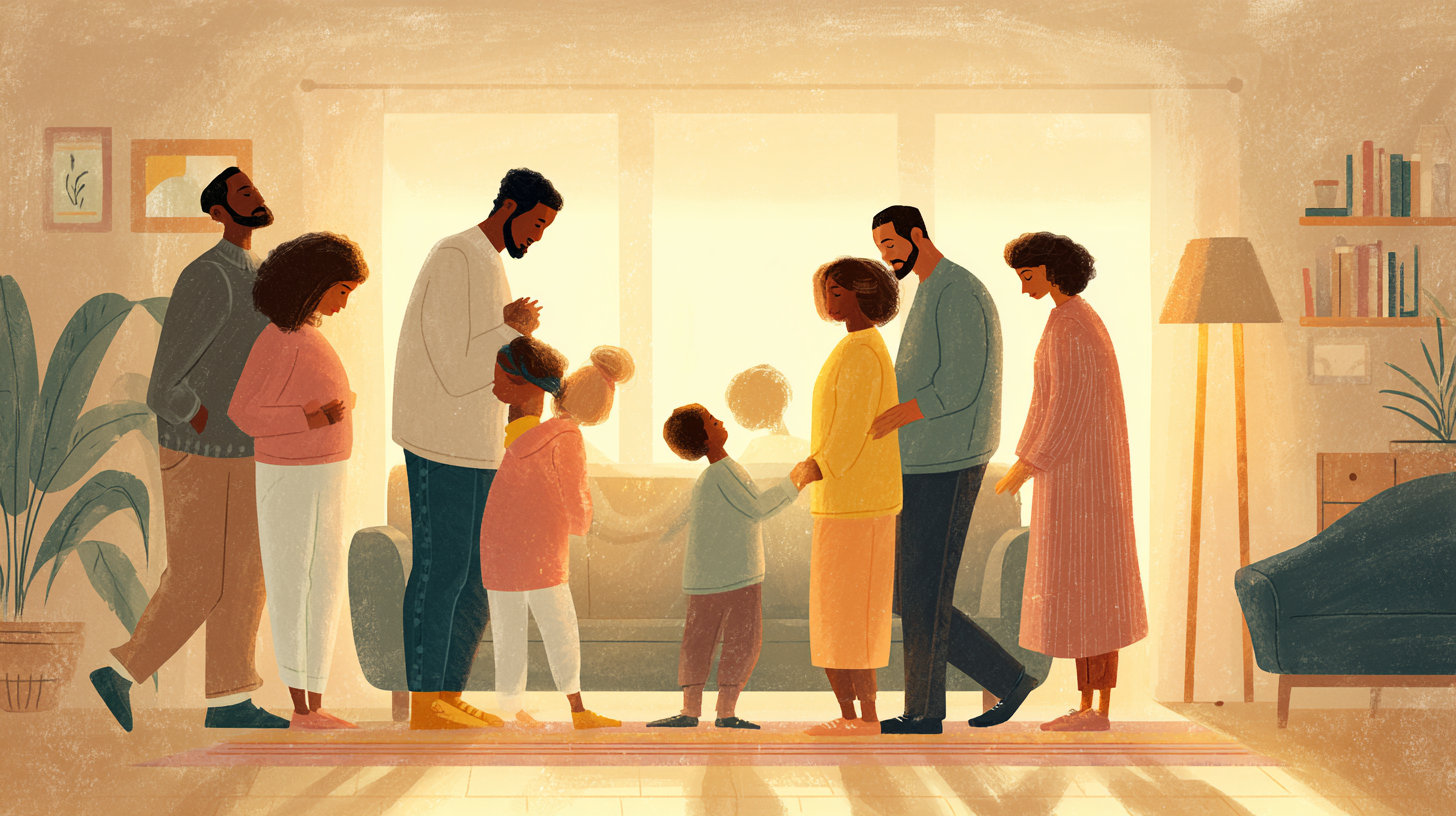
When you share a roof with others, staying active stops being just a personal project and becomes part of the spirit of the home. You know how a house can feel heavy when everyone is tired, scrolling, and drifting from room to room? Movement can change that atmosphere. It lightens the air. It draws people out of corners and into fellowship. And it doesn’t require anyone to be an “athlete.” It just asks that you all be willing to take a few simple steps together, in goodwill and patience.
One of the easiest ways to begin is to trade “exercise time” for “activity time.” The word “exercise” makes some people brace up inside; they remember old gym classes or failed attempts. But nearly everyone is willing to join a “10-minute energy break” or a “stretch-and-move time” after dinner. Choose a time when you are already gathered—maybe right after the evening meal or before a favorite show—and announce a short, non-negotiable movement ritual. Nothing dramatic: five minutes of gentle stretches, a few squats, some wall pushups, a minute of marching in place. When the time is short and the tone is kind, even the reluctant hearts are more likely to join.
It can help to make one person the “movement captain” for the day. This isn’t a drill sergeant; it’s a guide. Their job is to pick two or three simple moves everyone can do and call them out. Tomorrow, someone else takes the role. One evening a roommate may lead a “desk recovery” stretch session for tight shoulders and necks; another night a child might choose a “jumping and dancing” circuit where you all hop, wiggle, and laugh more than you sweat. Rotating leadership gives each person a voice, and those who feel weak in one area may discover they have something to offer in another. This sense of shared ownership can turn sporadic home workouts into a household habit.
If your group enjoys games, use that. Turn movement into a living-room challenge instead of a silent duty. Write simple exercises on slips of paper—“10 chair squats,” “20 seconds of fast marching,” “5 wall pushups,” “15-second plank,” “20 side steps”—and put them in a bowl. Each person draws one slip and the whole group does that move together. Then the bowl passes to the next person. Keep going for 10–15 minutes, or until everyone has drawn twice. You’ll get variety, laughter, and shared effort, which is often more powerful than any perfectly designed routine.
Music can bind everyone together as surely as any schedule. Choose a song or two that your household loves and declare them your “movement anthems.” When that song plays, everyone stands up—no matter what they’re doing—and moves for the length of the track. It might be simple dancing, step-touches, light jogging in place, or playful shuffling around the coffee table. Children especially respond to this kind of cue-based activity, but adults benefit just as much. Over time, the music becomes a cheerful reminder that your home is a place of life and healthy living, not just sitting and watching.
If some in your home are stronger or more fit than others, be very careful that the active ones don’t trample the weaker ones with their enthusiasm. Remember that not everybody can or should do the same movements in the same way. Offer options without shame. For instance, as one person does full pushups on the floor, another might do them against the wall. As one jogs in place, someone else may simply march or sway. A parent may hold a chair for balance while a teenager bounces around the room. The goal is not uniformity, but participation. Whenever you offer a more intense variation, always name a gentler one right beside it, so no one feels pushed aside.
Sometimes the sweetest shared movement is also the quietest. Not every session has to be loud and high-energy. On weary evenings, invite your family or roommates to a “wind-down stretch circle.” Clear a bit of floor, sit in a loose circle, and go through slow, simple stretches: reach for the toes, gently twist side to side, roll the shoulders, circle the ankles and wrists, stretch the chest while holding hands behind the back. Keep your voices low. You might even share a verse, a thought of gratitude, or a brief prayer of thanks for bodies that can still move. These peaceful gatherings nourish not only your joints, but your unity.
For households with children, turning movement into story can work wonders. Instead of saying, “We’re going to exercise now,” say, “Let’s act out a journey.” You might be “climbing the mountain” with high-knee marches, “crossing the river” with side steps, “picking apples” with big overhead reaches, and “sneaking past the dragon” by tiptoeing in a squat. Adults may feel a bit silly at first, but step into it fully for the children’s sake. In teaching them that movement is play, not punishment, you are planting seeds of lifelong fitness without them even noticing.
There will be days when not everyone wants to join, and that’s all right. Force breeds resistance; gentle consistency breeds curiosity. Rather than scolding the ones who stay on the couch, simply move with those who are willing and keep the door open. Let your own steady practice be an invitation. Often, as people see the joy and camaraderie that grow from these small gatherings, their hearts soften. They may start with just one stretch or one round of a game, then quietly stay for the rest. Patience is part of stewardship too.
You can also connect movement with shared tasks, so it doesn’t feel like “extra” on busy days. If you’re already doing a quick tidy-up before bed, turn it into a light movement circuit: carry items back to their rooms with a brisk walk, pause for three squats when you put something away, or do a quick side stretch every time you close a cabinet. Invite the others to join you for just five focused minutes. In this way, the patterns you learned while incorporating movement into chores can extend naturally into family or roommate routines, so work and home workouts strengthen each other instead of competing for time.
Shared challenges can be a quiet source of encouragement, provided they are framed in kindness. As a household, you might choose a simple monthly goal: “Every day this week we’ll do at least five minutes of movement together,” or “For the next 30 days, we’ll each take the stairs in the building at least once.” Post the goal on the fridge or a wall and mark each day you succeed with a small check or symbol. Rather than comparing who did more, celebrate the fact that you all showed up. These little visible records remind everyone that progress is being made, even on days that feel ordinary or hard.
If you live with older family members or anyone with limited mobility, your shared activity may need a more careful pace. Chair-based routines can be a blessing here. Sit together at the table or in the living room and move in unison: seated marches, arm circles, gentle torso twists, calf raises while holding the chair. You can still play music, still laugh, still share stories while you move. The key is to honor each person’s limits while not surrendering them to stillness. When the stronger ones slow down to match the weaker, they are not losing progress; they are gaining character and deepening the bonds of the home.
Finally, remember that the purpose of staying active together is larger than toned muscles or checked boxes on a chart. You are shaping the culture of your home. Each shared stretch, each silly dance, each quiet set of chair squats is like a thread in a tapestry, weaving movement, companionship, and care into the daily pattern of life. Over time, that pattern becomes part of how you all see yourselves: a household that doesn’t simply sit side by side, isolated behind screens, but one that rises, moves, and gently urges one another toward stronger, steadier, more joyful living.
Maintaining motivation and tracking progress
Motivation at home rarely fails because you don’t care enough; it fails because you keep waiting to “feel like it.” If you hitch your movement to feelings alone, your activity will rise and fall with your mood, your sleep, and the day’s frustrations. A better approach is to treat movement as part of your identity and daily rhythm—a quiet, nonnegotiable piece of your healthy living—and then use simple tools to keep yourself honest. Motivation is the spark, but structure is the fireplace that keeps the flame going.
One of the most powerful shifts you can make is from vague wishes to tiny, concrete promises. “I should do more home workouts” is fog; “I will move for 10 minutes before lunch on Monday, Wednesday, and Friday” is solid ground. Write that promise down. Put it on your fridge, your mirror, or the lock screen of your phone. When your brain tries to negotiate—“Maybe later, maybe tomorrow”—you’re not arguing with your feelings; you’re choosing whether or not to keep a promise you already made. That simple act of keeping your word to yourself, again and again, slowly reshapes how you see your own reliability.
Tracking your progress doesn’t need to be complicated or obsessive. A plain notebook or a simple note app is enough. Jot down the date, what you did, and how it felt, using a word or two: “tired,” “steady,” “stronger than last week.” Over time, those short lines turn into a visible story of your fitness journey—a story that often reveals progress you would otherwise miss. On days when you feel stuck, flipping back and seeing where you started can be the encouragement that gets you to roll out of bed and move anyway.
Numbers can be helpful if they serve you, not the other way around. You might track sets and reps, steps, minutes of movement, or weekly totals of active days. For some, a simple “movement streak” works best: each day you do at least five or ten minutes, you mark an X on a calendar. The goal becomes “don’t break the chain.” Behavioral research has long shown that visible streaks tap into our desire for consistency; we feel a quiet urge to protect the line we’ve built. But remember: the streak exists to bless you, not to bind you. If you break it, you simply start a new chain—no shame, just continuation.
Technology can be a helpful servant if you refuse to let it become your master. Fitness trackers, apps, and smartwatches can remind you to stand, log your steps, or guide short routines. An app might send a gentle nudge every hour: “Time to move for 2 minutes.” You can schedule notifications for your chosen workout times or use guided videos for structure on days when you don’t want to think. But set boundaries: if the numbers start making you anxious or ashamed, adjust your goals downward or turn off some metrics. The purpose of the tools is to support steady home workouts, not to make you feel like a constant failure.
Motivation often fades because we expect every session to feel exciting. In reality, consistency is built on accepting that most days will feel ordinary. One helpful mindset is to separate “starter days” from “builder days.” On starter days, your only requirement is to begin: five minutes of light movement, a short walk around the room, some gentle stretches. Once you start, you’re free to stop after those five minutes—or keep going if the energy appears. Builder days are when you ride a wave of higher energy and push a bit more. Knowing that not every session has to be big removes the pressure that often kills motivation before you even lace up your shoes.
Another way to keep yourself going is to track more than just physical results. Write down non-scale victories: “less back pain,” “climbed the stairs without stopping,” “slept better,” “felt calmer after the workout,” “played with the kids without getting winded.” These quiet changes are often the true fruit of steady movement. When you look back and see that your home routines gave you back energy, ease, and confidence in everyday tasks, the desire to keep moving becomes deeper than chasing a certain look in the mirror.
Rituals can anchor your motivation when willpower runs low. Choose a small action that always comes before your movement: tying your shoes, filling a water bottle, turning on a particular song, lighting a candle, or rolling out a mat or towel. This “pre-move ritual” signals to your brain that it’s time to shift gears. Done consistently, it becomes almost automatic—a gentle path that leads you from sitting to moving without a long inner debate. Over time, the ritual itself can begin to feel comforting, a familiar doorway into caring for your body.
On days when you genuinely have little energy or feel low in spirit, tracking your effort instead of your performance can be a mercy. Give each session an “effort score” from 1 to 5, where 1 is “I just showed up” and 5 is “I gave everything I reasonably could today.” A 2 on an exhausted day might take more courage than a 4 on a good day. When you look back and see that you kept showing up even when it was hard, you start to trust yourself in deeper ways. That trust can be more powerful than any single strong workout.
Accountability doesn’t have to mean posting every workout online. Sometimes the most effective support is quiet and close. You might text a friend or family member each time you complete your planned movement: “Done for today.” Maybe a roommate agrees to ask you once a week how your home workouts are going. You could even set up a shared spreadsheet or a simple checklist on the fridge where everyone in the household marks their movement minutes for the day. The goal is not competition, but mutual encouragement—a gentle sense that someone else cares whether you keep going.
It also helps to design your environment so that movement is the easy choice. Keep resistance bands, a mat, or a small set of household “weights” (like water bottles or a loaded backpack) visible and within reach. Save a shortcut on your TV or laptop to a favorite 10-minute routine. Decide in advance where in your home you’ll move when it’s raining, when the kids are loud, when you’re on a work break. The fewer decisions you have to make in the moment, the less friction stands between you and the session you promised yourself.
As you track your progress, be prepared to revise your goals. Maybe you discover that five days a week of structured training leaves you drained, but three days plus daily movement “snacks” fits your life beautifully. Maybe you thought you cared most about appearance, but your log shows that what really lights you up is having more energy to serve others or to fully participate in daily life. Let that information guide you. Your goals are not laws chiseled in stone; they’re living guides that can grow as you grow. If you stay curious about what truly helps you flourish, your record of workouts becomes less a scorecard and more a set of clues about how God designed your body to thrive.
Ultimately, maintaining motivation at home is less about chasing constant inspiration and more about quietly aligning your daily choices with what you say you value. Each checkmark on the calendar, each tiny note in your log, each five-minute walk taken instead of skipped is a small but real act of stewardship. You are not just tracking numbers; you are tracing a pattern of faithfulness across your days. As you look at your own records and see that pattern forming, allow it to stir questions in you: What else in your life could change if you treated small, repeated actions with this much respect? Where else might quiet consistency build the kind of strength you can lean on when life is heavy?
- How many days per week should I aim to be active at home?
- Most guidelines suggest at least 150 minutes of moderate activity per week, which can look like 20–30 minutes on most days. If that feels like too much, start with 10 minutes a day and build up; consistency matters more than perfection.
- What if I don’t feel motivated to do home workouts?
- Instead of waiting to feel motivated, commit to a very small minimum—like five minutes—and focus on starting, not finishing. Often, motivation appears after you begin, and even if it doesn’t, those five minutes still count toward your health.
- Do I need special equipment to make progress?
- No, you can get stronger and more mobile using just your body weight and household items like chairs, walls, backpacks, and water bottles. The key is gradually making things a bit harder over time by changing angles, tempo, or repetitions.
- How can I tell if my home workouts are actually working?
- Track simple markers such as how many reps you can do, how long you can hold a plank or wall sit, how you sleep, and how daily tasks feel. If you’re slowly improving in these areas or everyday activities feel easier, your training is working.
- What should I do when I miss several days in a row?
- Don’t try to “make up” missed workouts; just restart with a lighter session to rebuild the habit. Treat the lapse as information, not failure, and adjust your plan if your original schedule didn’t fit your real life.
- Is it okay to break my activity into short sessions throughout the day?
- Yes, research shows that accumulating movement in short bouts—like 5–10 minutes at a time—can offer similar health benefits to one longer session. This approach often works better for busy schedules and can make staying active feel more manageable.
- How do I avoid getting bored with the same routine?
- Rotate between different types of sessions—strength, stretching, dance, or interval-style cardio—and change one small element each week, like the order of exercises or the music. Keeping a log of what you enjoyed also helps you design more routines you actually look forward to.
Ashland Sabbath Chapel Ministries
Beside our live streamed church services, all are welcome to attend our church in person each Saturday beginning 10:00 AM Central Time by going to 2425 Owens Rd., Ashland, AL 36251. There is no cost and any donations are strictly voluntary.
For questions, call +2563547124.