Come join Ashland Sabbath Chapel Ministries each Saturday for live streamed church services. Bible Study begins at 10:00 AM Central Time and Sermon at 11:00 AM. Visit Our YouTube channel and watch from home!
When a man gives a portion of each day to hobbies that call his body into healthful action, he rises from his labor stronger rather than spent. You have felt, as I have, that the duties of life often press upon nerve and muscle like a continual weight. Yet when we harness the spare hour to some simple, regular pursuit—be it walking, gardening, cycling, or even a lively game with the children—the body begins to answer with new vigor. The blood moves more freely; the lungs take in a fuller draft of air; the step becomes more sure and elastic. Such things are not trifles. They are means appointed for the preservation of strength, if only we will use them faithfully.
Consider what happens during a common brisk walk taken each day at nearly the same hour. The heart, being called to steadier action, sends the blood through arteries and veins with more order and efficiency. The lungs, long confined by desk or bench, expand more fully and cleanse the system of impurities. Muscles that have grown slack under constant sitting are roused and toned. You may begin this habit with only twenty minutes around the neighborhood or along a quiet road, yet, kept up day after day, it acts as a gentle training for the whole frame. The joints grow more supple, balance improves, and even the night’s sleep becomes deeper and more refreshing.
There is also much virtue in those outdoor pursuits that require bending, lifting, and steady movement without violent strain. Gardening is a notable example. When one turns the soil, reaches and stretches to pull weeds, or carries light loads, the body is engaged in natural motions for which it was fashioned. Unlike sudden, excessive exertion, this labor of moderate, regular kind strengthens rather than exhausts. The sun upon the skin, the fresh air, the fragrance of the plants—all these act as restoratives. Many who thought themselves too weary for any exertion have found that a small garden plot, faithfully tended, gave them more real strength than an extra hour upon the couch.
You might say, “My work already tires my body; why should I take on more activity?” The answer lies in the kind of exertion. Many occupations strain only a few parts while leaving the rest neglected. The clerk stoops over the desk; his back and eyes suffer while his legs grow weak. The driver sits long hours, the mechanic twists the same joints again and again, the student bends always over books. These labors are often one-sided, cramped, and accompanied by anxiety. A well-chosen hobby, by contrast, draws the entire frame into freer action, with the mind at ease. The body gains what was missing: balanced movement, deeper breathing, and the wholesome rhythm of exercise unburdened by care.
Another gain from steady physical hobbies is seen in the matter of weight and the wise use of food. Many struggle with a body burdened either by excess or by poor distribution of flesh. They try severe diets or costly remedies, yet make little progress. Meanwhile, a regular hour of wholesome motion—walking, swimming, cycling at a temperate pace—helps the body burn what is not needed and build up what is weak. Appetite becomes more natural; vain craving for heavy, rich foods is lessened; water is taken more freely. It is as though the body, given proper movement, begins to govern itself with greater order. The scale may not change quickly, but the clothing fits more comfortably, the heart does not labor so hard upon slight exertion, and the breath comes easier upon climbing the stairs.
Attending to the regularity of these pursuits is worth more than occasional bursts of zeal. Some will rush into severe exercise for a week and then abandon it altogether. They gain little but soreness and discouragement. Yet the man or woman who chooses a simple activity and adheres to it gently, day by day, obtains far greater benefit. It is like sowing seed in a field. Scattered once upon the wind, it bears little fruit; but planted in order, watered with care, and visited daily, it yields a harvest in due time. So it is with the body. A half hour of chosen movement, kept as faithfully as one keeps an appointment, works more health than two or three hours taken only at rare intervals.
These bodily pursuits also lessen the very conditions that lead to disease. A frame kept in wise motion sends the blood more regularly to every part, so that no organ is left neglected. The bowels act with more order; the skin, that great covering of the body, performs its office of cleansing more freely; the heart is spared violent strain because its daily work has strengthened it for every demand. Even those with advancing years may find in mild, consistent hobbies a shield against the stiffness and frailty that so often attend old age. A simple daily walk, some light work among plants, or gentle exercises upon rising can hold back for many years the decline that otherwise would come swiftly.
However, in all of this, temperance and wisdom must rule. A hobby that pushes the body to extremes is no friend to health. Some are tempted to prove their strength by sudden long runs, heavy lifting, or dangerous feats. Instead of building up the system, such excess tears it down and leaves the heart over-taxed, the joints strained, and the nerves unstrung. Better to choose pursuits that can be continued with comfort into later life. Moderate walking, steady gardening, leisurely cycling, light games played in good spirit—these things can be repeated again and again without injury, and they leave the body asking, not for the bed in exhaustion, but for wholesome food and sound sleep.
Remember, too, that what blesses the body often comforts the mind. While we speak here chiefly of the physical frame, the advantage does not end there. When the limbs are exercised in fresh air, the thoughts are often clarified. Many a perplexity has been eased during a quiet walk, many gloomy feelings lifted while the hands were set to simple, active labor. Thus, even though we might be talking of muscles and circulation, we find that wellness is one whole. Regular bodily hobbies lighten the heart, steady the nerves, and prepare a better ground for strong mental health.
Mental wellness through creative activities

You know how the mind can run like a frightened horse. It bolts at small sounds and shadows and will not be called back. A man sits in a quiet room and yet feels hunted. The clock is gentle, the chair is soft, but the thoughts are wild and cruel. In such hours, talk of “relaxing” means nothing. You cannot relax on command. The mind needs a task, not a command. That is where simple, creative hobbies do their honest work. They give the hands a duty so the thoughts may stop their useless war.
Take a pencil and a blank page. Draw anything: the curve of a coffee cup, the line of the old tree out front, the shape of your own hand. The drawing may be poor at first. It does not matter. As the pencil moves, your breathing steadies. You look, then look again, trying to see more plainly. The world outside your worries steps closer. The rumble in your head grows quiet because the eyes have taken command. This is how a small act of making can soften the hard corners of the day and guard your mental health.
There is a plain truth in this: the mind cannot clutch its grief and its craft with the same fingers at the same time. Think of someone knitting in a hard season. The yarn slides, the needles tap in a slow, sure rhythm. A scarf takes shape, then a hat, then another scarf. The sorrow does not vanish, but it becomes bearable, like a stone that can be carried in the pocket instead of on the back. Each row finished is a line of time crossed safely. Such small progress is a kind of wellness, built stitch by stitch, when there was nothing else that seemed sure.
Writing does this work as well, even when the words are rough. You could keep a simple journal. No one need ever read it. Each night you set down three plain things: what burdened you, what helped you, and what you hope to do tomorrow. The page does not judge. It merely holds. As you write, the tangle in your head must be turned into sentences. This turning is powerful. Vague dread cannot stand long once forced into clear lines. You see what is true fear and what is only smoke. A few weeks of such writing often eases the tightness in the chest more than many long complaints spoken in anger or despair.
Music reaches even deeper. You do not have to be skillful. Strum a guitar, press the keys of an old piano, hum as you wash the dishes. There is a directness in sound. A simple tune played each evening can become a rope you hold while the river of the day rushes past. Your fingers learn where to go; your breath finds the beat. The body and mind move together for once instead of pulling one another apart. Many a man has kept his courage alive by returning to the same short melody in the dark hours when words were useless.
Painting works in another way. The colors say what the tongue does not know how to tell. On a difficult day you might reach for heavy reds and thick strokes, pressing the brush into the paper with force. On a quiet morning you may choose thin blues and loose lines like the sky. You do not need to ask, “What does it mean?” The meaning is in the doing. When you step back and look, you see your own weather made visible. This recognition is gentle medicine. It reminds you that feelings move and change, just as clouds do, and that you are something larger than the storm passing through.
There is also the plain craft of working with wood, cloth, or clay. The saw hums, the sandpaper rasps, the clay yields under the palm. These sounds and sensations pull you out of the pale, hovering world of fears and into the solid world where things have weight and shape. To plane a board smooth, to mend a torn sleeve, to throw a small pot upon the wheel—these are homely acts, yet they steady the nerves. You see that your hands can still bring order where there was none. Each finished, useful object stands like a small flag against the bleak thought that nothing you do matters.
There are other gains for the mind that come quietly as you work. When you return to a creative hobby day after day, you teach yourself patience. At first your lines are crooked, your notes sour, your stitches uneven. The old habit of scolding yourself will try to rise. But if you press on, there comes a day when the cup you draw looks more like a cup, the song sounds less broken, the scarf lies more even in the lap. You feel it in the chest—a little weight of pride. This is not the loud boasting the world loves, but the quiet conviction that you can learn, that you are not fixed forever in your worst form. Such belief is strong armor against despair.
You also come to see failure in a new way. When paint smears, you paint over it. When a board splits, you cut another. When the writing in your notebook displeases you, you turn the page and begin again. Again and again you discover that a poor attempt is not the end, only part of the work. This lesson, learned with the brush or needle, carries into the rest of life. A bad day does not prove you are ruined. A sharp word spoken, a task abandoned halfway—these do not define you, any more than one ruined canvas defines a painter. The creative habit trains the mind to rise and try once more.
You may say, “I have no talent. I was never good at art or music.” Cast that off. The mind does not require talent to heal. It asks only for honest occupation. Think of a man who whittles on the porch in the evening. He does not carve masterpieces. He shapes small boats and animals that sit crooked on the shelf. Yet while his knife moves, his anger drains away. He watches the shavings fall and feels the day’s noise recede. That is enough. The work has done its duty. The worth lies not in applause but in the peace that settles over him like a light coat against the night air.
Even the simplest acts of arranging and tending can calm a troubled mind. You might keep a few houseplants and take ten minutes each morning to water, trim, and turn them toward the sun. You might keep a small box of photographs and spend a quiet hour now and then sorting and labeling them. These things seem slight, almost foolish, but they give the mind a narrow, clear path to walk. Order replaces confusion, if only on a single shelf or windowsill, and that small patch of order stands as proof that chaos is not complete.
For those who bear heavy burdens—grief, long illness, old regrets—creative hobbies can be a kind of shelter. Not an escape that denies reality, but a refuge that allows you to rest from staring at it. A widow may find in quilting a way to sit with others, to piece bright scraps into patterns while her heart slowly grows accustomed to its new weight. A man who has lost his work may turn to repairing old tools or furniture, giving fresh life to things the world had cast off, and in so doing begin to believe that his own story is not yet finished. These are not cures, but they keep the soul from freezing.
It helps to keep the bar low. Choose creative work that can be done in short, sure sessions, fifteen or twenty minutes at a time. Place the tools where you can reach them easily: the notebook on the table, the yarn in a basket by the chair, the guitar on a stand instead of shut in its case. Let the work call to you without fuss. You do not need to wait for inspiration. Sit down, pick up the tool, and begin in a small way—one line, one row, one chord. Often the mind, which refused large demands, will yield to this modest invitation. The rhythm takes hold, and the noise inside you softens.
If you will give such simple acts of making a regular place in your days, you may find that the inner storms come less fiercely and pass more quickly. The worries will still knock at your door, but they will no longer own the house. You will have built rooms of your own, bright with color and sound and the honest marks of your hands. In those rooms, your thoughts move more gently, your breath comes easier, and your heart, which once felt like a hunted thing, stands firmer on its feet. This is how mental health is guarded in common hours—through small, steady acts of creation that ask for no glory, only your faithful return.
Building social connections with shared interests
You and I have both seen how a man may possess excellent principles, even passable fortune, and yet be wretchedly lonely. It is not always ill will that keeps us apart; often it is merely that our lives run in narrow channels which never meet. Here is where hobbies, quietly and without ceremony, perform a most useful office. They provide the very ground on which strangers may stand together without awkwardness, and upon which mere acquaintance may blossom into friendship. Shared interests are like a common language; one need not search for clever phrases when the subject is already waiting between you.
Consider two people who scarcely know what to say to one another. Place them at a table with a simple puzzle, or set them side by side in a small class of watercolors or pottery. At first, the talk is of the materials: “Will this color do?” “Have you tried this brush?” “How on earth does this piece fit?” It is not profound, but it is sufficient. As the hands grow busy, the tongue grows freer. Soon stories slip out—where they first learned to paint, how their grandmother loved jigsaw puzzles, or why they took up this new pursuit at all. By the time the session is done, the puzzle is not the only thing more complete; a thread of understanding has been woven between them.
Modern observers have taken some pains to measure what we may easily feel. They find that men and women who regularly join in group activities—choirs, book clubs, walking circles, knitting gatherings—tend to report greater wellness, fewer feelings of isolation, and even better physical health over time, compared with those who pursue pleasures only in solitude or not at all (Holt-Lunstad et al., 2015; Cruwys et al., 2014). Strong social ties have been linked with lower mortality risk, better heart health, and reduced symptoms of depression, showing that companionship is not a luxury but a safeguard to both body and mental health (Uchino, 2006; Santini et al., 2020).
You may object, “I am not one for parties; I dislike great crowds and loud talk.” Nor am I urging you into them. The beauty of shared hobbies is that they permit social life in forms as gentle or as lively as suits your nature. A small reading circle of three or four friends; a quiet walking group that takes the same route each morning; a simple weekly game of chess at the local library—these modest arrangements may do more for the heart than any grand ball. They provide regular, predictable meetings, without the strain of constant novelty.
There is a curious magic in belonging to a group that gathers for some specific purpose beyond mere conversation. When people sing together in a choir, for instance, each voice must listen to the others. No one can sing entirely for himself; the whole piece would fall into confusion. This shared attention knits people together in a fashion most agreeable. It is no wonder that those who sing in choirs often describe feeling “lifted,” “connected,” or “part of something larger” after rehearsal, and research has found genuine reductions in stress and improvements in mood and social bonding among such groups (Pearce et al., 2016; Fancourt & Finn, 2019).
The same spirit appears in humbler pursuits. A knitting circle looks, at first glance, like a company intent only upon yarn. But if you sit among them an hour, you will hear fears confessed, joys shared, advice exchanged, and laughter rising over some dropped stitch or tangled skein. The work of the hands gives cover to the work of the heart. People who might never dare to sit face to face and speak of losses and hopes can do so side by side, eyes on their needles. It is as if the hobby grants permission to be honest without declaring, “Now we shall have deep talk,” which would send half the room into fright.
Shared interests are also a fine remedy for the shyness that so often keeps good people apart. A person who feels terribly awkward in open company may behave quite differently when the subject is a favorite pastime. Ask a quiet gardener about her beans and roses; you will rarely be disappointed in the abundance of her reply. Place a reserved gentleman on a small team for a local trivia night, and you may see him become almost animated while recalling old facts about history or music. In such moments, personality is not forced; it is drawn out by the delight of the subject. Over time, these small exposures strengthen social confidence, rather as regular walks strengthen the legs.
You and I know, too, that solitude can grow dangerous when it hardens into fixed isolation. When a man sees no one but his own thoughts, those thoughts may grow grim indeed. Group hobbies interrupt that decline. A weekly woodworking club, a weekend cycling group, or even a regular gathering in a neighbor’s kitchen for bread-baking offers gentle obligation: “They will expect me; I must go.” That expectation, so small compared to the weight of private sorrow, has been shown to protect against depression and to support recovery from hard seasons, particularly when people feel recognized and valued within the group (Haslam et al., 2018).
You may notice that the most fortunate hobby gatherings are those in which skill is not a gate but merely an ornament. A walking club does not demand speed; it demands only that you put on your shoes. A community garden welcomes both the expert and the novice, for there is weeding enough for everyone. In such places, people are known first not by their rank in the world but by their shared task: “She tends the tomatoes,” “He always brings extra seeds,” “They save us when the hose breaks.” These are small honors, perhaps, but they build a sense of belonging more solid than titles and salaries.
Of course, not all social experiences are equally wholesome. One must exercise some prudence in choosing companions, for the company we keep through our pleasures can influence our health as surely as any medicine. Joining a hobby group that encourages overindulgence in drink, unkind gossip, or reckless risk-taking will do your wellness no favors, no matter how diverting the pastime. Select, instead, those gatherings where kindness is valued, where newcomers are received with patience, and where the activity itself calls for cooperation rather than rivalry alone. Competitive sports can be excellent when played in good spirit; they become harmful only when pride and ill temper are allowed to reign.
If you find yourself, at present, somewhat cut off from others, you need not fling yourself into a dozen clubs at once. Begin modestly, with one or two avenues that suit both your interest and your courage. You might:
- Attend a local class—cooking, drawing, language, or dance—where the instruction itself provides topics of conversation.
- Join a small group that meets outdoors, such as a walking, hiking, or birdwatching circle, where nature supplies pleasant pauses and diversions.
- Volunteer for a practical cause—a food pantry, community garden, or animal shelter—so that the shared effort gives purpose to every meeting.
- Seek out a club devoted to a favorite pastime—chess, knitting, book discussion, board games—where the activity naturally breaks the ice.
When you first attend, your task is not to be brilliant, but merely to be present. Stand where others stand, take part in the shared work, and allow the talk to flow around you. Over time, you may find one or two faces becoming familiar, one voice you particularly enjoy, one person whose story touches your own. Deep friendships often begin not with thunderclaps of immediate intimacy, but with these repeated, gentle contacts over a shared table or trail.
There is another grace in shared hobbies: they draw people of different ages into one room. In our present way of life, it is too common for the young to know only the young, the old only the old, and each to suspect the other of being either foolish or dull. A local choir, a gardening project, or a crafting circle breaks down this unfortunate separation. A young woman learns from an older one how to plant beans or darn a sock; an older man hears from a younger about new tools or music. Each gives and each receives, and both are preserved from the narrowness that comes when we see only our own generation.
You will observe, if you look closely, that the most restorative circles are those in which help is quietly exchanged. One person carries heavy materials, another shares knowledge, another brings humor, another offers a listening ear. This mutual aid nourishes that sense of usefulness which is so vital to mental health. It is not enough merely to be cared for; one longs also to care. In a well-ordered hobby group, even the shyest member can contribute something—a suggestion, a tool, a word of encouragement—and go home feeling, “They were glad I was there.” That sentiment, though simple, steadies the heart more than any number of solitary entertainments.
As your social circle widens through shared pursuits, you will likely find that other parts of life become easier to bear. A person who once faced every difficulty alone now has a few companions to whom he may say, “I am troubled,” and from whom he may hear, “So am I, but let us walk, or sing, or sew through it together.” The problems themselves may remain, but the burden is lightened by being carried side by side. Researchers have long noted that such perceived support can soften the impact of stress and guard against anxiety and depression (Cohen & Wills, 1985; Thoits, 2011). It is one of the oldest truths: grief divided is grief diminished; joy shared is joy increased.
If you will allow your hobbies to open these doors, rather than shut them, you may discover that the hours given to them do more than fill your leisure. They become the very threads by which your days are joined to the days of others—neighbors, acquaintances, and, in time, dear friends. And as those bonds strengthen, you will find yourself steadier, more hopeful, and less easily thrown down by the storms that come to every life, prepared in both body and soul for the next small steps you will take together.
Incorporating hobbies into a busy schedule
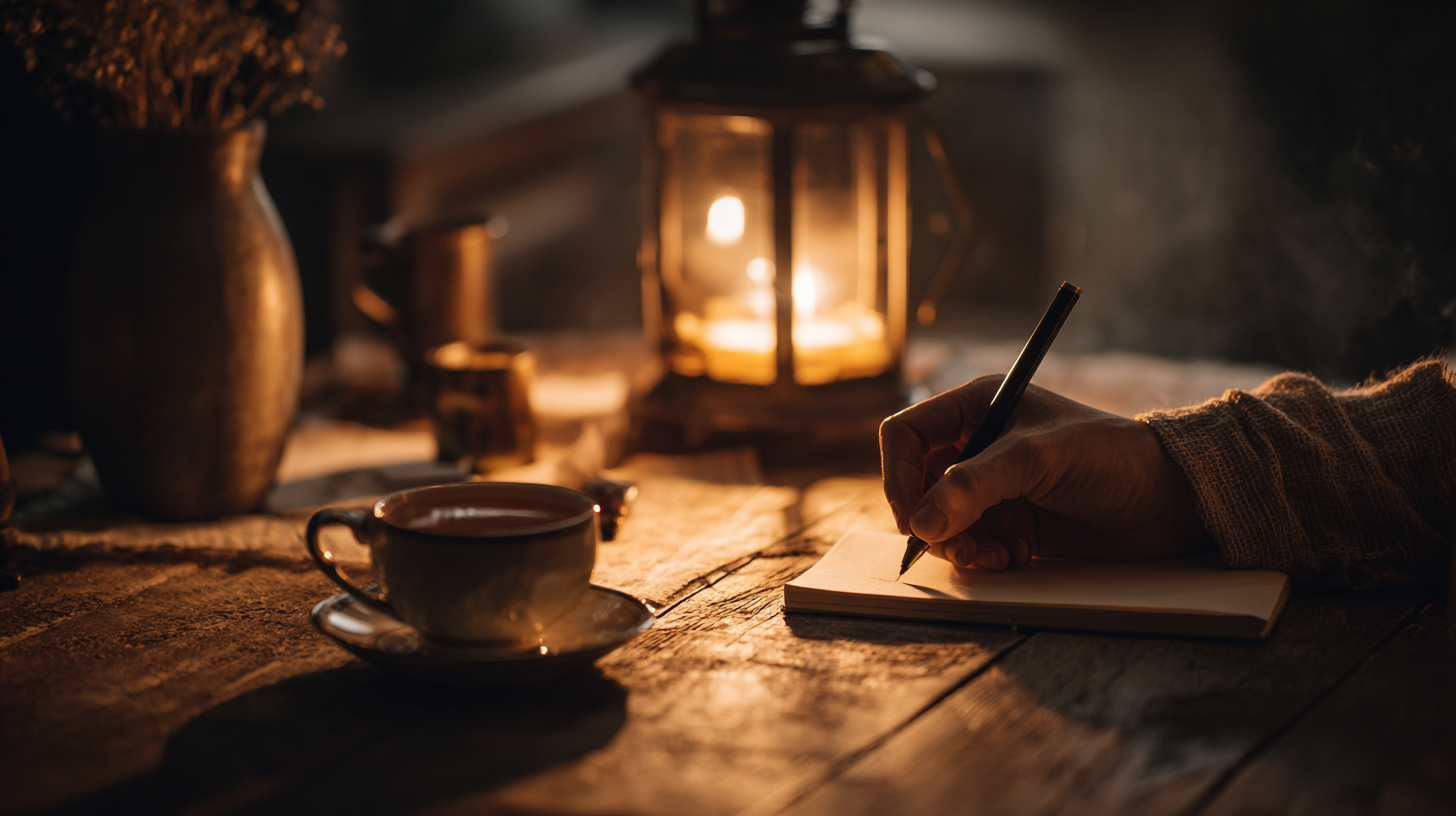
Now, you may be saying, “All this about hobbies is well and good, but look at my days. They are already full from dawn until dark. Where is there room for such things?” I do not doubt that you are pressed. Yet I have found again and again that the great enemy is not the shortage of hours, but the way they slip past us unexamined. When a man begins to number his minutes as carefully as he numbers his dollars, he finds small coins of time hidden in every corner—five here, ten there, a quarter-hour before bed—which, gathered together, will buy him more strength and peace than many a costly indulgence.
The first step is to look your day squarely in the face. Take two or three ordinary days and write, as plainly as you can, how each hour is spent. From the time you rise to the time you retire, set it down without excuse: work, meals, errands, screens, idle wandering through the news, anxious pacing, all of it. This simple act of accounting often reveals what the mind has refused to see. Modern studies of time use show that many adults underestimate how long they spend in unplanned screen use by an hour or more each day (Robinson, 2022). It is not that we are wicked, but that we drift. Once the drift is seen, it can be corrected.
When your day is thus spread before you, begin to ask gentle questions. “Is this task necessary? Must I do it at this hour? Must I do it alone?” You will be surprised how many activities can be shortened, moved, or shared without any real loss. A long, aimless scroll through messages could become ten minutes answering only what is needful. A half-hour spent in fretful waiting for sleep could be given to quiet reading, sketching, or writing in a small journal until the mind grows calm. Even the busiest lives often contain scattered, unclaimed intervals that can shelter a modest, regular pastime.
It is important, too, to think in small portions. We sometimes imagine that a hobby is not “worthwhile” unless we can give it a long, uninterrupted stretch. But the body and mind often gain more from steady, brief engagements than from rare, lengthy ones. A ten- or fifteen-minute walk taken almost every day does more for wellness than a single two-hour march once a fortnight (Warburton & Bredin, 2017). In the same way, fifteen minutes with a sketchbook, a bit of knitting, or a few pages of reading can, over weeks and months, equal many hours of quiet recreation and restoration.
You might choose one or two such small windows to guard each day. Perhaps you rise twenty minutes earlier, before the household stirs, and give that time to a chosen pursuit. Or you claim the first quarter-hour after returning from work, before you touch the devices or sink into the nearest seat. You may find another slender piece of day after the evening meal, when the dishes are done and the night has not yet quite closed in. Mark these spaces as surely as you would mark an appointment with a physician. They are not selfish luxuries; they are a means of preserving the strength by which you serve in every other duty.
There is wisdom in linking your hobby to a habit you already keep. If you drink a cup of tea each evening, let that be your signal to open the book, or pick up the guitar, or turn to the half-finished puzzle on the table. Habit scholars call this “anchoring”—tying a new practice to an old one to make it more likely to endure (Duhigg, 2012). In plain speech, you are hitching your wagon to a horse that already knows the road. Over time, your mind will come to expect that quiet occupation whenever the familiar cue appears.
You may find it helpful, as well, to plan your week rather than trusting to impulse. Take a few minutes each Sunday to set down, in a small notebook or calendar, where your chosen hobbies will fit. Not grand resolutions, but simple, definite appointments: “Monday, after supper—20 minutes of drawing.” “Wednesday noon—short walk around the block.” “Friday evening—work on the quilt.” When such plans are made in advance, they must be broken by a deliberate choice, not merely overlooked in the rush of the moment. Research on behavior change has shown that these “if–then” intentions (“If it is 7 p.m., then I will take my walk”) significantly increase the likelihood that good habits are carried out, even when people feel tired or busy (Gollwitzer & Sheeran, 2006).
You may protest, “By the end of the day, I am too worn to do anything but sink into the nearest chair.” I will not argue with your fatigue, but I will suggest that not all rest is equal. There is a kind of idleness that leaves a man more weary than before, because his mind has been left to gnaw on the same worries while his body lies still. And there is another kind of rest—active, but gentle—that renews rather than drains. Studies comparing different forms of leisure have found that active pursuits, such as light exercise or creative tasks, are more strongly associated with improved mood, better sleep, and reduced symptoms of anxiety than passive screen-based activities (Kuykendall, Tay, & Ng, 2015; Wang et al., 2022). A few minutes of such wholesome occupation may actually restore the very strength you thought you lacked.
One way to overcome that first wall of tiredness is to lower the threshold. Tell yourself you will give only five minutes to your hobby. Set a small timer. Begin with the easiest possible step: take the knitting from its basket, open the sketchbook, lace your shoes and step outside the door. If, at the end of five minutes, you are still spent, you may lay it aside with a clear conscience. But you will find, more often than not, that once you have begun, the reluctance fades and you gladly continue a little longer. It is the starting that is hardest; once the wheel is in motion, it turns more easily.
You need not labor under the idea that every hobby must be carried alone. Some of the busiest people I know have preserved their mental health by weaving their pursuits into duties they must perform anyway. A parent who must attend to children in the late afternoon might carry handwork to the playground bench, or read while the little ones nap. One who cooks each evening might keep a radio or simple instrument nearby and sing softly while the pots simmer. Another may listen to instructive or uplifting recordings on gardening, history, or language while commuting, turning otherwise wasted travel into a kind of mobile classroom for the mind.
Household tasks themselves can be made into a kind of gentle hobby if they are approached with purpose rather than haste. Tidying a single drawer with care; tending a few pots of herbs on the windowsill and noting their growth; learning one new, simple recipe each week and mastering it—these small projects give shape to time that might otherwise be swallowed by vague busyness. They combine usefulness with recreation, nourishing both the home and the heart that lives within it.
It is true that the duties of family and work change from season to season, and your chosen hobbies must bend with them if they are to endure. A young mother with infants at her feet cannot keep the same schedule as a retired man whose days are largely his own. But each may keep something. In the press of early parenthood, a five-minute sketch, a single page of reading, or a short walk around the block with a stroller may be all that is possible. Later, when the children are older, those minutes can widen into half-hours. Likewise, one whose work demands travel may shift to portable pursuits—a journal, a harmonica, a bit of embroidery—that can be carried in a small bag and taken up in hotel rooms or waiting areas.
When work presses hardest, you may be tempted to cast aside all such recreations as frivolous. Yet many have learned, and research confirms, that short, planned breaks taken during long periods of demanding labor actually improve performance, reduce errors, and lessen exhaustion (Hunter & Wu, 2016). A brief walk outside, a few minutes tending plants, even a handful of stretches or deep breaths by an open window can reset the mind and body better than pushing on without pause. In this sense, your hobbies become not competitors to your work, but allies that make your work more sustainable.
There is another matter we must name plainly: the expectations of others. Some feel they cannot devote time to personal pursuits because every spare minute is given to the requests and needs of family, friends, or employer. Service is noble, but even the most faithful servant requires maintenance. A tool used without care will grow dull; a lamp that is never replenished will grow dim. Setting aside regular, bounded times for your own restoration is not selfishness; it is stewardship. When you return from a walk calmer, or from a bit of music lighter in spirit, you are better equipped to be patient, just, and kind in all your relations.
You can make this easier by speaking simply and honestly with those around you. Let your household know, “From seven to seven-twenty each evening, I will be walking around the block,” or, “After breakfast, I will have ten minutes in the garden.” If they understand that these intervals are not a withdrawal of love, but a means by which you keep yourself well so that you may continue to serve, many will respect and even support them. Some may wish to join you, turning your private hobby into a shared practice that blesses the entire home.
As your new pattern takes root, guard it gently but firmly. There will be days when emergencies arise and your plans must yield. That is part of life. The danger lies not in occasional interruption, but in allowing one broken day to excuse the next and the next, until the habit is lost. When a day goes awry, simply begin again at the next appointed time, without scolding yourself or declaring the whole effort a failure. This quiet persistence—starting afresh, again and again—is the true secret by which all lasting habits are formed.
Over time, you will likely notice that these small, steady appointments with your chosen hobbies change not only how you feel, but how you see yourself. Instead of saying, “I am at the mercy of my schedule,” you begin to say, “I am a person who walks each morning,” or, “I am one who writes a little each night.” Psychologists speak of this shift in identity as a powerful support to behavior change; when people come to view healthful activities as part of who they are, they maintain them more easily, even when circumstances grow trying (Oyserman, 2015). In simpler terms, habits that once felt like burdens become familiar companions on the road of your days.
If you will treat your time with the same reverence you give to your strength or your earnings—examining it, ordering it, dedicating modest, regular portions to life-giving pursuits—you will find that you need not flee to some distant retreat to know greater wellness. Even in the thick of responsibilities, your days can hold small islands of refreshment, steady as the sunrise. In those few protected minutes, the body moves more freely, the mind breathes more deeply, and the heart, long harried by duty, remembers that it was made not only to labor, but also to live.
Choosing sustainable hobbies for long-term health
When you choose how to spend your spare strength, you are not merely passing the time; you are shaping the person you are becoming decades from now. Here the question is not only, “What do I enjoy today?” but also, “What can I keep on doing, gently and steadily, when I am older, busier, or facing illness?” A fad taken up in a fever and dropped in a month may amuse, but it does not build the kind of deep-rooted wellness that holds through the long seasons of life. Sustainable hobbies are those that can bend with changing circumstances without breaking.
Begin by weighing the demands of a pastime against the likely changes in your body and duties. A hobby that depends on perfect joints, peak stamina, or costly equipment may serve you well for a few years, yet leave you bereft when injury, age, or finances alter the scene. In contrast, pursuits such as walking, reading, journaling, gardening, simple music, or handcrafts can be scaled up or down. You can walk farther when you are strong, shorter distances when you are not; you can garden in a small box when a large plot is beyond you. Ask yourself plainly, “Could I see myself doing some form of this at seventy? At eighty? On a tighter income? During a hard winter of the soul?” If the answer is “yes,” you have likely found sound ground.
It is wise, too, to consider how a hobby treats the body over the long term. Some pastimes thrill the heart in youth but leave the knees and back in ruins later: repeated heavy impacts, reckless stunts, nights cut short again and again. Others strengthen the frame without punishing it—steady swimming, moderate cycling, tai chi, slow dancing, gardening, gentle hiking. When you stand at the threshold of a new activity, listen not only to the excitement of the moment but to the quiet voice that asks, “Will this help my future self to walk, bend, and breathe more easily, or will it rob that self of comfort?” It is a kind of kindness to plant now what your older body will harvest in grace rather than pain.
The same question must be asked for the mind. Many entertainments dazzle but do not endure; they depend upon louder noise, faster pace, stronger shock. Over time, such things can thin the attention, feeding restless craving rather than calm focus, and doing little for mental health. Sustainable hobbies, by contrast, often involve some element of learning, practice, and quiet concentration. Reading thoughtful books, learning an instrument, studying a language, tending plants, woodworking, or painting do not exhaust themselves in a weekend. They open onto wider fields. Each skill gained reveals another beyond it, inviting you onward, not with frantic urgency, but with steady curiosity.
Money, of course, is no small matter. A pastime that demands constant purchase of new devices, travel, or fashionable equipment may endanger your peace as much as it promises delight. Debts and worry over expenses can gnaw at mental health more fiercely than any lack of diversion. When possible, favor hobbies whose basic tools can be acquired once and used for many years, or whose supplies are modest and replaceable without strain: a library card, a few hand tools, a simple instrument, a small set of art materials, seeds and soil in reused containers. Ingenuity and patience will carry you further than luxury ever could.
You do well also to examine the moral and emotional fruit a hobby tends to bear. Ask, “When I rise from this activity, what sort of person am I? More patient or more irritable? More hopeful or more cynical? More ready to serve, or more wrapped up in myself?” There are amusements that, pursued without check, foster envy, vanity, harsh competitiveness, or despair—constant comparison on screens, gambling, pastimes rooted in mocking or harming others. Even if they seem harmless in single doses, their long habit may quietly erode the inner ground on which true wellness must stand. In contrast, activities that call forth gratitude, wonder, skill, and service tend to leave the heart softer and the conscience clearer.
Another mark of a sustainable hobby is its ability to fit the natural rhythms of your life rather than always fighting them. If a pastime demands late nights when you are an early-rising soul, or requires bright summer weather in a place of long winters, you will grow weary of wrestling your days into unnatural shapes. Better to select pursuits that have both “quiet” and “lively” forms—reading alone and discussing books with others; walking outdoors when the weather is fair and practicing gentle stretching or indoor movement when it is not; tending a garden in summer and houseplants in winter. By giving your hobby more than one doorway into your day, you protect it from being shut out by any single change of season, work, or mood.
There is much gain in choosing hobbies that allow you to serve as well as to enjoy. A skill that blesses others—baking bread, mending clothes, repairing small machines, playing comforting music, tutoring children, growing extra vegetables to share—will seldom feel stale. Even when your own interest flickers, the knowledge that someone else is warmed, fed, or encouraged by your efforts can renew your desire to continue. In this way, the pursuit ceases to be mere self-indulgence and becomes part of your calling in the world, strengthening both your sense of purpose and your mental health.
Do not be afraid to keep a small “portfolio” of sustainable hobbies rather than resting all your hope on one. Life will not always allow you the same freedoms. Injury may take away running but leave you swimming. A noisy household may crowd out delicate music practice but still permit gardening or woodworking. Travel may interrupt your knitting but open opportunities for drawing, journaling, or learning local history. If you cultivate two or three varied pursuits—some active, some quiet, some solitary, some shared—you will always have at least one path to renewal open, even when others are blocked.
From time to time, pause and look back over the trail you have walked with your chosen pastimes. Ask yourself: “Are these things making me more alive, more gentle, more steadfast? Or am I growing more anxious, scattered, or dull through them?” Such examination need not be severe, but it should be honest. If you find that a hobby that once nourished you has become a source of strain or bondage, you are free to adjust your manner of engaging with it, or even to lay it down. To release a pastime that no longer serves your health is not failure; it is wisdom. In its place, you may discover something quieter, humbler, yet better fitted to the person you are becoming.
As you weigh these matters, let your mind wander forward: what kind of old woman or old man do you wish to be? One who sits before a blaring screen, numbed and restless, or one whose hands still reach for a familiar tool, whose eyes still brighten at the sight of a seedling, a page, a neighbor at the door? Your choices now are not small. They are the daily strokes of the chisel with which you carve that future self. Let this thought unsettle you in a fruitful way. Let it stir a thirst to learn, to question, to test and refine the ways you rest and rejoice, so that your hobbies become not passing diversions, but enduring companions on the long road of your days.
- How do I know if a hobby is truly sustainable for my long-term health?
- Ask whether you could continue some version of it if your energy, income, or mobility were reduced. If it can be scaled up or down, done in different seasons of life, and does not depend on constant spending or perfect health, it is likely to support long-term wellness.
- Can digital or screen-based hobbies be good for my mental health?
- Some digital pursuits can nourish you—learning, thoughtful games, online classes, or creative projects—if they are used with clear limits and purpose. Trouble begins when screen use becomes restless, endless, and crowding out sleep, movement, and real relationships.
- What if my favorite hobby is physically demanding, like running or team sports?
- You need not abandon it, but it is wise to pair it with gentler activities you can continue as your body changes. Consider adding low-impact movement, stretching, or skills you can pursue even if injury or age limits your current intensity.
- How many hobbies should I have at once?
- It is better to practice a few steadily than to scatter yourself across many. Two or three well-chosen hobbies—balanced between active and quiet, solitary and social—can offer variety without overwhelming your time or attention.
- What if I lose interest in a hobby I once loved?
- Interests naturally rise and fall over time. Before giving up entirely, try changing how you engage—join a group, set a new goal, or learn a related skill; if it still feels like a burden, you are free to lay it aside and explore something that better fits who you are now.
- How can I choose hobbies that also benefit others?
- Look for activities that meet real needs: cooking, gardening, mending, tutoring, music, or simple crafts that can be shared or given. When your enjoyment also strengthens your family, neighbors, or community, the hobby gains a deeper, more durable purpose.
- Can hobbies really make a difference in serious stress or depression?
- They are not a cure-all, and professional help may still be needed, but regular, meaningful hobbies have been linked with better mood, lower stress, and improved mental health. They offer structure, small successes, and connection—three things the troubled mind deeply needs.
Ashland Ashland Sabbath Chapel
Beside our live streamed church services, all are welcome to attend our church in person each Saturday beginning 10:00 AM Central Time by going to 2425 Owens Rd., Ashland, AL 36251. There is no cost and any donations are strictly voluntary.
For questions, call +2563547124.