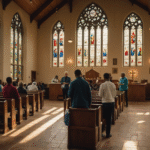
Come join Ashland Sabbath Chapel Ministries each Saturday for live streamed church services. Bible Study begins at 10:00 AM Central Time and Sermon at 11:00 AM. Visit Our YouTube channel and watch from home!
In the early days of Adventism, marriage was not merely a union of two individuals; it was a tapestry woven with the threads of Christian courtship principles, family values, and communal expectations. The emphasis on spiritual alignment was paramount, creating a foundation whereby marital relationships were less about romantic entanglements and more about a shared divine purpose. Prospective couples often engaged in courtship practices that extended well beyond casual dating, seeking not only compatibility in personal interests but also a harmonious agreement in spiritual beliefs.
Young men and women in the Adventist community were encouraged to participate in supervised interactions, often within the familiar settings of family homes or church gatherings. This structure fostered an environment where families could monitor relationships, ensuring adherence to the fundamental tenets of their faith. The concept of relationship principles derived from biblical texts permeated these interactions, guiding individuals in their understanding of love, respect, and commitment. The stories of the Bible, especially those illustrating devotion and fidelity, served as both a blueprint and a source of inspiration for couples embarking on this sacred journey.
Engagements typically were lengthy, allowing time for reflection on the serious nature of the commitment being made. This period of courtship was less about grand romantic gestures and more focused on establishing a durable foundation for family life. It involved discussions of future aspirations, roles within the family, and the significance of faith in everyday life. For instance, practical matters such as financial goals and child-rearing philosophies frequently came to the forefront, emphasizing the community’s conviction that marriage was a partnership not only in love but also in labor and devotion to God’s will.
The Adventist view of marriage as a covenant rather than a mere contract implies an enduring framework that demanded preparation and introspection. Many engaged couples sought marriage counseling from church leaders or mentors, where they would discuss not only the logistics of their upcoming wedding ceremonies but the deeper implications of their vows. This preparatory process reinforced the understanding that marriage was not simply an event but a lifelong journey rooted in spiritual ethos, mutual respect, and collective responsibility. As such, early marriage practices among Adventists laid a distinguished groundwork, profoundly impacting the structure of family life in the Adventist community for generations to come.
Cultural influences on marriage customs
The fabric of early Adventist marriage customs was undeniably influenced by a variety of cultural factors that not only shaped personal relationships but also dictated the broader societal norms within which these unions were perceived. As an extension of the larger milieu of the time, Adventist marriages were often a reflection of prevailing societal attitudes towards family life, community standards, and religious observance.
The Adventist emphasis on a collective interpretation of faith can be seen as entwined with historical cultural traditions. Influences from various backgrounds—particularly those of early European settlers—imparted a distinctive flavor to marriage practices. The cultural heritage brought forth by diverse immigrant groups highlighted the common threads that bound individuals of faith together, wherein neighborly support and shared beliefs in God forged stronger familial connections. Oftentimes, these societal norms dictated not merely how partnerships were formed, but dictated the behaviors acceptable within marriages, as spouses were seen as representatives of both their families and their communities.
As a consequence, certain aspects of local traditions found their way into Adventist ceremonies and practices. From the exchange of tokens symbolizing commitment to the elaborate preparations for wedding ceremonies, the mirroring of cultural sentiments was evident. Thus, it was not surprising that the ritualistic aspects—be they inspired by cultural affinities or drawn from scriptural precedents—played equally significant roles in ceremonies, reinforcing that marriages were celebrations not just of mutual affection but of communal cohesion.
Furthermore, the relationships between families within the Adventist faith often reflected deeper societal values that emphasized the formation of alliances through marriage. These alliances served to strengthen ties between congregations and promote stability within the community. The practice of seeking approval and counsel from extended family members during the courtship phase illuminated how cultural influences operated hand in hand with religious doctrine, where marrying into a family symbolized an agreement to uphold shared values and beliefs.
Additionally, the roles of women and men within these situations were often framed by cultural expectations, ranging from the responsibilities each partner was expected to uphold within the household to the distinct social roles assigned prior to and following marriage. Educational opportunities, for example, were typically segregated, where young women were frequently directed towards nurturing roles, thus impacting the dynamics of family life within the home. Meanwhile, the male counterparts were often prepared for leadership both in the family and, by extension, within their communities.
The intricate dance of cultural influences on early Adventist marriage customs reveals a profound intertwining of faith and tradition. The resultant practices reflect a commitment to shared religious convictions and societal values, solidifying the belief that marriage was as much a spiritual undertaking as it was a cultural institution. As Adventists navigated this dual landscape, they forged a path rich with meaning, ensuring that their unions contributed to both personal fulfillment and communal harmony.
Ceremonial rites and traditions

In the realm of early Adventist marriage customs, ceremonial rites and traditions emerged as significant expressions of both faith and community, encapsulating the essence of what it meant to be united under God. The Adventist approach to marriage ceremonies was deeply rooted in their interpretation of biblical teachings, which dictated that the union of two individuals should be a public declaration, transcending mere personal vows. Within this framework, wedding ceremonies became more than just rituals; they were sanctified events woven into the fabric of community life, reinforcing spiritual and social bonds alike.
Wedding ceremonies were often marked by a series of rites designed to underscore the sacred nature of the commitment being undertaken. These rituals would typically include the reading of scripture, prayers, and hymns that praised God, signifying the couple’s intention to align their marriage with divine purpose. The expectation that couples incorporate elements of Christian courtship into their vows and pledges highlighted the importance of maintaining a spiritual connection throughout their married life. For instance, couples would often promise to uphold their relationship principles based on biblical precepts, affirming their dedication not only to one another but also to their faith community.
Within the ceremonies, the role of the officiating minister was pivotal. He served not only as a witness but also as a guide, facilitating a sacred space where the couple’s intentions could be articulated and blessed. This involvement emphasized that marriage was not solely a private matter but a public testament to one’s faith. Guests present at the ceremony were frequently invited to participate, further enhancing the communal aspect of marriage as a collective undertaking. The shared experiences, from the exchanging of vows to communal prayers, underscored the belief that marriage should bolster not just individual happiness but also contribute positively to the spiritual growth of the entire congregation.
The symbolism within wedding ceremonies was rich and varied, often incorporating traditional elements inspired by the surrounding culture. For example, the exchange of rings signified commitment and fidelity, while moments of solemn reflection allowed space for both families to bless the union and recognize their larger roles within the community. Food and celebrations that followed the ceremony drew in elements of local custom, merging spiritual significance with cultural expression and manifesting the joy of the new union in the context of collective celebration. Such festivities were designed to fortify relationships among families, thereby establishing interconnections that extended beyond the couple to the larger Adventist fellowship.
In parallel, the focus on marriage counseling prior to the wedding ceremony served as a vital preparatory measure. Couples would often engage with church leaders or mentors to delve into the spiritual and practical implications of their upcoming union. This counseling was instrumental in ensuring that both partners entered marriage with a clear understanding of their roles and responsibilities, guided by the teachings of their faith. The insights gained during these sessions would invariably influence the ceremonial aspects of their weddings—emphasizing the need for mutual respect, shared goals, and the centrality of faith in navigating life’s trials together.
As Adventists commemorated these unions through ceremonial rites, they were not merely observing tradition; they were reinforcing the principles of faith, community, and commitment that defined their identity. Each wedding ceremony acted as a poignant reminder that marriage was a divine covenant, a serious partnership enriched not only through love but also adeptly interwoven with cultural values and spiritual guidance. The legacy of these practices highlighted the conviction that in the solemn act of marrying, couples were embarking on a journey that, while personal in nature, was inherently entrenched within the collective narrative of their community. These ceremonies, thus, were not isolated events; they reverberated through the relational fabric of Adventist life, fostering a sense of continuity and purpose among its members.
Role of the church in marriage
The role of the church in Adventist marriage was not only a guiding force but the very foundation upon which the institution of marriage was built. It served as a custodian of the values and principles that governed not only the spiritual lives of couples but also the broader context of community ethics and family life. In the days of early Adventism, the church was viewed as a sacred space wherein individuals sought divine guidance and counsel, particularly as they embarked upon the profound journey of matrimony.
At the heart of this institution lay the concept of Christian courtship, which was meticulously interwoven with the church’s teachings. Couples were encouraged to approach their unions with the understanding that marriage was ordained by God and thus should reflect His will. Within this framework, the church provided the necessary counsel to navigate the complexities of relationships, emphasizing the importance of mutual respect and adherence to relationship principles based on biblical wisdom. Often, prospective spouses would partake in pre-marital counseling sessions facilitated by church leaders, where they learned how to communicate effectively, resolve conflicts, and build a partnership that honored familial roles as well as God’s commandments.
The church’s influence extended into the ceremonial aspects of marriage as well. Wedding ceremonies took place within the hallowed walls of the church, serving not merely as a backdrop to the nuptials but as an active participant in the sacred vows exchanged. It was understood that the blessings of the church were essential to sanctifying the union, transforming the rituals into a testament of faith. This public observance allowed the congregation to witness the formation of a new family, thereby reinforcing the community’s collective commitment to support and nurture the couple in their shared life journey.
Moreover, the church facilitated connections among individuals, fostering an environment where relationships could flourish under careful watch. Community gatherings, organized by the church, often created opportunities for young men and women to interact in an atmosphere of respect and family oversight. These events allowed church members to engage not merely as congregants but as supportive guardians of spiritual and moral standards—values that were vital in ensuring that couples, both during the courtship phase and afterwards, cultivated a deep understanding of the roles they were to play in their marriages.
The intertwining of the church with marriage customs also established a framework within which family life could thrive. The church offered resources and teachings about the responsibilities inherent in marriage, preparing couples not only for the joyous occasions but also for the inevitable challenges that life would present. Such insights contributed to the building of resilient partnerships that could withstand the tests of time, fortified by the knowledge imparted through the doctrines of their faith.
The church functions as an anchor for Adventist marriages, embodying the ideals of commitment, mutual growth, and divine purpose in relationships. Its indispensable role in the life of a couple ensured that their union was not solely a private affair, but a significant event that echoed throughout the broader community, solidifying the belief that marriage was a divine covenant that held both personal significance and communal values. As couples stood before their church community, they acknowledged not just their love for one another, but the commitment to uphold the shared tenets of faith that would sustain their union through life’s many seasons.
Evolution of marriage customs over time

The evolution of marriage customs within the Adventist community reveals a dynamic interplay between tradition, cultural shifts, and the tenets of faith that have constantly influenced the way couples approach their unions. Over time, the foundational practices established in early Adventism underwent transformations, reflecting broader societal changes while still adhering to the core principles that defined their relationships.
As societal norms evolved in the late 19th and early 20th centuries, so too did the perspective on marriage within the Adventist faith. While the original courtship practices emphasized strict adherence to biblical teachings and community oversight, newer generations began to incorporate more modern norms, which often reflected a greater focus on individual choice and personal compatibility. This evolution highlighted a noticeable shift—from arranged or heavily supervised courtships toward a model that allowed for more personal agency in selecting partners, albeit while still valuing the foundational concepts of christian courtship and communal responsibility.
The role of technology and communication also played a pivotal part in these shifts. With the advent of social changes alongside technological advancements, young Adventists found new means to engage with potential partners, using letters, telephone calls, and eventually digital communication platforms. Despite these changing mediums, the underlying ideals of relationship principles focused on mutual respect, faith, and family values remained central to the process of courtship. This preservation of core values amidst changing modes of interaction illustrated the adaptability of Adventist marriage customs, ensuring that while expressions of love might shift, the essence of the commitment to faith and family life endured.
Furthermore, the rise of premarital counseling became increasingly prevalent within the church, emphasizing the belief that preparation is essential for a healthy marriage. Couples began engaging with trained counselors and church leaders to explore relationship dynamics and Christian teachings before entering matrimony. This practice served to deepen couples’ understanding of their responsibilities toward one another and their community, reinforcing the concept that marriage was a covenant, not merely a contract, steeped in spiritual significance.
The adaptations in ceremonial practices also indicated the evolution of Adventist marriage customs. While early wedding ceremonies were often rigid and heavily dictated by church traditions, modern ceremonies have increasingly included personalized elements. Couples began to infuse their unique touches into the rituals, melding traditional readings and hymns with contemporary customs that resonate with their personal journeys, thereby reflecting the broader transformations in societal attitudes toward marriage.
As these changes unfolded, the church’s role in marriages continually adapted, balancing tradition and innovation. This adaptability ensured that the spiritual underpinnings remained intact while allowing couples to express their unique stories within the framework of their faith. The evolution of marriage customs in the Adventist community thus highlights a rich tapestry where the past and present intermingle, fostering an environment that encourages individuals to pursue deeper knowledge about the nature of commitment and love in a faith-centered context.
- What were the early Adventist views on marriage?
- Early Adventist views on marriage were centered around the belief that it was a sacred covenant ordained by God, emphasizing spiritual alignment and community involvement over romantic notions of love.
- How did cultural influences affect Adventist marriage customs?
- Cultural influences shaped Adventist marriage customs by integrating elements from the diverse backgrounds of early settlers, leading to a unique blend of biblical principles and local traditions that reflected societal values.
- What role did the church play in early Adventist marriages?
- The church served as a vital institution that provided guidance, support, and oversight in the marriage process, ensuring that couples adhered to Christian teachings and received the necessary counseling before their unions.
- What is the significance of marriage counseling in the Adventist faith?
- Marriage counseling is significant in the Adventist faith as it helps couples navigate the complexities of relationships, promotes effective communication, and reinforces their commitment to the principles of faith-based marriage.
- How have wedding ceremonies evolved in the Adventist community?
- Wedding ceremonies have evolved from strictly traditional and formalized rituals to more personalized celebrations that still incorporate essential biblical elements while reflecting the couple’s unique story.
- What is the concept of Christian courtship?
- Christian courtship is an approach to dating that focuses on spiritual alignment and guided relationships, emphasizing the importance of faith and community involvement in preparing for marriage.
- How do Adventist marriage customs reflect broader societal changes?
- Adventist marriage customs reflect broader societal changes through their evolving practices, including increased personal agency in courtship, the incorporation of modern communication methods, and a more flexible approach to wedding rituals.
Ashland Ashland Sabbath Chapel
Beside our live streamed church services, all are welcome to attend our church in person each Saturday beginning 10:00 AM Central Time by going to 2425 Owens Rd., Ashland, AL 36251. There is no cost and any donations are strictly voluntary.
For questions, call +2563547124.