Come join Ashland Sabbath Chapel Ministries each Saturday for live streamed church services. Bible Study begins at 10:00 AM Central Time and Sermon at 11:00 AM. Visit Our YouTube channel and watch from home!
When you strip meat off your plate, you’re not just swapping chicken for chickpeas; you’re rebuilding your whole idea of what a balanced diet looks like. The trick is to know which pieces matter most so you’re not just “eating vegetarian,” you’re actually feeding your body what it needs. Think of it less like memorizing a textbook on nutrition and more like learning the rules of a game you plan to win.
Start with protein, because that’s usually the first thing people worry about. Your body uses protein to repair tissues, build muscle, maintain your immune system, and even make hormones. On a vegetarian pattern, you’re getting protein from beans, lentils, tofu, tempeh, edamame, peas, nuts, seeds, and whole grains like quinoa or farro. The catch is that many plant proteins don’t contain all the essential amino acids in perfect proportions the way eggs or dairy might. That doesn’t mean they’re “incomplete” in a scary way; it just means you want variety. Black beans one day, lentil soup the next, tofu stir-fry after that—over the course of a day or two, your body pulls together what it needs from all those different sources.
Right behind protein comes iron, the quiet workhorse helping your red blood cells carry oxygen. Plant-based iron (non-heme iron) is found in lentils, chickpeas, kidney beans, pumpkin seeds, sunflower seeds, spinach, Swiss chard, and iron-fortified cereals. The snag is that your body doesn’t absorb non-heme iron as efficiently as the heme iron in meat. But there’s a simple move to tilt things in your favor: bring vitamin C along for the ride. If you toss red bell peppers into your bean chili, squeeze lemon over your sautéed greens, or have an orange with your fortified cereal, you’re giving your body a better shot at grabbing that iron before it slips by.
Then there’s vitamin B12, which is the one that sneaks up on a lot of people. B12 is crucial for nerve health, energy production, and making red blood cells. It’s mostly found in animal products, so if you’re vegetarian and not eating much dairy or eggs—or if you’re fully plant-based—you can’t just hope you’ll “pick some up” from vegetables. You won’t. You get B12 from fortified plant milks, fortified breakfast cereals, nutritional yeast that specifically lists B12 on the label, or from a supplement. This is one nutrient where planning beats wishful thinking, and a quick blood test every so often can confirm you’re on track.
Calcium and vitamin D travel together like a pair of detectives—calcium builds and maintains your bones and teeth, and vitamin D helps you absorb that calcium. Without enough of both, your bones quietly thin over time. On a vegetarian approach, calcium can come from dairy (milk, yogurt, cheese), as well as fortified plant milks, calcium-set tofu, almonds, tahini, and leafy greens like kale and bok choy. Spinach looks like a calcium hero on paper, but it has oxalates that bind calcium, making it harder for your body to use, so it doesn’t count as much as you’d think. Vitamin D is tougher, because it’s in very few foods—some fortified milks, fortified orange juice, and certain mushrooms exposed to UV light. Sunlight on your skin helps your body make vitamin D, but depending on your location, skin tone, and sunscreen use, that may not be enough. This is why so many people, vegetarian or not, end up needing a vitamin D supplement after a discussion with their doctor.
Next up is omega-3 fatty acids, especially EPA and DHA, which support brain, eye, and heart health. Fish usually steals the spotlight here, so it’s easy to assume you’re out of luck without it. Not quite. Plant foods like flaxseeds, chia seeds, hemp seeds, and walnuts provide ALA, a precursor your body can convert into EPA and DHA. The conversion isn’t wildly efficient, but if you regularly sprinkle ground flax into oatmeal, stir chia seeds into yogurt, or snack on walnuts, you’re at least feeding that pathway. Some people also use algae-based omega-3 supplements to go straight to EPA and DHA without the fish detour.
Zinc and iodine are like the background players you barely notice until they go missing. Zinc supports your immune system and wound healing, and you’ll find it in beans, lentils, chickpeas, pumpkin seeds, cashews, and whole grains. The same compounds that interfere with iron absorption—like phytates in grains and legumes—can also affect zinc, which is one more reason soaking, sprouting, or thoroughly cooking your beans and grains can be helpful. Iodine, meanwhile, keeps your thyroid running smoothly, which matters for your energy and metabolism. If you use iodized table salt, you’re probably covered. If you tend to lean on fancy sea salts or avoid added salt altogether, then seaweed (like nori, dulse, or kelp) or dairy can help, but you don’t want to overdo seaweed either, because too much iodine can be just as problematic as too little.
One more nutrient duo worth keeping on your radar is vitamin K and magnesium. Vitamin K plays a role in blood clotting and bone health, and it comes packed in dark leafy greens—kale, collards, spinach, and broccoli. Magnesium helps muscles relax, keeps your heart rhythm steady, and supports energy production. You’ll find it in nuts, seeds, whole grains, and beans—the very foods that end up in most plant-centered meals if you’re being intentional. When your plate is full of color and texture—crunchy seeds, chewy grains, bright greens—you’re often covering these nutrients without even thinking about it.
So when you look at the big picture, the main nutrients to keep an eye on in a vegetarian way of eating are protein, iron, B12, calcium, vitamin D, omega-3s, zinc, iodine, vitamin K, and magnesium. It sounds like a lot, but they all live in a surprisingly small cast of foods: beans and lentils, nuts and seeds, whole grains, leafy greens, fortified products, and maybe a well-chosen supplement or two. Once you know who these nutrient “characters” are and where they like to hide, it becomes a lot easier to build meals that aren’t just meat-free, but truly balanced.
Planning balanced vegetarian meals
Now that you know which nutrients matter most, the next step is to bring them together on the plate so they actually serve you day after day. A balanced vegetarian pattern doesn’t happen by accident; it’s the fruit of steady, thoughtful planning. Think of your meals the way a careful builder thinks of a house: every plank, every nail, every stone has a place and a purpose. When you sit down to plan, you are laying the beams of your own strength and usefulness.
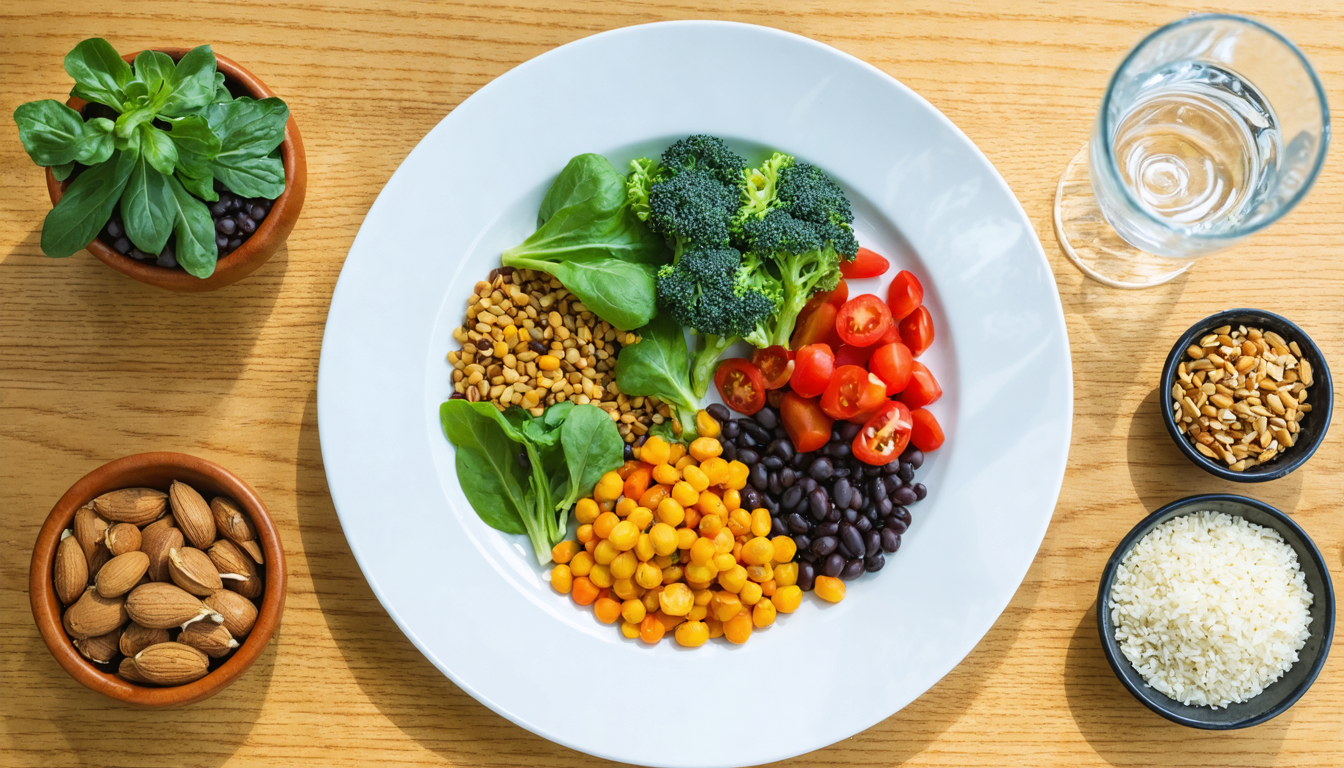
A simple way to keep your meals balanced is to picture your plate divided into sections. Let about half of it be fruits and vegetables, a quarter whole grains, and a quarter protein-rich foods like beans, lentils, tofu, tempeh, or eggs if you use them. Around the edges, make room for healthy fats and calcium-rich foods. You do not need to count every gram or live with a measuring cup in your hand, but you do well to keep this picture in your mind as you prepare your breakfast, dinner, and supper.
Start with the vegetables and fruits, because they are the most easily neglected when life grows busy and the appetite clamors for rich things. Aim for color—dark leafy greens, deep orange carrots and sweet potatoes, red tomatoes and peppers, purple cabbage and berries. Each different color bears its own cluster of vitamins, minerals, and protective compounds. When your plate is pale and colorless, your body is being shorted, no matter how full you feel. When it is bright and varied, you are giving yourself light and strength in a form you can taste.
Next, give careful thought to your grains. Whole grains—such as oats, brown rice, barley, quinoa, whole-wheat bread, or cornmeal—do more than merely fill you up. They bring fiber to steady your blood sugar, B vitamins for your nerves, and a share of protein to help build and repair. Choose them in their fuller, less-refined forms whenever you can. A bowl of hot oatmeal with ground flaxseed and berries will sustain you longer, and more kindly, than a sweet roll that melts in the mouth and then leaves you faint and craving more in an hour.
Then turn to the heartier foods that carry most of your protein and iron—beans, lentils, peas, soy foods, nuts, and seeds. Let one or more of these appear at every meal. You might have peanut or almond butter on whole-grain toast in the morning, lentil soup or hummus with vegetables at midday, and a stir-fry with tofu or tempeh in the evening. As these foods return again and again to your table, the body learns to draw upon them for steady strength instead of the short-lived stimulation that so many rich and highly seasoned dishes produce.
Do not overlook healthy fats, for they have their place in sound vegetarian nutrition. The body needs them for the brain, the nerves, and the absorption of certain vitamins. Choose modest portions of nuts, seeds, avocados, and olive or canola oil rather than relying on heavy, fried fare. A small handful of walnuts, a spoonful of chia or flax stirred into your porridge, or a drizzle of olive oil on cooked vegetables is often enough. These are simple additions, but they help you feel satisfied so you are not forever searching the cupboard for more.
Calcium-rich foods should appear daily, and often more than once, especially for the young, for nursing and expectant mothers, and for those whose bones must be guarded with special care. If you use dairy, plan in plain yogurt, milk, or a small portion of cheese. If you avoid dairy, choose fortified plant milks, calcium-set tofu, and greens like kale and bok choy, along with almonds and sesame or tahini. Do not leave calcium to chance. Write it into your meals the way you would write an appointment into your day, and then keep that appointment faithfully.
It can help to think in terms of patterns across the day, not just individual plates. At breakfast, let there be a good base of whole grains and some protein: oatmeal with nuts and seeds, or whole-grain toast with nut butter and fruit, or a tofu scramble with vegetables. At midday, use beans, lentils, or tofu as the center of the meal, and surround them with vegetables and grains: chili over brown rice, a hearty bean and vegetable soup with whole-grain bread, or a big salad crowned with chickpeas, sunflower seeds, and whole-wheat crackers. In the evening, keep the same pattern but lighter if your digestion is tender: steamed vegetables, a small portion of grain, and a bean or soy dish prepared simply and without needless richness.
Meal planning becomes easier when you prepare some of the staples ahead. Set aside a regular time each week to cook a pot of beans or lentils, a pan of brown rice or barley, and to wash and cut vegetables. You can portion the beans into jars, the grains into containers, and keep cut carrots, peppers, or leafy greens ready in the refrigerator. Then, on a hurried day, you are not driven to hasty, unwise choices. You can quickly put together a nourishing bowl: a base of grain, a scoop of beans, a handful of greens, a sprinkle of nuts or seeds, and a bright dressing made with lemon and a little oil.
Another helpful practice is to build a short list of dependable meals that you know are balanced and agreeable. You might keep five or six such meals in regular rotation, such as lentil stew with whole-grain bread, black bean burritos with vegetables and salsa, baked tofu with sweet potatoes and broccoli, chickpea curry with brown rice, and a hearty salad with nuts, seeds, and whole-grain crackers. When your mind is weary, you can turn to this list instead of falling into confusion and resorting to whatever is most tempting rather than what is most helpful.
Pay attention also to how your meals are spaced. Long stretches without food, followed by heavy eating late in the day, burden the system and cloud the mind. Regular meals, taken at nearly the same time each day, allow digestion to work smoothly and the appetite to stay in its place. A well-planned vegetarian diet will supply enough fiber and steady energy that you do not feel driven to constant snacking. If you do need something between meals, choose a piece of fruit, a small handful of nuts, or a bit of vegetable and hummus, not sweet, greasy, or highly seasoned foods that excite the taste but leave the body weary.
As you plan, remember that seasoning and preparation matter. A plain food, well cooked, is better than a rich, highly spiced dish that stirs up the appetite and then lies heavy on the stomach. Use herbs, garlic, onions, lemon, and a moderate amount of salt to make your meals pleasant without being overpowering. Steam, bake, stew, or lightly sauté instead of frying when you can. The aim is not to punish the body with dull fare, but to bring it food that is clean, simple, and satisfying, so the mind may be clear for duty and devotion.
In all of this planning, it is easy to be drawn away into endless rules and numbers, but the safest path is to combine good knowledge with plain common sense. If, day after day, your meals contain whole plant foods in their natural forms, a variety of colors and textures, an honest portion of protein, and regular sources of calcium, healthy fat, and whole grains, you are on solid ground. Your strength will not depend on stimulants or highly refined foods, but on the quiet power that comes from simple, well-chosen fare. In this way, your table becomes not a place of confusion and indulgence, but a workshop where health and character are quietly shaped, one thoughtful meal at a time.
Protein sources without meat
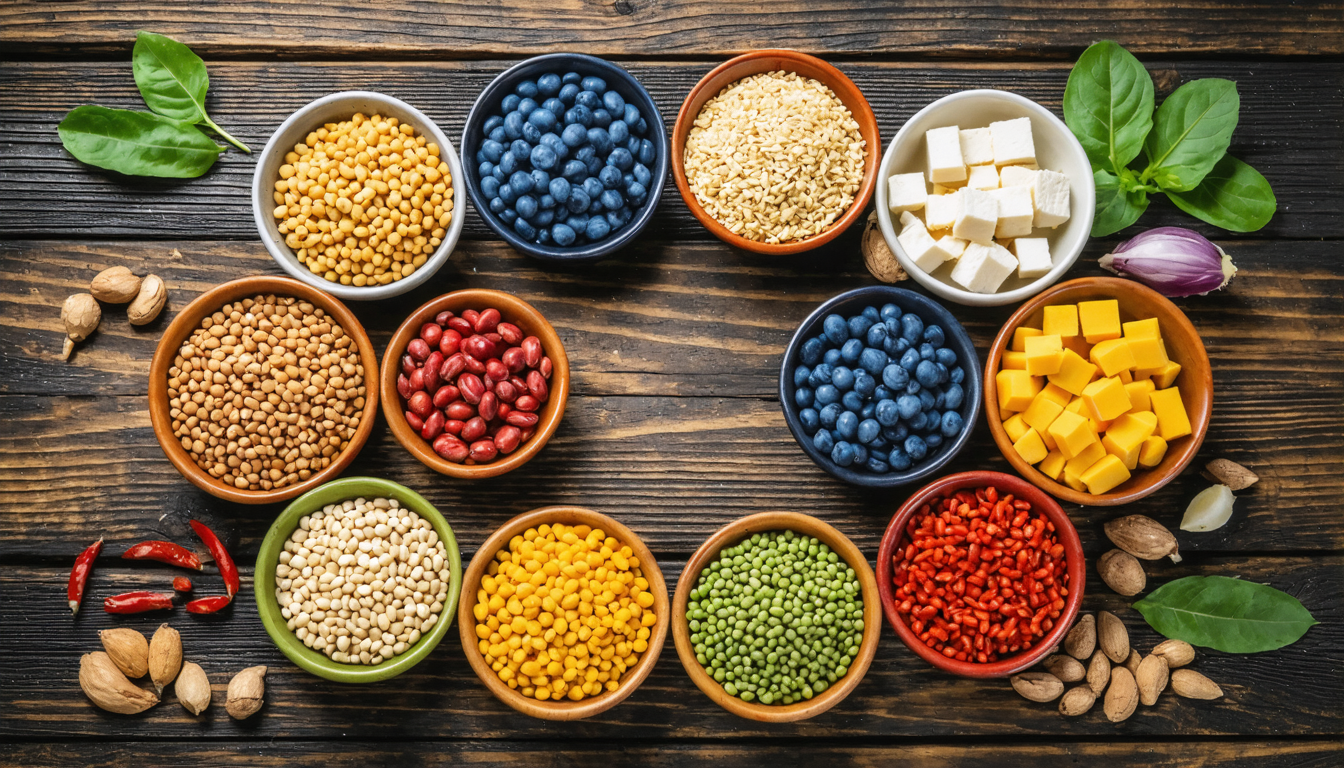
You know that question people are forever asking—“But where do you get your protein?”—as though the moment you put aside meat, your muscles will sigh, pack a small trunk, and depart? It is a most tiresome inquiry, and yet it springs from ignorance rather than malice. The truth is that a thoughtful vegetarian pattern offers more than enough protein, provided one chooses with care and does not attempt to live upon toast and tea alone.
Let us begin with the most reliable companions: beans and lentils. They are the sturdy, dependable characters in the story of your diet, perhaps not always the most dramatic, but always present when real work must be done. Black beans, kidney beans, chickpeas, lentils of every hue—these humble creatures bring not only protein, but also iron, fiber, and a calm, steady energy. A cup of cooked lentils or beans may supply as much protein as a generous serving of meat, yet without the heaviness that often follows rich animal dishes. You may mash chickpeas with a little lemon, garlic, and tahini for a spread; simmer lentils with carrots and onions for a simple stew; or bake black beans into a pan of enchiladas with corn tortillas and peppers. Each such dish proves, quietly but firmly, that protein is in no danger of deserting you.
Next there is soy, which I must consider something of a prodigy in the realm of vegetarian nutrition. Tofu, tempeh, and edamame are not content with offering a mere token of protein; they come forward with it in earnest. Tofu, especially when made with calcium, is both a protein and a bone-building friend. It will take on the flavor of whatever seasonings you choose, which is an admirable trait in a food, even if not always in a person. You may press it, marinate it in a little soy sauce, garlic, and ginger, then bake it until the outside grows firm and golden, to be eaten with rice and vegetables. Tempeh, being fermented, has a heartier taste and a pleasantly firm bite; it is well suited to stir-fries, sandwiches, or crumbled into sauces where meat once reigned. Edamame—those green, tender soybeans—make an ideal addition to salads, grain bowls, and stir-fries, or a simple snack with a pinch of salt. In each form, soy shows itself a complete protein, containing all the essential amino acids in good measure.
If you feel you could never reconcile yourself to tofu, do not distress yourself; soy is helpful, but it is not the only path to adequate protein. Turn your mind instead to the marriage of beans and grains, one of the most successful unions ever known in the kitchen. Many plant proteins do not offer every amino acid in perfect abundance, but when you combine foods such as rice and beans, hummus and whole-wheat pita, lentil soup with barley, or peanut butter on whole-grain bread, the smaller weaknesses of each are supplied by the other. You do not need to perform such combinations with mathematical precision at every meal—your body is wiser than that—but if across your daily vegetarian meals you regularly mingle legumes, grains, nuts, and seeds, you will be as well supplied with amino acids as any person could reasonably desire.
Nuts and seeds play the part of charming but powerful secondary characters. They appear in smaller portions, yet contribute richly to the whole. Almonds, walnuts, cashews, pistachios, sunflower seeds, pumpkin seeds, chia, hemp, and flax all bring protein, along with healthy fats and minerals. A small handful of nuts, or a sprinkle of seeds on your oats or salad, may not look like much, yet it gently raises the protein content of the meal and helps you feel pleasantly satisfied. Peanut or almond butter on toast, tahini stirred into a sauce, hemp seeds scattered over roasted vegetables—each of these is a quiet reinforcement of your protein stores, so that you need never feel dependent upon any single food.
Dairy and eggs, if you choose to use them in your vegetarian way of living, are like well-bred cousins who visit regularly and always bring a useful gift. A cup of milk or fortified plant milk, a serving of yogurt, a piece of cheese, or a couple of boiled eggs all supply a neat portion of high-quality protein, along with calcium, B12 (in dairy), and other nutrients. An omelet with vegetables and a slice of whole-grain toast, yogurt with fruit and nuts, or a little cheese grated over a bean-and-vegetable casserole: each of these meals layers protein from more than one source, leaving your appetite calm and your strength well supported. If you prefer to avoid eggs or dairy, the role they would have played can be taken over quite nobly by tofu, tempeh, beans, and fortified plant milks.
Whole grains themselves should not be overlooked in the matter of protein. People are apt to think of bread, rice, and oats as mere fillers, when in truth they each carry a modest, but very real, share of protein. Quinoa, farro, barley, bulgur, whole-wheat pasta, brown rice, and oats all lend their assistance. A bowl of oatmeal topped with peanut butter and chia seeds, quinoa tossed with black beans and roasted vegetables, or barley stirred into a pot of vegetable soup—here the grain is not idle, but working quietly alongside the beans or nuts to strengthen the overall protein content of your meal.
Some persons imagine that, in order to meet their protein needs, they must be forever consulting charts and counting grams upon their fingers. I would not have you live in such bondage. It is enough, in most cases, to observe a few clear principles. Let there be a source of protein at every meal—beans, lentils, tofu, tempeh, edamame, nuts, seeds, yogurt, eggs, or cheese if you use them. Let these foods appear in portions that satisfy, not in timid spoonfuls scattered like ornaments on the side of the plate. And let them be accompanied by whole grains and vegetables, so that the meal is not only rich in protein, but also balanced with fiber, vitamins, and minerals.
If you are active, building muscle, or recovering from illness, you may wisely be a little more deliberate. In such cases, you might add an extra scoop of beans to your salad, stir more lentils into your soup, enjoy a larger portion of tofu at supper, or keep nuts and roasted chickpeas on hand for a convenient snack. Some also find a plant-based protein powder helpful, stirred into a smoothie made with fruit and fortified plant milk. This is not a requirement for a sound vegetarian diet, but a tool that can be employed if appetite is small or time short. The key is not extravagance, but consistency: to let each meal bear its fair share of the work, so that together they fully supply your needs.
There is, too, the matter of variety—a subject upon which I could speak at great length, were you not already in some danger of being wearied by my zeal. If you live forever on the same peanut butter sandwiches and the same pot of lentil soup, your protein may be quite sufficient, but your enjoyment and your overall nutrition will suffer. Allow different legumes to visit your table—black beans on Monday, chickpeas on Tuesday, lentils on Wednesday, white beans on Thursday, and so forth. Rotate your grains—oats one morning, quinoa the next, whole-wheat toast another. Try almonds one week, walnuts the next; sunflower seeds for a time, then pumpkin seeds. This gentle rotation not only improves your nutrient intake, but also keeps your meals from becoming dull and melancholy.
As you grow more accustomed to this way of eating, you will find that you scarcely think of “protein” as an isolated concern at all. It will simply be part of a pattern: a thick lentil stew over brown rice; a stir-fry of tofu with broccoli, carrots, and cashews; a chickpea and vegetable curry over quinoa; a big salad with black beans, avocado, pumpkin seeds, and whole-grain bread; yogurt with oats, berries, and hemp seeds. In each case, the protein seems almost incidental to the pleasure of the dish, and yet it is there, reliable and sufficient, strengthening you quietly day after day.
In this way, protein ceases to be the great argument against a vegetarian life and becomes instead one of its quiet proofs. Far from being starved of strength, you may find yourself better nourished, less weighed down, and more steady in energy when your plate is built from beans, grains, vegetables, nuts, seeds, and, if you choose, modest amounts of dairy or eggs. Once you have seen this in your own experience, the next anxious question about “where you get your protein” will not trouble you in the least; you will answer it with the calm assurance of one whose meals have long since settled the matter.
Ensuring adequate vitamins and minerals
Protein may be the loudest part of the conversation, but vitamins and minerals are the quiet ones that decide how well you actually live inside your own skin. You can eat enough calories, even enough protein, and still feel tired, foggy, or brittle if these smaller pieces go missing. On a vegetarian pattern, they do not have to go missing at all, but you do have to look them in the eye and count them as part of your daily work.
There are some nutrients that will look after themselves if your meals are full of whole plant foods. Others demand a bit of deliberate planning, and a few almost always call for blood tests and, at times, a bottle of pills on the kitchen shelf. None of this is a tragedy. It is only the price of being awake about your nutrition instead of drifting along and hoping for the best.
Begin with iron, because it is so often blamed when people feel worn out. On a vegetarian diet, your iron comes from lentils, beans, chickpeas, soy foods, pumpkin and sunflower seeds, quinoa, oats, dark leafy greens, and iron-fortified cereals. The trouble is not shortage of iron in the food, but the body’s stubbornness about taking it in. Plant iron is less readily absorbed than the iron in meat, but you can push the odds in your favor with a few simple habits. Have a source of vitamin C—citrus, strawberries, kiwi, tomatoes, bell peppers, or a squeeze of lemon—every time you sit down to an iron-rich meal. A bowl of lentil soup taken with a salad heavy on tomatoes and peppers, or beans and rice with cabbage and lime, works better than the lentils or beans alone. And if you drink tea or coffee, keep them at least an hour away from your main iron-containing meals; the same tannins that make your tea bold also hold back iron.
If you have been feeling short of breath on small hills, chilled for no good reason, or as if your thoughts move through mud, it is worth asking for a blood test to check your iron stores, not just your hemoglobin. If they are low, the answer is rarely to panic. You tighten up your food choices, lean on beans, lentils, seeds, and fortified cereals, keep that vitamin C near at hand, and, if your doctor advises it, take an iron supplement for a spell. Too much iron is no favor to the body, so you do not swallow tablets just because you feel gloomy. You test, you respond, you test again. Calmly.
Then there is vitamin B12, which is more treacherous precisely because you feel nothing at first when it slips away. Months, even years may pass before the nerves begin to complain and your blood cells thin and weaken. Meat eaters pick up B12 from animal flesh by default. Most vegetarians do not have that luxury. If you eat dairy and eggs daily, you may just manage, but the margin is thin. If you are mostly or fully plant-based, food alone will almost never be enough unless it has been fortified.
The surest path is to decide, here and now, where your B12 will come from. You might drink a fortified plant milk that offers B12 with each cup, choose a breakfast cereal that clearly lists it on the label, or keep a jar of nutritional yeast that boasts B12 and sprinkle it over pasta, popcorn, or scrambled tofu. Many people, tired of guessing, simply take a B12 supplement a few times a week. The dose does not have to be enormous, but it must be regular. Think of it the way you think of brushing your teeth—not a heroic act, just one small habit that spares you large trouble later. Every year or two, you ask your doctor to include B12 in your blood work. If the numbers are low, you do not brood; you adjust your plan and go on.
Calcium stands behind your bones like an old soldier, steady and largely silent until the day it is gone. You cannot tell by how you feel whether you are getting enough; the bones will rob themselves to keep the blood supplied, and the bill comes due many years later. So you do the responsible thing and build it in daily. Dairy, if you use it—milk, yogurt, a small piece of cheese—is straightforward. If you prefer a fully plant-based vegetarian way of living, you lean harder on fortified plant milks, calcium-set tofu, fortified orange juice, almonds, tahini, and greens such as kale, bok choy, and turnip greens.
Read the labels on your plant milks and yogurts; some brands boast of calcium on the front, yet the fine print tells a different story. Aim to gather your day’s calcium from several modest servings rather than one heroic glass of milk at night. A cup of fortified soy milk on your oats, a square of tofu in a stir-fry, kale in your soup, and almonds as part of a snack—these quiet acts add up. Spinach looks impressive on a chart but carries oxalates that tie up the calcium, so enjoy it for its other virtues and let other greens shoulder the bone-building work.
Vitamin D is another of those nutrients that does not show itself in the mirror until the lack has gone on far too long. The sun can help, but depending on your skin color, latitude, season, clothing, and sunscreen, you may make little or none of it from light, especially in winter or if you work indoors. Food sources are limited: fortified cow’s milk and plant milks, fortified orange juice, and some mushrooms treated with UV light. For many people—vegetarian or not—a supplement is simply the sensible route.
Here again, guessing is a poor game. You ask for a vitamin D blood test, learn whether you are low, and then take what is needed under proper guidance. A daily modest dose often suffices for maintenance once your levels are up. You take it with a meal that includes some fat, to aid absorption. It becomes another small, unremarkable part of your life, like tying your shoes before you walk out into the weather.
Omega-3 fats matter, too, particularly for the brain and heart. The famous forms, EPA and DHA, dwell mostly in fish. But the starting material, ALA, is easy enough to get on a vegetarian pattern: ground flaxseed, chia seeds, hemp seeds, walnuts, and canola oil. The body can convert some ALA into EPA and DHA, though it does so rather grudgingly. To tip the balance, you can make these foods regular companions. Stir a spoonful of ground flax into your oatmeal, scatter chia on your yogurt, add walnuts to salads, and cook with a little canola oil now and then.
If your heart health is already a concern, or you simply want more certainty, algae-based omega-3 supplements step in where fish would normally stand. They deliver EPA and DHA directly, drawn from the same original source as the fish themselves, but without the fish in between. Once again, you can confirm your status with blood work if your doctor thinks it warranted, rather than living forever in the land of “probably.”
Zinc does not make much noise either, yet it is there in nearly every repair job the body undertakes. Beans, lentils, chickpeas, pumpkin seeds, cashews, and whole grains are your main allies here. The same phytates that stand between you and easy iron absorption also meddle with zinc. You can blunt their interference by soaking beans before cooking, sprouting grains and legumes when you have the patience, and eating fermented foods like tempeh or whole-grain sourdough. None of this has to become a religion; even simple steps, like thoroughly cooking your beans and choosing leavened whole-grain breads instead of dense, raw-seed concoctions, can make a difference.
Iodine belongs to your thyroid, the small yet commanding gland at the front of your neck that helps rule your metabolism. If you use iodized salt in the home, and not in tiny, cosmetic amounts, you are likely covered. But many people now turn to pretty, unfortified sea salts, and they use very little of any salt at all out of concern for blood pressure. In such a case, you must think a bit more. Dairy and eggs offer some iodine. Seaweed—nori, dulse, kelp—can offer a great deal, sometimes too much. A sheet or two of nori with your rice bowl, or a small sprinkle of dulse flakes on soup, is enough to help without overshooting. If your thyroid has already given you trouble, your doctor may want to measure your iodine intake more carefully and advise you on supplements instead of leaving it to guesswork at the table.
Magnesium and vitamin K are easier to meet if your plate is rich in plants, yet still worth mentioning. Magnesium comes with beans, lentils, nuts, seeds, oats, brown rice, and leafy greens. If you often find your muscles tight, your sleep restless, and your bowels sluggish, you might inspect your intake—not as a diagnosis, but as a starting point. A handful of pumpkin seeds, more beans in your soups, and whole grains in place of white bread or rice will push your numbers up without fanfare. Vitamin K, particularly the K1 form, arrives with dark greens—kale, collards, spinach, cabbage, broccoli. If these appear daily in some form, your blood and bones are not likely to complain. If you are on blood thinners, you do not avoid greens altogether; you keep your intake steady and let your doctor adjust your dose around your habits, not the other way around.
All of this may sound like a long list, but in practice it is the same set of foods doing most of the work over and over again. When you build your vegetarian meals from beans and lentils, soy foods, nuts and seeds, whole grains, dark leafy greens, colorful vegetables, fruits, and fortified staples like plant milks and cereals, you are hitting many targets with each bite. Where food can carry you, let it; where food cannot reasonably reach—especially B12 and often vitamin D—accept the help of a simple supplement with the same plain good sense you would use to wear boots in the snow.
If you ever find yourself unsure whether you are truly meeting your needs, do not lean on fear or vague impressions. Ask for a set of basic blood tests: iron and ferritin, B12, vitamin D, perhaps folate, and anything else your history suggests. Then you have numbers, and numbers are calmer than guesses. You can adjust your diet, strengthen your regular meals, add or remove a supplement, and check again later. In this way, your health does not depend on optimism alone, but on facts, and on the steady, unremarkable faithfulness of daily choices made at the table.
Common pitfalls and how to avoid them
Many people approach a vegetarian way of eating with sincere intentions, only to stumble over the same few stones in the path. The problem is rarely that the diet itself is unbalanced by nature, but that it can be practiced in a careless, haphazard way. When the word “vegetarian” merely means “no meat,” it easily slips into patterns that rob you of strength instead of building it. If you look closely at the missteps others have made, you may spare yourself needless fatigue and disappointment—and perhaps ask harder questions about your own habits than you have yet dared to ask.
One of the most common errors is leaning too heavily on refined, processed foods simply because they are labeled “meat-free.” White bread, pastries, chips, sweetened cereals, instant noodles, and frozen convenience foods can all be technically vegetarian and yet woefully poor in real nutrition. You may feel full for the moment, but you are living on quick-burning fuel that leaves you dulled and hungry again in short order. If half your calories come from such sources, no amount of good intentions will keep your body from complaining in its own language of headaches, mood swings, and sluggish energy. Look at your pantry with honest eyes: how much of what you call your vegetarian “staples” would still remain if you removed anything refined, sugar-laden, or deep-fried?
Another pitfall is mistaking “vegetarian” for “low-protein” or “protein-optional.” You have already seen how rich plant foods can be in protein, yet many still drift into days filled with bread, fruit, and cheese, or plates of pasta with a mere dusting of vegetables. The body will run on this for a time, but muscles thin, immune defenses weaken, and you find yourself perpetually tired or sore from the smallest effort. The remedy is not another complicated rule, but a simple question you can ask at every meal: “Where is the main source of protein here?” If you cannot point to beans, lentils, tofu, tempeh, nuts, seeds, yogurt, eggs, or another clearly substantial protein, you have found a problem that must be corrected before it corrects you.
Closely tied to this is the habit of letting vegetables slip to the edge of the plate, as an afterthought or decoration. It is strangely easy to eat a “vegetarian” pattern almost devoid of vegetables: cheese pizza, macaroni, peanut butter sandwiches, pastries, and sweetened drinks can crowd out the very foods that make this way of eating a blessing. Without daily, generous portions of colorful vegetables and fruits, your intake of vitamins, minerals, and protective plant compounds sinks quietly, even if your calorie count looks respectable. Consider your last few days of eating: have your meals been living things—crisp, green, orange, red—or mostly shades of beige? What might change in your mind and body if you made vegetables the unquestioned centerpiece instead of the reluctant side?
Then there is the subtle danger of letting iron, B12, calcium, and vitamin D drift below the surface of your awareness. Many assume that if they “eat healthy” in a general way, the details will look after themselves. Months or years later, unexplained exhaustion, frequent illness, numbness or tingling, brittle nails, or bone loss may appear like a sudden storm, when in truth the clouds had been gathering for a long time. Failing to plan for these key nutrients does not mean you are weak or foolish; it means you are human, living in a noisy world that rarely reminds you to check your ferritin level or your B12. Yet you have the power to ask your physician for simple blood tests and to shape your vegetarian meals—beans, seeds, fortified milks, leafy greens, supplements where needed—with deliberate care rather than vague hope. Why leave such vital matters to chance when a few questions and a small vial of blood could show you the truth?
Some fall into the trap of “cheese and bread vegetarianism,” where nearly every meal leans on refined grains and heavy dairy for comfort and convenience. Grilled cheese, cheese-laden pasta, thick slices of pizza, and buttery pastries may feel satisfying, but taken as the backbone of your diet, they load you with saturated fat, salt, and low-fiber starch while leaving little room for beans, whole grains, nuts, seeds, and vegetables. Over time, weight creeps up, cholesterol rises, blood pressure follows, and you may catch yourself wondering why your health has not improved despite your decision to leave off meat. It is worth asking plainly: is cheese occupying the place that ought to belong to beans, lentils, or greens at your table?
Over-restriction is another danger, particularly for those who approach vegetarian eating from a place of fear or rigid control. Some become so anxious about oils, grains, or any foods they deem “imperfect” that they grind their meals down to a narrow, joyless list of permitted items. This can lead to deficiencies, social isolation, and a preoccupation with food that leaves little mental room for work, worship, or service. A sound vegetarian pattern is wide rather than narrow, rich in variety rather than hemmed in by ever-increasing rules. When you look at your own habits, do you see a healthy structure that supports freedom, or a tightening cage that demands more and more of your attention?
Snacking and grazing, especially on sweet or salty processed foods, can quietly undermine even a well-designed meal plan. When every feeling of boredom, stress, or mild fatigue sends you searching for crackers, cookies, or sweet drinks, your blood sugar is pulled up and down like a rope in children’s play. This kind of eating, common in modern life, is no kinder simply because the snacks are meatless. Regular, thoughtfully composed meals with modest, purposeful snacks—fruit, nuts, vegetables with hummus—restore order to your appetite and give your digestion the rest it needs between times. Ask yourself how often you eat because the clock or true hunger calls, and how often because your hand has learned to reach for something before your mind has even formed a thought.
Some are tripped up by failing to drink enough water, especially when their fiber intake rises. Whole grains, beans, fruits, and vegetables bring the very fiber that guards your heart and bowels, yet without sufficient fluid, that same fiber can leave you bloated, uncomfortable, and tempted to blame the vegetarian pattern itself. A simple habit of drinking water regularly throughout the day, and allowing enough time for unhurried meals and digestion, can transform your experience. It is not only what you eat, but how calmly and thoughtfully you live with it, that decides whether your food feels like a burden or a blessing.
Social and practical obstacles form another set of pitfalls often ignored in neat nutrition charts. Perhaps your family does not share your choices, or your workplace offers little more than pastries and coffee each morning, or your traditions are built around meat-filled feasts. If you do not plan for these realities, you may find yourself either giving up your convictions when pressured, or going hungry and resentful. Learning to prepare simple, portable meals; to speak about your vegetarian way without apology or argument; and to adapt shared dishes so they nourish you as well as others—these skills are as essential as knowing how much iron is in a cup of lentils. How might your health and peace change if you treated these practical questions as part of your spiritual and physical stewardship, not mere inconveniences?
Finally, there is the quiet but serious error of never revisiting your choices, never asking, “Is this way of eating still serving the purpose for which I chose it?” You may have begun vegetarian living out of compassion, health concerns, or conviction, but over time, habit can replace thought, and your meals may drift far from your first ideals. Periodic reflection—perhaps at the turn of a season or year—invites you to examine your energy, lab results, mood, and spiritual clarity in the light of your daily foods. Are you growing stronger and more useful, or more distracted and frail? What changes, however small, might bring your plate back into harmony with the life you long to live?
You are not bound to repeat the mistakes of those who walked this path before you. Each pitfall, once seen plainly, becomes a doorway to deeper understanding and wiser practice. Let these warnings stir not fear, but curiosity—a readiness to look more closely at your meals, your habits, and even your motives. The questions you ask yourself today about your vegetarian pattern may shape not only your health, but your character, for many years to come.
- Is it possible to get all the nutrients I need from a vegetarian diet without supplements?
- A well-planned vegetarian diet can supply most nutrients through food, especially when it is rich in beans, whole grains, nuts, seeds, fruits, vegetables, and fortified products. However, vitamin B12 almost always requires a fortified food or supplement, and many people also need vitamin D support after checking blood levels.
- How can I tell if I’m not getting enough protein as a vegetarian?
- Persistent fatigue, slow recovery from exercise, thinning muscle, and frequent hunger after meals can be clues, though they are not proof by themselves. A more reliable approach is to look honestly at your plate: if beans, lentils, tofu, tempeh, nuts, seeds, dairy, or eggs are absent or only appear in tiny portions, your protein intake likely needs attention.
- Do I need to combine specific plant foods at each meal to get “complete” protein?
- No, your body can assemble amino acids over the course of the day, provided you eat a variety of legumes, grains, nuts, and seeds. You do not need to pair rice with beans at every sitting, but you do well to include different protein-rich plant foods regularly throughout the day.
- What blood tests should I ask for if I’m concerned about my vegetarian nutrition?
- Commonly useful tests include iron and ferritin, vitamin B12, vitamin D, and sometimes folate, zinc, and a basic metabolic panel. Discuss your symptoms and history with your healthcare provider so the tests match your actual risks instead of being chosen at random.
- Are processed meat substitutes a healthy way to follow a vegetarian diet?
- Many meat analogs can help you transition or add variety, but they are often high in salt, refined oils, and additives. Use them as occasional convenience foods, not as the foundation of your diet; let whole foods such as beans, lentils, tofu, vegetables, and whole grains carry most of the daily work.
- How can I avoid feeling bloated or uncomfortable when I increase fiber from plant foods?
- Increase fiber gradually, drink plenty of water, and make sure beans and whole grains are well cooked or soaked to soften them. Some people also find that spreading fiber-rich foods across the day, rather than eating a very heavy evening meal, allows digestion to adapt more gently.
- What should I do if my family or friends don’t support my vegetarian choices?
- Begin by clarifying your own reasons so you can explain them calmly and briefly, without turning every meal into a debate. Offer to bring nourishing dishes to shared gatherings, show respect for others’ choices, and quietly prove, by your health and steadiness over time, that a thoughtful vegetarian pattern is both practical and sustaining.
Ashland Ashland Sabbath Chapel
Beside our live streamed church services, all are welcome to attend our church in person each Saturday beginning 10:00 AM Central Time by going to 2425 Owens Rd., Ashland, AL 36251. There is no cost and any donations are strictly voluntary.
For questions, call +2563547124.