Come join Ashland Sabbath Chapel Ministries each Saturday for live streamed church services. Bible Study begins at 10:00 AM Central Time and Sermon at 11:00 AM. Visit Our YouTube channel and watch from home!
When you step outside and start moving, your body begins a quiet reformation that no pill and no soft chair can ever give. Think of the simplest of outdoor activities—a steady walk down a tree-lined road. With each step, your heart is pressed into more faithful service, pumping stronger, sending fresh blood into muscles that have too long been idle. The lungs, so often narrowed by stale indoor air, open wider to receive a richer portion of oxygen. Even that gentle burn in your legs is a signal that the body is waking up from a kind of modern sleep.
Modern life has bound many to the desk and the screen, and the body rebels in quiet ways: stiff joints, a back that aches, sleep that never quite restores. Yet, when you take that same body into the open air and give it the honest labor of walking, cycling, or working in the garden, you begin to undo the harm. The heart grows more efficient, resting heart rate lowers, and blood pressure can be brought toward healthier levels. Doctors speak of cardiovascular conditioning, but you and I can see it simply—climbing a hill today that would have left you breathless last month, and now you reach the top still able to speak in full sentences.
Weight, too, answers to regular movement under the sky. It is not that a single walk makes a man lean, but a thousand such steps, repeated day after day, re-teach the body how to use its stores rather than hoard them. When you walk briskly for a half hour, or take a bike out for an evening ride, your muscles demand fuel. They draw on the sugar in your blood and the fat in your stores, helping to steady blood sugar and trim excess weight. This is no sudden miracle, but the quiet arithmetic of daily faithfulness: a little effort, repeated often, moving you steadily toward better fitness.
Nor is it only the heart and weight that are helped. The joints, which suffer from both misuse and overuse, find relief in steady, moderate motion on natural surfaces. A stroll on a dirt path or forest trail is gentler on knees and hips than a hard floor or city pavement, and the small, constant adjustments your feet must make over roots and stones strengthen the ankles and the smaller muscles that keep you sure-footed. I have seen men who creak and wince when they rise from a long sitting find that after a season of faithful walking, they move with greater ease, their joints warmed and better nourished by improved circulation.
The muscles of the core and back, so often weakened by long hours bent over tables, counters, and devices, are called into proper duty by simple outdoor tasks. Raking leaves, pushing a lawnmower, carrying firewood, or working a small plot of ground in the garden bring into action muscles that were growing slack. As the back and abdomen strengthen, posture improves, and with better posture comes easier breathing and less strain on the neck and shoulders. What seems like common labor—a day spent tending a yard or hoeing a row—often does more to restore a tired frame than any cleverly designed machine indoors.
Outdoor movement also serves the bones in a way that many forget. When you walk, jog, climb, or even play a lively game of catch, your bones bear more of your weight and respond by growing stronger. Gentle impact and resistance signal the body to keep calcium and other minerals where they belong. In this way, steady time spent outside, especially under the light of the sun, can help guard against the thinning of bones that so often troubles people as the years advance. Coupled with sunlight’s help in forming vitamin D, that daily walk becomes a shield against frailty.
Even the rhythm of your body’s rest is touched by faithful time in the open air. Regular movement outside helps to steady your internal clock. The body, having spent its strength in useful exertion, is readier to accept sleep when night comes. Many who toss and turn beneath artificial lights find that after some weeks of daily walking in natural light, sleep grows deeper, and waking is more refreshed. The body likes this kind of order: exertion by day, restoration by night.
There is also a quiet harmony that forms between the body and the mind when you give yourself to regular movement outdoors. As the heart and lungs grow stronger, the brain receives richer blood and steadier oxygen, and the mind often becomes clearer and more alert. While the next section will consider mental health more directly, it is enough to say here that the physical changes brought on by the open air and honest movement prepare the way for calmer thoughts and a more peaceful spirit. The same walk that strengthens your legs is often the very path that begins to lighten your burdens within.
Mental and emotional well-being
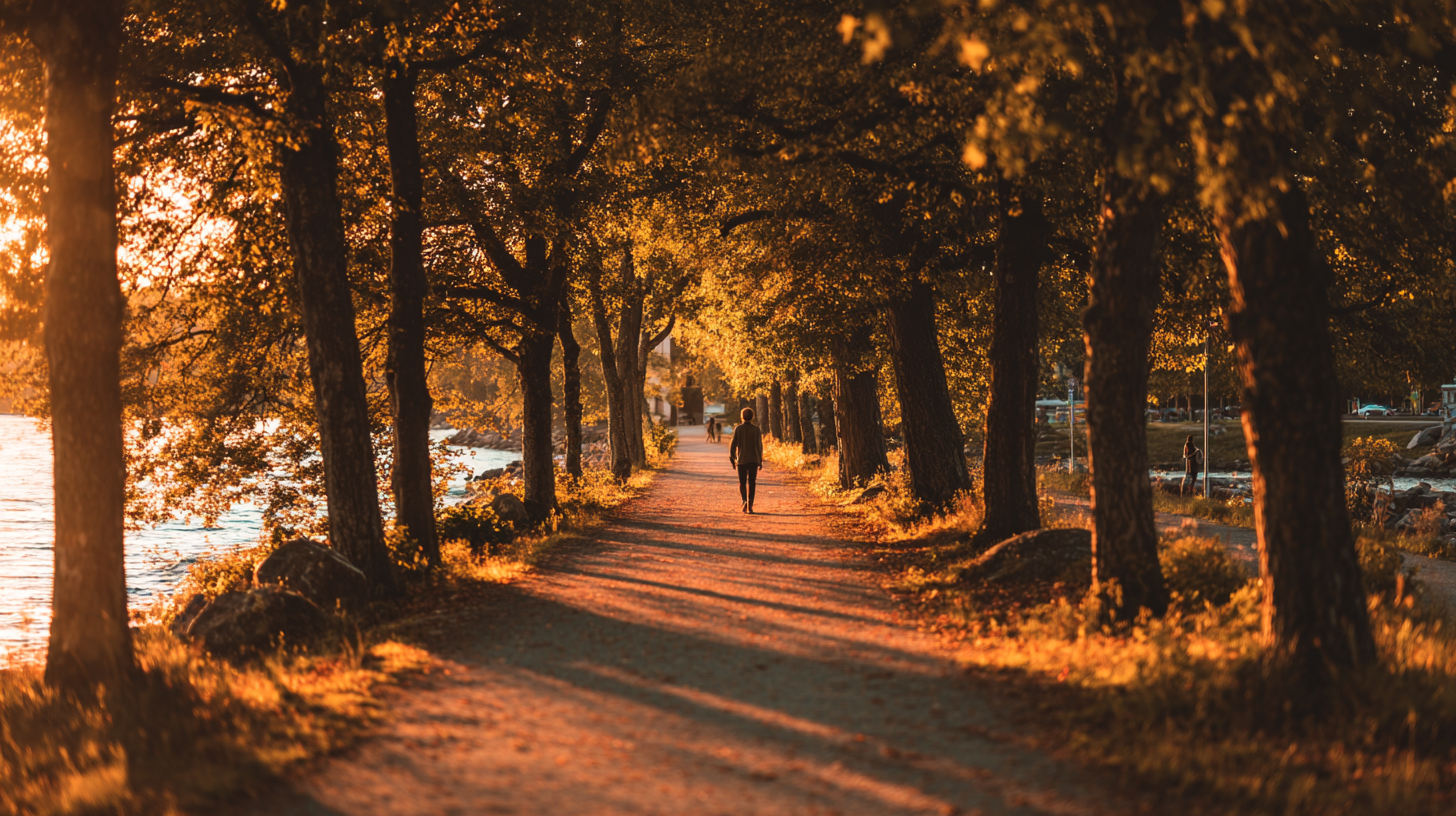
You know, my dear friend, there are sorrows and agitations of the mind which no armchair counsel and no further cup of tea can wholly cure. For such troubles, there is uncommon relief in stepping beyond the threshold and letting the sky—whether clear or clouded—look you full in the face. It is one of the quiet wonders of outdoor activities that they soothe the inner life almost as faithfully as they strengthen the outer frame. The world presses upon us with duties, disappointments, and endless little vexations; yet a modest walk along a quiet lane has a way of setting these same anxieties at a more reasonable distance.
Consider how often a restless mind is made worse by sitting still in a narrow room, turning over the same uneasy thoughts, again and again, like a book one cannot stop reading though every page increases the discomfort. When you go outside, you give your mind new pages. The mere act of noticing the sway of branches, the passing of clouds, or the crunch of gravel underfoot interrupts that endless inward chatter. You have felt it yourself, I am sure—that after ten or fifteen minutes of walking, the sharpest worries seem to lose some of their authority, like tiresome guests who finally sense they have overstayed their welcome.
There is also a certain kindness in the way the body and mind are tied together. When you move your limbs, your heart beats more earnestly, your lungs work more diligently, and your blood travels with greater energy. In response, the brain receives both more oxygen and a generous supply of those quiet little messengers—chemicals which the learned call endorphins and others—that tend toward comfort and ease within. You may call it improved mental health, or you may simply say, “I feel better,” but the effect is the same: a settled calm, as though some inward knot had been loosened.
Nor is the benefit confined to those whose spirits are only occasionally low. Many who are visited by more persistent gloom, or who live under a regular cloud of anxiety, find that faithful time outdoors works like a most patient companion. A short daily walk, even if it be only round the same modest streets, often tempers the severity of such feelings. The sadness does not always vanish—life would rarely be so obliging—but it becomes less overpowering, less like a master and more like an unwelcome visitor who can be shown politely to a smaller room.
You might suppose that such improvement requires grand adventures—climbing mountains, crossing wild moors, or undertaking some heroic sport—but it is not so. A person whose strength or opportunity is limited can yet claim much of this comfort. Sitting on a bench in a small park, pacing quietly along a garden path, or tending a few pots of herbs on a balcony may all serve. It is the combination of gentle motion, fresh air, and a change of scene that does the work, not the grandeur of the landscape. In this, the joys of the open air are most democratic: they ask little in the way of equipment or expense, and offer their favors freely to those who seek them with any degree of constancy.
I have observed, too, that the mind finds particular relief when we allow ourselves to be properly absorbed in the small details of the world outside. When we look closely at the texture of a leaf, the play of sunlight upon a puddle, or the industrious progress of a line of ants, we are pulled—if only for a few moments—out of our endless preoccupation with ourselves. There is something exceedingly wholesome in this outward turn. It reminds us that the universe is not confined to the narrow circle of our own affairs; it is wider, richer, and more indifferent to our current annoyance than we usually remember. Such recollection has a wonderful power to shrink our troubles to a more manageable size.
Another comfort of being out of doors is the way it arranges our thoughts. When one is enclosed in a room, cares and speculations rush upon us from all directions at once, like unruly children who will not wait their turn. But as you walk, they seem to fall into a kind of procession. One idea follows another more politely; problems that appeared hopeless indoors begin to present at least the shape of a solution. Many a quarrel has been softened, many a difficult letter at last composed, during a steady turning of the path, the mind growing clearer with each circuit, the heart more disposed to fairness and charity.
There is, besides, a steadiness to be found in the very rhythm of simple outdoor activities. To place one foot before the other, again and again, or to move the arms in repeated, familiar motions—raking, digging, sweeping—has a strangely comforting regularity. This is especially helpful when the mind is in disorder, fluttered by grief, anger, or uncertainty. The body, by occupying itself with a task that is plain and honest, seems to lend some of its own order to the inward world. The movement says, in its own language, “Here, at least, is something you can do,” and the mind responds with a little more courage.
Do not think, however, that the only effect is calmness. Time outside can also awaken a gentle cheerfulness, even in those who believe themselves quite beyond it. A cool breeze on the face, a bird’s song from a hedge, the laugh of children in a playground—these things have a way of slipping past our defenses. They appeal to parts of us that are older than our worries and wiser than our present mood. One may set out on a walk wrapped in a sober cloak of irritation, yet find it slowly loosened by such small, ordinary pleasures, until one returns home in an easier temper, half ashamed of having been so very cross.
For those who feel the constant hum of modern life—its messages, its news, its demands—being outside can provide what I might call a most necessary intermission. When you leave the screens and the incessant communications indoors, and give yourself even half an hour in the open air, the mind is no longer buffeted by every fresh opinion and urgency. You are returned, for a short while, to your own pace. This withdrawal is not selfishness; it is a way of restoring your powers, so that when you re-enter the noise, you may do so with better judgment and a less frazzled spirit.
I should like to add that such practices need not be solitary to be of use. Indeed, a quiet walk with a trusted companion frequently does more for the spirits than the most eloquent of letters or the finest of entertainments indoors. Side by side, with steps keeping time, conversation often grows more frank and more hopeful. There is something about looking ahead together, rather than meeting eye to eye across a table, that encourages sincerity without awkwardness. Confidences are shared, grievances aired, and, because the body is in motion and the air is free about you, they are less likely to settle into bitterness and more likely to dissolve into understanding.
At the same time, there is a particular value in occasionally walking alone. In such moments, with no one to please and no performance to maintain, you may be most honest with yourself. Hopes and fears, which were crowded and confused indoors, can be examined one by one. The path gives them a sort of order, and the horizon offers a quiet reassurance that there is more ahead than whatever presently troubles you. Many people, if they were to form a simple habit—a quarter of an hour’s walk after supper, for example—would discover in a few weeks that their tempers grow more even, their worries less consuming, and their capacity for joy quietly enlarged.
All of this is to say that the health of the mind is far less separate from the open air than we have been taught to believe. We speak of fitness as though it concerned only the muscles and the waistline; yet there is another sort of fitness—a readiness of the spirit, an elasticity of mood, a resilience of thought—that flourishes when we step outdoors with some regularity. You need not be an athlete, nor in the first bloom of youth, to claim these blessings. A modest habit, steadily kept, is often more powerful than any grand but short-lived effort. If you will only open the door, and give the sky regular opportunity to work upon you, you may find that your inner life grows quieter, kinder, and more courageous than you had thought possible.
Social connection and community
There is a kind of healing, my friend, that no medicine bottle can contain: the comfort of finding yourself among others, moving together beneath the open sky. In our age, men and women sit in crowded rooms yet feel strangely alone. Messages fly faster than ever, but true fellowship often grows thinner. Here the simple grace of outdoor activities offers a remedy. When people step outside and labor, walk, or play side by side, the distance between hearts begins to shorten in a way that no mere exchange of words on a screen can match.
You have likely noticed how different a conversation feels when you and a companion are walking a quiet road together. Indoors, seated face to face, the talk can grow stiff or self-conscious; but outdoors, with your steps keeping time and your eyes turned generally forward, things soften. Difficult matters—family burdens, disappointments, fears—can be spoken of with less strain, as if the very movement of the body helps carry some of the weight. Many a strained friendship could be mended more easily by a shared walk at dusk than by a dozen earnest letters.
It is much the same with families. Children who fidget under long speeches and give only half an ear at the dinner table will often become unexpectedly open once you get them outside. Take a slow walk after supper, toss a ball in the yard, or tend a small garden together, and you will find their tongues loosened. They speak more freely of their little triumphs and their quiet sorrows. The fresh air and the informal motion disarm their resistance. A father who cannot draw two honest sentences from his son indoors may find, on a simple Saturday hike, that the boy talks for miles.
Community itself is built in such common exertions. When neighbors meet only in the formal pose of brief hallway greetings or hurried exchanges at store counters, their acquaintance remains thin as paper. But set those same neighbors to raking leaves together in a common space, planting trees along a street, or organizing a modest walking group that meets twice a week, and you will see a different spirit arise. Conversation springs up naturally when hands are busy and the body is at work. Stories are traded, small kindnesses are offered, and a quiet trust begins to grow.
I have seen it in town and village alike: a few people resolve to walk each morning around the same route. At first, they are strangers, nodding politely as they pass. In time, they begin to keep step, to share a word about the weather, then about their families, their work, their concerns. After some weeks, if one fails to appear, the others notice and inquire. What began as a mere pursuit of fitness becomes a living web of care, where each watches over the others, and none is allowed to vanish unnoticed into loneliness.
Shared labor outdoors has a particular power to bind people who might otherwise stay apart. Think how a simple clean-up of a park brings together the old and the young, the strong and the frail. One may pick up litter, another sweep a path, another trim a hedge, while those whose bodies are weaker bring water, offer encouragement, or mind the tools. In such scenes, distinctions of status and station fade. The world is too much given to sorting men and women by income, education, and appearance, but the earth itself cares nothing for these things. A weed pulled by a wealthy hand and a weed pulled by a poor one look much the same when they lie together on the pile.
Even outdoor games, if kept within the bounds of charity, help in this work of knitting hearts. A simple game of catch, a friendly match on a grassy field, a group practicing gentle stretches in the park—all these create occasions for laughter that is shared rather than observed. There is a vast difference between being amused by a spectacle and joining in a wholesome play. In the one, you are a spectator, alone in your own mind; in the other, you are a participant, your joy entangled with the joy of those around you.
Moreover, the open air tempers many of the small irritations that often poison gatherings indoors. Within four walls, the air grows close, voices echo, and tempers can flare over trifles. But outside, space itself is a peacemaker. If two persons feel a slight friction, they can drift a few paces apart, each finding another to speak with, without any awkwardness. The presence of trees, sky, and moving clouds reminds all that they are part of something larger, and this sense of proportion makes it harder to cling fiercely to petty grievances.
Those who struggle with shyness or social unease often find, too, that it is easier to be among others when there is a shared outdoor task. To sit in a circle and be expected to talk at length may be torture to them, but ask them to help plant bulbs along a path, to join in a gentle walking group, or to assist in setting up tables for an outdoor gathering, and a new confidence appears. Their hands having something to do, their minds are spared the crushing weight of constant self-scrutiny. Step by step, word by word, they discover that fellowship can be less frightening than they had imagined.
Even those whose spirits are weighed down by heavy cares—loneliness, grief, or the lingering shadows that trouble mental health—may find particular refuge in an outdoor community. A widow who joins a morning walking circle, a man recovering from illness who helps tend a small public garden, a young person wrestling with sadness who volunteers at an outdoor event—these are not merely filling their hours. They are quietly binding themselves back into the fabric of human life. No one may speak directly of their sorrow, yet the simple recognition of their presence, the regular greeting, the expectation that “We will see you again on Thursday,” acts like a slender but real lifeline.
Consider, too, how easily shared outdoor customs can revive a town’s sense of itself. An annual community walk to mark the first day of spring; a neighborhood evening each week when people open their yards for shared play; a small, regular group that meets to clear a trail or sweep the sidewalks—such things seem humble, but they breathe life into places that might otherwise become collections of strangers. Children who grow up in such a pattern learn, quite without formal teaching, that health is not merely an individual affair but something that belongs to the whole community.
Of course, all this requires some measure of intention. It is one thing to step outside alone, put on headphones, and hurry through your route without so much as a nod to those you pass. That may strengthen the body, but it does little to strengthen the bonds between souls. It is quite another thing to walk with your eyes open to others—to offer a greeting, to fall into step with a neighbor for a stretch, to invite someone who seems often alone to join you on your next outing. Such small invitations can alter the whole course of a life that was drifting toward isolation.
Do not suppose that you must possess great energy or social skill to foster this spirit. Start where you are, with what you have. Perhaps you resolve simply to invite one friend for a weekly walk, or to ask a nearby neighbor to join you in tending the strip of ground along your shared fence. Perhaps you gather a few families to meet at the same park each month, allowing the children to play while the adults walk the perimeter together. In these plain beginnings, the blessing lies not in grand organization but in regularity and sincerity.
When we bring our outdoor activities into the company of others, we are doing more than passing the time. We are pushing back against the cold habit of living as though each person were an island. Step by step, task by task, we rediscover that strength and courage are often borrowed from one another. The heart that might have grown discouraged if left to labor alone is steadied when it hears another pair of feet beside its own. In an age that multiplies connections yet often starves true fellowship, the simple act of going outside together, in honest movement and shared purpose, becomes one of the surest ways to keep both body and community from growing weak and solitary.
Exposure to nature and environment

There is, I think, a particular magic in the simple act of placing oneself under the open sky, quite apart from the mere exertion of walking or working. The world indoors is chiefly of our own contrivance—walls, furniture, screens, all arranged to our liking or displeasure. Outside, however, we enter a realm that is cheerfully indifferent to our plans. The trees do not consult us before budding, nor do the clouds wait upon our approval before they gather or part. To spend time in such a world is to be gently reminded that life is larger than our personal perplexities, and this remembrance is as strengthening to the spirit as any exercise is to the body.
When you go out, even for the humblest of outdoor activities, you place yourself in constant company with natural changes of light and air. Morning light, brisk and pale, has a way of sharpening one’s thoughts; the softer glow of the late afternoon invites a slower, more reflective temper. The learned speak of our inner clocks, of rhythms that govern sleep, appetite, and mood. Yet you and I may simply observe that those who see the sky regularly—its dawns and its dusks—often find their days better ordered and their nights more restful. The body and mind, acquainted afresh with the honest progression of day to night, grow less confused by the irregular habits imposed by artificial lamps and screens.
You might suppose that this benefit could be had by merely opening a window, but there is a notable difference between watching the weather from within and actually entering into it. Indoors, we remain half spectators, safely distant, our thoughts easily pulled back to household tasks and indoor anxieties. Outside, the air touches your face, the ground answers beneath your step, the wind rearranges your hair without permission. You are no longer merely observing nature; you are among its company. That sense of being part of a living scene, rather than apart from it, quietly alters one’s mood and, over time, one’s whole understanding of health.
There is, too, the matter of the air itself. Within houses and offices, the same breath is traded back and forth, burdened with dust, stale odors, and the exhalations of many people and machines. Out of doors, especially where there are trees, grass, or even a modest patch of shrubs, the air is more generously refreshed. You may not see the invisible particles and little chemicals that the scholars describe, but your body recognizes their influence. A deep breath taken under a row of old trees has a different character from one drawn beside a humming copier. Lungs that have grown lazy indoors are coaxed into honest work by a brisk breeze, and the whole system wakes as if from a doze.
Sunlight, in particular, is an ally we frequently neglect. Fear of its excess has driven many to hide from it altogether, yet in reasonable measure it is one of the kindest physicians we possess. The skin, when kissed by a modest portion of sun, helps the body form vitamin D, which you know is useful for the strength of bones. But there is more: this same sunlight steadies the inner mood, regulating those tender workings of the brain that govern cheerfulness and gloom. People who seldom see the open daylight, especially in the colder seasons, often find their spirits sinking without quite knowing why. A half hour outside, face turned toward the sun even on a cool day, can be as reviving to the mind as a cordial is to the body.
We must not imagine, either, that nature’s gifts require grand scenery. Certainly, a wild coastline or a sweep of mountain is a magnificent medicine, but few can prescribe such cures for themselves very often. A small city park, a strip of grass between buildings, a scattering of trees along a neighborhood street—all these can serve. A sparrow on a fence, a dandelion forcing its way between paving stones, the changing pattern of light on a brick wall as clouds pass overhead: such small evidences of the living world are quite sufficient, if attended to with some faithfulness, to ease the mind and enlarge the heart.
I have seen people whose mental health seemed wrapped in a tight band of worry or sadness begin to loosen, almost in spite of themselves, when they made a practice of daily contact with such modest nature. At first they protested that there was “nothing to see”—only the same trees, the same bit of sky, the same habitual path. But in a little while, they began to remark upon the first buds of spring, the deepening shadows of autumn, the mysterious stillness before a rain. Their attention, which had been ruthlessly fixed on inward troubles, learned to reach outward. This outward gaze does not solve every difficulty, but it does prevent the soul from folding entirely in upon itself, which is a very great danger.
You may have noticed how differently your thoughts behave when you walk along a road lined with houses compared with a path edged by hedges or fields. The former keeps the mind occupied with comparisons—this person’s garden, that person’s car, the state of the paint upon another’s shutters—matters that so easily stir envy or judgment. The latter, even if the fields are small and the hedges somewhat neglected, turns the gaze toward things that are simply themselves: a crow alighting on a fencepost, the rustle of a breeze in dry grass, the particular curve of a branch against the sky. The mind, having fewer temptations to measure itself against others, grows calmer and more content.
In an age filled with alarming tidings about the planet—its warming climate, its vanishing species, its polluted waters—you might feel that to go outside is to expose yourself to yet another source of distress. But here again, personal acquaintance with the natural world offers a strange comfort. When you stand under a tree you have passed a hundred times, and know the sound of its leaves in summer and the look of its bare branches in winter, anxiety about “the environment” ceases to be an abstract terror and becomes a more intimate, and therefore more manageable, concern. You are less likely to feel helpless when the thing at stake is the particular patch of earth beneath your own feet.
From this familiarity often springs a quieter, more hopeful kind of care. A person who has walked daily beside a small stream is far more inclined to pick up rubbish from its banks, or to notice when its water runs low or smells wrong, than someone who only reads of rivers in the news. In this way, outdoor activities become more than a personal pursuit of fitness; they form the beginning of a courteous conversation with the land itself. You greet the same trees and paths; in return, you feel a growing responsibility for their well-being. The habit of care that begins with nature frequently overflows into how we treat our own bodies, and even one another.
Some people, it is true, protest that they have no “taste for nature,” as though affection for trees and clouds were a special refinement reserved for poets. I cannot agree. The difficulty, in most cases, lies not in the absence of taste but in the absence of acquaintance. One cannot be expected to love what one has hardly noticed. If such a person were persuaded—as I now attempt to persuade you—to choose one small piece of the outside world and visit it regularly, they might be surprised. It could be a single tree at the corner, a bench beside a pond, or even a particular view from the end of the street. Return to it in rain and in sunlight, in warmth and in cold, and you will soon feel that pleasant recognition one usually reserves for old friends.
Another advantage of frequent time outdoors is the way it quietly disciplines our expectations. Indoors, we grow accustomed to constant convenience: the temperature adjusted at the turn of a dial, the light steadied by a switch, the noise level controlled—more or less—by our own choosing. Outside, we must submit ourselves to what is given. A planned walk is shortened by sudden rain; a cherished view is obscured by fog; the air is colder or warmer than we would like. Though it may seem inconvenient, this gentle resistance to our every wish is good for us. It teaches patience, adaptability, and a certain humility—all of which are healthful qualities in their own right.
You may also find that your sense of time is corrected in the company of growing things. Indoors, a day can be consumed in a rush of messages and tasks, leaving you with the odd sensation that much has happened yet nothing has truly advanced. Outdoors, the steady pace of seasons insists upon a different rhythm. Buds do not become flowers in an instant; fallen leaves are not cleared from the ground overnight; a sapling does not lengthen into shade-giving branches by the next morning. To walk the same route for months, watching these slow alterations, is to receive an education in perseverance and in the modest speed at which real change, both in nature and in ourselves, often proceeds.
Even the smallest of creatures contribute their part to this instruction. To stop for a moment and watch ants carrying burdens far larger than themselves, or to listen to a bird repeat its simple song with tireless enthusiasm, is to be reminded that steady, humble effort may achieve more than grand, sporadic attempts. For someone struggling to reform habits of health—attempting, perhaps, to walk more, to breathe outside air daily, or to calm a disordered mind—such examples, though they say nothing, speak quite loudly.
I should add that none of these benefits require you to perform violent exertions or to be at the peak of physical strength. A person whose health is fragile, whose joints complain at every step, or whose energy is modest may still claim rich advantages from nature’s society. A few minutes seated on a porch with the door truly open, a short journey to a quiet bench, a slow circuit of the yard at whatever pace can be managed—these, if taken faithfully, will do more good than remaining entombed in indoor air for fear of not doing enough. The body, like the mind, is grateful for any honest attempt at engagement with the living world, however small.
As you continue to shape your life around regular time outside—walking, sitting, tending a plant, or simply standing in a shaft of morning light—you may discover a subtle but profound shift. The boundary between “exercise” and “existence” grows thinner. You stop thinking of going outdoors as a special occasion and begin to regard it as the natural setting for much of your everyday living. When this happens, health ceases to be a burdensome project, measured only in steps and heartbeats, and becomes instead a by-product of a more harmonious arrangement: yourself, your days, and the quiet, steady presence of the world beyond your front door.
Practical tips for getting outdoors
Good intentions alone rarely carry a person out the door with any regularity; it is the weaving of fresh air into the ordinary fabric of your days that keeps you faithful. Begin not with grand declarations, but with something so small you could hardly refuse it—a ten-minute walk after breakfast, a slow circuit of your block before supper, or a quiet sit on the porch each morning with your face turned toward the light. Call it a standing appointment with your own well-being. Once that brief visit with the outdoors is secured, you may lengthen or embellish it, but do not despise the small beginning. The body and mind care less about what you intend to do some distant day and more about what you actually repeat today and tomorrow.
Choice of time and place makes a greater difference than people often admit. If you tell yourself that you will “get outside when things calm down,” you will soon discover that life is remarkably skilled at never quite calming down. Instead, tie your outdoor activities to something that already happens: step out as soon as the breakfast dishes are rinsed, walk while the kettle heats for evening tea, or use part of your lunch break to circle the building where you work. Select routes and spots that feel genuinely inviting—a tree-lined street rather than a crowded thoroughfare, a modest park bench instead of the nearest parking lot—so that the very thought of going out carries a hint of pleasure instead of duty alone.
Clothing, too, can quietly strengthen or sabotage your resolve. Many a promising habit has been spoiled by shoes that pinch, a coat too thin for the breeze, or a hat forgotten on a bright day. Consider assembling a small “outdoor kit” near your door: a pair of comfortable walking shoes, a hat, a scarf or light gloves in cooler seasons, perhaps a simple reusable bottle of water. When everything needed is already at hand, there are fewer excuses to stay indoors. You may find it strangely satisfying to know that, at any moment, you could be walking under the sky within two minutes, simply by putting on what waits patiently beside the door.
Once you begin, it is kindness to yourself to honor your present condition. There is no strict rule that says a walk must be brisk and long to count, nor that every outing must raise you to the point of breathlessness. If your strength is limited, take short, frequent walks with rests along the way; if pain troubles your joints, try smooth paths or soft ground, or alternate walking with sitting in a place where the air and light can reach you. A person who is faithful with ten gentle minutes each day will fare far better in the long run than one who attempts an hour of punishing effort once a month and then gives up in discouragement. Think of it less as heroic exercise and more as daily nourishment for your body and mental health.
Companionship can be a powerful ally. You might invite a neighbor to join you each Tuesday, or agree with a co-worker that the two of you will spend part of your lunch break walking outside rather than scrolling through messages. Even a friendly dog, eager for a daily circuit, can become a living reminder to keep your promise of movement. On days when your own resolve falters, the quiet expectation of another person—or creature—often supplies the missing spark. And if no one is immediately available, you can still walk “with” others by listening to a recording of thoughtful talk or gentle music that you only allow yourself to hear while you are outside; in this way, the pleasant anticipation of the next installment draws you back to the path.
For those who find walking dull, variety is an excellent teacher. One day, make a practice of noticing every bird you can hear; another day, attend to the smells of your route—the damp scent after rain, the dry dust on a hot afternoon, the faint sweetness of cut grass. On another outing, you might count how many different shades of green you can spot, or walk one way in silence and the return journey in prayer, reflection, or deliberate planning. These simple games train your mind to meet the outdoors with curiosity rather than boredom. If you were to keep a small notebook, jotting each day one thing you observed outside that you had not noticed before, you would quickly discover that the world beyond your threshold is far richer than it first appeared.
It may help to think of your outdoor time not as one more task added to an already crowded list, but as the quiet engine that makes the rest of the list more manageable. When the mind feels crowded and slow, stepping out for even a brief walk can restore clarity, much as opening a window clears a stuffy room. Some people find that their best ideas—whether for their work, their household, or the shaping of their own character—arrive unbidden while they are simply putting one foot before the other. You might experiment with carrying a small slip of paper or using a voice note on your phone, so that any helpful thought that arises during your walk can be captured before it slips away. In this way, your time under the sky becomes a practical workshop, not a theft from your other responsibilities.
If safety or surroundings cause concern, do not let that trouble remain vague and paralyzing; address it directly. Choose well-lit routes, walk at times when others are about, or invite a friend so that you are rarely alone. If traffic is heavy, look for school yards after hours, church lots, or quiet residential streets for your circuits. Those living with health conditions might speak with a trusted clinician about any limits or precautions, then move within those boundaries with confidence rather than fear. The purpose is not to ignore danger, but to deal with it sensibly so that it no longer stands as a shadowy excuse to remain shut indoors.
When the weather seems unfriendly, remember that the outdoors has more moods than simply “pleasant” and “unpleasant.” A light rain, softened by a hood or umbrella, can be oddly soothing; a crisp cold morning, met with a warm coat and brisk steps, can sharpen the senses delightfully. Instead of asking, “Is it perfect out?” you might ask, “How shall I meet the day that has actually been given?” There will, of course, be times when storms or extremes of heat or cold make it wise to shorten your time outside, or to stay just under the shelter of a porch. But if you learn to dress for the weather rather than flee from it, your world of possible outdoor activities suddenly becomes far larger.
One fruitful habit is to link your time outdoors with a specific purpose that reaches beyond your own fitness. You might carry a small bag to collect litter along your route, tend a modest patch of garden that provides herbs or flowers for others, or volunteer to help maintain a local path or playground. Knowing that your walks are quietly serving your neighbors or your town as well as your own body can be a strong incentive to persevere when your personal motivation wanes. You may also find that such simple acts awaken a new sense of belonging—that you are not merely a passerby on the land, but a caretaker in a story that began before you and will continue after you.
As these habits settle into place, it is worth pausing now and then to ask yourself what is changing. Do you find your sleep a little sounder, your thoughts a shade clearer, your temper a bit less quick to flare? Are there details in your neighborhood—a certain tree, a familiar bird, the shifting color of the western sky at your usual walking hour—that now feel like old acquaintances? Such questions keep you from rushing past your own growth as though it were nothing. They draw your attention to the subtle, accumulating rewards that come from stepping regularly outside, and they stir a deeper curiosity: if such modest efforts can reshape your days in this way, what other quiet transformations might be possible, both in your own life and in the lives of those you might encourage to join you?
- How much time should I spend outdoors each day to see health benefits?
- Even 10–20 minutes outside each day can begin to improve mood, energy, and sleep, especially if you are moving your body. Over time, many people aim for 30–60 minutes most days of the week, but consistency matters more than perfection.
- What if I’m not very fit or have health problems—can outdoor activities still help me?
- Yes, you can tailor outdoor time to your current abilities, whether that means slow walks, brief standing breaks on a porch, or sitting where fresh air and light can reach you. Starting gently and increasing gradually supports both physical and mental health without overstraining your body.
- I live in a city with little green space. Are there still benefits to going outside?
- Even small pockets of nature—a few street trees, a courtyard, a rooftop, or a tiny park—can offer meaningful benefits. Paying close attention to light, air, and small living things around you helps your mind and body, even if the setting is urban.
- How can I stay motivated to go outside regularly?
- Link your outdoor time to an existing daily routine, such as after meals or during a work break, and keep your goals modest at first. Walking with a friend, tracking your outings on a calendar, or tying a favorite podcast or prayer time to your walks can also keep you returning.
- Is outdoor exercise better than indoor workouts for fitness?
- Both indoor and outdoor exercise can improve fitness, but being outside adds extra advantages like natural light, varied terrain, and fresh air. Many people find outdoor movement more enjoyable and sustainable, which makes them more likely to stick with it over the long term.
- What should I do outside if I don’t enjoy traditional exercise?
- You might try gardening, gentle stretching in a park, birdwatching, or simply walking slowly while observing your surroundings. Any activity that gets you out in the air and moving, even lightly, can support your health.
- How does time outdoors affect stress and anxiety?
- Being outside can lower stress hormones, calm racing thoughts, and shift your focus away from constant digital input. Regular outdoor activities give your nervous system a chance to reset, which often makes anxiety feel more manageable over time.
Ashland Ashland Sabbath Chapel
Beside our live streamed church services, all are welcome to attend our church in person each Saturday beginning 10:00 AM Central Time by going to 2425 Owens Rd., Ashland, AL 36251. There is no cost and any donations are strictly voluntary.
For questions, call +2563547124.