Come join Ashland Sabbath Chapel Ministries each Saturday for live streamed church services. Bible Study begins at 10:00 AM Central Time and Sermon at 11:00 AM. Visit Our YouTube channel and watch from home!
You know how people always say, “Move your body, feel better”? It sounds like a cheesy poster on the gym wall, but underneath the cliché there’s a very real, very physical story going on in your body that directly feeds into your mental health. Your muscles, your heart, your hormones, even your gut—when they’re working better, your brain ends up with a cleaner signal and a calmer baseline. It’s not magic. It’s mechanics.
Think about your body as the hardware and your mind as the software. If the hardware is overheating, full of glitches, and barely has any battery left, even the best “mental tools” are going to struggle. What regular fitness does is quietly upgrade that hardware in ways that make resilience, focus, and emotional balance much easier to access.
One of the biggest physical changes you get from moving more is what happens to your cardiovascular system. When you walk, jog, cycle, or do anything that nudges your heart rate up, you’re training your heart to pump more efficiently and improving blood flow throughout your body, including the brain. Better circulation means more oxygen and nutrients delivered upstairs, which supports the parts of your brain involved in mood, memory, and decision-making. Research has shown that aerobic exercise can increase the volume of the hippocampus—the area tied to memory and emotion regulation—which is often smaller in people dealing with depression (Erickson et al., 2011).
Strength training gets in on this, too. It doesn’t just build muscle for the sake of looking toned; it makes daily life physically easier. When your body can handle stairs, groceries, kids, long shifts, or desk marathons without wiping you out, your baseline stress drops. That physical reserve becomes a psychological reserve. Several studies have found that resistance training is associated with reduced depressive symptoms and improved self-esteem, even when people aren’t trying to “bulk up” (Gordon et al., 2018).
Then there’s the whole hormone and brain-chemical story, which is basically your body’s internal messaging system. When you move, your body releases endorphins—those are the famous “feel-good” chemicals—but that’s only one piece. Exercise also influences serotonin, dopamine, and norepinephrine, which are all involved in mood and motivation. There’s evidence that consistent physical activity can work similarly to some antidepressant treatments for mild to moderate depression (Blumenthal et al., 1999). It’s not a replacement for medication when that’s needed, but it is one of the few side-effect-positive tools we have: better sleep, better energy, better mood.
Speaking of sleep, the relationship between exercise and sleep is one of the most underrated pathways to better wellbeing. When your body gets a regular dose of movement during the day, it tends to fall into a more natural rhythm at night. People who exercise regularly often fall asleep faster, have deeper sleep, and wake up less during the night (Kredlow et al., 2015). Better sleep is like mood insurance: your emotional reactions are less extreme, your patience tank is fuller, and your brain is more capable of handling everyday stress without tipping into overwhelm.
Another physical benefit that quietly supports your headspace is how exercise affects inflammation and immune function. Chronic low-grade inflammation has been linked to conditions like depression and anxiety in a growing body of research (Miller & Raison, 2016). Regular movement lowers that background inflammation by improving insulin sensitivity, supporting healthy weight, and nudging your immune system into a better-balanced state. It’s like turning down the noise in the system so your body isn’t constantly stuck in “something’s wrong” mode.
Body tension is another angle that’s easy to overlook because we get used to it. Tight neck, sore lower back, clenched jaw—that low-level physical discomfort becomes a constant whisper of stress in the background. When you move—whether it’s stretching, lifting, walking, or yoga—you’re not just working muscles, you’re releasing stored tension. That release sends a signal back to your nervous system: you’re not in immediate danger. Over time, your baseline muscle tension drops, which means your brain doesn’t have to interpret every day as a low-key emergency.
Posture and breathing are part of this same loop. When your chest is collapsed and your breathing is shallow, your body is basically mimicking a stressed or anxious state. Activities that open up the chest, strengthen your back, and deepen your breathing—like walking briskly, swimming, or yoga—allow more oxygen in and give your nervous system a cue that it’s safe to relax. There’s emerging research showing that slow, controlled breathing alone can reduce anxiety and improve emotional control, and exercise naturally builds that into your routine (Zaccaro et al., 2018).
Let’s not skip over energy levels, because they are one of the most tangible day-to-day changes. When you’re inactive, you’d think you’re “saving” energy, but what usually happens is the opposite: energy drops, fatigue increases, and even simple tasks feel heavier. Regular physical activity improves mitochondrial function—the part of your cells that makes energy—so your system becomes better at producing and using fuel. A lot of people notice that after the first couple of weeks of adjusting, they actually feel less tired on days they move. When your energy is more stable, your mood usually is too.
There’s also the way your relationship with your body shifts on a basic, physical level. When you notice that you can walk farther without stopping, lift something that used to feel impossible, or move with less pain, that feedback isn’t just physical—it feeds self-respect. Feeling physically capable often translates into feeling more mentally capable. That change in how you inhabit your body—less like a problem to fix and more like a tool you can rely on—is a quiet but powerful support for long-term emotional stability.
And underneath all of this is one simple thread: your body is constantly sending signals to your brain, and movement changes those signals. Stronger heart, steadier breathing, less inflammation, better sleep, easier movement, more energy—those physical upgrades make it easier for your mind to not be at war with your own body all day. When your hardware runs smoother, your mental software has more room to heal, grow, and handle whatever life throws at you.
How exercise impacts mood and stress

Now, friend, let’s talk about what’s happening in that inner sanctuary of the mind when you move your body. You’ve already seen how fitness strengthens the “hardware.” But there is a gentler, more hidden work taking place—a work in your thoughts, your feelings, your sense of calm. Exercise doesn’t just change your muscles; it changes the climate inside your mind, the very weather of your emotions.
One of the first things movement does is shift the balance of your nervous system. Most of us live with the “alarm” switch halfway on—heart a bit fast, mind a bit restless, shoulders tight, thoughts scattered. That’s the sympathetic nervous system, the fight-or-flight side, humming along as though danger is always nearby. When you exercise, you briefly turn that alarm up as your heart rate rises and your body responds to the challenge. But then, when you stop, the quiet worker of peace—the parasympathetic system—steps forward to pull everything back down to rest. Over time, that rhythm of effort and recovery trains your body to return to calm more quickly. Studies show that regular physical activity improves heart rate variability, a sign of better stress resilience and nervous system flexibility (Carter et al., 2003).
Think of it this way: every brisk walk, every light jog, every round of stretching is like a small rehearsal in how to move from agitation to peace. You’re teaching your body, “We can be under pressure and still return to rest.” That practice carries over into daily life—traffic jams, tense conversations, unexpected bills. The body that has learned to settle after a workout is better prepared to settle after a hard day.
Then there’s the way exercise works on your thoughts themselves. When your body is in motion, your mind can often untangle what seemed impossible when you were sitting still. You’ve probably noticed how a problem that looked huge at the desk suddenly shrinks after a walk around the block. Research has found that even short bouts of moderate exercise can improve attention, working memory, and the ability to shift away from negative thinking patterns (Basso & Suzuki, 2017). It’s as though circulation improves not only in the body, but in the thought life—ideas move, feelings move, and what was stuck begins to loosen.
Persistent stress and low mood often come with a heavy, repetitive style of thinking: rehearsing old hurts, replaying failures, anticipating disasters. Movement interrupts that cycle. When your breathing deepens and your limbs stretch, the mind is gently invited out of its narrow hallway of worry into a wider room. You’re not forced to “think positive;” instead, your whole being becomes a little less chained to the negative. That simple shift—one walk, one bike ride, one short session of movement—can be the opening in the wall where light gets in.
Another quiet blessing of exercise is how it gives structure to time. On the days when sadness or anxiety feels thick like fog, minutes can blur into hours, and hours into an empty, colorless day. Setting even a small appointment with movement—“At 3 p.m., I will walk for ten minutes,” or “After breakfast, I will stretch my body”—creates a little pillar in the day. It’s something you can anticipate and accomplish. Research on behavioral activation, a core treatment for depression, shows that simple, planned activities that align with health and values help lift mood and restore a sense of purpose (Dimidjian et al., 2011). Exercise fits beautifully into that pattern. It is both a task and a gift, both discipline and kindness.
You might wonder, though, how all this affects the sharp edge of stress—the racing thoughts, the clenched stomach, the feeling that everything is “too much.” Exercise helps metabolize stress in a very literal way. When you’re under mental strain, your body acts as if danger is physically near: adrenaline rises, blood pressure climbs, muscles tense, sugar floods the bloodstream. But many times, you’re just sitting at a desk or lying in bed. There is no running, no fighting—only worrying. Movement gives those stress chemicals somewhere to go. You use them for what they were originally designed for: action. Studies have found that regular physical activity is associated with lower perceived stress and better coping with daily hassles (Gerber & Pühse, 2009).
So, instead of your body being trapped in a cycle of “prepare for danger, but do nothing,” exercise completes the loop. You step out, you move, you sweat a bit, and your body understands: “We’ve handled the challenge.” That message then reaches the mind: “We are not helpless; we are not powerless.” In that realization, tension begins to soften.
There is also something profound about the way exercise can lift the heaviness of the spirit, even if only for a little while. People with depression often describe feeling like they’re moving through mud, or like a gray filter covers everything. Research has consistently shown that regular aerobic activity—such as walking, cycling, or swimming—reduces depressive symptoms and can be as effective as medication for some individuals with mild to moderate depression (Blumenthal et al., 1999; Schuch et al., 2016). It is not a cure-all, and it doesn’t replace needed medical care, but it is a powerful companion. Each session of movement can be a small window in the day when the darkness thins and color returns, even faintly.
And what about anxiety—the restless fear, the uneasy heart, the mind that jumps forward into tomorrow’s troubles before today has even finished? Interestingly, the racing heart and quick breathing that feel scary during anxiety are some of the same sensations you experience during exercise. But in a workout, those sensations are safe and expected. That’s why movement can be a kind of gentle exposure therapy. You feel your heart beat faster while walking up a hill. You sense your breath deepen during a set of squats. And instead of panicking, you learn, “My body can feel this and I am still all right.” Over time, this can reduce the fear of bodily sensations that often fuels anxiety. A meta-analysis of randomized controlled trials has found that exercise leads to significant reductions in anxiety symptoms across a variety of populations (Stubbs et al., 2017).
There is another layer I don’t want you to miss: the moral courage that grows out of simply showing up. Many people think of exercise as something you do once you feel motivated. But in truth, faithful, gentle movement teaches you to act even when you don’t feel like it. That practice of doing a small, good thing in the face of resistance is a school for the will. You teach yourself, “My feelings are real, but they are not my master.” This quiet strengthening of the will is deeply protective for mental health. When storms come—and they always do—you have already learned how to take one faithful step at a time.
On the days when your thoughts are especially loud or your heart is especially heavy, exercise can also become a simple form of prayer in motion. You can walk and breathe, lifting your burdens silently. You can stretch your hands toward the sky and, in that simple posture, open your heart. Even if you say no words, the very act of caring for your body is a declaration: “My life has value. This temple matters.” That attitude of reverence toward your own health nourishes the soul as much as the body.
And as your mind becomes a little clearer and your stress a little softer, you may notice something else: space. Space to reflect, to listen, to notice the quiet impressions that were drowned out by noise before. Space to recognize what truly restores you and what drains you. That inner space is where better choices are born—choices that strengthen your wellbeing, your relationships, and your walk through this world.
All of this is why I don’t see exercise as just one more item on a to-do list, but as a gentle tool for reshaping the inner life. Step by step, breath by breath, it moves you out of constant alarm into a steadier peace. And once you begin to taste how movement softens your mood and shifts your stress, it becomes natural to ask, “What kinds of activities best nourish my mind and spirit, not just my body?” From here, it makes sense to look more closely at the different types of movement available to you, and how each one can serve your heart as well as your muscles.
Types of fitness activities for mental well-being
When folks talk about “getting in shape,” they usually picture the same old thing: pounding away on a treadmill or lifting heavy weights under bright gym lights. But if we’re talking about mental health—about peace of mind, steadier moods, and that deep sense of wellbeing—then we need a wider view of fitness. Not all movement feels the same on the inside, and not every style of exercise speaks the same language to your heart.
Think of movement like tools in a workshop. A hammer, a screwdriver, and a saw are all “tools,” but you’d never use them the same way. Some activities are best for burning off nervous energy. Others help you slow down and listen. Some remind you that you are strong; others remind you that you are safe. If you can match the tool to the need, fitness stops feeling like punishment and starts feeling like care.
Let’s start with the old faithful: steady, rhythmic movement that gets your heart rate up but doesn’t crush you. I’m talking about things like brisk walking, gentle jogging, cycling at a comfortable pace, swimming laps you can actually enjoy, not fight. These are your classic aerobic or “cardio” activities. They’re powerful for mood because they’re repetitive and predictable. Step after step, breath after breath—there’s a built-in rhythm your nervous system can rest on.
If your mind tends to race or you get stuck in loops of worry, that steady rhythm can be a real friend. A 20–30 minute walk most days can act like a pressure valve, letting out built-up stress before it overflows. I’ve known people who turned a simple evening walk into their daily “reset”: they left the house feeling knotted up and came back feeling at least untangled enough to think clearly again. No fancy gear, no perfect route—just the faithful rhythm of feet on the ground.
Then there’s strength training—the weights, the resistance bands, the bodyweight exercises like squats, pushups against a wall, or lying hip bridges. This kind of work speaks to a different part of your inner life. It doesn’t just say, “You can move.” It says, “You can push.” When you pick up something that used to feel heavy and your body now manages it, there’s a quiet message underneath: “I am capable of bearing more than I thought.”
For people who feel small inside—overwhelmed by life, worn down by criticism, or hollowed out by chronic stress—this message is no small thing. One friend started with a single round of light dumbbells in her living room, three days a week. Months later, she told me, “It’s not just that I’m stronger. I argue with my thoughts differently now. When my mind says, ‘You can’t handle this,’ I remember the weights I’ve lifted, and something in me answers back, ‘Yes, I can.’” That’s the kind of transfer strength training can have on your mental landscape.
Of course, not all strength work needs machines or metal. Using your own body weight is often gentler, cheaper, and less intimidating. A short circuit of movements—chair squats, wall pushups, slow lunges holding onto a table, a few planks on your knees—can build both physical strength and a sense of inner solidity. Each rep is like a small statement: “I am building a foundation under myself.”
On the other end of the spectrum are the slower, more mindful practices—yoga, Pilates, tai chi, simple stretching routines. These are the activities that help stitch your awareness back into your body. When your mental health is under pressure, it’s easy to feel like you live entirely in your head, carried around by a body that’s either ignored or disliked. Slow, intentional movement invites you to inhabit that body again with some gentleness.
Think of a basic yoga session: you move into a pose, you notice your balance, your breath, the stretch along the back of the leg. You stay. You breathe again. Instead of fleeing discomfort or numbing out, you practice being present with it. That’s a spiritual lesson as much as a physical one. You’re learning, “I can feel something intense and still stay here. I can breathe through this instead of running.” For anxiety and restlessness, that skill is gold.
Even if formal yoga isn’t your style, a simple stretching routine can offer similar gifts. Ten minutes at the end of the day—neck rolls, slow arm circles, back stretches on the floor—can become a quiet ritual of release. You’re telling your muscles, “It’s safe to let go now,” and your mind often follows. For those whose sleep is shattered by tension, this kind of practice before bed can be the difference between lying awake in a tight knot and gradually unfolding into rest.
Then we have the playful, spontaneous side of movement—dancing in the kitchen, shooting hoops at the park, playing catch with a child, tossing a frisbee, joining a pick-up game of anything. These don’t always get labeled “exercise,” but they count, and in some ways they dig deeper than a structured workout. Many of us learned to associate movement with judgment: “You’re slow. You’re clumsy. You’re not athletic.” Play breaks that link. It says, “You’re allowed to move simply because you are alive.”
There’s something healing about moving your body for joy rather than performance. Put on a song and sway, step, spin as much or as little as you like. You’re not training for anything; you’re just letting your body remember that it was made to move. I know people who have fought through dark seasons of depression who will tell you the turning point each day was one silly song in the kitchen, stirring a pot while they danced like no one respectable was watching. That kind of “unserious” movement can be a lifeline.
Don’t overlook the power of being outdoors, either. Walking or cycling on a trail, gardening, hiking, even raking leaves or shoveling snow—all of that is physical activity wrapped in creation. When your world has shrunk to screens, walls, and anxieties, stepping outside widens the frame. The sky is bigger than your to-do list. The trees are not in a hurry. Even five or ten minutes in fresh air can loosen the grip of racing thoughts.
There’s research suggesting that “green exercise”—movement done in nature—can have an extra calming effect compared to indoor activity. But even without the science, you know the feeling: sunlight on your face, a breeze on your skin, birds you didn’t pay attention to before now slowly re-entering your awareness. Your nervous system hears a different story out there. It doesn’t sound like alarms; it sounds like life going on quietly, faithfully, beyond your worries.
And then there’s the social side of fitness: walking groups, gentle fitness classes, water aerobics, recreational leagues, martial arts, even online movement communities. For a lot of people, the hardest part of caring for their mental health is the loneliness—the sense that everyone else has somewhere to be and someone to be with, and they do not. Moving with others, at any level of intensity, pushes back against that lie.
You don’t have to be chatty or outgoing. Just sharing space and rhythm with other human beings—stepping in time in a low-impact class, paddling in sync in a canoe, taking turns in a simple drill—reminds your nervous system that you’re part of a tribe, not stranded on an island. Even saying, “See you next week,” to the same faces can anchor your weeks when everything else feels shaky.
Of course, every person is different. What feels soothing to one might feel agitating to another. A fast run might clear your head or might stir up your anxiety. A crowded class might cheer you or overwhelm you. That’s why it helps to look less for what’s “ideal” on paper and more for what feels sustainable and kind in your real life. Ask simple questions: Does this leave me feeling more settled or more scattered? Do I dread it or slightly look forward to it? Could I honestly imagine doing this again next week?
A helpful way to think about it is to have a “small stable” of movements you can draw from depending on what your mind and body need that day. Something like:
- For nervous energy: a brisk walk, an easy bike ride, or light jogging you can still talk through.
- For feeling weak or helpless: a short strength session—maybe just 2–3 exercises, a few sets each.
- For feeling overloaded or tense: ten or fifteen minutes of stretching, yoga, or slow mobility work.
- For feeling numb or flat: a song or two of dancing, a game of catch, or a simple sport you enjoy.
- For feeling isolated: a group class, a walk with a friend, or joining a low-key club or meetup.
None of these has to be long or intense to matter. Often, the most therapeutic movement is the one you’ll actually do on a hard day, not the one that looks impressive written down. Even five minutes of pacing your hallway while breathing deeply is more powerful than a perfect session that never happens.
Once you begin to see movement this way—not as a test to pass, but as a set of tools to steady your inner life—you’ll find it easier to experiment. You can adjust the dial based on how you’re really doing, not how you think you “should” be. The body becomes less of a burden and more of a partner in healing. And as these different forms of activity begin to weave into your days, the next question naturally becomes, “How do I turn this from random good intentions into a steady pattern that truly supports my mind and spirit over time?” That’s where building a gentle, sustainable mind-body routine comes in.
Building a sustainable mind-body routine
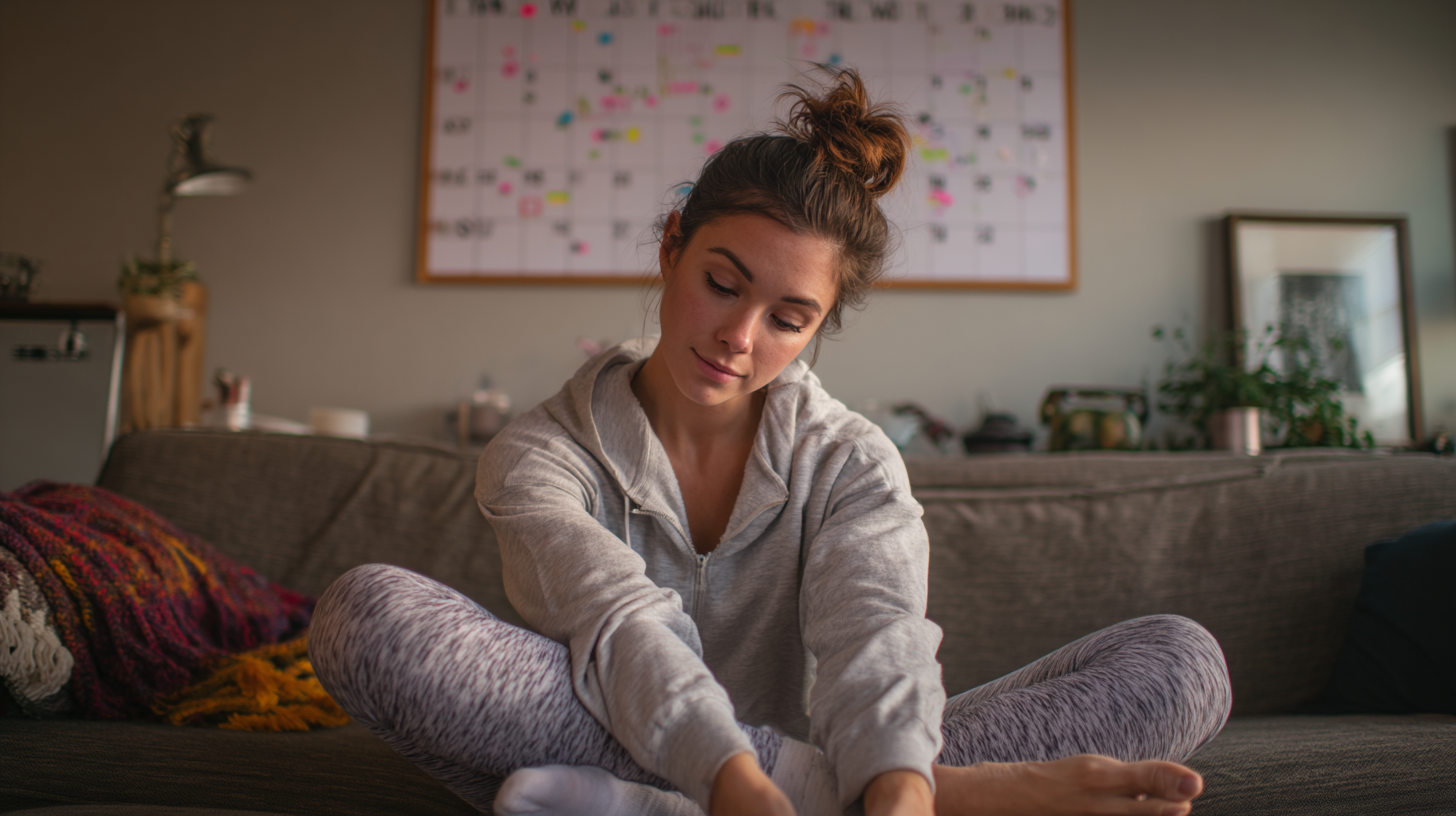
The trick isn’t starting. Anyone can start. The real work is waking up on an ordinary Tuesday, when you’re tired and the sky is dull, and still giving your body a little care. That’s where a mind-body routine is born—not in grand promises, but in small, almost unimpressive acts done again and again.
The first thing is to make peace with the idea that this routine is not a punishment for being “out of shape.” It’s a shelter you’re building for your own mind. Think of fitness less like a project and more like brushing your teeth. You don’t need to feel inspired to do it; you just do a little, most days, because life goes better when you do.
Start smaller than you think you should. If, in your head, a “real workout” is 45 minutes, cut that in half. Then cut it again. Make it so easy you’d almost feel silly skipping it. Maybe it’s ten minutes of walking after lunch. Maybe it’s five minutes of stretching before bed. That’s your seed. When mental health is shaky, the nervous system doesn’t need heroics; it needs consistency and safety.
It helps to anchor movement to something that already happens in your day. You eat. You wake up. You brush your teeth. You make coffee. Pin your routine to one of those. For example:
- After I brush my teeth in the morning, I’ll do five minutes of gentle mobility.
- After lunch, I’ll walk to the corner and back.
- After I close my laptop, I’ll do one short round of bodyweight strength.
Tying new actions to old habits keeps you from having to bargain with yourself all day. The time is set. The decision is made. You just step into it.
Next, think in terms of “minimums,” not perfection. Set a floor, not a ceiling. Your minimum might be: three days a week, ten minutes of movement that makes you breathe a little deeper. If you do more, fine. But the minimum is success. That’s how you build trust with yourself again—you make promises so small you can keep them, even on bad days.
It can help to sketch out a simple weekly rhythm, not a military schedule. Something like:
- Two days of light strength: squats to a chair, wall pushups, hip bridges.
- Two or three days of steady movement: walking, cycling, easy swimming.
- Most days: five to ten minutes of stretching or breath-focused movement.
This doesn’t have to be exact. You might walk on Monday and Wednesday, do strength on Tuesday and Friday, and stretch whenever your body feels stiff. The point is to see your week as a landscape, not a tightrope. There is room to shift things around without calling the whole thing a failure.
To keep it friendly to your mind, choose movements that ask just enough of you to wake you up, but not so much that you dread them. A good test is this: when you finish, you should feel like you could have done a bit more. That leftover capacity is important. It leaves you with a sense of strength instead of depletion, which is kinder to your mood and your long-term wellbeing.
Routines are made of more than tasks; they’re made of cues. Build small signals that tell your brain, “It’s time to move” and, later, “It’s time to rest.” Maybe you always change into the same comfortable shoes before your walk. Maybe you light a candle before your evening stretches, or put on the same playlist when you do strength work. These little rituals are like a doorway. Step through often enough, and your body starts settling into the pattern before you’ve even begun.
Tracking can help, but keep it gentle. You don’t need a fancy app if that overwhelms you. A simple calendar with a mark for each day you moved is enough. Some folks use three colors: one for walks, one for strength, one for stretching. Over time, you begin to see patches of color, like a garden slowly filling in. The sight of it can be a quiet encouragement: “I am showing up for myself, even when it doesn’t feel like much.”
There will be days your energy is low or your mood is heavy, and the plan you made on a better day will feel too sharp. This is where a sustainable routine bends instead of breaks. On those days, give yourself a “compassionate downgrade” instead of a pass/fail test. If the plan was a 20-minute walk, do five. If you can’t face a full strength session, do one exercise. Or simply step outside, breathe fresh air for three minutes, and stretch your shoulders. Call that your win.
This isn’t cheating the system; it is the system. You’re teaching your brain that even when life is hard, you still care for your body in some small way. That’s one of the strongest messages you can send to a mind that tends to believe everything is “all or nothing.” It isn’t. There is always a middle ground, and that middle ground is where healing usually happens.
It also helps to match your movement to your inner weather. If you wake up anxious and jittery, go to something rhythmic and steady—a walk, an easy bike ride, a simple swim. Let your nervous system rock itself calmer. If you wake up flat, unmotivated, half-asleep inside, try something a bit more activating: a short strength circuit, a few rounds of jumping jacks or marching in place, a song of dancing in the kitchen. When you’re overstimulated and tense, turn toward slower practices—stretching, yoga, deep breathing, a quiet walk at dusk.
Over weeks, this kind of listening becomes second nature. You stop asking, “What’s the perfect workout?” and start asking, “What does my body and mind need from me today?” The routine becomes less rigid and more like a conversation with yourself.
Remember that recovery is part of the routine, not the enemy of progress. Rest days, or lighter days, are when your body knits together the changes you’ve made and your mind processes the new rhythms. Overtraining—pushing hard, every day, in the name of discipline—can backfire badly on your mood. Irritability climbs. Sleep gets worse. Anxiety spikes. Better to move at a sustainable pace than to burn fast and quit.
Sleep, food, and stress management sit alongside movement like three good neighbors. If your routine is making you so tired you can’t sleep well, or so hungry you swing between binging and restriction, it’s not serving your mental health. Adjust. Add a snack before you exercise. Move your sessions earlier in the day. Shorten them. Small tweaks can turn a grinding routine into one that actually supports your whole life, not just your muscles.
It can also help to wrap your routine in meaning. Instead of seeing it as a chore to fix your “flaws,” see it as part of the way you honor the life you’ve been given. Some people choose a simple phrase to hold in mind when they move: “I am strengthening my anchor,” or “I am building peace in my body,” or “I’m taking one kind step.” This kind of inner language might sound small, but over time it shapes how you relate to yourself. You are no longer the harsh coach screaming from the sidelines; you’re the steady friend walking beside you.
Expect seasons. There will be stretches when your routine hums along, almost effortless. Then something will hit—a sickness, a deadline, a family crisis—and everything will wobble. The goal is not to keep your pattern flawless; the goal is to return. Even if you drift for a week or a month, the routine is still there like a path in the grass. The first steps back might feel clumsy. Take them anyway. Shame will tell you, “You blew it.” Remind yourself: “I am a person who returns.”
If your mind is especially dark or your anxiety high, building this pattern might feel like walking through mud. In those times, consider leaning on structure outside yourself. Join a gentle class, ask a friend to be your walking partner, set up an appointment with a trainer or therapist who understands the link between movement and mental health. Borrow someone else’s steadiness until yours grows stronger.
With time, these small, repeated acts of movement begin to stitch a different story into your days. Mornings have a little more shape. Evenings have a small point of release. Your body starts to feel less like a stranger and more like a place you live. And as that happens, the storms inside—though they may still come—find you better anchored, better supplied, less likely to be swept away.
Once you have even the beginnings of this routine, another question will rise up: what about the days you can’t make yourself move at all? The heavy seasons, the anxious spells, the practical tangles that keep you stuck? Learning how to face those barriers without giving up is the next part of the journey.
Overcoming barriers to active living
When you picture an “active life,” it’s easy to imagine someone with unlimited energy, plenty of free time, cute workout clothes, and ironclad motivation. But that’s not most people’s reality. Especially when mental health is fragile, movement can feel like climbing a hill with a backpack full of bricks—bricks made of exhaustion, self-doubt, pain, finances, and old memories of failure. If you’ve tried before and “fallen off the wagon,” it’s no wonder part of you flinches at the idea of trying again.
Instead of asking, “Why am I so lazy?” it’s more honest and far kinder to ask, “What’s actually in my way?” Barriers to active living are rarely about character flaws; they’re usually about real limits, unmet needs, or stories you’ve absorbed about yourself and your body. When you begin to name those obstacles, they become less like invisible walls and more like puzzles you can work with. And the way you solve them can be just as healing as the movement itself.
One of the loudest barriers is simple fatigue—physical, emotional, or both. If you’re working long hours, caring for others, or living with chronic illness, the idea of doing more may feel impossible. In seasons of depression, even getting dressed can feel like a small mountain. Instead of demanding “extra” from a body that already feels overdrawn, consider this question: where can movement replace something that drains you, rather than pile on top?
For example, maybe scrolling your phone before bed leaves you wired and empty. Could five of those minutes become stretching on the floor instead? If a stressful commute is wearing you thin, could you park a little farther away and use the walk as a decompression zone between work and home? Micro-shifts like that don’t ask for new energy so much as they redirect the energy you’re already spending in less helpful ways.
Another powerful barrier is pain—joint pain, back pain, headaches, old injuries that whisper, “Don’t move; you’ll make it worse.” Fear of hurting yourself again is not irrational; it’s your nervous system trying to protect you. But total avoidance can slowly narrow your life until even gentle movement feels dangerous. For many people, the path forward is not pushing through pain, but finding a kind of motion that feels safe enough: water exercise, chair-based routines, short walks on soft ground, or simple range-of-motion movements done at home.
If pain is part of your story, this is where guidance matters. A physical therapist, knowledgeable trainer, or healthcare provider can help you find movements that respect your limits while still nudging your body toward more ease. The right support turns the message from “My body is my enemy” to “My body has limits, but it’s still capable of healing and adaptation.” That shift alone can lift a surprising amount of mental fog.
Time is another barrier people name all the time: “I’m too busy,” “My schedule is chaos,” “I can’t commit to a class.” Sometimes this is an excuse, but often it’s real. Work, caregiving, unpredictable shifts, financial stress—these things don’t vanish because you’ve decided movement is important. But they don’t have to win by default.
Instead of looking for big empty blocks of time, think in “movement snacks.” Three five-minute bouts scattered through the day—marching in place while the kettle boils, walking during a phone call, a handful of squats beside your bed—add up more than you’d think. Research shows that accumulated activity in small chunks can still support overall health and wellbeing. Maybe you can’t give yourself 45 minutes, but can you give five, three times? Start there, and let that be “real fitness,” because it truly is.
Emotional barriers can be the heaviest, even if they’re invisible to others. Shame about your body. Embarrassment about how out of shape you feel. Old gym-class memories of being mocked, picked last, or scolded by adults who confused cruelty with “motivation.” It’s no surprise that for some, a brightly lit gym is not inspiring but threatening. If that’s you, honoring that history is a form of honesty, not weakness.
In those cases, your first step might be to choose an environment that doesn’t trigger that old wound. That could mean walking at dawn when the streets are quiet, following a gentle video at home, or finding a faith-based or community class that emphasizes care over competition. Some people feel safer starting with one trusted friend rather than strangers. The question isn’t, “Where should I work out?” but “Where can my nervous system relax enough that movement feels possible?”
There’s also the common belief that movement “doesn’t count” unless it looks like what other people are doing: intense classes, long runs, heavy lifts. This perfectionism masquerades as high standards, but really it’s another barrier. It keeps you stuck on the sidelines because you assume small efforts aren’t worth making. When you believe that, even a ten-minute walk can feel like failure before you begin.
Try flipping that idea on its head: what if the smallest, most do-able action is the most powerful because you’ll actually repeat it? A five-minute walk you take four days a week will shape your mental health far more than a 60-minute workout you imagine but never attempt. The humility to start small—and stay small longer than your ego likes—is often what opens the door to real, sustainable change.
Finances and access are huge barriers that don’t get talked about enough. Not everyone can afford a gym membership, a personal trainer, or high-tech gadgets. Not everyone lives near safe parks or sidewalks. If the usual advice—“Join a club! Try a boutique studio!”—doesn’t match your reality, it can make you feel excluded before you even start.
But the human body has always been moved by simple means: walking, climbing stairs, carrying things, stretching on the floor, using household items as resistance (water bottles, backpacks with books, towels for pulling). Free online videos, library DVDs, community center programs, and church groups can also bridge the gap. It might be worth asking yourself: “What’s the simplest movement I can do, with what I already have, where I already am?” The answer might not be fancy, but it can still be deeply effective.
For many, a hidden barrier is the thought, “What’s the point? Nothing really changes.” This hopelessness can grow out of long battles with depression, trauma, or chronic stress. When life has taught you that your efforts don’t matter, starting any new habit can feel like an invitation to disappointment. In those seasons, it can help to redefine what “success” means.
Instead of measuring victory by the scale, the mirror, or outside praise, what if success was this: “Today I did one small thing that aligned with the kind of person I want to become.” Maybe you still feel low afterward. Maybe the sky doesn’t part and trumpets don’t sound. But you have quietly contradicted the belief that you are powerless. That inner contradiction—repeated over days and weeks—can slowly loosen the grip of despair.
Social pressures weave their own net of barriers. Friends who tease your efforts. Family members who don’t value fitness. A culture that praises thinness and performance more than genuine health. If you’re surrounded by people whose idea of fun is always sedentary or whose comments cut at your confidence, it’s hard to protect the fragile beginnings of a new routine.
Sometimes the simplest step is to add just one ally. Not a perfect fit, not a superhero of discipline—just one person who won’t roll their eyes when you say, “I’m trying to walk more.” That ally might be a neighbor, an online support group, a coworker, or someone in your faith community. Walking side by side with even one person can change the emotional temperature of your efforts from lonely and risky to shared and supported.
Then there is the barrier of mood itself. On anxious days, your thoughts might race: “What if people stare? What if I can’t keep up? What if my heart pounds too fast?” On depressed days, the message might be: “Why bother? I’ll just fail again.” Waiting until these voices are silent is a trap; they may never fully go away. The path forward is learning to move with them, rather than waiting for them to disappear.
One practical approach is to negotiate with your mood instead of obeying it. If your mind screams, “I can’t face a 20-minute walk,” you might answer, “Okay, how about three minutes? Just to the corner.” If anxiety worries about being seen, you might choose a quieter route or time of day. If depression says, “This is pointless,” you can gently respond, “Maybe. But I’ll decide that after five minutes of trying, not before.” In doing this, you’re training a new inner voice—one that listens with compassion but still chooses action.
On top of all this, some people face a spiritual barrier: the subtle belief that caring for the body is selfish, vain, or secondary to “more important” duties. Yet when your body is exhausted and your mind is frayed, your capacity to serve, love, think clearly, and pray deeply is dulled. Movement, in this light, is not self-obsession; it’s stewardship. It’s tending the vessel through which you live, think, feel, and relate to others.
So what does it look like to begin overcoming these barriers in practice? Often, it means experimenting and staying curious. You might try a week of “movement snacks,” then decide which ones felt easiest to keep. You might test walking at different times of day to see when your anxiety is lowest. You might log—not just what you did—but how you felt before and after, gradually discovering patterns that are unique to your own nervous system.
Every obstacle you face holds information about you: what scares you, what drains you, what helps you feel safe. If you approach those obstacles as teachers instead of enemies, you become a kind of investigator of your own life. Why does walking outdoors feel easier than in a gym? Why do you move more when you have a podcast playing, or when you frame your walk as prayer, or when you know a friend is waiting? These are not small questions; they’re keys to designing a life where movement is not forced in, but woven in.
As you look at your own barriers—practical, emotional, spiritual—it might be worth asking yourself quietly: Which of these are truly immovable, and which are negotiable? Where could I carve out five minutes of possibility? What story have I been telling myself about my body, my willpower, or my worth that might deserve a challenge? The answers may not come all at once, but the act of asking is itself a step toward freedom.
What would your days look like if movement felt less like a battle and more like a small, steady ally to your inner life? How might your mood, your sleep, your relationships, even your sense of hope shift if you learned to meet your own barriers with patience and creativity instead of judgment? These are not theoretical questions; they’re invitations. You are allowed to explore them, to test new paths, and to discover that even with many obstacles, an active, mentally nourishing life is still possible—one imperfect, thoughtful step at a time.
- How much exercise do I really need to support my mental health?
- Research suggests that about 150 minutes per week of moderate activity (like brisk walking) can significantly improve mood and reduce anxiety, but even smaller amounts help. If that sounds overwhelming, start with 5–10 minutes a day and build up; consistency matters far more than intensity.
- Can exercise replace medication or therapy for depression or anxiety?
- For some people with mild to moderate symptoms, regular physical activity can be as effective as certain medications, but it is not a universal replacement. Think of movement as a powerful part of your toolkit that can complement, not necessarily substitute, professional care—always discuss changes with your healthcare provider.
- What type of exercise is best for mental well-being?
- Steady aerobic activities (like walking, cycling, or swimming), strength training, and mind-body practices (like yoga or tai chi) have all been shown to benefit mental health. The “best” exercise is the one you can do regularly and that leaves you feeling calmer, clearer, or more grounded afterward.
- What if I’m too tired or busy to work out?
- In demanding seasons, long workouts may not be realistic, but short “movement snacks” can still help—a few minutes of walking, stretching, or light strength work scattered through the day. Look for ways movement can replace existing habits (like scrolling) rather than add another obligation to your schedule.
- How do I start exercising if I feel anxious or self-conscious?
- Begin in environments that feel safe: at home with a video, in a quiet park, or with one trusted friend. Wear comfortable clothes, choose gentle activities, and focus on how you feel rather than how you look; over time, small positive experiences can slowly rewrite old fears.
- Is it still worth moving if I don’t see physical changes?
- Yes—mental and emotional benefits often show up long before visible physical changes do. Better sleep, steadier moods, reduced stress, and a stronger sense of self-efficacy are all powerful gains, even if your weight or appearance stays the same.
- What can I do if pain or a health condition makes exercise difficult?
- Work with a healthcare professional or physical therapist to find movements that are safe for your condition, such as water-based exercise, chair workouts, or gentle range-of-motion routines. Start very small, respect your limits, and remember that even modest increases in activity can improve both physical and mental wellbeing over time.
Ashland Ashland Sabbath Chapel
Beside our live streamed church services, all are welcome to attend our church in person each Saturday beginning 10:00 AM Central Time by going to 2425 Owens Rd., Ashland, AL 36251. There is no cost and any donations are strictly voluntary.
For questions, call +2563547124.