Come join Ashland Sabbath Chapel Ministries each Saturday for live streamed church services. Bible Study begins at 10:00 AM Central Time and Sermon at 11:00 AM. Visit Our YouTube channel and watch from home!
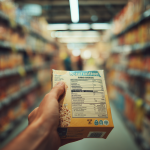
One might imagine that a small rectangle on the back of a package could hardly command our attention; yet, my dear friend, that unassuming Nutrition Facts panel holds more power over our daily well-being than a whole parade of advertisements. When you know how to read it with sense and discernment, you are no longer at the mercy of bold front-of-pack promises, but may instead form your own sober judgment about what truly supports your health and comfort. Let us, then, look together at this little box of information and unravel its meaning line by line, as calmly as if we were examining the characters at a country ball.
First, your eye will usually fall upon the number of calories. This figure tells you how much energy you receive from one stated serving of the food. Yet calories, while much discussed, are only a portion of the story. Leading public health guidance suggests that, for most adults, total daily calorie needs fall somewhere in the range of 1,600–2,400 calories for women and 2,000–3,000 for men, depending on age, size, and activity level (U.S. Department of Health and Human Services & U.S. Department of Agriculture, 2020). If a single serving of some sweet indulgence claims 400 calories, you may quickly see how immoderate it could become when multiplied over the day. However, it is not only the number but the origin of those calories that deserves your notice.
Just beneath the calories, you will frequently see a column of nutrients accompanied by “% Daily Value” (%DV). This little figure is not, as some suppose, a mysterious code meant to confound the innocent shopper. Rather, it shows what portion of a typical day’s recommended intake is found in one serving of the food, based on a 2,000-calorie diet. If you observe 20% next to a nutrient, that food offers a substantial amount of it in a single serving; if you observe 5%, it is rather meager. Public health agencies often suggest that 5% DV or less may be considered “low,” while 20% DV or more is “high” (U.S. Food and Drug Administration, 2022). Thus, you might seek a high %DV for fiber and vitamins, and a low %DV for sodium and saturated fat.
As you proceed down the panel, a succession of fats presents itself: total fat, saturated fat, and sometimes trans fat. Here the %DV becomes exceedingly helpful. Excessive saturated fat has been associated with higher levels of LDL (“bad”) cholesterol, which, in turn, may increase the risk of heart disease (American Heart Association, 2023). If the panel reveals that one modest serving supplies 40% of your daily limit for saturated fat, it would be wise to treat such a product as an occasional pleasure rather than an everyday staple. Trans fat, if listed, is best kept as near to zero as possible, for it has been strongly linked with adverse cardiovascular outcomes (Mozaffarian et al., 2006).
Next, your attention should be drawn to cholesterol and sodium. While dietary cholesterol is no longer viewed with the same universal suspicion it once aroused, many guidelines still advise moderation, particularly for people with existing heart concerns (Dietary Guidelines for Americans, 2020–2025). Sodium, on the other hand, remains an ingredient of keen importance. Abundant intake of sodium has been associated with higher blood pressure and increased risk of cardiovascular disease (World Health Organization, 2012). When the %DV for sodium climbs into double digits for an ordinary serving, you may reasonably suspect that such a product, if eaten frequently, is not a sure friend to your long-term well-being.
Descending further, you will reach the carbohydrates, where you will often find total carbohydrates, dietary fiber, and total sugars, sometimes with added sugars listed separately. Dietary fiber is an ally of the first order; it assists digestion, helps maintain more stable blood sugar, and has been linked with a reduced risk of heart disease and certain types of cancer (Slavin, 2013). If a product offers 15–20% DV or more of fiber in a serving, you might regard that as a point in its favor. In contrast, a high percentage of added sugars indicates that sweetness, rather than sustenance, is doing most of the work. Many health authorities advise limiting added sugars to less than 10% of total daily calories (World Health Organization, 2015). Should you encounter a panel in which added sugars alone contribute 40–50% DV, you may rightly question whether this confection merits a regular place in your daily affairs.
Alongside sugars and fiber you may also find sugar alcohols or other carbohydrate subtypes. These can be somewhat less straightforward, but the panel at least informs you of their presence. Sugar alcohols do provide fewer calories than ordinary sugar and affect blood glucose differently, yet in some persons they may cause digestive discomfort. So, even where the calorie count appears agreeable, your own comfort and experience must also be your guide, for a label cannot always foretell the behavior of a delicate constitution.
Further down the panel, you will encounter protein. For those attentive to muscles, satiety, or simply wishing to feel more satisfied after a meal, this line is not to be overlooked. Protein helps maintain muscle mass and supports many essential bodily functions; recommendations often fall around 0.8 grams per kilogram of body weight daily for the average adult, with higher amounts for those who are very active or older (National Academies of Sciences, Engineering, and Medicine, 2005). If the Nutrition Facts panel displays a paltry amount of protein, while boasting generous calories and sugars, you may surmise that the food contributes little beyond fleeting pleasure.
At the foot of the panel you are likely to discover a listing of certain vitamins and minerals, each furnished with its own %DV. These might include vitamin D, calcium, iron, and potassium, which many people do not consume in sufficient quantities. For example, adequate potassium intake has been associated with healthier blood pressure, while calcium and vitamin D are important for bone health (Ross et al., 2011). When these nutrients appear in gratifying amounts—say 10–20% DV or more—you may feel more confident that the item offers something truly nourishing, rather than mere indulgence disguised as food.
You may observe as well that some nutrients are notably absent from the panel. Not every beneficial compound is required to be listed, and not every potentially unhelpful one must be singled out. The Nutrition Facts panel is thus a guide, not an infallible oracle. Nonetheless, it provides a structured way to compare products: if two foods are similar, you can judge which offers more fiber, less sodium, or fewer added sugars, and thus make decisions that quietly accumulate in favor of your welfare over time.
It is important, dear friend, not to read each line in lonely isolation, but to consider the whole panel as you would a character sketch in a novel. One severe flaw need not condemn a food entirely if the other qualities are sound and you enjoy it infrequently. Yet many small shortcomings, repeated often, may together form a pattern that does your health no service. When you look past the handsome front of the package to that plain black-and-white box, you are choosing reason over romance in the realm of eating. In mastering these small details of food labels, you gain a quiet command over your daily choices, and with it, a better chance of aligning your table with the sound principles of modern nutrition rather than the fleeting fancies of appetite or fashion.
Interpreting serving sizes and portions

Now, my friend, there is one little line on those food labels that has shipwrecked more good intentions than any other: the serving size. Many a soul has examined the calories, nodded with satisfaction, and placed the box into the cart, not realizing that the numbers apply only to a portion far smaller than what will actually be eaten. In this way, a modest-looking panel may cloak an immoderate indulgence. If we would deal honestly with ourselves, we must first understand how serving sizes and our real-life portions can quietly part company.
When you look at the top of the Nutrition Facts panel, you will see “Serving size” and beneath it “Servings per container.” That serving size is not a command from on high, but a standardized estimate of what an average person might eat at one sitting. It might read “2/3 cup,” “1 slice,” or “about 15 chips.” The difficulty arises because our bowls, plates, and habits are rarely as modest as those printed figures. A cereal box may calmly declare 1 cup as a serving, while the bowl you pour without thinking may hold nearer to 2 or 3 cups. The label is not lying; it is simply counting differently than your hand and your appetite are inclined to do.
Consider, as an example, a bag of crisps that announces 150 calories per serving, with 10 servings in the bag. A weary traveler, pausing at a roadside inn, may begin to eat “just a few” while he reads or converses. The bag grows lighter; time passes pleasantly. At last, with some surprise, he finds he has eaten half the bag. On the label that means 5 servings, not one. The true toll is not 150, but 750 calories, with each nutrient—sodium, saturated fat, and added sugars, if any—also multiplied by five. What seemed a small indulgence has, by quiet degrees, become a whole extra meal in disguise.
This is why it is so important, whenever you examine a label, to ask yourself two questions in turn: “What is the serving size?” and “How much do I actually eat at one time?” This simple habit can restore honesty between your intentions and your plate. If you discover that your customary portion is double the serving size, then every figure on the panel must likewise be doubled to reflect your reality. The nutrition numbers are like the marks on a ruler; they tell the truth only if you measure the whole length of what you consume, not merely a fraction.
You may find it helpful, at least for a season, to measure your portions with simple instruments: a measuring cup, a kitchen scale, or even your own hand as a guide. One might, for example, pour cereal into a bowl as usual, then pour it back into a measuring cup to see how much it truly is. Or, when cooking pasta, you might weigh the dry portion once or twice, so that your eyes become accustomed to what a single serving looks like. These little experiments require a trifling effort, but they teach your judgment in nutrition more accurately than any pamphlet.
Another difficulty arises when a single item is packaged in a manner that suggests it is meant for one person, yet the label counts it as two or more servings. A bottle of sweetened tea may seem a personal refreshment, yet if the panel lists 2½ servings per bottle, the 90 calories and 24 grams of sugar per serving must be multiplied by 2.5 if you drink it all—which many will do without a second thought. Suddenly, that harmless-looking bottle bears 225 calories and 60 grams of sugar, a load far heavier than it first appeared. If we are not watchful, such things will slip into our day and press upon our health unnoticed.
Do not suppose, however, that serving sizes must be followed slavishly, like a rigid rulebook. They are better understood as a common language. When all foods use the same units for measurement, you can compare them fairly. If two granola bars each claim one bar as a serving, you can easily see which one brings more fiber or less sugar. The trouble comes only when we misread that common language—when we imagine we are eating one serving, while our hand, guided by habit, takes two or three.
You may also encounter days when you deliberately choose more than one serving, because you are especially hungry, have been unusually active, or are planning a long stretch between meals. There is no harm in this when it is done knowingly. If the label tells you that one serving of a stew brings 250 calories and a generous share of fiber and protein, and you take two servings with clear intention, you may simply acknowledge that your meal is 500 calories and adjust your eating through the rest of the day. Honest arithmetic leads to sensible balance.
It can be helpful to develop a few simple visual comparisons so that serving sizes no longer seem mysterious. Many find it convenient to think of 3 ounces of cooked meat as roughly the size of a deck of cards, or 1 cup of food as about the size of a closed fist. A tablespoon of oil or nut butter may resemble the size of your thumb. These small pictures in the mind remove the need to measure every morsel, while still keeping your portions within the bounds of reason. Over time, your eyes and your conscience will work together, and you will gain a steady sense of “enough.”
There is also a mercy in remembering that not every meal must be perfectly portioned. Life brings feast days and lean days, celebrations and plain suppers. The aim is not to count every bite with anxious precision, but to keep your ordinary portions in harmony with your needs and with the counsel that sound nutrition offers. If you notice that plates at your table have quietly grown larger over the years, or that “normal” now means twice what it did in your youth, that is a gentle summons to reconsider. The serving size on the label is a quiet voice asking, “Is this amount truly fitting for me today?”
When you begin to read serving sizes with clear understanding, you will find that many so‑called “healthy” products show their true character. A snack bar may boast of oats and fruit on the front, yet the panel reveals that one bar is actually two servings, each rich in sugar and poor in fiber. A frozen entrée may trumpet “only 300 calories,” but you discover that its portion is so small that you will surely add bread or dessert, turning a modest meal into a heavier one. In this way, your early attention to serving sizes helps you see through flattering words and make judgments that genuinely favor your welfare.
If ever you feel discouraged by the tangle of numbers, remember that this practice grows easier with use. What seems at first like a foreign language soon becomes familiar. You will glance at a label, notice that your usual helping is two servings, and calmly double the figures in your mind. You will see a bottle that claims multiple servings and decide, either to share it with another or to drink half and save the rest. In all this, you are not becoming a slave to numbers, but a faithful steward of the body entrusted to you.
Thus, by bringing serving sizes and actual portions into honest agreement, you turn the information on food labels into a trustworthy ally rather than a confusing riddle. You are no longer deceived by small print or misled by generous packaging. Instead, you eat with understanding, allowing both appetite and reason to have their proper place, and giving your body the fair and moderate support it needs for daily duty and enduring health.
Spotting added sugars and unhealthy fats
If there is any point upon which the manufacturers of modern delicacies most wish to impose upon our credulity, it is surely in the matter of sweetness and fats. They will adorn the front of the package with words such as “natural,” “wholesome,” and “light,” as if the mere presence of fruit, oats, or a picturesque farm upon the label were sufficient to secure our health. Yet, if we would not be so easily won over, we must learn to look beyond the charming exterior and attend to those quieter lines on the back, where added sugars and unhealthy fats reveal themselves with far less romance.
Let us begin with sugar, that most flattering and deceitful companion. In truth, not all sugar is created equal in the eyes of sound nutrition. The natural sugars found in a whole apple or a plain cup of milk come escorted by fiber, water, and other useful nutrients. They arrive, as it were, in good company. Added sugars, by contrast, are those introduced during processing or preparation—white sugar stirred into a sauce, syrups poured over grains, honey or agave woven into a bar, or concentrated fruit juice used to sweeten a drink. These contribute sweetness and calories, but bring little in the way of actual nourishment (World Health Organization, 2015).
The mischief lies not in a solitary teaspoon of sugar taken with your tea, but in the quiet accumulation of added sugars from a dozen unsuspected sources. Many public health authorities advise that added sugars should provide less than 10% of our daily calories—no more than about 50 grams, or 12 teaspoons, in a 2,000‑calorie day, and ideally less (World Health Organization, 2015; U.S. Department of Health and Human Services & U.S. Department of Agriculture, 2020). Yet a single bottle of sweetened beverage or a generous helping of flavored cereal can nearly exhaust that allowance at once. If we wish to keep our blood sugar steady, our weight in sensible bounds, and our risk of heart disease and type 2 diabetes in check, we must be wary of these invisible heaps of sweetness (Malik et al., 2010).
Happily, food labels now offer a most valuable clue: the line for “Total Sugars,” beneath which you will often see “Includes X g Added Sugars.” When that second line appears, it is like a candid confession. The total sugars tell you everything sweet in the product, both natural and added; the “added sugars” portion reveals how much of that sweetness has been supplied by the manufacturer’s spoon rather than by nature. If a yogurt, for example, contains 15 grams of total sugar and 10 grams of added sugar, you may suppose that only a modest share comes from the milk itself, while the greater part has been introduced in the form of sugar, syrup, or fruit purée.
The % Daily Value may guide your judgment still further. If the added sugars show 20% DV or more in a single serving, you may be sure that this item is more treat than staple. Suppose your breakfast cereal offers 12 grams of added sugars, listed as 24% DV. If that is only the beginning of your day, and you later accept a sweetened coffee, a flavored yogurt, and a little dessert after dinner, your total will creep easily beyond what is considered prudent. Over time, such excess has been associated with weight gain, increased risk of cardiovascular disease, and dental troubles (Te Morenga, Mallard, & Mann, 2013). It is not that one bowl of cereal will ruin your fortunes; it is that daily repetition, unexamined, may slowly lead you where you never meant to go.
Yet, those who wish to conceal their indulgence in sugar have become remarkably inventive with names. If you glance down the ingredient list, you may not always encounter a plain “sugar.” Instead you will find a whole society of sweeteners, each dressed in its own title. Among them are:
- Common refined forms: sugar, cane sugar, brown sugar, raw sugar, powdered sugar.
- Liquid sweeteners and syrups: high fructose corn syrup, corn syrup, rice syrup, barley malt syrup, maple syrup, honey, agave nectar.
- Fruit-based sweeteners: fruit juice concentrate, apple juice concentrate, grape juice concentrate (when used primarily for sweetness).
- Other disguises: dextrose, fructose, sucrose, glucose, maltose, evaporated cane juice.
Whenever you see several such names scattered through the ingredient list, you may safely assume that the product has been sweetened from more than one direction. The order of ingredients is also instructive, for they are listed from greatest to smallest by weight. If sugar, syrup, or any of its cousins appears among the first few items, sweetness plays a very prominent role in the affair. It matters little whether the sweetener calls itself honey, agave, or organic cane sugar; your body recognizes them all with similar effect when they are present in excess (Ludwig, 2002).
Let us turn now to fats, those substances which can be either steady allies or quiet saboteurs. Your body does indeed require some fat—for cell structure, hormonal balance, and the absorption of certain vitamins. However, the manner and kind in which it arrives at your table can greatly influence your long-term health. The Nutrition Facts panel distinguishes among total fat, saturated fat, and trans fat. To these, one might add a fourth character—unsaturated fat—which is often mentioned in the ingredient list and promotional claims rather than in its own separate line.
Saturated fats are commonly found in animal products such as fatty meats, butter, full‑fat cheese, and cream, as well as in some tropical oils like coconut and palm oil. When eaten in abundance, saturated fat has been associated with higher levels of LDL (“bad”) cholesterol, which may, in turn, raise the risk of heart disease (American Heart Association, 2023). Many guidelines advise limiting saturated fats to less than 10% of daily calories, and even 5–6% for those at higher cardiovascular risk (American Heart Association, 2013). On the label, this means you would do well to favor products with a lower %DV of saturated fat, especially for foods you eat every day rather than on special occasions.
Trans fats are quite another matter. These are often industrially produced through partial hydrogenation of oils, though they may also appear in small quantities in some animal products. Research has shown that artificial trans fats raise LDL cholesterol, lower HDL (“good”) cholesterol, and sharply increase the risk of heart disease (Mozaffarian et al., 2006). Many countries, including the United States, have moved to remove partially hydrogenated oils from the food supply. Yet vigilance is still wise, for older products, imported goods, or certain baked and fried foods may harbor them.
When you inspect food labels, you might sometimes see “0 g trans fat” on the panel. Do not be entirely reassured by this alone, for regulations may permit a product containing less than 0.5 grams of trans fat per serving to round down and declare “0 g.” If the serving size is small, several helpings could still yield a meaningful amount. To gain a truer understanding, read the ingredient list as well. If you detect the phrase “partially hydrogenated oil” in any form, you may conclude that trans fats are present, however modestly the panel may attempt to disguise them. In such cases, it is usually wise to choose another option when one is available.
Unhealthy fats are not limited to those bearing the name “trans.” A food heavy in saturated fat, fried in abundant oil, or prepared with a lavish hand of shortening may also be less than friendly to your heart when eaten regularly. You may observe that many highly processed snacks, pastries, and fast foods derive a large share of their calories from fats that do little to promote health. Here, again, the %DV on the Nutrition Facts panel is a valuable counselor. If a single serving of a snack supplies 30–40% DV for saturated fat, and you know you are likely to consume more than one serving, you may reasonably reserve such an item for rare indulgence rather than habitual use.
In contrast, unsaturated fats—found in foods such as olive oil, nuts, seeds, and fatty fish—have often been associated with more favorable health outcomes when they replace saturated and trans fats in the diet (Mensink et al., 2003). While the Nutrition Facts panel may not always single out “monounsaturated” and “polyunsaturated” fats with great ceremony, you can learn to spot their sources in the ingredient list. Oils such as olive, canola, sunflower, safflower, and soybean generally provide more unsaturated than saturated fat; similarly, ingredients like almonds, walnuts, chia seeds, and flaxseeds are often signs of a more heart‑supportive fat profile.
Of course, it is not only the kind of fat but also the manner of its use that deserves attention. Consider two crackers: one made largely of refined flour and palm oil, the other composed of whole grains and a little olive oil. Both may contain a similar amount of total fat per serving, yet their effect upon your body’s inner housekeeping may be quite different. When you read a label, therefore, look not only at grams of total fat, but at how many of those grams are saturated, whether trans fat lurks within, and what oils or fats appear in the ingredients. In this way, you move from a crude arithmetic of “low fat” and “high fat” to a more refined understanding of which fats serve you best.
You may ask, in a moment of exasperation, how one is ever to enjoy a biscuit or a slice of cake again, if such scrutiny must attend every bite. Take heart. No reasonable counsel of nutrition requires you to banish all sweetness or richness from your life. Rather, it encourages you to place them in their proper station. A dessert, understood as an occasional pleasure and prepared or chosen with some care, need not disturb your peace. The difficulty arises when foods heavy in added sugars and unhealthy fats cease to be rare visitors and instead establish themselves as daily companions—from sweet coffee drinks to sugary cereals, from pastries at breakfast to fried snacks at every turn.
A useful habit, then, is to ask of any packaged food: “Where do its calories chiefly come from?” If you find that a large share arises from added sugars and saturated or trans fats, with little fiber, protein, or micronutrients in attendance, you may recognize that this item is more of a “sometimes food” than a daily staple. A flavored yogurt with 7 or 8 grams of added sugars and modest saturated fat might reasonably find a place in your regular rotation; a similar cup with 20 grams of added sugars and cream near the top of the ingredient list might better be reserved for special occasions or replaced with a plainer variety brightened by fresh fruit.
Another gentle strategy is substitution, not mere denial. When you have learned to spot added sugars and unhelpful fats, you can seek out alternatives that satisfy without such excess. A granola bar that lists oats, nuts, and dried fruit ahead of sweeteners may be a better companion than one whose first ingredient is sugar. A jar of tomato sauce with 3 grams of added sugars and little saturated fat will support your supper far more kindly than a brand that offers 10 grams of added sugars in the same portion. Bit by bit, these substitutions accumulate into patterns that favor your well‑being without requiring heroic effort.
If, at first, everything seems dismayingly sweet or oily once you begin to notice the facts, do not be discouraged. Our palates are remarkably adaptable. When you gradually reduce your reliance on heavily sweetened and fried foods, the natural flavor of fruits, vegetables, whole grains, and simply prepared meats begins to reassert itself. Many people find, after a few weeks of more moderate intake, that formerly beloved items taste cloying or excessively greasy. The change is not sudden, but it is steady—and it testifies to the body’s profound capacity to respond to kinder treatment.
Thus, by learning to recognize added sugars and unhealthy fats upon the label, you are not merely memorizing a set of tedious rules; you are reclaiming your authority over what enters your kitchen and, ultimately, your body. You cease to be dazzled by enticing promises on the front of the package and instead consult the sober accounting on the back. Little by little, you cultivate a table at which sweetness and richness appear in their due proportions—present enough to delight, yet not so constant as to undermine your health. In this quiet way, without drama or self‑reproach, your everyday choices begin to align more closely with the sound principles that modern nutrition has labored to reveal.
Recognizing nutrient-dense ingredients

There is, I believe, a most agreeable change that occurs when one ceases to inquire only, “How many calories are in this?” and begins instead to ask, “What, in truth, am I receiving for those calories?” At that moment, dear friend, you step from mere arithmetic into discernment. You pass from counting to judging, and learn to distinguish those foods which are rich in nourishment from those which simply crowd the day with empty energy. This is the very heart of recognizing nutrient‑dense ingredients: to train your eye, with the help of food labels, to favor those elements that truly sustain your body, rather than those which flatter your palate and contribute little to your long‑term health.
If we are to be sensible about nutrient density, we must first understand what it means. A nutrient‑dense food is not necessarily one with few calories, but one that offers a generous measure of vitamins, minerals, fiber, and other beneficial compounds for each calorie it contains. Imagine two small snacks, each of 150 calories. One is a frosted pastry made chiefly of white flour, sugar, and cheap oils; the other is a modest handful of nuts and a piece of fresh fruit. The calories may be equal, yet the second snack bestows fiber, healthy fats, and a wealth of micronutrients, while the first provides mostly sugar and refined starch. In such comparisons, the true character of our choices is revealed more clearly than in any romantic description on the front of the box.
To recognize these more valuable ingredients, you must make the acquaintance of the ingredient list, that long, often neglected paragraph which usually lurks in small letters beside the Nutrition Facts panel. Though it appears dry and uninviting at first, it speaks quite candidly when you know how to listen. Ingredients are listed in order of weight, from greatest to least. Thus, the first three to five items are the principal actors in the story of your food; the remainder are minor characters. If those leading positions are occupied by whole grains, vegetables, fruits, legumes, nuts, seeds, or plain dairy, you may suspect that the food is at least aspiring toward good nutrition. If, instead, sugar, refined flour, and various oils claim the top of the list, you are dealing with a product that depends more on cheap energy than on actual nourishment.
You will quickly discover that whole plant foods are among your best allies in the search for nutrient‑dense ingredients. When you scan a label and see words such as “rolled oats,” “brown rice,” “quinoa,” “black beans,” “chickpeas,” “spinach,” “tomatoes,” “berries,” “almonds,” or “sunflower seeds” among the first ingredients, you may take it as an encouraging sign. These are foods which, even before they were submitted to factory or kitchen, already contained generous amounts of fiber, vitamins, minerals, and helpful plant compounds. When manufacturers use them liberally and avoid drowning them in sugar and unhealthy fats, the result often serves both your palate and your health rather well.
Whole grains deserve particular notice, for they are frequently promised yet not always honestly delivered. Many packages speak seductively of “grain” or “multigrain,” when in truth the grains are ground so fine and refined so thoroughly that little of their original virtue remains. To guard against such flattery, look in the ingredient list for phrases such as “whole wheat,” “whole oats,” “whole rye,” “brown rice,” or “whole grain corn.” The critical word is “whole.” By contrast, expressions like “wheat flour,” “enriched flour,” or “degerminated cornmeal” usually indicate a refined grain, from which the bran and germ—rich in fiber and nutrients—have been mostly removed. A bread may be as dark as you please and still be made chiefly of refined flour, with only a token sprinkling of whole grain for appearance’s sake.
To illustrate, imagine you are choosing between two loaves of bread. The first lists “enriched wheat flour” as its first ingredient, followed by sugar and vegetable oil, with “whole wheat flour” appearing much later. The second begins with “whole wheat flour, water, oats, sunflower seeds,” and only then a little sugar and oil. Though both may proclaim themselves “wheat” breads upon the front, their internal arrangements are quite different. The second loaf, with whole grain as its foundation and seeds as its allies, is indisputably more nutrient‑dense, bringing along more fiber, B vitamins, and minerals for each slice you enjoy.
Vegetables and fruits, when named plainly and placed high upon the ingredient list, are likewise strong assurances of value. A tomato sauce whose first ingredient is “tomatoes” (not water, not sugar), followed by “onions, olive oil, garlic, basil,” is almost certainly richer in nourishment than a rival sauce that begins, “water, tomato paste, high fructose corn syrup, modified starch.” Both may be red and seasoned, yet the first derives its character from real vegetables and a modest amount of healthy fat, while the second relies on sweeteners and thickeners to imitate the body and flavor that nature would have provided for itself.
A very similar test can be applied to products that claim to contain fruit. A yogurt that lists “cultured milk, strawberries, sugar” looks quite different from one whose first fruit‑related ingredient is “strawberry purée concentrate” or “natural flavor” with only the vaguest mention of fruit. If the word “fruit” appears chiefly in the form of “fruit juice concentrate” or as a flavoring rather than as whole or cut fruit, you may justly suspect that the manufacturer has leaned heavily on sweetness and aroma while neglecting the fiber and natural complexity that fresh or frozen fruit would have brought.
Beans, lentils, and other legumes are also noble contributors to nutrient density. They offer protein, fiber, and a suite of minerals which together support steady energy and appetite control. Canned soups, frozen meals, or prepared salads that name “black beans,” “lentils,” or “chickpeas” early in the ingredient list often give you better value than those that depend chiefly on refined starches or processed meats. A modest serving of chili built around beans, tomatoes, and vegetables may make a heartier and more wholesome meal than a similar‑looking dish that is mostly meat, sauce, and salt with scarcely a bean in sight.
Nuts and seeds, though higher in calories than fruit or vegetables, frequently earn their place in a nutrient‑dense diet because they bring healthy fats, protein, fiber, and important micronutrients such as magnesium and vitamin E. When you examine a granola or snack bar and discover that its chief ingredients are “whole oats, almonds, pumpkin seeds, dried cherries,” with sweeteners and oils appearing further down, you are encountering a product built on ingredients that genuinely contribute to your well‑being. If, in contrast, sugar and syrup stand proudly at the top, and nuts or seeds linger near the bottom in tiny quantities, you have before you a confection masquerading as a health food.
Plain dairy foods—such as milk, yogurt, and cheese—may also be sources of nutrient‑dense ingredients when chosen with care. A simple yogurt that lists “cultured milk, milk” alone, or perhaps with a bit of fruit, will generally offer protein, calcium, and beneficial bacteria without an excess of sugar or dubious additives. When the ingredient list of a dairy product runs into many lines, crowded with corn syrup, starches, gums, and artificial flavors, you may be sure that it is pursuing charm more diligently than true nutrition. In such cases, a return to a plainer variety, sweetened if you wish with your own fresh fruit or a little honey, restores both control and simplicity.
Another telling mark of nutrient‑dense ingredients is the presence of naturally occurring fiber. On the Nutrition Facts panel, you may see a certain number of grams of dietary fiber; but to understand their origin, you must turn again to the ingredients. If that fiber is derived from whole grains, beans, vegetables, fruit, nuts, and seeds, it is accompanied by a host of beneficial compounds. If, instead, you see added fibers—“inulin,” “chicory root fiber,” “cellulose,” or “resistant starch”—yet very few whole plant ingredients, you may suspect that the manufacturer has attempted to repair a fundamentally poor recipe by sprinkling in isolated fiber after the fact. Such additions are not necessarily harmful, but they do not equal the full benefits of a diet based chiefly on naturally fiber‑rich foods.
One might reasonably ask, “How many ingredients are too many?” There is no strict number, yet it is often remarked that the longer and more complicated the ingredient list, the more likely the product has been highly processed and designed with shelf‑life and seduction in mind rather than straightforward nourishment. A jar of peanut butter that reads “peanuts, salt” is delightfully clear and likely nutrient‑dense. Another jar that declares “peanuts, sugar, hydrogenated vegetable oil, corn syrup solids, mono‑ and diglycerides” may spread just as smoothly, but its additional ingredients contribute little of value and may even work against your health in quantity. Where you have the choice, the simpler preparation often proves the wiser companion.
Consider, too, the presence of herbs, spices, and modest amounts of quality oils—such as olive or canola oil—as signs of a more thoughtful formulation. A salad dressing, for example, that begins with “olive oil, vinegar, mustard, herbs,” and contains only a small measure of sugar or honey, allows its flavor to arise from ingredients that do something more than merely sweeten. Another dressing may derive its body and character chiefly from corn syrup, water, and cheap oils, with only token amounts of herbs or real vinegar. Both may make your salad glisten, but only the former contributes meaningfully to a meal that seeks to be rich in beneficial fats and plant compounds.
There is a certain pleasure in discovering that one can, by mere attention to these details, reshape familiar meals into more nutrient‑dense versions without great upheaval. The pasta that once swam in a sugary sauce can be dressed instead with crushed tomatoes, olive oil, garlic, and vegetables. The breakfast that formerly consisted of a refined cereal with marshmallows may be exchanged for oats cooked with milk, scattered with nuts, and crowned with berries. The change appears modest from one plate to the next, yet over months and years it can alter the entire direction of your health, simply because your daily intake now leans upon ingredients that actually nourish you.
If you ever feel disheartened by the labor of reading food labels, remember that your purpose is not to seek perfection in every morsel, but to tip the balance steadily toward foods whose ingredients repay you generously for the calories they contain. There will be evenings when you accept a biscuit baked with white flour and sugar, or mornings when a polished bun finds its way to your plate. Such indulgences, if occasional, need not disturb you. What matters most is that the majority of the foods which appear in your kitchen—day after ordinary day—are built upon whole, nutrient‑dense ingredients: grains that have not been stripped, beans that have not been buried under salt and fat, fruits and vegetables that are present in honest quantities, and simple proteins prepared with a moderate hand.
In time, you will find that your eye has grown quick and shrewd. A glance at an ingredient list will tell you whether a cereal is truly based on oats or merely studded with them for display, whether a snack is composed chiefly of nuts and seeds or of sweetened puffed flour, whether a frozen meal is a company of vegetables and beans with a little oil or a thin scattering of vegetables floating in a salty, starchy sauce. Each such recognition strengthens your ability to assemble meals that do more than fill your stomach—they uphold your energy, your mood, and your long‑term health.
Thus, by learning to recognize nutrient‑dense ingredients wherever you meet them, you transform the act of shopping and eating from a hasty reflex into a series of deliberate choices. Your pantry grows gradually more honorable; your meals, while still pleasant and comforting, are anchored in foods that truly deserve a daily place at your table. And although no single choice may seem particularly dramatic, the quiet habit of favoring such ingredients, day after day, weaves itself into a pattern of living that accords both with the best counsel of modern nutrition and with the affectionate care you wish to extend to yourself.
Using labels to compare and choose healthier options
Once you have become acquainted with the small dramas of calories, sugars, fats, and serving sizes, a new and very practical question arises: how, in the bustle of a shop or the glow of an online cart, are you to use this knowledge to choose among competing products? There, side by side upon the shelf, stand a dozen cereals, three tomato sauces, five kinds of yogurt—each one adorned with bright promises and persuasive images. In such company, the calm black‑and‑white rectangle of the Nutrition Facts panel and the quiet script of the ingredient list are your most reliable companions. They enable you not merely to accept what is offered, but to compare with intention, to ask, “Which of these will better support my health?” rather than “Which of these has the cleverest front label?”
A reasonable first step in any comparison is to ensure that you are weighing like against like. Two packages may both be called “granola,” for example, yet one lists a serving size of 1/4 cup and the other 2/3 cup. If you judge only by calories per serving, you may be misled. To make a fair appraisal, look at the serving size and, if necessary, do a little simple arithmetic to adjust them to a common measure—perhaps 1/2 cup or 100 grams. In this way, you align the units before you compare the numbers, much as you would not compare the price of apples sold by the pound to those sold by the ounce without first converting them.
Once the serving sizes are in honest agreement, you may begin to consider which nutrients matter most for the decision before you. If you are choosing a breakfast cereal that you will eat most mornings, you might give priority to fiber, added sugars, and overall nutrient density. One cereal may offer 4 grams of fiber and 5 grams of added sugars per serving, while its neighbor supplies only 1 gram of fiber and 15 grams of added sugars. Even if the calorie counts are nearly the same, the first will do far more to keep you satisfied and to support sound nutrition throughout the morning. The numbers are not there merely for curiosity; they reveal whether a product behaves as a steady friend or a fleeting indulgence in your daily routine.
In many cases, the % Daily Value (%DV) can simplify these comparisons. When two products are similar in nature, you may glance down the columns and ask, “Where are the highs and where are the lows?” A cereal or bread that shows 15–20% DV for fiber and modest amounts of added sugars has a quite different character from one with 2% DV for fiber and 30% DV for added sugars. A soup that provides 8% DV of sodium per serving is more modest in salt than one that supplies 35% DV for the same portion. Over time, learning to favor lower %DV for sodium and saturated fat, and higher %DV for fiber, protein, and certain vitamins and minerals, helps tip your everyday choices toward foods that support blood pressure, heart health, and lasting energy.
Consider, for example, the simple act of choosing a tomato sauce. One jar may contain 60 calories, 2 grams of fiber, and 3 grams of added sugars per half‑cup serving, with sodium at 10% DV. Another jar, proudly labeled “traditional,” might carry 90 calories, 1 gram of fiber, and 10 grams of added sugars, with sodium at 25% DV. Both will coat your pasta with a red sheen, but the first delivers more fiber, far less sugar, and a gentler load of salt. If such a sauce will be used often—in stews, casseroles, and quick suppers—the cumulative effect of this quieter profile could, over months, shape your health more kindly than any seasoning of herbs alone.
The ingredient list, too, becomes especially useful when you are comparing products within the same category. Two granolas may show similar calories, sugars, and fats; yet when you read beneath the panel, one lists “whole oats, almonds, pumpkin seeds, raisins” at the beginning, while the other starts with “sugar, corn syrup, rice flour.” In such a case, the first granola is built on nutrient‑dense ingredients and sweetened only as needed; the second is essentially a confection whose more wholesome elements appear only in decorative quantities. When you take a moment to scan these lists, you are not merely being fussy—you are deciding what kind of building materials will shape your body and your days.
When the choice is between products that are all somewhat indulgent—biscuits, ice creams, or savory snacks—the label still offers useful distinctions. One brand of biscuit may contain 6 grams of saturated fat and 12 grams of added sugars per piece, with partially hydrogenated oil lurking in the ingredient list. Another, though hardly a health food, might offer 3 grams of saturated fat, 8 grams of added sugars, and no trans fats, with a shorter and cleaner ingredient list. If you know that such treats will find their way to your table now and then, selecting the option with less saturated fat, fewer added sugars, and no trans fats moderates their burden on your health without demanding complete renunciation.
A particularly revealing question to ask, whenever you face two or three similar items, is this: “Where do most of the calories in this product come from?” If the majority arise from added sugars and refined starch, with little fiber or protein, you are dealing with a food that will likely raise your blood sugar swiftly and leave you hungry again not long after. If instead the calories are shared among complex carbohydrates, some protein, and healthy fats, and accompanied by fiber and useful micronutrients, the food is more likely to sustain you. Two snack bars may each contain 200 calories; yet one, rich in nuts, oats, and seeds, will carry you comfortably between meals, while the other, woven mainly of syrups and crisped rice, will vanish in a moment’s pleasure and leave scarcely a trace of nourishment behind.
Price, too, makes a frequent entrance into these considerations. It is perfectly reasonable to ask whether the more nutrient‑dense option must always be the most expensive. Sometimes it is; a yogurt made with ample fruit and little sugar may cost more than a heavily sweetened rival. Yet in other cases, the plainer, better choice is just as affordable: a can of beans with little salt and no added sugar may be no dearer than a can of beans floating in a sugary sauce; plain oats are often less costly than elaborately flavored cereals. By bringing your attention to food labels, you train yourself to spend not only your money but your daily calories more wisely, seeking the best return in nourishment for what you invest.
It may help to carry in your mind a few simple rules of thumb when comparing labels in the midst of busy errands. For everyday staples—breads, cereals, yogurts, sauces, soups, frozen vegetables, and beans—prefer those with shorter lists of recognizable ingredients, higher fiber, modest or no added sugars, and reasonable sodium. For foods where fat is expected—cheeses, spreads, nuts, and oils—favor those with less saturated fat, no trans fats, and, where possible, more unsaturated fats. For items that will be frequent visitors to your table, let the label persuade you toward moderation and nutrient density; for those you will meet only on high days and holidays, let it at least prevent the most extravagant excesses.
You might try, as an experiment, to focus on one category at a time rather than attempting to reform your entire pantry in a single afternoon. Perhaps begin with breakfast. Compare your usual cereal, bread, or yogurt with two or three alternatives, taking the time to weigh fiber, sugars, and ingredient quality. Then, the following week, turn your attention to snacks, and after that to sauces or frozen meals. In this manner, you gradually transform your cupboards through a series of small, deliberate choices, instead of exhausting yourself with a grand resolution that fades after a single ambitious shopping trip.
There is a peculiar satisfaction in reaching the point where a simple glance at food labels allows you to dismiss a poor option and embrace a better one without turmoil. A bread that once seemed wholesome because it was brown and sprinkled with seeds now reveals itself, by its refined flour and long list of sweeteners, to be more ornament than nourishment. A yogurt that formerly attracted you with pictures of fruit now pales beside another that, for the same calories, delivers more protein, less sugar, and actual pieces of fruit within. Each such recognition is a quiet victory—a sign that you are no longer guided merely by habit or marketing, but by a growing, thoughtful understanding of nutrition.
As you practice these comparisons, you may find that questions begin to stir in your mind. Why are some foods so heavily sweetened when they might be pleasant with far less sugar? What led manufacturers to rely so much on refined flour and cheap oils instead of whole grains and better fats? How have our tastes and expectations been shaped by years of eating what is convenient rather than what truly sustains us? Let these questions trouble you a little, for they signal an awakening curiosity—an eagerness to look beyond the shelf and to consider the larger patterns of eating that influence your health, your community, and even the way food is grown and prepared.
The more you engage with these modest rectangles of information, the more they may begin to feel less like a dull requirement and more like a kind of code to be cracked, a language to be learned. As your fluency grows, so too does your freedom. You are no longer confined to trusting bold claims on the front of the package; you can test them for yourself. You can ask, whenever you stand with two jars or two boxes in your hands, “Which of you will serve me best—not only in taste today, but in strength, clarity, and well‑being in the years to come?” And in asking that question again and again, you may find that your curiosity does not fade but deepens, leading you to seek further knowledge, to experiment in your own kitchen, and to take an ever more active part in the care of your own body and those you love.
- How can I quickly compare two similar products using the Nutrition Facts panel?
- First, check that the serving sizes are the same or adjust them in your mind so you are comparing equal amounts. Then scan for a few key points: lower added sugars, sodium, and saturated fat; higher fiber and protein; and, if possible, more vitamins and minerals for similar calories.
- Are “natural” or “organic” claims on the front of the package a guarantee of a healthier choice?
- No. Such claims say little about added sugars, sodium, or overall nutrient balance. Always turn the package around and use the Nutrition Facts panel and ingredient list to judge whether the food truly supports your health.
- What is the easiest way to spot a more nutrient-dense option when I am short on time?
- Glance at the fiber and added sugars first: more fiber and less added sugar usually signal a better choice among similar foods. Then skim the ingredient list—prefer products where whole grains, beans, vegetables, fruits, nuts, or plain dairy appear near the top.
- How should I use % Daily Value when comparing foods?
- Think of 5% DV or less as “low” and 20% DV or more as “high.” When choosing staples, favor products low in saturated fat, sodium, and added sugars, and higher in fiber, protein, and key micronutrients like calcium, iron, and potassium.
- Is it always better to choose the product with fewer calories?
- Not necessarily. A slightly higher-calorie food that offers more protein, fiber, and micronutrients can be a wiser choice than a low-calorie item that is mostly sugar or refined starch and leaves you hungry soon after.
- How do I balance cost with choosing healthier labeled options?
- Focus your budget on improving the foods you eat most often—breads, cereals, beans, sauces, and yogurts—rather than occasional treats. Many simple, minimally processed foods like oats, dried beans, and frozen vegetables are both affordable and nutrient-dense when you compare labels.
- What if none of the options on the shelf look particularly healthy?
- You can still choose the “better” rather than the “perfect” option by looking for lower added sugars, sodium, and saturated fat, and shorter, more recognizable ingredient lists. Over time, you might also explore preparing some foods at home, where you can control the ingredients more carefully.
Ashland Ashland Sabbath Chapel
Beside our live streamed church services, all are welcome to attend our church in person each Saturday beginning 10:00 AM Central Time by going to 2425 Owens Rd., Ashland, AL 36251. There is no cost and any donations are strictly voluntary.
For questions, call +2563547124.