Come join Ashland Sabbath Chapel Ministries each Saturday for live streamed church services. Bible Study begins at 10:00 AM Central Time and Sermon at 11:00 AM. Visit Our YouTube channel and watch from home!
In 1874, John Nevins Andrews stepped onto European soil as the first official foreign missions representative of the Adventist movement. His arrival in Switzerland marked the beginning of a bold endeavor that would reshape religious landscapes across continents. Within months, Andrews established a printing press in Basel, recognizing that the printed word could penetrate barriers where human voices couldn’t reach.
The success of Andrews’ mission sparked a wave of pioneering expeditions. Stephen Haskell and John Matteson ventured into Scandinavia in 1885, while Abram La Rue, a self-supporting missionary, sailed to Hong Kong in 1888, laying groundwork for Adventist presence in Asia. These early missionaries carried trunks filled with publications translated into local languages, establishing the foundation for literature evangelism that would become a hallmark of Adventist outreach.
Between 1890 and 1900, the movement expanded rapidly across five continents. Teams of dedicated workers established mission stations in:
- Argentina, where F.H. Westphal organized the first Spanish-speaking Adventist church
- Ghana, where Dudley Haynes established medical missionary work
- India, where William Lenker and A.T. Stroup initiated colporteur work
The missionaries adopted practical approaches, combining medical work with evangelistic efforts. They established schools, clinics, and printing presses, creating self-sustaining missions that served as training grounds for local converts. This practical Christianity resonated with local populations, leading to the establishment of indigenous congregations that would later become centers for further missionary expansion.
By 1901, these pioneering expeditions had established mission offices in 36 countries, forming a network that would support future generations of missionaries. The early mission stations became strategic hubs, providing crucial support for Bible workers who ventured into increasingly remote territories, often facing severe hardships but persistently advancing their mission.
Global outreach initiatives
The advent of radio broadcasting in the 1920s revolutionized global outreach efforts, enabling Adventist messages to penetrate regions previously unreachable through traditional means. H.M.S. Richards Sr.’s Voice of Prophecy became the movement’s first international broadcast, reaching millions across borders and oceans, while correspondence Bible schools sprouted in response to growing listener interest.
Strategic mission centers emerged in key locations worldwide, functioning as operational hubs for foreign missions. These centers coordinated systematic approaches to evangelism through:
- Mobile medical clinics serving remote communities
- Agricultural education programs teaching sustainable farming methods
- Correspondence courses available in 75 languages by 1950
- Publishing houses producing indigenous language materials
The post-war era witnessed an unprecedented expansion of evangelistic efforts, with mission aircraft services reaching isolated regions in Papua New Guinea, Peru, and Africa. The establishment of Adventist World Radio in 1971 further amplified the church’s reach, broadcasting in over 40 languages within its first decade of operation.
The integration of medical ministry with evangelism proved particularly effective. Dr. Harry Miller’s work in China exemplified this approach, establishing a network of hospitals that served as bridges for spiritual outreach. Meanwhile, Bible workers collaborated with local converts to establish indigenous leadership training programs, ensuring sustainable growth of newly established congregations.
By the 1980s, satellite technology transformed outreach capabilities. The Adventist Development and Relief Agency (ADRA) emerged as a global force, implementing humanitarian projects that opened doors for literature evangelism and spiritual ministry in previously resistant regions. These technological and humanitarian advances helped establish Adventist presence in 190 countries, creating a truly global movement.
Training and preparation methods

The rigorous training programs for foreign missions began at Battle Creek College in 1874, where prospective missionaries underwent intensive preparation spanning medical basics, practical trades, and theological instruction. Students learned everything from basic dentistry to carpentry, ensuring they could serve communities holistically while spreading their spiritual message.
The curriculum evolved to include hands-on experience in literature evangelism, with trainees practicing door-to-door book sales in nearby communities. They’d often return covered in dust and rejection, but these experiences proved invaluable in developing resilience for field service. The college established a unique “Mission Band” where students practiced preaching in various scenarios, from street corners to formal pulpits.
- Language acquisition through immersion methods
- Practical medical training including basic surgery and dentistry
- Agricultural techniques suitable for various climates
- Basic construction and mechanical skills
The preparation extended beyond mere academics. Candidates underwent physical conditioning to withstand harsh climates and demanding conditions. They learned to navigate by stars, build temporary shelters, and treat tropical diseases. Mock scenarios tested their ability to handle crises, from political upheavals to natural disasters. Bible workers in training spent months shadowing experienced missionaries, learning to adapt their methods to different cultural contexts.
By 1900, the training system had evolved into a sophisticated network of preparation centers. These facilities incorporated survival skills with cultural studies, ensuring missionaries could effectively integrate into their assigned territories. Practical workshops taught candidates to repair equipment, operate printing presses, and maintain medical supplies – skills that proved crucial in remote mission fields where technical support was nonexistent.
Language and cultural barriers
The clash between missionary zeal and cultural realities created formidable challenges for foreign missions. Missionaries often arrived in their fields with limited understanding of local languages, facing the daunting task of conveying complex spiritual concepts across linguistic divides. In Burma, early workers spent months learning tonal variations that could transform the meaning of biblical terms into unintended, sometimes offensive interpretations.
Local customs and traditions presented particularly complex hurdles for literature evangelism. In parts of Africa, workers discovered that written materials held different cultural significance – some communities viewed books as objects of spiritual power rather than sources of information. This necessitated creative adaptations in presentation methods and material formats.
- Communication barriers in non-written languages
- Cultural taboos affecting biblical translations
- Dietary restrictions impacting communion services
- Gender-based social norms limiting ministry access
The struggle to translate biblical concepts posed unique challenges. In the Amazon, missionaries encountered languages lacking words for abstract concepts like “faith” or “salvation.” Bible workers collaborated with native speakers to develop new vocabulary, often through extensive metaphorical discussions. In Asia, workers grappled with hierarchical language systems that complicated the translation of religious texts.
Cultural resistance to Western teaching methods forced significant adaptations in evangelistic efforts. Missionaries learned to incorporate storytelling, music, and visual aids that resonated with local traditions. In Polynesia, workers discovered that community consensus was crucial for acceptance, leading them to approach entire villages rather than individuals. These adaptations transformed missionary methodology, creating more culturally sensitive approaches that would influence future outreach strategies.
Impact on indigenous communities
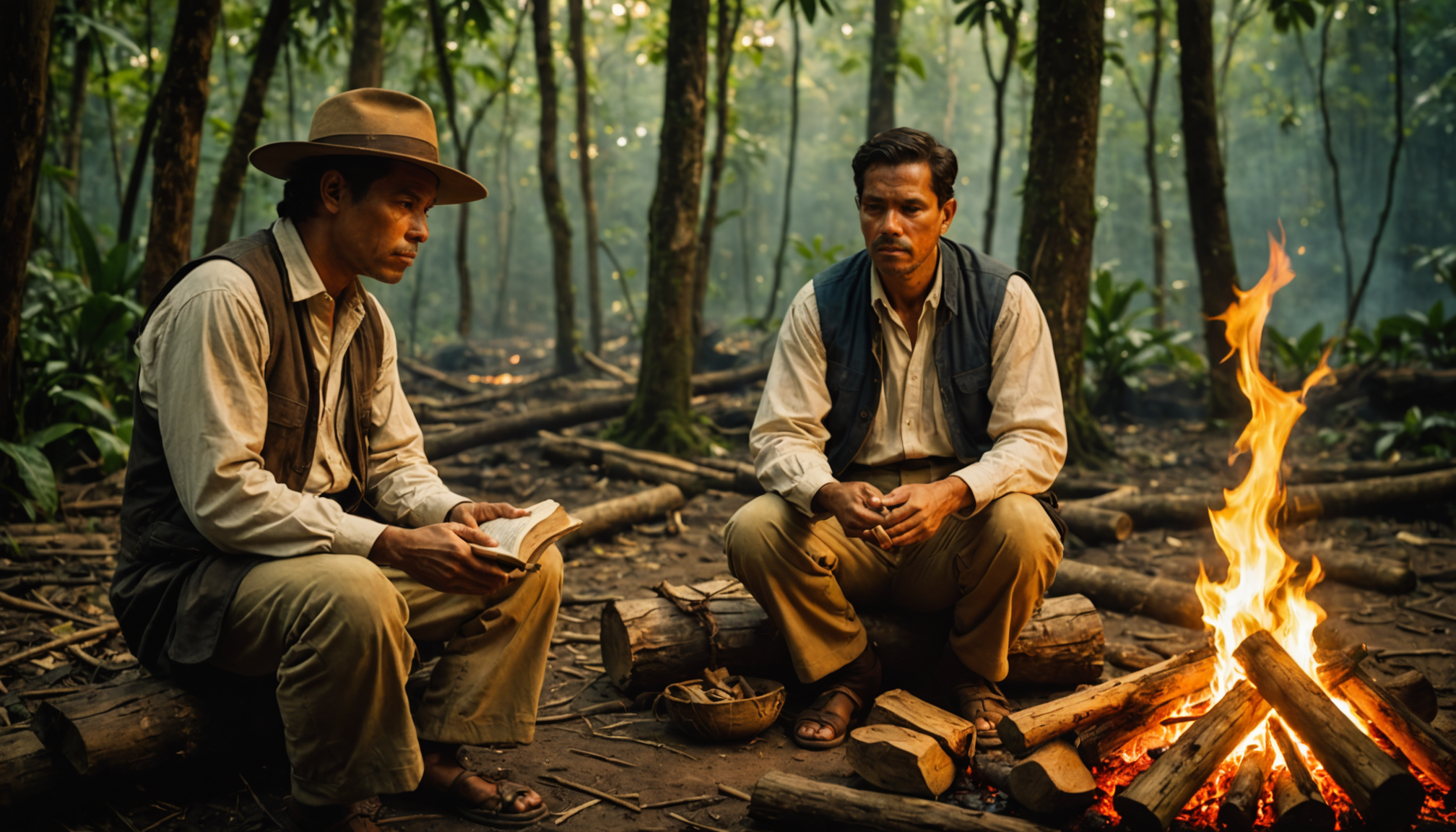 The interactions between Adventist missionaries and indigenous communities fundamentally transformed both groups in profound ways. Through evangelistic efforts, missionaries discovered that successful ministry required far more than mere preaching – it demanded genuine cultural exchange and mutual respect. Native communities often became teachers themselves, showing missionaries sustainable ways of living off the land and understanding natural medicine.
Many indigenous groups integrated Adventist health principles with their traditional healing practices, creating unique hybrid approaches to wellness. The establishment of schools in tribal areas led to unprecedented literacy rates, with children learning to read in both their native languages and the national tongue. These educational centers became cultural bridges, preserving local traditions while providing access to modern knowledge.
Literature evangelism took on new forms as indigenous converts adapted biblical stories into their own oral traditions. In the Amazon, native Bible workers developed innovative methods of sharing scripture through traditional storytelling formats, while Pacific Islander converts incorporated biblical themes into their ceremonial dances. These adaptations demonstrated the flexibility and resilience of both missionary work and indigenous cultures.
The impact extended beyond spiritual matters into practical life changes. Indigenous communities that embraced Adventist principles often experienced significant improvements in:
- Community health outcomes through preventive medicine
- Agricultural sustainability using combined traditional and modern methods
- Educational achievement across multiple generations
- Women’s empowerment through literacy and leadership programs
Bible workers from indigenous backgrounds emerged as powerful agents of change, understanding intimately how to present biblical truths within their cultural context. Their success demonstrated that effective mission work wasn’t about replacing local culture but rather enriching it through thoughtful integration of Adventist principles.
These partnerships with indigenous communities continue to influence modern foreign missions, establishing models of cultural respect and mutual learning that characterize contemporary Adventist outreach worldwide.
Beside our live streamed church services, all are welcome to attend our church in person each Saturday beginning 10:00 AM Central Time by going to 2425 Owens Rd., Ashland, AL 36251. There is no cost and any donations are strictly voluntary.
For questions, call +2563547124.