Come join Ashland Sabbath Chapel Ministries each Saturday for live streamed church services. Bible Study begins at 10:00 AM Central Time and Sermon at 11:00 AM. Visit Our YouTube channel and watch from home!
My dear friend, you need not torment yourself with visions of grand gymnasiums and fearsome contraptions to enjoy the blessings of healthy living. A body is not made useful and cheerful only by heroic exertions, but by little habits repeated with a quiet steadiness. Think of movement as you would of good conversation: frequent, natural, and suited to the company you keep, rather than stiff, formal, and saved for rare occasions.
First, let us contrive to rise from our chairs more often, for it is the prolonged sitting that does us particular mischief. Modern physicians assure us that breaking up long periods of sitting with even a few minutes of light walking improves blood sugar and circulation, and may lower the risk of early death, regardless of one’s more formal exercise habits (see Katzmarzyk et al., 2019; Ekelund et al., 2016). This is wonderfully convenient, for standing and strolling are within almost everyone’s reach. Set a small household rule: each hour, you must either fetch a glass of water, put away some object that has strayed, or step outside to survey the weather. In ten or twelve such interruptions of idleness, you may acquire twenty to thirty minutes of additional movement without once tying a shoelace.
Do not imagine, however, that movement must be dreary duty. Let it be entertained under the guise of pleasure. If ever there was a collection of practical life hacks for the body, it is this: fasten motion to something you already enjoy. Should you be enamored of music, decree that you must dance to the chorus of one favorite song each day. Research suggests that even moderate dancing contributes to heart health and reduced mortality (Merom et al., 2016), yet to those who practice it, it feels more like celebration than exertion. Likewise, if you are fond of talking with a friend, transform your visits into walking meetings, pacing gently through the neighborhood or even simply around the house, gathering steps as you gather news.
To make daily movement simple, shrink your expectations until they are impossible to refuse. A splendid trick is what some call the “one-minute rule.” Promise yourself only one minute of activity: one minute of strolling after a meal, one minute of stretching before bed, one minute of marching in place while the kettle boils. Once commenced, you may continue longer if you feel so disposed, but you are not required to do so. Behavioural scientists find that lowering the barrier to beginning a task greatly increases the likelihood that it will be done at all, and over time these small starts accumulate into real change (Fogg, 2019).
You may find it helpful to weave movement into the steady rhythm of your day, attaching it to existing habits in a most domestic fashion:
- After you brush your teeth in the morning, perform ten gentle sit-to-stands from a sturdy chair.
- Whenever you wait for water to boil, circle the kitchen or perform heel raises at the counter.
- On every telephone call, stand up or pace the room instead of remaining seated.
- Each time you finish a cup of tea, refill both the cup and your steps with a brief walk about the house or garden.
These modest additions ask for no special clothing, equipment, or journey, which leaves you with fewer excuses to decline them. Over weeks, such seemingly trivial efforts foster improved strength and endurance; studies show that frequent short bouts of movement can contribute meaningfully to cardiovascular health and improved glucose control (Dunstan et al., 2012).
Strength, too, need not be pursued with grim earnestness among iron contraptions. Your own body is quite a convenient weight. When you rise from a chair without using your hands, you are quietly practicing a squat; when you press yourself away from a countertop, you are performing a genteel push-up. Try sprinkling these efforts throughout your day:
- Whenever you approach a chair, sit and stand five times before you finally settle.
- While you await the oven’s readiness, place your hands upon the counter and do a few inclined push-ups.
- During a pause in your evening entertainment, step sideways along the length of the sofa and back again several times, as if engaged in a tiny country dance.
These little applications of strength help maintain muscle and bone, which are essential to independence and vitality as we age (Wolff et al., 2020). No one will suspect you of training like a cavalry officer; they will only observe that you move with increasing ease.
Let me also encourage you to walk after meals, whenever circumstances allow. A brief stroll of ten to fifteen minutes after eating can aid digestion and help regulate blood sugar (Ludwig et al., 2018). It is a most civilized custom: you air your thoughts, your limbs, and perhaps your companion, all at once. If the weather withstands you and the outdoors is disagreeable, march the corridors of your home, or tread in place near a window, looking out upon the world you are not yet disposed to visit.
Of equal importance is treating movement as an ally to your mind, not merely a sculptor of your figure. Regular physical activity is strongly linked to reduced anxiety and improved mood (Chekroud et al., 2018), and I dare say many a quarrel might be preserved from excess if its participants took a brisk walk before they answered one another. When vexed, take yourself into motion; walk until your thoughts loosen, or stretch until the sharpness of your feelings softens a little. In this way, your simple daily movement becomes not only a contributor to wellness, but also a gentle guardian of your temper.
Above all, be kind in your expectations and patient in your progress. Ten minutes of movement performed most days will do you infinitely more good than an hour-long campaign attempted once a fortnight and then abandoned in despair. Researchers find that even modest amounts of light to moderate activity, accumulated over the day, meaningfully reduce the risk of many chronic diseases (Physical Activity Guidelines Advisory Committee, 2018). So each step, each stretch, each brief household circuit is a quiet vote cast in favor of your future self. Keep those votes frequent and unpretentious, and you shall discover that daily movement, far from being a burden, slips into your routine as naturally as conversation, and with equal power to enliven the day.
Balanced eating on a budget

Now since the body has been persuaded to move, we must consider how to furnish it with provisions, and here, my friend, the world has done you a particular disservice. One would think from the advertisements that healthy living demands exotic berries, powders stamped with mysterious symbols, and meals assembled with the precision of an engineer. In truth, the simplest foods, bought and prepared with a little cunning, will serve your health and your purse far better than most of these gaudy contrivances.
Begin by giving your allegiance, as far as you are able, to foods that look as if they might once have grown, walked, or swum: whole grains, beans, fruits, vegetables, modest portions of meat or fish, nuts, seeds, and plain dairy. Diets that lean heavily on these “whole” foods and lightly on the packaged curiosities are consistently linked with lower risk of heart disease, diabetes, and early death (Schwingshackl et al., 2017; Satija et al., 2016). This is tremendously good news, because such foods are often the cheapest items in the market, provided we are willing to accept them in their more humble forms.
Consider the difference between a sack of oats and a box of sugared cereal. The former offers a week’s worth of hearty breakfasts at a trifling cost, with fiber to steady your blood sugar and keep you satisfied (Reynolds et al., 2019). The latter, though dressed in bright colors, is little more than sweetened air. In like fashion, a bag of dried beans or lentils costs less than a single fashionable coffee, yet yields several pots of nourishing meals rich in protein, iron, and other useful minerals (Afssa, 2007). If you were searching for genuine life hacks in the domain of food, you could scarcely do better than to befriend oats, beans, and frozen vegetables.
Frozen vegetables, by the way, are not a moral compromise, but rather a most sensible economy. They are often picked and frozen at their peak, retaining nutrients quite respectably, and they require none of the washing, trimming, and rapid consumption that fresh produce demands (Rickman et al., 2007). When you find a bag of broccoli, mixed vegetables, or berries on sale, you are not merely buying food; you are purchasing future convenience. On evenings when you are weary and tempted by costly takeout, that bag in your freezer will stand between you and both extravagance and indigestion.
To keep your spending under gentle discipline, it is helpful to establish a short list of “household staples” that are nearly always present in your kitchen, and then build your meals chiefly from these. For example:
- Oats or another whole grain (rice, barley, or whole-wheat pasta)
- Dried or canned beans and lentils (black beans, chickpeas, split peas)
- Eggs, which are a remarkably affordable and nutritious source of protein (Rutherfurd‑Markwick et al., 2018)
- Frozen vegetables and some long-keeping fresh ones (carrots, onions, cabbage, potatoes)
- Seasonal fruit, especially those sold by the bag rather than the dainty plastic punnet
- Plain yogurt, which can serve as breakfast, snack, or sauce with a little doctoring
Once these pillars are in place, you need only add whatever on-sale items the market offers each week, and your table will be both varied and economical. A pot of lentil soup with carrots and onions today becomes lentils over rice tomorrow, and perhaps a filling for wraps the next day, with the addition of a few spices and a squeeze of lemon or vinegar. In this way, you have three days of quite respectable eating from one modest batch, which is far kinder to your budget than beginning anew each evening.
Meal planning, a phrase that sounds dreadfully formal, can in practice be disarmingly simple. Rather than composing a great manifesto of recipes, you may merely decide on a few broad structures for the week. For instance:
- One pot meal (soup, stew, or chili)
- One “beans and grain” supper (such as rice and beans with vegetables)
- One egg-based meal (frittata, omelet, or scrambled eggs with vegetables)
- One “baked tray” meal (vegetables and potatoes with a little sausage or chicken, roasted together)
- One easy pasta with tomato sauce, lentils, or vegetables
Having such a pattern does more than simplify shopping; it protects you from the expensive panic of last-minute decisions. Research on household food spending suggests that unplanned purchases and impulsive takeout are among the chief culprits in budget overruns (Cappellini & Parsons, 2012). When you know that Wednesday is “egg night,” you are less likely to surrender to the entreaties of delivery menus. You may bore your cravings into submission simply by having an answer ready before they begin their mischief.
Another friendly tactic is what I might call “deliberate repetition.” The modern world has suggested that every meal must be novel and Instagram-worthy, but the healthiest and most economical eaters often repeat the same simple breakfasts and lunches most days, saving their creativity for the evening or the weekend. There is a particular kindness in this regularity. If you decide that your default breakfast is oats with fruit and a scattering of nuts, and your default lunch is a bean-and-grain bowl with some vegetable and sauce, you are spared a dozen decisions and a good many dollars. Studies in behavioral nutrition show that reducing decision fatigue around food can support more consistent healthy choices (Neal et al., 2013).
As for snacks, your future self will thank you if you make it easier to choose those that align with both wellness and thrift. You might keep a bowl of fruit in plain view, and reserve the cupboard for items that require a little trouble to access. Cut-up carrots or celery in a jar of water in the refrigerator, a tub of plain yogurt, or a handful of nuts will satisfy hunger far better than many packaged curiosities whose main virtue is their marketing. Fiber and protein, taken in modest frequent doses, help control appetite through the day (Slavin, 2013), which means you will be less susceptible to expensive impulse purchases when you pass a bakery or vending machine.
You will also do well to treat beverages with suspicion, as they are subtle thieves of both health and coin. Sugary drinks are strongly linked to weight gain, diabetes, and heart disease (Malik et al., 2010), and they contribute remarkably little satisfaction for their cost. Water, humble as it appears, is the most economical and healthful drink for everyday use. If you find it dull, make it sociable by floating a few slices of lemon, cucumber, or apple, or by brewing a large pot of tea to drink hot or cold throughout the day. A reusable bottle filled at home is one of the quietest, most effective financial and health decisions you can make.
When resources are limited, you may feel that you must choose between the health of today and the bills of tomorrow, yet the evidence suggests that modest improvements in diet—even within tight budgets—can have meaningful effects on long-term health (Mozaffarian, 2016). This is not an invitation to perfection, but an encouragement toward direction. If your present habit is to purchase lunch out five days a week, and you replace two of those lunches with a simple home-prepared meal of beans, rice, and vegetables, you have not only saved money but likely improved your nutrition. Each such change is a vote, not for an imagined ideal version of yourself, but for a slightly better-fed, better-fortified one.
To keep your spirits up in this practical campaign, allow yourself a small, planned indulgence rather than a steady trickle of unplanned ones. Perhaps you designate one evening a week as your “fancy food” night, when you might buy a bit of good cheese, a particular fruit, or even a modest takeout meal. Knowing that such pleasures are scheduled helps you resist the random, often more expensive temptations that accost you on other days. In the language of psychology, this kind of planned flexibility tends to produce better long-term adherence than rigid restriction (Mann et al., 2007).
Finally, let me urge you not to confuse thrift with deprivation. The object is not to eat the fewest calories for the least money, but to secure the greatest nourishment your circumstances allow. A pot of vegetable-and-bean stew, served with crusty bread, is not a sacrifice; it is a feast in its own honest way. A bowl of oats with fruit and a spoon of peanut butter is not penance; it is a well-constructed breakfast that keeps you steady for hours. Build your meals so that they satisfy both hunger and enjoyment, and you will discover that frugality can be quite companionable with healthy living. Your table may be simple, but it can be unfailingly kind.
Stress-busting habits that last
Now, my dear, since your plate is sensibly arranged and your limbs are in motion, we must turn to that invisible mischief-maker who upsets everything from digestion to sleep: the steady drip of everyday vexations. One might suppose, from the way people speak of “self-care,” that relief from stress must be purchased in elaborate jars or found at the end of some distant retreat. Yet the habits that truly soothe the nerves and protect your wellness are much quieter, and—most conveniently—can be practiced without leaving your own sitting room.
Let us begin with your breath, for it is the one companion that follows you into every circumstance, however inconvenient. When the mind is agitated, the breath grows shallow and hurried; when the breath is slowed and deepened, the nervous system is invited to stand down from its alarms. Physicians have observed that slow, deliberate breathing—particularly when the exhale is slightly longer than the inhale—can reduce heart rate and blood pressure and calm the body’s stress response (Jerath et al., 2015; Russo et al., 2017). This is, I assure you, one of the most effective life hacks ever smuggled into so small a package.
Try, when your thoughts grow noisy, to sit upright and behave as follows: inhale gently through your nose while you count to four, pause for the briefest moment, then exhale through pursed lips or your nose for a count of six. Repeat this for a minute or two—no more is necessary. You need not close your eyes, adopt curious poses, or announce your intentions to the household. To any observer, you will simply appear thoughtful; only you will know that you are quietly instructing your nervous system to cease its theatricals.
Yet breath alone cannot conduct all the business of tranquillity. We must also attend to the constant clamor of obligations, which assault us in the form of messages, notifications, and tasks that breed overnight like rabbits. The mind, poor creature, tries to keep all of these in its immediate attention, and in doing so becomes thoroughly exhausted. Psychologists have long noted that when we ask memory to store too many uncompleted tasks, it continues to rehearse them in the background, a phenomenon known as the Zeigarnik effect (Baumeister & Masicampo, 2011). This is why worries so often recite themselves as you lie in bed, though you are too tired to perform a single item on their list.
A remarkably gentle cure is to give your concerns a home outside your head. Keep a small notebook, or even a slip of paper, where you can deposit anything that tugs upon your attention: an errand, a problem, a troubling thought. You are not required to solve it at once; you are only required to write it down. Studies show that simply forming a concrete plan for when and how you will address a task—“I shall telephone the dentist tomorrow at ten”—greatly reduces the mental noise surrounding it (Gollwitzer & Sheeran, 2006). In other words, your brain will stop shouting, “Do not forget!” if you prove that you have no intention of forgetting.
It may appear unromantic, but a short, daily “worry appointment” can be absurdly effective. Choose a small, consistent time—say, ten minutes after supper—during which you allow yourself to review your list, fret as much as you please, and decide on any simple next steps. Outside that brief audience, if an anxious thought barges in, you may dismiss it with, “You shall be heard at half-past seven.” This is not madness; it is the training of a very excitable puppy of a mind. Research suggests that such scheduled worry periods can reduce overall anxiety and make intrusive thoughts less disruptive (Borkovec et al., 1983).
You may also discover that your peace of mind is excessively dependent on a small, rectangular object that chirps, buzzes, and flashes at you throughout the day. Our devices, though extremely useful, are notorious disturbers of serenity. Frequent interruptions from phones and computers are associated with increased stress, reduced concentration, and poorer mood (Mark et al., 2015). It is no wonder you feel strained, when you are summoned as often as a fashionable physician and paid far less for your trouble.
Happily, you need not throw your phone into a pond; you have only to re-negotiate the terms of your acquaintance. Declare certain hours as “interruption-free,” during which notifications are silenced and the device is banished to another room. Even reserving the first and last thirty minutes of your day for device-free living can meaningfully soften stress and improve sleep quality (Exelmans & Van den Bulck, 2016). You might charge your phone outside the bedroom, relying on a modest alarm clock instead, so that you are not greeted each morning by a chorus of messages clamoring for attention before you have even greeted yourself.
Now, there is another matter upon which I must speak plainly: you are, I suspect, far kinder to others than you are to yourself. When a friend is overwhelmed, you counsel rest and gentleness; when you are overwhelmed, you prescribe more effort and harsher words. This double standard is most unhelpful. Research in self-compassion shows that treating oneself with the same patience and understanding one would offer a friend is associated with lower stress, less anxiety, and greater resilience (Neff, 2011). In short, kindness to oneself is not indulgence, but maintenance.
To cultivate this habit, try catching the particular phrases you murmur to yourself when plans go awry—“I am hopeless,” “I ruin everything,” and other colorful exaggerations—and consciously replace them with something more accurate and humane, such as, “This is difficult, but I am learning,” or, “Anyone in my situation would feel strained.” At first, this may feel unnatural, as if you are composing speeches for a stranger, but with repetition it becomes your mind’s new dialect. Over time, such quiet corrections can loosen the grip of perfectionism, which is a great ally of chronic stress and no friend at all to healthy living.
Another steadying practice lies in what has become fashionably termed “mindfulness,” but which you may think of simply as remembering to inhabit the present moment. Our minds are tireless travelers, forever racing toward future catastrophes or reviewing past embarrassments. Yet studies indicate that bringing attention back to the immediate experience—the feel of your feet on the floor, the warmth of the cup in your hands, the sound of the kettle—can reduce emotional reactivity and stress, and even alter the brain structures associated with attention and regulation over time (Keng et al., 2011; Hölzel et al., 2011).
You need not sit cross-legged for an hour to enjoy these benefits. Instead, choose a few ordinary activities—washing your hands, making tea, walking to the mailbox—and designate them as “anchor moments.” During these, you gently direct your full attention to the sensations at hand: the sound of water, the scent of soap, the clink of the spoon, the air on your face. When your mind wanders, as it certainly will, you escort it back with the tolerance you would extend to a small child. In this way, you sprinkle the entire day with tiny islands of calm, rather than reserving all your peace for rare vacations that vanish almost as soon as they begin.
Of greatest importance, perhaps, is your fellowship with other human beings. We are, to our very bones, social creatures, however much we may occasionally wish for solitude. Loneliness is not merely unpleasant; it is strongly linked to higher levels of stress hormones, increased risk of heart disease, and even earlier mortality (Holt-Lunstad et al., 2015). You may possess the most refined breathing exercises in the world, but if you never share your burdens with another person, your poor nervous system will remain perpetually overworked.
Cultivating connection need not resemble a grand society ball. You may simply resolve to send one sincere message each day—an inquiry after a friend’s health, a word of gratitude, or a small joke. You might schedule a weekly walk with a neighbor, a short telephone call to a sibling, or a quiet hour in the company of someone who can sit with you without attempting to fix you. Such modest rituals of companionship can be powerfully protective against stress, and they tend to be more restorative, and far less costly, than many of the entertainments we pursue in their place.
Finally, you may find it useful to adopt a small, end-of-day ritual to signal to your body that its duties are suspended until morning. The specifics matter little; the consistency matters a great deal. Perhaps you dim the lights, perform a few gentle stretches, note one or two things for which you are quietly grateful, and then place your notebook and pen where tomorrow’s cares may safely land. The practice of reflecting briefly on positive events has been shown to improve mood and reduce stress, particularly when done regularly (Emmons & McCullough, 2003). Think of it as closing the household ledgers of the day—acknowledging what has been done, forgiving what has not, and granting yourself permission to rest from the remainder.
These habits are not dramatic; indeed, they may appear almost too small to contend with the size of your responsibilities. Yet the evidence suggests that it is precisely such small, repeated acts that reshape how your body and mind respond to life’s demands. Breath by breath, list by list, cup of tea by cup of tea, you are teaching your system that, whatever disturbances the world may offer, you possess reliable ways to steady yourself. And once you have begun to feel more settled within, you will be far better prepared to address the great conspirator against calm that so often goes overlooked: the quality of your sleep, and what may be done to improve its character.
Sleep upgrades for better rest
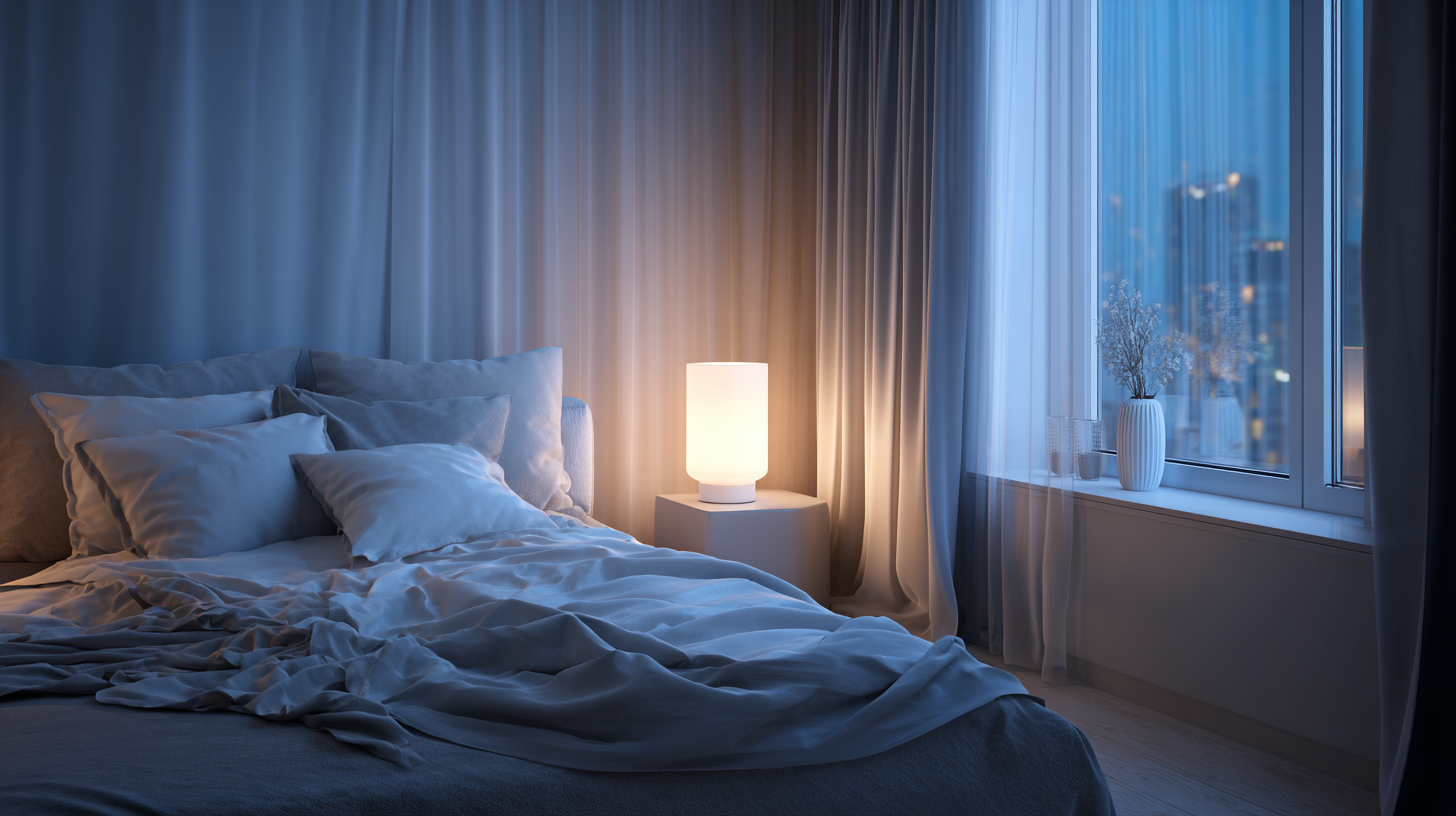
Now, my friend, we come to that nightly neglect which quietly undoes so many of your good intentions: the way you sleep—or rather, the way you do not. You may labor to move your limbs, arrange your plate wisely, and tend to your worries with some measure of order, yet if your nights are ragged, your days will be too. Modern physicians tell us that adults generally require seven to nine hours of sleep for sound wellness, and that persistent short sleep is linked to higher risks of heart disease, diabetes, depression, and even early death (Watson et al., 2015; Itani et al., 2017). This is a grave matter, but the corrections, happily, are often small, homely, and very much within reach.
Consider first that sleep is not a switch to be flipped, but a tide that must be coaxed. You cannot hurl yourself from bright screens and bustling conversation straight into peaceful slumber any more than you can drive a wagon at full gallop and expect it to halt at once. The body requires a predictable “coming down,” and it cherishes rhythm. Researchers have found that regular bed and rising times are strongly associated with better sleep quality, improved mood, and even healthier weight (Phillips et al., 2017). In plain terms, going to sleep and waking at roughly the same hours—yes, even on weekends—acts as a kind of internal conductor, signaling to every organ when to quiet and when to stir.
If your present habit is to retire at wildly different hours according to your whims or entertainments, do not attempt to reform yourself in a single night. Choose a bedtime and waking time that suit your station in life, then edge your schedule toward it by fifteen minutes every few days. The object is not perfection, but drift. Even a half-hour of greater regularity can improve how quickly you fall asleep and how refreshed you feel in the morning (Juda et al., 2013). Think of it as gradually turning the great ship of your habits, not jerking it about in a storm.
Now we must speak of light, that great governor of our inner clocks. The body was designed for bright days and dim nights, yet we spend much of daylight indoors and many of our evenings before luminous rectangles. This confuses the brain’s sense of time. Exposure to bright light in the evening suppresses melatonin—the hormone that signals “night is come”—and delays sleepiness (Cajochen et al., 2011). Meanwhile, too little light in the morning leaves your internal clock groggy and uncertain.
Here lies one of the simplest life hacks for better rest: court the morning light, and gently refuse the late-night glare. Soon after you rise, step outside if you can, or at least stand at a window where daylight falls fully upon your face. Ten to thirty minutes of natural light—more if the day is overcast—helps to anchor your internal clock, making it easier to feel alert by day and drowsy by night (Khalsa et al., 2003). If you must be indoors, draw back curtains, open blinds, and invite the day into your rooms as if it were a welcome guest.
In the evening, treat bright overhead lights as impudent intruders. Begin dimming your lamps an hour or two before bed. Favor small, warm-hued lights over dazzling blue-white bulbs. And if your eyes must fall upon a screen, at least reduce its brightness, enlarge the letters, and keep it at some distance. Studies show that evening use of bright screens—particularly held near the face—delays sleep onset and reduces evening sleepiness (Chang et al., 2015). You need not live as a hermit by candlelight; you must simply cease inviting noon into your bedroom at eleven o’clock at night.
We must next consider what I shall politely call “evening excitements.” Many a poor sleeper blames their pillows, their mattress, or the phase of the moon, while ignoring the coffee taken at four, the stimulating drama watched at nine, and the heated argument conducted in bed at ten. Caffeine, for instance, can linger in the body for six hours or more, and even when it does not keep you fully awake, it can fragment your sleep and reduce its restorative deep stages (Drake et al., 2013). A modest rule will spare you much trouble: in the afternoon, treat caffeinated drinks as you would noisy visitors—welcome in the earlier hours, but gently dismissed as evening approaches. Many find that setting a “caffeine curfew” six hours before bedtime markedly eases their way into sleep.
Similarly, though alcohol may appear to hasten slumber, it is a treacherous helper. It fragments the latter part of the night, suppresses deep and dream sleep, and increases awakenings (Roehrs & Roth, 2001). You may indeed fall asleep more quickly after a generous drink, but you are likely to wake in that fretful early-morning interval when worries are loud and solutions scarce. If you take wine or spirits, favor smaller quantities and earlier hours, allowing your body time to clear them before you expect it to rest.
Food, too, exerts its influence. A heavy supper eaten shortly before bed asks your digestion to labor at the very moment your body wishes to power down. Large, rich meals near bedtime are associated with reflux, discomfort, and lighter, more broken sleep (St-Onge et al., 2016). Try to finish your principal eating two or three hours before retiring, and keep any late snack modest—a small piece of fruit, a few nuts, or some plain yogurt, if hunger insists. In this way, your stomach is not appointed night watchman over a great feast.
Now let us arrange your sleeping quarters as one might arrange a sanctuary: simple, uncluttered, and devoted chiefly to rest. The body sleeps best in a cool, dark, and quiet environment. Temperatures somewhat lower than those of your waking rooms—often in the mid-60s Fahrenheit for many adults—tend to support deeper sleep (Okamoto-Mizuno & Mizuno, 2012). If your household is warm and cannot be otherwise, light bedding, a fan for air movement, and breathable fabrics will nevertheless assist.
As for darkness, be surprisingly strict. Even small amounts of light—such as a bright alarm clock or streetlamp glow—can slightly disturb the body’s rhythms and hormone patterns (Cho et al., 2016). If you cannot tame the intruding rays with curtains, consider a simple eye mask. It is a humble device, but many have found it remarkably potent in promoting more continuous rest. Noise, likewise, is best moderated. Where silence is impossible, a steady sound—such as a fan or simple white-noise device—can mask the irregular clatters that tend to rouse a light sleeper. These are not luxuries; they are small guards posted at the gates of your slumber.
There is another matter of some delicacy: the purpose for which you use your bed. If it serves as dining room, office, theater, and debate hall, it is small wonder that your body feels uncertain what to do when you lie down. Sleep experts often recommend making the bed a place for sleep and intimacy only, so that the mind comes to associate it with rest rather than rumination (Perlis et al., 2011). If you regularly lie awake in bed tossing and fretting, you are unfortunately training your brain to link that particular patch of mattress with wakefulness and worry.
A simple remedy is this: if you find yourself unable to sleep after what feels like twenty minutes or more, rise quietly, leave the bed, and sit somewhere dim and calm with a book or some other low-key occupation. When you grow drowsier, return to bed. This practice, called “stimulus control,” has been shown to improve insomnia by re-teaching the brain that bed equals sleep, not struggle (Bootzin & Perlis, 1992). You may need to repeat this several times at first, but in due season your body will catch the lesson.
I must also commend to you the gentle power of a “wind-down ritual.” Children are wisely given a sequence of baths, stories, and quiet cuddles before bed, which signal that the day’s tumult is ending. Adults often fling themselves into sleep without any such ceremony, then wonder why the mind will not instantly obey. A consistent, thirty-minute sequence before bed—kept simple and repeated nightly—can become a kind of liturgy for rest. Studies on behavioral approaches to insomnia highlight such routines as effective in easing the transition to sleep and reducing night-time awakenings (Espie et al., 2018).
Your own ritual need not be elaborate. You might dim the lights, make a cup of non-caffeinated tea, perform a few slow stretches, wash your face with deliberation, and read a few pages of a gentle book—not one filled with suspense or controversy, but something that allows the mind to idle. You might jot a few thoughts in a notebook, especially any tasks that trouble you, so they are captured on paper rather than circling in your head. If you have a practice of prayer, Scripture reading, or quiet reflection, placing it here, at day’s end, can be most fitting; many find that lifting their concerns to God before sleep lightens the mind considerably (Koenig, 2012). The point is not what you do, but that you do roughly the same soothing things in the same order, until your body recognizes, “Ah, now we are approaching rest.”
You may have noticed that anxious thoughts are particularly fond of the night, when the world is quiet and your customary distractions are removed. In those hours, every inconvenience looms like a catastrophe. There is good sense, then, in preparing answers for your night-mind before darkness falls. Earlier in the evening, you might take five minutes to list the following: what went reasonably well today; what must be done tomorrow (in a short, realistic list); and any pressing worries, each followed by one small next step you can take. This practice of “constructive worry” has been shown to reduce night-time rumination and shorten the time it takes to fall asleep (Carney et al., 2010).
Then, when you awaken at two in the morning with your mind in uproar, you can gently reply, “I have already met with this concern; it has an appointed place in tomorrow’s work.” You are not pretending the problem does not exist; you are declining to let it conduct an unauthorized meeting at an unreasonable hour. If the thoughts will not subside, a brief breathing practice—like the slow, extended exhale we considered earlier—can help calm the body enough to let sleep return.
Do not overlook the role of movement in the matter of sleep. Regular daytime activity, especially earlier in the day, helps to consolidate night-time rest. People who engage in moderate exercise most days tend to fall asleep faster, sleep longer, and report better-quality rest (Kredlow et al., 2015). You need not run as though pursued; even brisk walking, performed consistently, appears to benefit sleep. But in this, timing matters. Vigorous exertion in the last hour or two before bed can leave some individuals too stimulated, like a child romping just before story time. Favor your more energetic efforts for earlier hours, and reserve the evening for gentler stretching or leisurely strolling, if any movement at all.
Nor should we neglect the influence of the mind’s attitude toward sleep. Some poor souls become so preoccupied with obtaining “perfect” rest that they lie awake fretting over the number of minutes remaining before their alarm, counting each lost moment as a blow against their health. This anxious vigilance is itself a chief cause of their trouble. Cognitive approaches to insomnia encourage a more relaxed stance: accepting that sleep varies naturally from night to night, and that a single poor night is an inconvenience, not a disaster (Harvey, 2002). When you find yourself catastrophizing—“If I do not sleep at once, tomorrow will be ruined”—you may quietly answer, “I have managed many days on less sleep before; my body is capable, and I shall rest again soon.”
If, despite your best efforts with these homely measures, your nights remain persistently poor for weeks or months—if you snore loudly, stop breathing at times, kick violently, or feel irresistibly sleepy by day—you must not accept it as your lot. Conditions such as sleep apnea and restless legs are common and treatable, and their consequences for heart, mood, and thinking are too serious to ignore (Peppard et al., 2013). In such cases, seeking the counsel of a competent physician or sleep specialist is not indulgence; it is an essential act of healthy living, akin to repairing the roof before the rains. No amount of chamomile tea will correct a disorder which demands more specific intervention.
When you begin to honor your nights with even a fraction of the care you devote to your days, you will likely find that many other improvements follow of their own accord. Mornings feel less like battles; irritations that once unseated your temper pass with less commotion; cravings for sugar and stimulants grow quieter; your body responds more readily to the good food and movement you have so diligently supplied. Because sleep repairs the brain’s circuits for mood, memory, and appetite, better rest often amplifies the benefits of all your other efforts (Walker, 2017).
So do not think of sleep as idle time stolen from productivity, but as the quiet workshop where the fruits of your labor are polished and preserved. By regular hours, wiser handling of light and stimulants, thoughtful evening rituals, and a bedroom arranged for slumber rather than spectacle, you grant your body the deep nightly repair for which it was fashioned. And once your nights have grown more peaceful, you will be better equipped to meet the coming day with a clear mind and a steadier heart, ready to shape your waking hours with the same simplicity and intention, gathering your scattered attention into mindful routines that nourish not only the body, but the very thoughts with which you meet the world.
Mindful routines for mental clarity
If the earlier practices of movement, nourishment, stress-taming, and sleep are the sturdy furniture of healthy living, then the way you use your attention is the arrangement of the whole room. You may possess the finest habits and yet derive little benefit if your mind is perpetually elsewhere—rehearsing old conversations, anticipating disasters, or skimming distractedly over your own life as though it were the dullest of newspapers. Mental clarity is not merely an inborn gift granted to a fortunate few; it is, to a remarkable degree, the result of quiet, repeatable routines that teach your attention where to rest and how to return when it has strayed.
Begin with the simplest of all mental practices: noticing what your mind is doing. For many people, thoughts drift and collide all day without any observation, like a crowd of unruly guests at a party where the host has gone missing. Several times a day, pause for ten slow breaths and inquire of yourself, “Where is my attention?” Do not scold your mind if you find it wandering; merely label its preoccupation—“worrying about money,” “replaying an argument,” “imagining the future”—and then escort it back to a simple anchor such as the feeling of your feet on the floor or the rise and fall of your chest. Studies in mindfulness training suggest that this basic cycle of noticing, labeling, and returning improves attention and emotional regulation over time (Keng et al., 2011). It is one of the most powerful mental life hacks precisely because it is so small and so endlessly repeatable.
Many people protest that their lives are far too busy for meditation, as if mental stillness could only be pursued in distant monasteries by persons in special garments. You need no robes, no incense, and certainly no mountaintop. A modest “one-minute observation” practice, tucked into the corners of your day, can serve you just as well. Choose a recurring cue—such as washing your hands, waiting for the kettle, or sitting down to a meal—as your signal to practice. For that single minute, direct your full attention to what you are sensing: the temperature of the water, the scent of the soap, the sound of the spoon against the mug, the colors on your plate. When your mind wanders (which it assuredly will), recognize this without irritation and gently bring it back. Over days and weeks, these tiny, repeated acts of intentional presence begin to clear the mental fog that constant distraction produces.
You might also experiment with giving each day a brief “opening ceremony,” so that your mind does not tumble headlong into its responsibilities in a state of confusion. Within the first half-hour of waking, sit with a piece of paper and ask three deliberate questions: “What is truly important for me to attend to today?” “What can politely wait?” and “What one small act would make me quietly proud by evening?” Write your answers as short, concrete tasks rather than lofty wishes—“call my mother,” “walk outside for ten minutes,” “finish page three of the report.” Such prioritizing practices help reduce decision fatigue, clarify purpose, and protect your attention from being entirely commandeered by the loudest demands rather than the most meaningful ones (Baumeister et al., 1998). You are not merely organizing your time; you are training your mind to distinguish between the urgent and the important.
Equally helpful is an “attention budget,” for your capacity to focus is not infinite any more than your funds are. Decide in advance how you will spend some of your finest mental currency. You might assign two or three specific windows in the day as “deep-focus” periods of 25–45 minutes, reserved for thought-intensive work or study. During these, silence unnecessary notifications, clear your desk of tempting distractions, and keep only the tools you require immediately at hand. A simple timer can serve as both guardian and encourager: you are not promising eternal concentration, merely a short, protected interval. Research on focused work intervals—sometimes called the Pomodoro technique—suggests that such bounded sprints can improve productivity and subjective clarity, especially when interspersed with brief, genuine breaks (Cirillo, 2006; Pencavel, 2015). If you have never granted yourself the gift of undivided attention, you may be astonished to discover how much calmer and more capable you feel after even one such session.
But clarity is not only a matter of how long you attend; it also depends on what you choose to admit into your mental space. Many of us attempt to think clearly while our environment is shouting. Every surface is cluttered, our phones fling headlines and arguments at us, and our minds try to hold a dozen unfinished tasks at once. Here you may employ a humble but potent routine: the “five-minute clearing.” Once or twice a day, set a timer and spend exactly five minutes restoring a small area to order—your desk, your bedside table, or the corner where you often sit to read or think. Remove obvious rubbish, put away stray items, and arrange what remains so that it pleases your eye. Studies show that visual clutter can tax working memory and increase perceived stress, whereas orderly spaces often support better focus and calmer mood (Vohs et al., 2013). When you sit down to think in such a cleared spot, you are not fighting your surroundings for peace.
Another subtle thief of clarity is the constant diet of information we consume without discrimination. If you begin each morning by plunging into a whirlpool of news, commentary, and minor quarrels, you invite the concerns of the entire globe to crowd your internal landscape before you have even checked in with your own soul. Consider a simple experiment: for the first hour of your waking, abstain from news and social media altogether. Instead, use this time for practices that turn your attention inward and upward—quiet reading, prayer, journaling, a short walk, or simply sitting in silence with your thoughts. Many report that such a “quiet first hour” reduces anxiety and improves their ability to think clearly for the rest of the day (Heaney, 2019). Ask yourself: whose voice do you wish to hear first each morning—your own, God’s, or the collective shouting of the world?
Speaking of God, those who cultivate a steady habit of prayer, Scripture reading, or other spiritual reflection often discover that their minds grow more ordered, not less. This is not because life becomes magically simpler, but because such practices give the heart a fixed point from which to view its difficulties. When you regularly set aside a few minutes to acknowledge your dependence upon something greater than yourself, to confess your confusion, and to seek wisdom, you shift from carrying your burdens alone to sharing them. Studies in religious and spiritual practices suggest associations with lower levels of anxiety and greater sense of meaning, both of which contribute to clearer thinking under pressure (Koenig, 2012). Whether you sit with a Psalm, whisper a brief prayer, or simply reflect upon the day in the light of eternity, you are giving your mind a larger framework in which to interpret its troubles.
Journaling, too, can be an unexpectedly sharp instrument for cutting through mental haze. When worries and ideas remain only in your head, they tend to blur together and repeat themselves endlessly. By writing them down, you give each thought a definite shape and a place to sit. You need not compose elegant essays; bullet points and half-sentences will do. A daily “brain dump” of ten minutes—listing tasks, naming feelings, sketching out decisions—can diminish rumination and increase problem-solving clarity (Pennebaker & Smyth, 2016). Over time, the very act of putting pen to paper before bed or upon waking becomes a signal to your mind that it is permitted to sort itself rather than remain an indistinct tangle.
Do not neglect the role of your body in all this. Clear thinking is an embodied state, not a purely mental trick. Dehydration, hunger, and long hours of sitting in stale air make your thoughts sluggish and irritable, much as poor oil and clogged filters hinder a fine machine. When you feel foggy, ask first: “Have I eaten something nourishing in the last few hours? Have I drunk water? When did I last move?” A short walk, a glass of water, and a modest snack of protein and fiber often do more for clarity than another hour of glaring at the same problem. The practices described earlier—steady movement, balanced eating, and sufficient sleep—are not merely health recommendations; they are the very soil from which mental clarity grows.
You may wonder whether you are too old, too scattered, or too long accustomed to distraction to benefit from such routines. Research into neuroplasticity—the brain’s ability to change throughout life—suggests otherwise. Even brief, regular attention-training practices have been shown to improve working memory, reduce mind-wandering, and enhance cognitive flexibility across a wide range of ages (Tang et al., 2015). Your brain, in other words, is far more teachable than you may suppose. Each time you gently bring your attention back from its wanderings, you are, in a literal sense, shaping the physical pathways by which your future thoughts will travel. Will you allow your mind to be carved chiefly by advertisements, arguments, and anxieties, or will you take a more active hand in its design?
Finally, let me encourage you to adopt a short “evening review,” not as a tribunal where you condemn yourself, but as a kindly audit of the day’s attention. Sit quietly with your notebook and ask: “Where did my mind dwell today? Did I spend more time reacting than choosing? What, if anything, felt especially clear or meaningful?” Jot a few observations without judgment. Then, select one small adjustment for tomorrow—perhaps a device-free meal, an extra five minutes of morning quiet, or a deliberate pause before opening your email. Such daily micro-adjustments harness the power of tiny, continuous improvement rather than relying on grand resolutions that flare and fail. Over months, you may look back upon these pages and see the outlines of a different life emerging—not one free of difficulty, but one met with a mind that is steadier, sharper, and more deeply awake.
All these routines, though modest, ask you a profound question: who, or what, shall be the chief shepherd of your attention? Will you surrender it entirely to the loudest voices and brightest screens, or will you experiment with carving out small sanctuaries of clarity within each day? As you try these practices, notice which ones change not only how much you accomplish, but how you experience your own life. Let your curiosity lead you: if such small shifts can alter your thoughts and feelings this much, what else might become possible if you treated your mind as a precious instrument to be tuned, rather than a noisy room to be endured?
- How can I start a mindful routine if my schedule is already packed?
- Begin by slipping mindfulness into moments that already exist rather than adding entirely new activities. Choose one or two daily tasks—like brushing your teeth or making coffee—and use them as cues to pay close attention to your senses and breath for just one minute. Over time, you can expand these islands of attention without feeling that you’ve added yet another chore.
- Do I need to meditate for a long time each day to see benefits for mental clarity?
- Length matters far less than consistency. Even 5–10 minutes of simple, focused-breath or body-awareness practice most days can gradually improve focus, reduce reactivity, and support overall wellness. Think of it as regular training for your attention rather than a heroic, once-in-a-while effort.
- What should I do when my mind keeps wandering during mindfulness exercises?
- Wandering is not a failure; noticing the wander and returning is the actual exercise. When you catch your mind drifting, gently label what it’s doing—“planning,” “worrying,” “remembering”—and bring your attention back to your chosen anchor, such as the breath or bodily sensations. Each return is like a repetition in strength training, quietly building mental discipline.
- Can mindful routines really help with anxiety and racing thoughts?
- Mindful practices teach you to observe thoughts and feelings without immediately believing or obeying them. Over time, this creates a bit of space between stimulus and response, so worries feel less overwhelming and you can choose more deliberate actions. Many people find that pairing mindfulness with simple breathing techniques noticeably softens racing thoughts.
- How do I stay consistent with mindful habits when I lose motivation?
- Keep the practices very small and tie them to existing routines so they require as little willpower as possible. It also helps to decide in advance which “non-negotiable” version you’ll do on hard days—perhaps just three slow breaths before meals—so you maintain continuity even when enthusiasm dips. Tracking your efforts in a tiny checklist or journal can also encourage you by making progress visible.
- Is it possible to be mindful while using technology and social media?
- Yes, but it requires clear boundaries and deliberate use. You might schedule specific times for checking messages, notice your body’s signals (like tension or fatigue) as you scroll, and pause to ask whether continuing aligns with your intentions for the day. Even a brief breath and posture check before opening an app can shift you from automatic to intentional use.
- What if mindfulness or journaling brings up uncomfortable emotions?
- Becoming more aware can surface feelings that were previously buried under distraction, which can be unsettling at first. If this happens, shorten your practice, focus more on bodily sensations than on detailed memories, and consider talking with a trusted friend, pastor, or counselor. Seeking wise support is not a sign of weakness; it’s a thoughtful extension of healthy living.
Beside our live streamed church services, all are welcome to attend our church in person each Saturday beginning 10:00 AM Central Time by going to 2425 Owens Rd., Ashland, AL 36251. There is no cost and any donations are strictly voluntary.
For questions, call +2563547124.