Come join Ashland Sabbath Chapel Ministries each Saturday for live streamed church services. Bible Study begins at 10:00 AM Central Time and Sermon at 11:00 AM. Visit Our YouTube channel and watch from home!
You know how some days your body just feels heavy, like you’re wading through wet sand? Regular physical activity cuts through that. When you move a little every day, your body starts to answer back. Your legs feel steadier. Your lungs open up. Climbing stairs stops being a small battle. It doesn’t happen overnight, but it happens faster than you think.
Think about your heart first. It’s just a tough little pump, beating away without applause. When you walk, jog, or ride a bike a few times a week, you train that pump. Over time, your resting heart rate drops. Your blood moves easier. Your blood pressure eases down. The heart doesn’t have to work as hard to get the job done. It’s like taking a load off a tired worker and giving him better tools.
Your lungs come along for the ride. At the start, you might feel winded after a short hill. Keep at it for a few weeks, and that same hill doesn’t scare you anymore. Your body learns to use oxygen better. You breathe deeper and smoother. This is why people who make movement a habit can walk briskly, talk, and still feel in control. Their bodies have adapted; they’ve built up real, earned fitness.
Muscles change too, in quiet ways. Even small things, like doing push-ups against the kitchen counter or squats while you wait for the coffee, send a message to your muscles: stay strong, stay ready. Over time, you build strength without turning into a bodybuilder. You notice that hauling groceries, shoveling snow, or lifting a suitcase isn’t such a strain. Your joints feel more supported because the muscles around them carry more of the work.
Then there are your bones, the slow, stubborn part of you. They seem fixed, but they’re not. When you walk, especially on uneven ground, or do light strength work, tiny stresses tug at your bones. Your body reacts by making them denser and tougher. This matters as you get older, when falls become risky and bones can break easier. Regular movement now is like putting money in the bank for later years, when balance and sturdy bones mean the difference between a scare and a serious problem.
Weight control is another quiet gain. You don’t have to chase some perfect number on a scale. That’s not the point. When you move your body more, you burn more energy, even after you’re done. Your body becomes better at handling the food you eat. Instead of storing so much as fat, it uses more for fuel. Maybe your pants fit better. Maybe your belt tightens one more notch. These are small victories, but they feel good because they’re real.
Your posture and balance start to improve too, often without you noticing. Sitting all day makes the body fold in on itself. A few simple movements—walking with purpose, stretching your chest, strengthening your back and legs—pull you upright again. You stand taller, move smoother, and feel more sure on your feet. This lowers the chance of falls and clumsy injuries, especially when you’re tired or distracted.
Pain is another place where movement can help, especially that slow ache in your back or knees. It sounds backward, but gentle, regular motion can ease a lot of nagging pain. When you stay still, everything tightens. Blood flow slows. Joints stiffen. A bit of daily walking, some careful stretching, a few easy strength exercises—done consistently—can loosen stiff spots and bring more blood, and more healing, to the places that hurt.
There’s also the simple fact that moving more makes everyday life less of a struggle. Carrying laundry up the stairs, playing on the floor with kids, working in the yard, standing in long lines—none of it wipes you out as quickly when your body is used to movement. It’s not about training for a marathon. It’s about making ordinary days feel lighter, so you have more energy left for the things you actually care about.
All of this stacks up into better overall health. Your heart, lungs, muscles, bones, joints, and even your metabolism start working together instead of fighting you. Once your body gets a taste of that, the next step becomes easier—using those physical gains to steady your mind and lift your mood, because the changes in your body don’t stop there; they reach right into how you think and feel.
Mental and emotional well-being
You’ve likely noticed that your thoughts feel different on the days you move your body. There is a kind of cloud that settles over the mind when the body is still too long. But when you stir yourself up with steady, honest physical activity, that cloud begins to thin. The mind, like the body, was never meant to rust in place. It was meant to work in harmony with muscles and lungs and heart, each part helping the other.
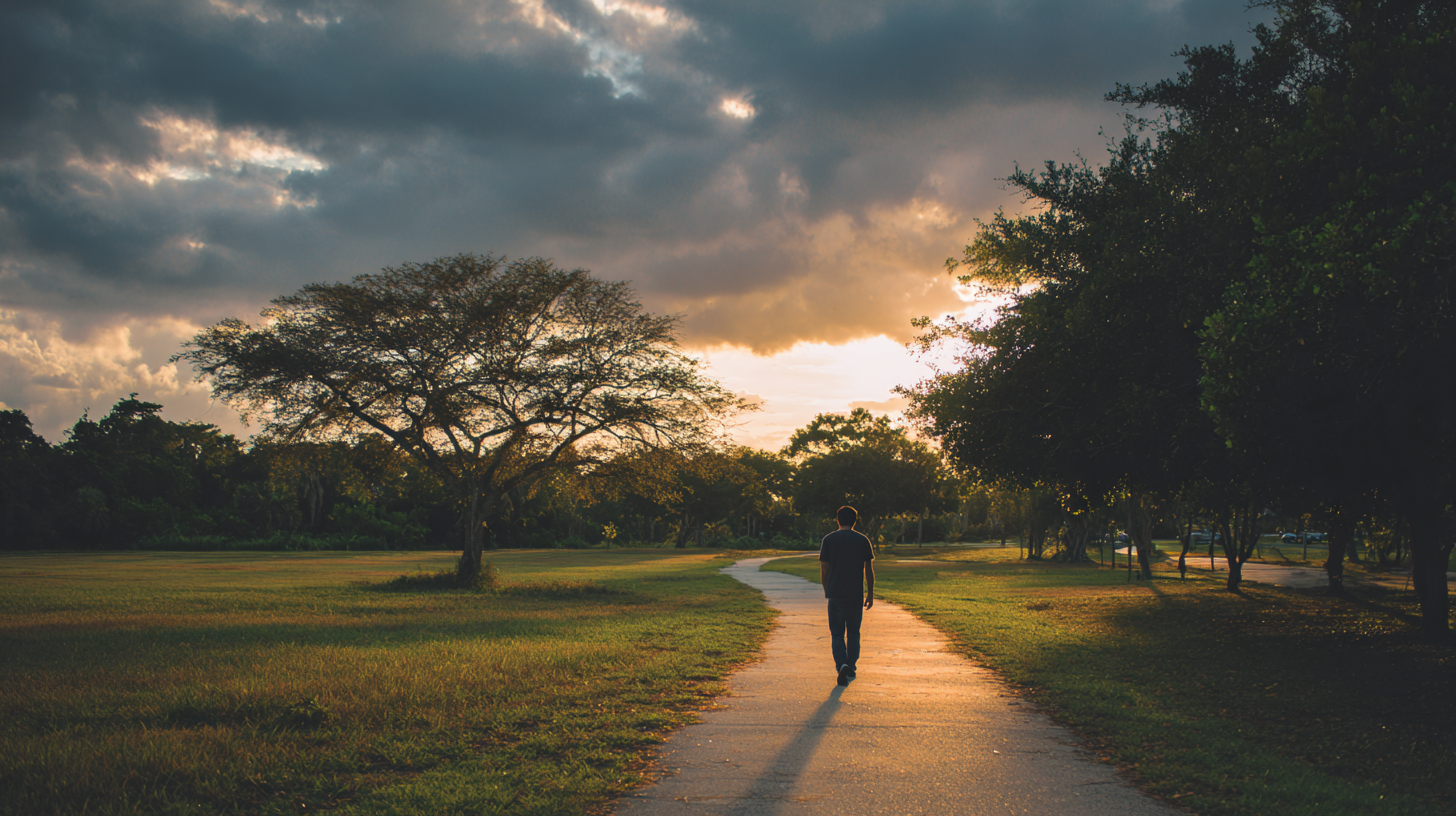
One of the first things that changes is the grip of worry. You may still have the same problems, the same stack of duties waiting on the table. But go out and walk with purpose for twenty minutes, arms swinging, lungs working, and see what happens. The troubles do not vanish, but they shift. They stand at a distance. Your thoughts loosen their hold on them. It’s as though, in moving your legs and arms, you have also moved your anxious thoughts from your chest out into the open air where they cannot press so heavily.
This is not imagination. When you move, your brain begins to release chemicals—little messengers of calm and courage. People call them “feel-good hormones,” but that sounds too light. They are more like faithful helpers, sent by your Creator to steady the nerves and brighten the spirit when the body is used as it was designed. A brisk walk, a simple bike ride, a few rounds of climbing stairs—these common, humble acts are often more helpful to the heavy heart than another hour sunk in a chair, turning worries over and over.
You’ve likely had days when your thoughts felt scattered, jumping from one thing to another like a bird startled from branch to branch. On such days, it can seem almost impossible to stay with a task or finish a simple chore. Yet if you pause and go out for a walk, or stretch your limbs and get your blood moving, you may find that when you return, your mind sits more quietly in its work. Regular movement trains not only your muscles but your attention. A body that is used to motion bears a mind that can hold steady.
Think of a friend who has battled low spirits, who says, “I just can’t get going.” You may not be able to lift that burden for them, but you can invite them to move beside you. “Come, walk with me. Just around the block.” That invitation holds more power than it seems. Step by step, as the blood flows and the lungs fill, the mind begins to breathe as well. It is not that troubles disappear; rather, the heart gains strength to look them in the eye. Many a dark mood has started to crack simply because the legs agreed to move.
Sleep, too, is drawn into this circle of blessing. When you live in a state of quiet weariness but can never quite fall into deep rest, the next day’s mind is foggy and thin. Thoughts become sharp, irritations grow large, patience runs short. Regular, wholesome movement through the day helps clear the mind at night. The body, gently tired in the right way, rests more deeply. And from sounder sleep comes a calmer, steadier outlook. The connection is simple but often forgotten: better fitness makes room for better rest, and better rest makes room for a clearer, more hopeful mind.
There is also the way movement helps you step outside yourself. When you sit still too long, your own thoughts can crowd around you until you see nothing else. Every small concern becomes large; every slight becomes a story. But when you walk under the open sky, or move through a park, or even pace steadily along a quiet hallway, your eyes lift. You notice the trees, the sky’s color, the sound of your own breathing. Your mind, drawn out of itself, finds new room. The burdens inside shrink to their proper size when measured against the world outside.
Another change comes in how you see your own life. Regular physical activity is one of the few things you can choose, day by day, that quickly shows its fruit. Maybe you start with ten minutes of walking and your mind is racing. After a week, you notice that by minute five, the thoughts begin to slow in their spinning. After a month, you realize that when a hard day comes, your first thought is not “I can’t handle this,” but “Let me go walk this off a little, then I’ll face it.” That is a quiet, powerful shift—from feeling overrun by life to feeling that you and your body together can answer back.
In this way, movement builds a kind of inner courage. You feel it when you finish a short session of exercise you did not want to begin. You stand there, breathing a bit harder, and you realize: “I kept my word to myself.” That simple victory strengthens the mind. Each small promise kept—each walk taken, each stretch completed—lays another stone under your feet. Before long, the ground beneath your thoughts feels firmer. You are less easily shaken, not because life is easier, but because you are more rooted.
There will be days when your mind is restless, your mood low, and your body unwilling. Those are the days when movement counts the most. You may not feel like walking; you may not feel like lifting your arms above your head, or rolling your shoulders, or bending and straightening your knees. But if you can persuade yourself to begin, even for a few minutes, you will often find that your thoughts begin to soften their edge. The heaviness may not flee entirely, but it lightens enough that you can carry it.
Mind and body are not enemies, nor are they strangers. They are companions on the same road. When you neglect the body, the mind bears the cost—dullness, anxiety, gloom. When you honor the body with steady, sensible movement, the mind reaps the reward—clearer thinking, calmer feeling, and a heart more ready to meet the day. And as your mental and emotional strength rises with your growing health, you will find yourself better prepared to guard against the deeper sicknesses that stalk our sedentary age, not only in the mind, but in the very organs and systems that keep you alive.
Disease prevention and longevity
Now, my dear friend, we must look more steadily at the quieter, graver gifts of regular physical activity—those which do not show themselves merely in looser clothing or easier staircases, but in the very chances you have of living long, and living well while you do it. It is not only that you feel better after a brisk walk; it is that such walks, repeated faithfully over the years, may keep you from the doctor’s waiting room, the hospital bed, and the narrow life that comes when illness has taken too much from you.
Consider first your heart and blood vessels, those silent servants that never once take a holiday. They work day and night, whether you honor them or abuse them. When life is mostly spent in chairs and soft cushions, fat and sugar creep into the bloodstream and make mischief there. Cholesterol rises, blood pressure climbs, and the arteries become stiff and narrow, like old garden hoses left too long in the sun. Yet when you move with purpose—walking briskly, cycling, dancing in your kitchen—your heart learns to pump more strongly and efficiently, and your vessels stay more supple. Large studies show that people who are regularly active cut their risk of heart disease and stroke by about a quarter to a third, sometimes even more for those who were very sedentary to begin with (Warburton et al., 2006; Lee et al., 2012).
These numbers may sound dry, but what they mean in real life is this: fewer sudden alarms in the night, fewer tight chests and racing trips to the emergency room, fewer long, slow recoveries that never quite return you to yourself. Instead of your heart being an anxious, overworked servant, panting through each day, it becomes a steady, reliable companion. Each walk, each modest effort, is like smoothing its path and lightening its load.
The same is true for your blood sugar, that sensitive measure of how kindly or unkindly you live. Our modern age, with its constant nibbling and long hours of sitting, has given rise to a flood of type 2 diabetes—a condition that creeps in quietly and then troubles eyes, kidneys, nerves, and heart for years. Yet the body is not without defense. When you move your muscles, they become hungrier for glucose and draw it out of the bloodstream more easily, with less demand on insulin. In many people, regular fitness—even simple walking for half an hour most days—can lower the chance of developing type 2 diabetes by about 30–40% (Knowler et al., 2002; Pan et al., 1997).
Imagine two versions of yourself, ten years from now. In one, your days are encircled by doctor’s visits and small, wearying rules: “Do not eat this; be careful of that; your numbers are not so good.” In the other, your meals are chosen with simple sense, your legs are accustomed to movement, and your blood tests come back with that quiet word “normal.” The difference between these two selves may rest not in great feats of athletic triumph, but in the plain decision to maintain a daily habit of movement.
Now look at the matter of cancer, that fearful word which has frightened so many families. No one can guarantee safety from it; we live in a world where such shadows fall without asking our consent. Yet researchers have observed, again and again, that people who are regularly active carry a lower risk of several common cancers, particularly of the breast and colon, and in some studies of the endometrium and lung as well (World Cancer Research Fund/American Institute for Cancer Research, 2018; McTiernan, 2008). The reduction is not small; for breast and colon cancer, it is often in the range of 20–30% for those who keep up steady physical activity compared with those who barely move.
Why should this be? Part of it has to do with hormones, those invisible currents that flow through the body. Regular movement helps keep levels of certain hormones—such as insulin and some forms of estrogen—within a healthier range, and this seems to make it harder for certain tumors to grow. Part of it has to do with inflammation, that slow internal “smoldering” which, when chronic, can encourage disease. Activity tends to damp down this smoldering, like gentle rain on a forest floor (Booth et al., 2012). Again, we are not speaking of punishing exercise or heroic marathons, but of modest, consistent motion—walks, gardening, light strength work—that keeps the body from sinking into too much stillness.
Then there is the matter of weight, which people discuss with far too much vanity and far too little common sense. Excess weight, especially around the waist, is tied to a whole society of ills—heart disease, stroke, diabetes, some cancers, joint problems, and more. You cannot control every influence upon your body, but you can choose to give it better odds. Regular physical activity helps keep your weight in a steadier range; it also improves how your body handles whatever weight you do carry, making high blood pressure, high cholesterol, and unstable blood sugar less likely (Ross et al., 2015). Even when the scale barely moves, people who move more tend to have healthier hearts and vessels than those who remain still.
As the years gather, another quiet threat appears: the thinning of bones and the weakening of muscles. Bones are like the old houses one sees in town—they stand faithfully as long as they are cared for, but if left too long without support, they begin to crumble. Without weight-bearing movement—walking, climbing, lifting, even carrying groceries—bones lose density and become prone to fracture. Muscles, too, fade when not used; the legs especially grow feeble, and with them goes balance. A simple slip on a rainy pavement becomes the beginning of a long decline.
Yet the body remains willing to respond, even in later years. Weight-bearing activities and simple resistance exercises—things as humble as rising from a chair without using your hands, or lifting light weights with your arms—can help maintain bone density and preserve strength (Kohrt et al., 2004). This does not merely prevent broken bones; it prevents the loss of independence that so often follows a major fall. To keep yourself strong enough to rise, to walk steadily, to carry out your own errands—this is no small victory. It is one of the finest gifts of continued health.
Nor should we forget the quieter diseases of the mind that may come creeping in with age—dementia and cognitive decline. No one yet has a perfect shield against them, but the evidence grows that those who are regularly active in midlife and beyond have a lower risk of such troubles later (Larson et al., 2006; Sofi et al., 2011). Movement seems to nourish the brain, encouraging better blood flow and the growth of new connections between cells. An active body keeps sending messages to the mind: “Stay alert; stay engaged; stay alive to the world.” In this way, walking may protect not only your legs but your very memories.
All these separate threads—less heart disease, less diabetes, lower cancer risk, stronger bones, sharper minds—are woven together into one larger pattern: longer life, and more life in your years. Studies that follow large groups of people over time have found that those who meet even basic activity guidelines—such as 150 minutes a week of moderate movement—tend to live several years longer than those who spend most of their time sitting (Moore et al., 2012; Wen et al., 2011). What is more, the benefit appears even at low levels; swapping a mere fifteen minutes of sitting each day for a bit of movement has been linked with living longer.
Yet it is not only the number of years that matters, but the character of them. You do not wish for a long life that is mostly spent in waiting rooms and sickbeds. You would rather have days where you can walk without fear, think without fog, and lift your own small burdens without calling for help. Steady fitness through the years makes it more likely that your later days will not be merely an extension of breath, but a continuation of real living—reading, visiting, working in your garden, kneeling to pick up a grandchild, rising again without struggle.
So when you tie your shoes for a walk, or decide to stand up and move rather than sink further into your chair, you are not only chasing a fleeting good mood or a little more energy for the afternoon. You are quietly voting for the kind of future you hope to inhabit. Step by step, you turn away from some of the great thieves of modern life—heart disease, diabetes, cancers, frailty, and confusion—and you turn toward a future in which your body remains a trusted ally instead of an early betrayer. That is the true dignity hidden inside this humble habit of daily movement: it guards not only your present comfort, but your very chances of living long, and living those years with as much strength, clarity, and grace as this mortal frame can reasonably hope to enjoy.
Social and lifestyle advantages

Now, friend, let us look at what regular physical activity does to the shape of your days, the pattern of your relationships, and the very way you spend your time. It is easy to think of movement only in terms of muscles and organs, of heart and lungs and bones. But once you make a habit of moving, you soon find that it reaches into your social life, your family life, your work, and even your use of money. It does not simply change how your body feels; it changes how you live among other people.
Think first of companionship. Our age is one of crowded cities and lonely hearts. Many sit in houses or offices, surrounded by others, yet hardly truly know anyone. When you take up steady movement—a daily walk, a weekly class, a small group that meets for simple exercise—you give yourself reasons to see the same faces again and again. Strangers on the walking path become familiar; a nod becomes a greeting; a greeting becomes a short word; in time, a short word may ripen into friendship. Shared effort has a way of drawing people together. Two people who walk the same hill week after week, puffing and laughing at the top, will not long remain strangers.
I have seen whole families changed by a simple decision: “After supper, we will walk together.” At first, the children grumble and the adults are tired. But after a few weeks, that daily round of the neighborhood becomes a kind of moving council. The day’s stories are told out under the evening sky. Troubles from school, questions about work, concerns about the future—all are spoken more freely while the feet keep time on the pavement. There is something about walking side by side, rather than sitting face to face, that makes it easier to speak the heart. In this way, regular movement becomes not merely a matter of health, but of family peace.
For some, a walking group or a simple community exercise class becomes a lifeline. The elderly widow who joins the “Tuesday morning walkers” suddenly has a reason to rise early and put on her shoes. The man who has left a life of heavy drinking may find that a group at the park, doing stretches and light calisthenics, gives him a circle of sober friends. This kind of shared fitness is no luxury; it is protection against isolation, which so often leads to discouragement and unwise habits. The body is strengthened, yes, but so is the sense that one belongs somewhere.
Consider, too, how movement alters the way you spend your leisure. Many modern amusements are built for stillness—screens, endless scrolling, long hours of passive watching. There is a dull comfort in these things, but it is the comfort of sinking into soft sand. When you begin to enjoy the feeling of your legs beneath you and the fresh air against your face, other kinds of rest open before you. A free evening might become a stroll through the park, a gentle ride on a bicycle, a game of catch with a child, or a ramble along a wooded path. Your recreation begins to restore you instead of draining you further.
Think of a common Saturday. One person spends it mostly in a chair, flicking from one show to another, snacking without thought, ending the day more tired than he began. Another spends part of that same day trimming the garden, walking to the market instead of driving, perhaps joining a neighbor to kick a ball around with their children. Both have “rested” from the week’s labor, but they do not arrive at Sunday in the same condition. The second carries into the new week a clearer mind, a lighter mood, and a body more ready for its duties. Over time, that difference accumulates until their lives look very different indeed.
There is also the matter of example, which we often count too lightly. When a child watches his parents, he is learning not only how to speak and how to work, but also how to live in a body. A parent who moves—who walks after meals, stretches in the morning, rides a bike to run a small errand—teaches without words that the body is meant for use, not for constant idleness. A parent who never rises from the chair unintentionally teaches that weariness is the natural state of grown people, and that to move is strange. Long after sermons and lectures are forgotten, these quiet lessons remain.
Imagine a household where physical activity is simply woven into the day. Perhaps there is a small box of simple equipment in the corner—a jump rope, a light ball, a pair of modest dumbbells. Perhaps, instead of always driving, there are short walks to the library, to the nearby store, to visit a neighbor. Over the years, such habits can keep children from growing up helpless in their own bodies, and can keep parents from becoming strangers to their own strength. Whole families rise and fall together in this matter.
At work, too, the fruits of steady movement show themselves. A person who keeps up regular activity often comes to his labor with more vigor and clearer thought. He is less easily exhausted by the long hours, less prone to that heavy mid-afternoon fog that sends the hand searching for more coffee or more sugar. Employers may speak of “productivity,” but what they are really yearning for are workers whose bodies and minds can carry them through a full day without breaking down. The humble habit of exercise often does more for this than any elaborate scheme of motivation.
And let us not forget the plain, practical matter of money. Illness is costly. Medicines, tests, missed days of work, and long recoveries drain a household’s resources as surely as a slow leak drains a barrel. While no one can purchase perfect safety in this world, those who are regularly active often face fewer medical bills and less time lost to preventable sickness. A body that has been maintained with simple, honest movement tends to withstand the jolts of life more firmly. It may still suffer accidents and unexpected illness, but it often recovers faster, and with less demand on purse and pocketbook.
There is also a quiet saving in the way active people take their pleasures. When your heart delights in a walk by the river or a game in the yard, you do not need to spend as much on costly entertainments to feel content. The simplest things—a good pair of shoes, a patch of sky, a friend willing to join you—become enough. In this way, activity leads not only to stronger bodies and richer friendships, but to a simpler, more contented way of life.
Another blessing of regular movement is the sense of freedom it gives you over your own affairs. When you know your legs can carry you a mile without protest, when you can lift your own bags, climb your own stairs, and stand in your own kitchen without your back crying out for mercy, you do not feel so easily cornered by circumstance. The errands of life do not loom as mountains. You can say “yes” more often—to an outing, to a service project, to helping a neighbor move a box or rake a yard—because your body is not always saying “no.” In this way, health opens doors that sickness quietly closes.
And in all this, there is a deeper, quieter gain. When you use your body as it was meant to be used—in honest work, in cheerful recreation, in shared walks and wholesome games—you are living nearer to the pattern set in the beginning, when humanity was placed in a garden, not before a glowing screen. Your days take on a steadier rhythm: work, movement, rest; fellowship, activity, quiet. Life becomes less about escape and more about engagement. You find that the very act of rising, lacing your shoes, and stepping out the door is a way of saying, “I choose to be present in my own life, among my own people, with the strength God has given me.”
So, as you think about regular physical activity, do not see it only as a lonely duty to be performed in a corner of your day. See it as a key that unlocks richer fellowship, sounder families, more joyful leisure, steadier work, and wiser use of your means. A walk with a friend, a game with a child, a family stroll at dusk, a small group that meets to stretch and move—these are not ornaments added to life; they are some of the very cords that bind life together. And once such habits are begun, they make it far easier to keep moving week after week, not by sheer will alone, but because your body, your mind, and your relationships all begin to lean gladly in the same direction.
Practical tips for staying active
Good intentions alone rarely carry a person very far. The secret is to make regular physical activity so small, so ordinary, and so woven into your days that it becomes harder not to move than to move. This is not about dramatic resolutions, but about building a pattern of life that quietly nudges your body toward motion again and again. Ask yourself: how could your current routines be bent, even slightly, toward more movement?
Begin with what you already do. You must rise, dress, eat, work, and rest. Can you tack five minutes of walking onto the start of your morning, before the day’s noise begins? Can you walk during one phone call instead of sitting, or pace the hallway while you think through a problem? These seem like scraps of time, but gather enough scraps and you have a whole garment. Many people discover that the simplest path to better health is not a gym membership, but a change in how they use the minutes they already possess.
Start smaller than you think you need to. Pride will whisper, “I should do thirty minutes every day.” Wisdom might answer, “Do ten minutes three times this week, without fail.” When those ten minutes become ordinary, add five more. When three days feel easy, make it four. In this way, you build a staircase instead of a wall. Which is more likely to last—a heroic effort that burns hot for two weeks, or a modest habit that you could keep even on your worst day?
It helps to tie new movement to something that is already solid in your life. Perhaps you always brew coffee in the morning. While it drips, can you march in place, stretch your arms overhead, roll your shoulders, or do a few slow squats? Perhaps you always watch a particular program. Can you decide that every commercial break belongs to your body—push-ups against the wall, gentle lunges, or simple stretches by the sofa? By hitching new habits to sturdy old ones, you make them harder to forget.
Think, too, about your environment. Does your home invite you to move or to sink? If every comfortable seat faces a screen, then the path of least resistance is obvious. You might keep a pair of walking shoes by the door where you can see them, set a jump rope or light dumbbells in the room where you tend to sit, or place a simple stretching mat in a corner that catches your eye. These small signals whisper, “Move a little,” each time you pass. How many quiet invitations to fitness could you place in your own rooms?
Not everyone can walk easily, and not every body can manage the same tasks. That does not mean you are excused from movement; it means you must become curious. If your knees protest walking, could you try cycling, swimming, or chair exercises? If you struggle with standing, could you work your arms with light weights, or practice lifting your legs while seated? Ask a knowledgeable person—a physical therapist, a trustworthy trainer, a wise physician—to help you find motions that your particular body can bear. Instead of saying, “I can’t exercise,” you might ask, “What kind of movement is possible for me today?”
Set goals that stir you but do not crush you. “I will walk around the block after supper four nights this week.” “I will stretch for five minutes before bed.” “I will take the stairs once a day where I used to take the elevator.” Write your aim where you will see it. At the end of the week, do not merely ask, “Did I succeed?” Ask also, “What got in my way? What could I change?” In treating your own habits like a puzzle to be solved rather than a test to be passed, you turn frustration into curiosity.
Some find it helpful to keep a simple record. Not an elaborate chart with colors and symbols, just a line in a notebook or on a calendar: “Walked 15 minutes,” “Stretched 5 minutes,” “Did light strength work.” Over time, those short notes become a story you can read: here is where you began, here is where you stumbled, here is where you rose again. When discouragement whispers, “You never stick with anything,” you can point quietly to the growing line of days that say otherwise.
Do not forget the power of people. If you promise yourself to walk, you may or may not go. If you promise a friend to meet them at the corner at 7 p.m., you are far more likely to lace your shoes. This is not weakness; it is wisdom. We are made to respond to one another. Could you invite a neighbor to a weekly walk, join a humble class, or form a small group at church or work that meets simply to move together? What would change if your pursuit of health were not a lonely struggle but a shared journey?
Many shy away from activity because they imagine it must be painful, frantic, or performed in special clothing before large mirrors. Cast that picture aside. Walking at a pace that raises your breathing just enough that you can speak but not sing—this alone has great power. Slow, steady strength work with your own body weight—squats to a chair, push-ups against a countertop, gentle rows with a resistance band—can be done in quiet clothes, in a small room, in just a few minutes. Ask yourself: are you avoiding movement itself, or the picture you have painted of what “exercise” must be?
There will be interruptions—illness, travel, busy seasons that trample your best plans. The question is not whether you will ever fall away from your routine, but how you will return to it. Can you decide in advance that when life knocks you off your path, you will not wait for Monday, or for a new month, but will simply begin again with the smallest possible step? “Today, I will walk five minutes.” The humility to restart is more valuable than the pride that tries never to stumble.
As your capacity grows, let curiosity tug you outward. Perhaps you begin with walks around your own block; one day you might wonder what lies a few streets over. Perhaps you start with stretches beside your bed; one day you might wonder how your body would feel trying a gentle class, a hiking trail, or a simple game with friends. Ask questions of your own body: “What could you do six months from now if I nourish you with steady movement?” Let the possibility of a stronger, more capable self stir your imagination.
In the end, practical tips are only tools. The deeper matter is this: will you treat your body as a burden to be endured, or as an instrument to be maintained and used? Each small choice—to sit a little less, to walk a little more, to stretch instead of scrolling—shapes the answer. As you consider your own routines, your own obstacles, and your own longings for better days, let your questions multiply: What else might be possible if my body were stronger? What callings could I answer, what joys could I taste, if simple, faithful movement became part of the way I live?
- How much physical activity do I really need to see benefits?
- Most adults gain clear health benefits from about 150 minutes of moderate activity a week, such as brisk walking, plus two days of light strength work. Even smaller amounts help; if that number feels large, begin with 5–10 minutes a day and build up as it becomes easier.
- What if I don’t have time for long workouts?
- You can break movement into short bouts—five or ten minutes at a time—and still gain meaningful benefits. Walking during breaks, taking the stairs, doing quick stretches or body-weight moves at home all add up over the day.
- Do I need a gym membership or special equipment to improve my fitness?
- No. Your own body weight, a pair of comfortable shoes, and a safe place to walk or move are enough to begin. Simple tools like resistance bands or light dumbbells can be added later if you wish, but they are not required.
- How can I stay motivated when I don’t feel like exercising?
- Lower the bar on hard days—promise yourself just five minutes and allow yourself to stop if you truly must. It also helps to schedule activity like an appointment, move with a friend, and remind yourself not how you feel before you start, but how you usually feel after you finish.
- Is it safe to exercise if I have a chronic condition like heart disease or diabetes?
- In many cases, gentle, regular physical activity is one of the best things you can do for such conditions, but you should speak with your healthcare provider first. They can help you choose safe types and amounts of movement and may suggest supervised programs to get you started.
- What types of exercise are best for overall health?
- A balanced approach works well: activities that raise your heart rate (like walking or cycling), strength exercises for major muscle groups, and simple balance and flexibility work. You do not need complex routines; consistency with a few basic movements often matters more than variety.
- How long will it take before I notice results?
- Many people feel small changes—better sleep, lighter mood, less stiffness—within a couple of weeks of steady movement. Deeper changes in strength, endurance, and long-term health build over months and years, so think in terms of a lifelong habit rather than a quick fix.
Ashland Ashland Sabbath Chapel
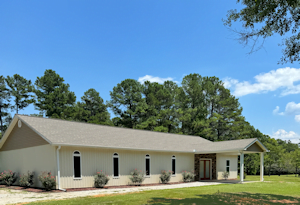
Beside our live streamed church services, all are welcome to attend our church in person each Saturday beginning 10:00 AM Central Time by going to 2425 Owens Rd., Ashland, AL 36251. There is no cost and any donations are strictly voluntary.
For questions, call +2563547124.