Come join Ashland Sabbath Chapel Ministries each Saturday for live streamed church services. Bible Study begins at 10:00 AM Central Time and Sermon at 11:00 AM. Visit Our YouTube channel and watch from home!
In the serene wilderness settings where Adventist camping flourishes, practical skills in knot tying emerge as essential tools for survival and comfort. The bowline, renowned for its non-slip properties, serves as a fundamental element in securing tent guylines against the capricious mountain winds. When erecting dining flies, the taut-line hitch proves invaluable, allowing for precise tension adjustments as weather conditions shift throughout the day.
Mastery of the square knot becomes particularly crucial during pack preparation, where campers must secure their gear with unwavering confidence. The clove hitch and timber hitch, meanwhile, demonstrate their worth in constructing camp furniture and establishing reliable clotheslines between trees. For more sophisticated camp structures, the sheet bend joins ropes of varying diameters, while the figure-eight follow-through creates secure anchor points for hanging bear bags.
- Sheet Bend: Essential for extending shorter ropes
- Bowline: Critical for rescue operations and secure loops
- Clove Hitch: Fundamental for starting lashings
- Figure-Eight: Vital for safety and security
Rope work proficiency extends beyond mere utility to encompass emergency preparedness, where quick-release knots might mean the difference between safety and peril. These techniques, refined through decades of wilderness experience, form the cornerstone of Adventist outdoor education, enabling campers to craft secure and efficient solutions for their outdoor living requirements.
History of knot tying in Adventist youth activities
The year was 1950 when the first organized knot-tying sessions emerged within Adventist youth programs, though the practical skills had been informally passed down since the early Master Guide programs of the 1920s. According to the Adventist Youth Ministry Archives (1952), the integration of rope work into youth activities gained momentum during the post-war outdoor education boom, when returning servicemen brought their military-honed expertise to church programs.
The Michigan Conference pioneered the first systematic approach to knot-tying instruction in 1955, developing a curriculum that would later influence the entire North American Division. Elder James Burton, a passionate outdoorsman, documented these early methods in his seminal work “Youth Leadership in the Great Outdoors” (1957), establishing standards that continue to shape modern practices.
Throughout the 1960s and 1970s, rope work became increasingly sophisticated within Adventist youth organizations. The Junior Missionary Volunteer (JMV) program, predecessor to today’s Pathfinders, incorporated specialized knot-tying challenges into their achievement levels. Historical records from the General Conference Youth Department (1968) reveal that leadership camps at Camp Berkshire first introduced the comprehensive knot-tying curriculum that would eventually become standard across the denomination.
The evolution of these skills paralleled the growth of the Pathfinder organization itself. By 1985, master instructors like Dorothy Eaton had developed innovative teaching methodologies, incorporating storytelling and practical demonstrations that transformed abstract concepts into memorable lessons. Her handbook, “Ropes and Knots in Christian Youth Leadership” (1986), became a cornerstone resource, emphasizing the spiritual parallels between reliable knots and steadfast faith.
The tradition continues to evolve, with modern Adventist youth leaders incorporating historical techniques alongside contemporary safety standards and materials. The International Pathfinder Camporee of 1994 marked a significant milestone, introducing standardized certification for knot-tying instructors, ensuring consistent quality in teaching these essential skills across the global Adventist community.
Pathfinder honor badge requirements
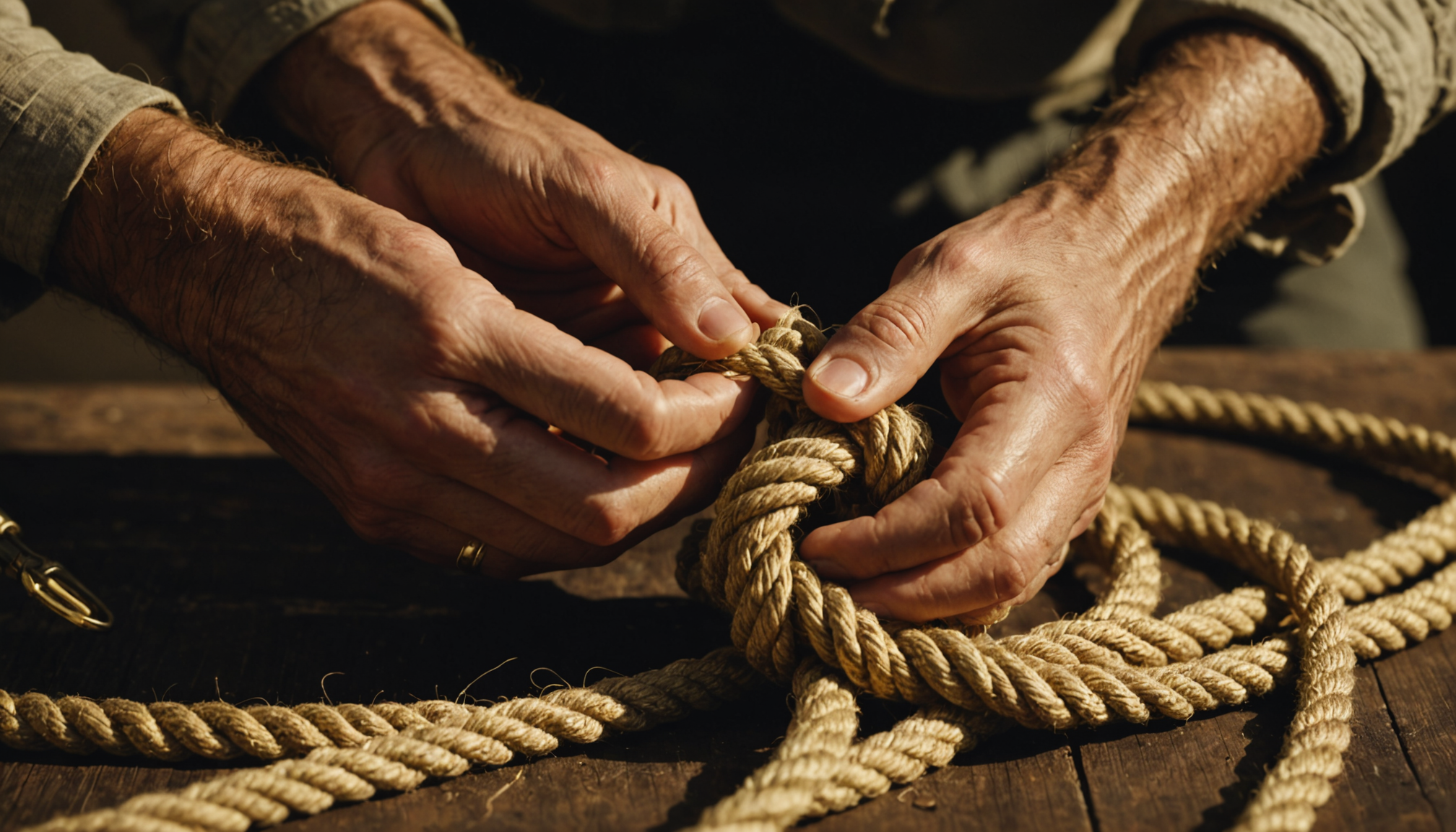
Within the structured framework of Pathfinder advancement, earning the Knot Tying Honor demands demonstration of practical skills across multiple proficiency levels. Candidates must master a minimum of fifteen essential knots, including the bowline, sheet bend, and double fisherman’s, executing each with precision and explaining their specific applications. The honor requirements emphasize not only mechanical competence but also situational understanding.
Progressive achievement levels unfold through carefully designed stages. At the basic level, Pathfinders demonstrate proficiency in fundamental hitches and bends. The intermediate stage challenges them with specialized knots for specific scenarios, while advanced requirements include teaching basic knots to younger members and creating functional items using rope work.
- Basic Level: Six essential knots with practical demonstrations
- Intermediate Level: Nine additional knots and their applications
- Advanced Level: Teaching skills and specialized techniques
- Master Level: Complex rope projects and emergency applications
Documentation plays a crucial role in the certification process. Candidates maintain detailed logs of their practice sessions, recording the time spent perfecting each knot and noting real-world applications. Evaluation criteria extend beyond mere technical execution to encompass speed, confidence, and adaptability under varying conditions. Instructors assess candidates through both practical demonstrations and oral examinations, ensuring comprehensive understanding of each knot’s properties and limitations.
Honor requirements also incorporate conservation awareness, emphasizing proper rope care and maintenance. Pathfinders learn to inspect ropes for wear, understand different rope materials and their characteristics, and master proper storage techniques. This holistic approach ensures that those who earn the honor possess not just mechanical ability but comprehensive rope handling expertise.
Teaching methods and techniques
Down by the riverside, where the old sycamore’s branches dip low enough to practice our hitches, I’ve watched many a seasoned instructor demonstrate the art of knot tying with the patience of a saint and the wisdom of Solomon. The most effective teaching approach, I’ve found, starts with the “grip and grin” method – letting young hands feel the rope’s texture while spinning yarns about each knot’s practical use in real-world scenarios.
The “shadow technique,” where instructors stand behind students and guide their hands through the motions, has proven particularly effective for teaching practical skills to visual learners. Meanwhile, the “red rope, blue rope” method, using differently colored cords to distinguish overlapping sections, helps youngsters track each step of complex knots with remarkable clarity.
- Learn by doing: Hands-on practice with immediate feedback
- Tell and show: Combining storytelling with demonstration
- Progressive mastery: Starting simple, building complexity
- Peer teaching: Advanced students instructing beginners
Memory aids and rhymes have become indispensable tools in our teaching arsenal. “The rabbit comes out of the hole, goes around the tree, and back down the hole” has helped countless young hands master the bowline. For rope work instruction, we’ve found that breaking complex knots into distinct “checkpoints” allows students to self-assess their progress and build confidence systematically.
Small group instruction, with no more than six students per instructor, creates an intimate learning environment where individual attention flourishes. We’ve developed a three-step verification process: “watch one, do one, teach one,” ensuring that knowledge transfers effectively from instructor to student and beyond. Interactive challenges, like timed competitions and practical scenario solving, keep the learning experience engaging while building muscle memory through repetition.
Safety considerations and best practices
 Before attempting any knot tying activities, proper safety protocols must be established and rigorously followed. Rope inspection becomes a critical first step, with careful examination for signs of wear, fraying, or chemical damage. Practical skills in identifying compromised equipment can prevent potentially dangerous situations during crucial moments.
Proper hand positioning and body mechanics play vital roles in preventing injuries. Maintaining correct posture while working with rope work helps avoid strain on the back and shoulders. When teaching or practicing, adequate lighting and appropriate working heights prevent eye strain and awkward positions that could lead to accidents.
Essential safety guidelines include:
– Never use ropes of unknown history or condition
– Keep ropes clean and store in dry, temperature-controlled environments
– Maintain proper distance from others during practice sessions
– Use appropriate protective gear when necessary
– Know weight limits and working loads for different rope types
Emergency protocols must be established and clearly communicated before any rope activities begin. Quick-release mechanisms should be incorporated into complex knots when appropriate, and rescue equipment must remain readily accessible. Regular safety audits ensure compliance with current standards and best practices.
Proper documentation of equipment usage, inspection records, and incident reports helps maintain accountability and enables continuous improvement of safety measures. Environmental considerations also factor into safety protocols, with special attention paid to weather conditions, terrain stability, and potential hazards.
Ashland Sabbath Chapel Ministries
Beside our live streamed church services, all are welcome to attend our church in person each Saturday beginning 10:00 AM Central Time by going to 2425 Owens Rd., Ashland, AL 36251. There is no cost and any donations are strictly voluntary.
For questions, call +2563547124.